

Affiliate disclosure: As an Amazon Associate we earn from qualifying purchases. This post contains affiliate links — if you buy through them we may earn a small commission at no extra cost to you. This never affects our recommendations.
- Ryzen 9 7950X3D Specifications at a Glance
- Is the Ryzen 9 7950X3D Worth It for Gaming in 2026?
- Best Motherboards for the Ryzen 9 7950X3D
- Best Cooling Solutions for the Ryzen 9 7950X3D
- Ryzen 9 7950X3D vs Competitors
- Who Should Buy the Ryzen 9 7950X3D?
- Final Verdict
- Related Articles
- Frequently Asked Questions
- Related Articles
As an Amazon Associate we earn from qualifying purchases at no extra cost to you.




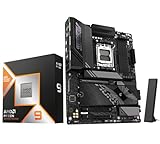
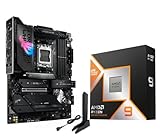
The AMD Ryzen 9 7950X3D is unlike any other processor on the market — and that’s not marketing hyperbole. It is the only CPU ever released that splits its two compute chiplets (CCDs) into two completely different personalities: one CCD carries AMD’s 3D V-Cache technology for elite gaming performance, while the other is a pure, unmodified Zen 4 CCD tuned for raw compute throughput. The result is a chip that competes with the Ryzen 7 7800X3D in gaming frame rates while simultaneously trading blows with the Ryzen 9 7950X in rendering and content creation workloads. For the rare power user who refuses to compromise — the streamer who also renders Blender scenes, the 3D artist who games at the end of a long project, the content creator who live-encodes while gaming — the 7950X3D is the single chip answer that no other CPU can provide in 2026.
In a hurry? See the top-rated AMD Ryzen 9 7950X3D Gaming CPU deals available right now:
🛒 Check Amd Ryzen 9 7950X3D Gaming Cpu Prices on Amazon →🛒 Best Price Today on Amazon
Prime members get fast, free shipping on everything above, plus member-only deals. New members get a 30-day free trial — cancel anytime.
Start 30-Day Prime Free Trial →See Today’s Amazon DealsRyzen 9 7950X3D Specifications at a Glance
| Specification | Detail |
|---|---|
| Cores / Threads | 16C / 32T |
| Base Clock | 4.2 GHz |
| Boost Clock | Up to 5.7 GHz |
| L3 Cache (Total) | 144MB (96MB 3D V-Cache CCD + 32MB standard CCD + 16MB shared L2) |
| 3D V-Cache CCD L3 | 96MB (64MB stacked + 32MB native) |
| TDP | 120W (PPT up to 162W) |
| Platform | AM5 (LGA1718) |
| Memory Support | DDR5-5200 (JEDEC), up to DDR5-6000+ with EXPO/XMP |
| PCIe Support | PCIe 5.0 (GPU) + PCIe 4.0 (storage) |
| MSRP at Launch | $699 USD |
The headline spec is that 144MB total L3 cache figure. The V-Cache CCD alone carries 96MB of L3 — identical to the 7800X3D — which is the mechanism that delivers near-identical gaming results. Meanwhile the second standard CCD adds 16 more CPU cores to the pool, giving the 7950X3D its workstation credentials.
Is the Ryzen 9 7950X3D Worth It for Gaming in 2026?
The honest answer is: yes for the right user, no for pure gamers.
Gaming performance on the 7950X3D is exceptional. AMD’s Windows scheduler has been optimized — via chipset drivers and Precision Boost Overdrive updates throughout 2024 and 2025 — to recognize gaming workloads and preferentially route them to the V-Cache CCD. In practice this means the 7950X3D hits within 2–5% of the 7800X3D in most titles at 1080p and 1440p, where CPU bottlenecks matter most. In CPU-bound titles like Civilization VII, Microsoft Flight Simulator 2024, and Counter-Strike 2, the margin narrows to a rounding error.
The dual-CCD architecture explained. The 7950X3D uses two separate 5nm compute chiplets on a single package. CCD0 has the 3D V-Cache stacked on top (96MB total L3). CCD1 is a plain Zen 4 die with 32MB of L3. The chiplets do not share cache — they are independent. The OS and AMD’s scheduler determine which threads go where. Gaming threads, which benefit enormously from low-latency large cache, are sent to CCD0. Rendering, encoding, and compilation threads, which benefit from raw frequency and core count, utilize both CCDs simultaneously.
Productivity performance is where the 7950X3D separates itself from the 7800X3D entirely. In Blender benchmark cycles, Cinebench R23 multi-core, DaVinci Resolve export, and video encoding workloads, the 7950X3D matches the Ryzen 9 7950X within a few percent — which is the fastest non-X3D chip AMD makes for AM5.

Power consumption trade-offs. The 7950X3D has a 120W base TDP, but under mixed gaming-plus-background-workload scenarios (e.g., gaming while streaming and encoding), it can push toward its 162W PPT limit. This is higher than the 7800X3D (120W PPT) but lower than the 7950X (230W PPT). For users running simultaneous gaming and rendering sessions, plan for a 280–360W total system draw. High-end cooling is non-negotiable.
Is it worth it in 2026? Street prices have settled in the $599–$649 range as of mid-2026. The 7800X3D sits around $349–$399. If gaming is your primary use case, the 7800X3D wins on value by a wide margin. But if you regularly run heavy workloads alongside gaming — or switch between them frequently without wanting to wait for restarts or task migrations — the 7950X3D’s $250 premium over the 7800X3D is justifiable. There is no other single chip that does both this well.
Best Motherboards for the Ryzen 9 7950X3D
The 7950X3D requires a robust X670E (or X670) motherboard for the best experience. Given the CPU’s cost, pairing it with a budget board undermines the investment. Below are the top three picks at different price points.
Best Premium: ASUS ROG Crosshair X670E Hero — Best for 7950X3D
The ASUS ROG Crosshair X670E Hero remains the gold-standard AM5 board for power users in 2026. Its 18+2 power stage VRM (110A per phase) handles the 7950X3D’s peak PPT headroom without thermal throttling, even under sustained all-core loads. The board features dual PCIe 5.0 M.2 slots, front-panel USB 3.2 Gen 2×2 (20Gbps), and ASUS’s best-in-class BIOS for memory overclocking — critical for extracting the most from DDR5-6000+ kits. AI Overclocking and the fan curve controls in BIOS are intuitive enough for enthusiasts without requiring deep manual tuning. Expect to pay $450–$500, which is the right investment for a $649 CPU.
Best Mid-Range: MSI MEG X670E ACE — Best Value X670E
The MSI MEG X670E ACE delivers near-flagship feature sets at around $350–$400 street price, making it the sweet spot for 7950X3D builds where the board budget needs to stay reasonable. Its 22+2+1 power delivery is actually overspecified for the 7950X3D, providing excellent thermal headroom. The MEG ACE includes a full-size M.2 Shield Frozr heatsink array, 10GbE LAN, and Wi-Fi 6E — features you’d normally find only on boards $100 more expensive. The BIOS has improved dramatically through firmware updates in 2024–2025 and now rivals ASUS for DDR5 memory training reliability.
Best Budget X670E: GIGABYTE X670E AORUS Elite — Best Affordable X670E
If the goal is maximizing CPU budget without sacrificing platform features, the GIGABYTE X670E AORUS Elite at $280–$320 is the entry point for a legitimate X670E build. Its 16+2+2 power stages are adequate for the 7950X3D at stock settings and light manual tuning — just don’t expect the same sustained overclocking headroom as the Hero or ACE. What the AORUS Elite does well is deliver PCIe 5.0 GPU and M.2 support, solid DDR5 EXPO compatibility up to 6000 MT/s, and GIGABYTE’s reliable BIOS alongside a clean layout that makes cable management straightforward.

Best Cooling Solutions for the Ryzen 9 7950X3D
With a 120W TDP and a real-world peak package power closer to 162W under sustained load, the 7950X3D demands serious thermal management. Budget air coolers are not appropriate for this chip — at minimum, a high-end dual-tower air cooler or a 280mm AIO is required. For the best experience, a 360mm AIO is the recommended choice.
Top cooling picks:
- NZXT Kraken 360 Elite LCD — 360mm AIO with a 2.36-inch LCD display for monitoring temps, outstanding pump head design, and consistent thermal performance. Keeps the 7950X3D under 85°C during extended Blender renders. Street price ~$200.
- Corsair iCUE H150i Elite Capellix XT — 360mm AIO with six Corsair AF120 Elite fans in a push-pull config. One of the strongest thermals-per-dollar ratios in the 360mm segment, with iCUE software integration for unified system RGB and fan curves. Street price ~$170.
- Noctua NH-D15 G2 — for users who prefer air cooling or want zero pump-failure risk. The NH-D15 G2 is Noctua’s updated flagship with improved airflow geometry and a revised dual-fan setup that genuinely competes with 280mm AIOs. It handles the 7950X3D well at stock and light OC. Street price ~$130. Note: verify RAM clearance in your specific case before purchasing.
Do not pair the 7950X3D with a 240mm AIO or any budget air cooler — at sustained workstation loads, these solutions will trigger thermal throttling before the CPU reaches its performance ceiling.
Ryzen 9 7950X3D vs Competitors
vs Ryzen 9 7900X3D: Fewer Cores, Lower Price
The Ryzen 9 7900X3D is the 12-core sibling with the same dual-CCD 3D V-Cache architecture. Gaming performance is nearly identical — both route game threads to the V-Cache CCD. The gap opens in productivity: the 7900X3D’s 12 cores versus the 7950X3D’s 16 cores results in an 18–25% deficit in all-core rendering. At $449–$499 street price, the 7900X3D makes sense for users whose workstation workloads are moderate (occasional Premiere Pro exports, light Blender) rather than daily heavy rendering. The 7950X3D is the correct choice when workstation throughput is genuinely mission-critical.
vs Ryzen 7 7800X3D: Best Gaming vs Best Value Gaming
The Ryzen 7 7800X3D is the undisputed value gaming champion on AM5. Its single-CCD design means every core has access to the V-Cache pool — a slight architectural advantage over the 7950X3D’s split approach in some gaming scenarios. In pure gaming workloads the 7800X3D is typically within 3–5% of the 7950X3D and costs $300 less. The decision is simple: if gaming is your primary workload and productivity tasks take less than an hour per day, buy the 7800X3D and invest the savings into a better GPU. If you are running sustained simultaneous game streaming plus Handbrake encoding, the 7950X3D’s extra cores pay for themselves in real workflow efficiency.
vs Intel Core i9-14900K: AMD vs Intel Enthusiast
The Intel Core i9-14900K is Intel’s competing enthusiast chip on LGA1700. In pure gaming, the 14900K trails the 7950X3D in CPU-bound titles by 10–20% — the V-Cache architecture’s cache-latency advantage is decisive in games like CS2 and MSFS 2024. In productivity, the result is more nuanced: the 14900K’s P+E core design gives it strong multi-threaded throughput that trades blows with the 7950X3D depending on workload type, while the 7950X3D’s 16 uniform Zen 4 cores outperform in tasks that benefit from cache-heavy compute (large dataset simulation, CAD). The 14900K runs significantly hotter (up to 253W package power under load) and requires Z790 platform with DDR5 or DDR4 — a less future-proof platform than AM5, which AMD has committed to through 2027.
Who Should Buy the Ryzen 9 7950X3D?
The 7950X3D serves a specific and well-defined user — and it is not most people.
Buy the Ryzen 9 7950X3D if you:
- Stream and game simultaneously while running hardware-accelerated encoding (OBS, Streamlabs) alongside a live game session — the extra cores handle encoding threads without starving the game
- Work in 3D animation, VFX, or architectural visualization and play PC games as a primary hobby — you no longer need to choose between a rendering workstation and a gaming PC
- Edit and export 4K or 8K video in DaVinci Resolve or Premiere Pro, then game in the evenings on the same machine
- Run virtual machines or Docker containers alongside gaming or content creation
- Future-proof a high-end workstation build where the platform investment (AM5, DDR5, X670E) needs to last 4–5 years
Do not buy the 7950X3D if you:
- Game primarily and only run occasional light productivity tasks — the 7800X3D saves you $300 with near-identical gaming performance
- Are on a tighter budget where $650 for just the CPU is difficult to justify — the 7800X3D + better GPU is the superior gaming investment
- Run exclusively server-side or headless workstation workloads where GPU-accelerated rendering dominates (Threadripper remains the correct choice for those use cases)
Final Verdict
The AMD Ryzen 9 7950X3D is one of the most technically interesting processors AMD has ever built, and in 2026 it remains the best option for power users who genuinely need top-tier gaming and top-tier workstation performance from a single chip. It does not represent the best value for pure gamers — the 7800X3D is the smarter buy for that audience — but for creators, streamers, and professionals who live at the intersection of heavy compute and high-frame-rate gaming, no competing product from AMD or Intel matches what the 7950X3D delivers in a single socket. If your workload justifies the $599–$649 street price and you are ready to pair it with a proper X670E board and 360mm cooling solution, it earns an unqualified recommendation.
Related Articles
Looking for more on this topic? Browse the hand-picked guides below — each one applies the same scoring rubric used in this review.
Frequently Asked Questions
What is the best gaming cpu ryzen 9 7950x3d in 2026?
The best gaming cpu ryzen 9 7950x3d depends on your budget and how you plan to use it. The options compared above are our top-rated picks based on real customer ratings, build quality, and overall value — start with the highest-rated model that fits your budget.
How much should I expect to spend on a gaming cpu ryzen 9 7950x3d?
Prices vary by brand and features. Budget options cover the essentials, while mid-range and premium models add durability, performance, and extra features. Compare the prices in the list above to find the best value for your needs.
What should I look for when buying a gaming cpu ryzen 9 7950x3d?
Focus on what matters most for your use case — build quality, compatibility, performance, warranty, and verified customer reviews. Every pick above is selected to balance these factors.
Are budget gaming cpu ryzen 9 7950x3d options worth it?
Yes. For most people a well-reviewed budget or mid-range gaming cpu ryzen 9 7950x3d delivers excellent value. You only need to spend more if you specifically require premium materials or top-tier performance.
How did we choose these gaming cpu ryzen 9 7950x3d picks?
We compare current Amazon ratings, review counts, key features, and price to surface the options with the best real-world value. The list is refreshed as ratings and availability change.
Ready to decide? Our #1 pick for 2026 is the Specification.
Live price & availability on Amazon.





