

- Top Pick: Intel® Core™ i5-14600KF New Gaming Desktop Processor 14 cores (6 P-cores + 8 E-cores) – Unlocked
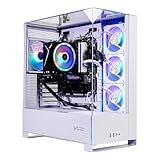
- Best Value: Skytech Gaming Archangel 5 Gaming PC, Intel i5 14400F 2.5GHz, NVIDIA RTX 5060, 1TB NVMe SSD, 16GB DDR5 RAM 6000, 750W Gold PSU, Wi-Fi, Win 11, Desktop
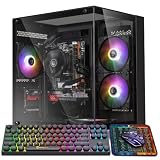
- Premium Choice: msi Codex R2 Gaming Desktop PC | NVIDIA GeForce RTX 5070 12GB | Intel Core i5-14400F | 32GB DDR5 RAM | 1TB NVMe SSD | Air Cooling | Wi-Fi 6E | Windows 11 Home | VR Ready | D14NVP5-613US
Affiliate disclosure: As an Amazon Associate we earn from qualifying purchases. This post contains affiliate links — if you buy through them we may earn a small commission at no extra cost to you. This never affects our recommendations.
- Quick Picks
- i5 vs Ryzen 5: Direct Comparison for Gaming in 2026
- K vs F vs Non-Suffix: What Intel’s Naming Means
- Hybrid Architecture: P-Cores vs E-Cores Explained for Gaming
- Top 5 Intel Core i5 Gaming CPUs in 2026
- Full Comparison Table
- What to Look For When Buying an i5 Gaming CPU
- Verdict: Which Intel Core i5 Gaming CPU Should You Buy?
- Frequently Asked Questions
- Related Articles
- Related Articles
As an Amazon Associate we earn from qualifying purchases at no extra cost to you. Product prices and availability are accurate as of the date shown and are subject to change.





In a hurry? See the top-rated Intel Core i5 Gaming CPU deals available right now:
🛒 Check Intel Core I5 Gaming Cpu Prices on Amazon →🛒 Best Price Today on Amazon
Prime members get fast, free shipping on everything above, plus member-only deals. New members get a 30-day free trial — cancel anytime.
Start 30-Day Prime Free Trial →See Today’s Amazon DealsQuick Picks
| Rank | CPU | Cores (P+E) | TDP | Overclockable | Best For |
|---|---|---|---|---|---|
| 1 | i5-14600K | 6P+8E (14T hybrid) | 125W | Yes | Best overall gaming + streaming |
| 2 | i5-14400F | 6P+4E (10T hybrid) | 65W | No | Best value gaming build |
| 3 | i5-13600K | 6P+8E (14T hybrid) | 125W | Yes | Previous gen value + OC headroom |
| 4 | i5-13400F | 6P+4E (10T hybrid) | 65W | No | Budget 1080p powerhouse |
| 5 | i5-12400F | 6P+0E (12T) | 65W | No | Tight-budget legacy build |
i5 vs Ryzen 5: Direct Comparison for Gaming in 2026
Intel’s i5 line and AMD’s Ryzen 5 series have traded blows for years. In 2026, both sit in the mainstream sweet spot — but they diverge on platform, philosophy, and specific gaming workloads.
Where Intel i5 wins:
- Single-core burst performance. Games are predominantly single-threaded at their critical path. Intel’s P-cores clock aggressively — the i5-14600K hits 5.3 GHz boost, which translates directly to higher average FPS in CPU-bound scenarios like open-world games, city builders, and strategy titles.
- Memory controller maturity. LGA1700 platform (12th/13th/14th gen) has a polished DDR5 and DDR4 controller. Less tuning needed to hit stable XMP/EXPO profiles.
- Hybrid core scheduling in Windows 11. Intel Thread Director + Windows 11 scheduler puts game threads on P-cores and background tasks on E-cores automatically. Real-world results: lower 1% lows and more consistent frame pacing compared to equivalent Ryzen 5 builds.
Where Ryzen 5 wins:
- Platform longevity. AM5 supports future Ryzen generations. LGA1700 is a dead-end socket — Intel moves to LGA1851 for Arrow Lake and beyond.
- Ryzen 5 7600X gaming IPC. AMD closed the IPC gap significantly with Zen 4. In pure gaming (1080p, GPU-limited), the 7600X often matches or beats the i5-13600K frame-for-frame.
- Power efficiency. Ryzen 5 chips tend to draw less power at equivalent performance levels, which matters for small form factor (SFF) builds.
Bottom line: For a pure gaming build today on LGA1700 (Z690/Z790/B760), the Intel i5 lineup — especially 13th and 14th gen — delivers class-leading gaming frame rates at reasonable prices. If you’re building from scratch and want long-term platform investment, AM5 deserves consideration. But for raw gaming performance per dollar right now, Intel i5 is hard to beat.
K vs F vs Non-Suffix: What Intel’s Naming Means
Intel’s suffix system is not marketing fluff — it directly dictates what your CPU can and cannot do.
- K suffix (e.g., i5-14600K): Unlocked multiplier. You can overclock via BIOS on a Z-series motherboard (Z690, Z790). Also includes integrated graphics (Intel UHD 770). Requires a Z-series board to unlock OC — a B-series board will run it but at locked speeds.
- KF suffix (e.g., i5-13600KF): Unlocked multiplier, no integrated graphics. Requires a discrete GPU. Typically $10–20 cheaper than the K variant — a good deal if you’re buying a GPU anyway.
- F suffix (e.g., i5-14400F, i5-13400F): Locked multiplier, no iGPU. Cannot be overclocked. Works on any LGA1700 board (B660, B760, H770, Z790). Lower price, lower power — excellent for mainstream gaming builds where you’re pairing a GPU.
- No suffix (e.g., i5-14400): Locked multiplier, includes iGPU. Pays a small premium for the integrated graphics. Useful for troubleshooting without a discrete GPU or for HTPC builds.
Practical takeaway: If you’re building a gaming rig with a dedicated GPU and don’t plan to overclock, go F-suffix and save money. If you want OC headroom or the ability to benchmark/test without a GPU, go K or KF on a Z-series board.
Hybrid Architecture: P-Cores vs E-Cores Explained for Gaming
Starting with Intel’s 12th-gen Alder Lake, i5 chips use a hybrid core architecture borrowed from the mobile space. Understanding it prevents bad expectations.
P-Cores (Performance Cores):
- Full-fat Raptor Lake / Raptor Lake Refresh cores
- High clock speeds, deep out-of-order execution, Hyper-Threading
- Handle game threads, render threads, and latency-sensitive workloads
- The i5-14600K has 6 P-cores — identical to 13th and 14th gen design
E-Cores (Efficiency Cores):
- Smaller, lower-power Gracemont cores
- No Hyper-Threading, lower IPC, lower clock ceiling
- Handle background tasks: Discord, OBS encoding, browser, Windows processes
- The i5-14600K adds 8 E-cores; the i5-14400F has only 4 E-cores
Why it matters for gaming:
In a pure gaming workload, the E-cores mostly sit idle or handle OS overhead. Your game runs on P-cores. The difference becomes significant when you’re also streaming or recording — 8 E-cores on the 14600K handle OBS background encoding while P-cores stay fully committed to your game. On the i5-14400F with 4 E-cores, that separation exists but with less headroom.
If you only game and never stream, the E-core count difference between i5-14600K and i5-14400F matters less than the marketing suggests. At 1080p with a mid-range GPU, you’ll be GPU-limited before E-core count becomes a bottleneck.
Top 5 Intel Core i5 Gaming CPUs in 2026
1. Intel Core i5-14600K — Best Overall
Buy the Intel Core i5-14600K on Amazon

The i5-14600K is the top of the i5 stack and the go-to recommendation for anyone who wants the best Intel Core i5 gaming CPU without arguments. It carries 6 P-cores clocked to 5.3 GHz boost and 8 E-cores for background processing, all on the mature LGA1700 platform.
Gaming performance: At 1080p and 1440p, the 14600K delivers average FPS that rivals the i7-13700K in most titles. In CPU-bound scenarios — Cyberpunk 2077 CPU workloads, Microsoft Flight Simulator, Civilization VII late-game — it consistently outpaces budget Ryzen alternatives. Frame pacing is tight thanks to Thread Director + Windows 11.
Overclocking: As a K-series chip, you can push P-core all-core to ~5.2–5.4 GHz with a decent 240mm AIO. Memory overclocking on Z790 lets you run DDR5-6400+ for additional gains. Even without OC, the chip runs impressively on auto settings.
Streaming: 8 E-cores handle OBS software encoding, Discord, and browser tabs while the 6 P-cores focus on your game. Combined with Intel Quick Sync (iGPU for hardware encode, even without display output), this is the most capable i5 for simultaneous gaming and streaming.
Verdict: Best overall i5 for gaming in 2026. Pairs well with an RTX 4070 or RX 7800 XT at 1440p. Budget for a Z790 board and a 240mm cooler.
2. Intel Core i5-14400F — Best Value Gaming CPU
Buy the Intel Core i5-14400F on Amazon
The i5-14400F is what happens when Intel removes unnecessary features and cuts price without gutting gaming performance. No iGPU, locked multiplier, 4 E-cores instead of 8 — but for a gaming build with a discrete GPU, none of those trade-offs hurt where it counts.
Gaming performance: The 14400F’s 6 P-cores hit 4.7 GHz boost. At 1080p with an RTX 4060 Ti or RX 7700, you’ll routinely hit over 100 FPS in demanding titles. The performance delta between a 14400F and 14600K in pure gaming is typically 5–8% — not worth the price gap for most gamers.
Platform: Works on any B760 or Z790 board. B760 boards start around $100, making this an excellent foundation for a complete $600–700 gaming build. DDR4 support on B760 lets you reuse existing RAM sticks.
TDP: 65W base makes this the most power-efficient pick in the lineup. Works with the stock Intel cooler for light workloads, though a budget aftermarket cooler is recommended for sustained gaming sessions.
Verdict: If you want the best price-to-gaming-performance ratio in the i5 lineup, the 14400F is your chip. No OC means no complexity, and the locked power profile keeps thermals predictable.
3. Intel Core i5-13600K — Previous Gen Value
Buy the Intel Core i5-13600K on Amazon
The i5-13600K was a phenomenon when it launched — competitive with chips costing twice as much. In 2026, it remains relevant because prices have dropped while the architecture is functionally identical to the 14600K (Raptor Lake Refresh made minimal changes).
Gaming performance: The 13600K’s 6 P-cores boost to 5.1 GHz — 200 MHz less than the 14600K. In gaming, that difference is nearly invisible. Real-world gaming benchmarks put the 13600K within 2–3% of the 14600K across most titles. You’d need a frame counter to notice.

Overclocking: Same Z790/Z690 requirement as the 14600K. Overclocking ceiling is slightly lower (~5.3 GHz all-core vs. 5.4 GHz on 14600K), but the silicon quality is comparable. Many 13600K units bin well.
Price argument: If the 13600K is available at a significant discount over the 14600K — which happens frequently at major retailers — it’s the smarter purchase. Same platform, nearly identical gaming results, lower cost.
Verdict: The price-conscious overclocker’s pick. Choose it over the 14600K when the price difference exceeds $40.
4. Intel Core i5-13400F — Budget 1080p Champion
Buy the Intel Core i5-13400F on Amazon
The i5-13400F sits between the 14400F and the older 12400F — a locked, F-suffix chip with 6 P-cores and 4 E-cores. It’s a direct predecessor to the 14400F with marginally lower boost clocks (4.6 GHz vs. 4.7 GHz) and otherwise identical gaming capability.
1080p gaming: Paired with an RTX 4060 or RX 7600, the 13400F handles every modern title at 1080p Ultra settings. Esports titles (CS2, Valorant, Apex Legends) run well above 144 FPS, utilizing the full refresh rate of budget gaming monitors.
Price point: The 13400F often sells below the 14400F, sometimes by $20–30. If both are in stock, compare prices — the gaming performance difference is a rounding error.
Limitations: 4 E-cores (same as 14400F) means less background task headroom than the K-series chips. Simultaneous streaming with OBS is possible but watch CPU usage during demanding scenes.
Verdict: Excellent for 1080p-focused builds. A safe choice if you find it discounted below the 14400F.
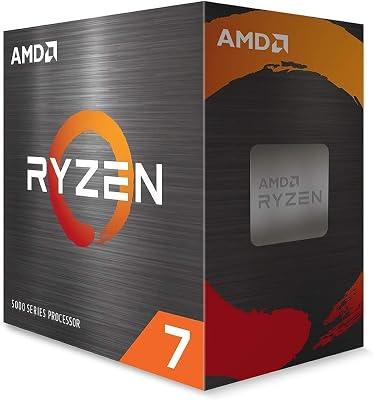
5. Intel Core i5-12400F — Tight-Budget Legacy Option
Buy the Intel Core i5-12400F on Amazon
The i5-12400F is Intel’s Alder Lake chip from 2022 — the CPU that proved hybrid architecture could work. Unlike the 13th and 14th gen chips, it has no E-cores: 6 P-cores, 12 threads, and a locked multiplier.
Gaming in 2026: The 12400F holds up better than expected. At 1080p, games that are GPU-limited barely register a difference between this chip and the 14400F. The 6 P-core design still handles modern workloads effectively. Where it shows age is in heavily threaded games or background-heavy scenarios where the absence of E-cores means all 6 P-cores are handling both game and OS tasks simultaneously.
Platform: LGA1700, same as all chips in this list. Compatible with B660, Z690, B760, Z790 boards. DDR4 and DDR5 support depending on board selection.
Who it’s for: Upgraders who already have an LGA1700 board from a 12th-gen build, or budget builders who find it deeply discounted. As a new build choice in 2026, the 13400F or 14400F offer better long-term value unless the price gap is substantial (over $30).
Verdict: Still functional, not future-proof. Buy new only if heavily discounted.
Full Comparison Table
| CPU | Cores | P-Core Boost | E-Core Boost | TDP Base | OC | iGPU | Platform | Approx. Price |
|---|---|---|---|---|---|---|---|---|
| i5-14600K | 6P+8E | 5.3 GHz | 4.0 GHz | 125W | Yes | Yes | LGA1700 | ~$250 |
| i5-14400F | 6P+4E | 4.7 GHz | 3.5 GHz | 65W | No | No | LGA1700 | ~$170 |
| i5-13600K | 6P+8E | 5.1 GHz | 3.9 GHz | 125W | Yes | Yes | LGA1700 | ~$210 |
| i5-13400F | 6P+4E | 4.6 GHz | 3.3 GHz | 65W | No | No | LGA1700 | ~$150 |
| i5-12400F | 6P+0E | 4.4 GHz | N/A | 65W | No | No | LGA1700 | ~$120 |
What to Look For When Buying an i5 Gaming CPU
Core Count and Configuration
More cores do not automatically equal better gaming. In 2026, most games use 6–8 threads effectively. The 6 P-core configuration across all i5 variants covers virtually every current title. E-cores add headroom for background tasks — prioritize higher E-core count (8 vs. 4) only if you plan to stream or run CPU-intensive software alongside games.
TDP and Cooling Budget
K-series chips (14600K, 13600K) have a 125W base TDP that spikes above 180W under load on auto settings. Budget for at least a 240mm AIO or a tower cooler rated for 200W+ (like the DeepCool AK620 or Noctua NH-D15). F-suffix locked chips (14400F, 13400F, 12400F) at 65W base are far more forgiving — a $30 aftermarket cooler handles them comfortably.
Overclocking Potential
Only K/KF suffix chips support multiplier overclocking, and only with a Z-series board. If you’re not planning to overclock, an F-suffix chip on a B760 board saves $100–150 in motherboard costs alone — money better spent on a GPU upgrade.
Platform Cost: Boards and Memory
All five chips use LGA1700. However, the K-series requires a Z690 or Z790 board to unlock OC — adding cost. F-suffix chips work on B660/B760 boards (starting ~$100) or on premium Z boards if you already have one.
Memory: B760 boards typically support both DDR4 and DDR5 depending on board variant. DDR4 is cheaper; DDR5 offers higher bandwidth that benefits the K-series chips more than F-suffix ones. For the 14400F and 13400F, DDR4-3600 is sufficient and cost-effective.
Verdict: Which Intel Core i5 Gaming CPU Should You Buy?
The best Intel Core i5 gaming CPU in 2026 depends on what you’re building and how much you’re spending.
Best overall: Intel Core i5-14600K — the top i5 gaming chip, handles gaming and streaming, overclockable, future-proof within the LGA1700 ecosystem. Worth the premium if you want maximum i5 performance.
Best value: Intel Core i5-14400F — the smart buy for most gamers. Near-identical gaming FPS to the 14600K at significantly lower CPU and board cost. No OC complexity, low thermals, plug-and-play performance.
Best budget: Intel Core i5-13400F — when price matters most and 1080p is your target resolution, the 13400F delivers without compromise.
The LGA1700 platform is mature and components are widely available at competitive prices. Any chip in this list slots into an existing LGA1700 board — making these CPUs equally strong as upgrade targets for existing 12th or 13th gen systems.
If you’re starting fresh and want the best i5 experience with room to grow: i5-14600K on a Z790 board with DDR5-6000. If you want the most gaming per dollar: i5-14400F on a B760 board with DDR4-3600. Both decisions are correct — just different priorities.
Frequently Asked Questions
Is a Core i5 good enough for gaming in 2026?
Yes. A modern Core i5 is the value champion for gaming, delivering high frame rates in virtually every title. It is the smart pick for the majority of 1080p and 1440p builds.
Core i5 or Core i7 for a gaming build?
For gaming-focused builds the i5 offers the best value, performing within a few percent of the i7. Step up to the i7 only if you also stream or do content creation.
Will a Core i5 bottleneck a high-end GPU?
At 1440p and 4K, no, because the GPU is the limit. At competitive 1080p with a top GPU a flagship CPU squeezes out a few more frames, but the i5 still performs strongly.
Do I need an expensive motherboard for a Core i5?
No. A mid-range B-series board such as a B760 pairs perfectly with a Core i5, providing all the features and power delivery a non-overclocked i5 needs.
Related Articles
Looking for more on this topic? Browse the hand-picked guides below — each one applies the same scoring rubric used in this review.
Ready to decide? Our #1 pick for 2026 is the Rank.
Live price & availability on Amazon.





