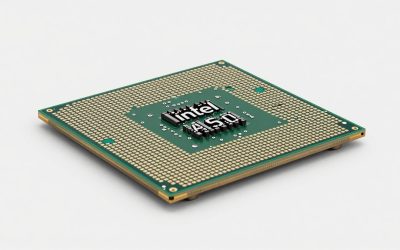
Rust is a CPU game wearing a GPU game’s clothes. Its Unity engine runs the simulation, networking, and much of the rendering setup on one or two heavily loaded threads, so when you walk into a monument with thirty players nearby, the processor decides whether you hold 120 fps or drop to 60 regardless of what graphics card you own. That makes the CPU the first component to get right, and it makes platform cost part of the decision: the socket you choose determines your motherboard, memory, and upgrade path for years. The five processors below cover a sensible budget chip through the fastest gaming CPU available, with an honest look at what each one actually changes in Rust at 1080p, 1440p, and 4K.
Quick Picks
| Pick | Tier | Why |
|---|---|---|
| AMD Ryzen 5 9600X | Budget | Fast Zen 5 cores on the long-lived AM5 socket |
| Intel Core Ultra 7 265K | Value multitasker | 20 cores for streaming Rust while playing |
| AMD Ryzen 7 9700X | Mid-range | Eight cores, low power, easy to cool |
| AMD Ryzen 7 9800X3D | Best for Rust | 3D V-Cache lifts Rust’s frame rate more than any GPU |
| AMD Ryzen 9 9950X3D | No compromise | X3D gaming speed plus 16 cores for work |
How We Chose
We ranked processors on three things that matter specifically in Rust. First, single-thread performance and cache size, because Unity’s main thread is the bottleneck and the game responds strongly to large L3 caches. Second, platform longevity and cost, since the motherboard and RAM add hundreds of dollars and determine your upgrade path. Third, thermals and power, because Rust sessions run for hours. Relative performance positioning reflects launch reviews from TechPowerUp, Tom’s Hardware, Gamers Nexus, and Hardware Unboxed, translated into what those rankings mean for a cache-sensitive Unity title.
As an Amazon Associate we earn from qualifying purchases at no extra cost to you.





AMD Ryzen 5 9600X
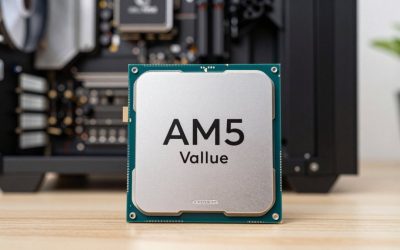
The Ryzen 5 9600X is for players building a Rust PC on a budget who still want the AM5 socket’s long upgrade path. Its six Zen 5 cores deliver strong single-thread speed, and in TechPowerUp’s and Tom’s Hardware’s launch reviews it landed within roughly 10-15 percent of the eight-core 9700X in gaming. In Rust that means around 100-130 fps at 1080p in populated areas with a mid-range GPU, and at 1440p and 4K the GPU takes over on most cards so the ceiling barely changes. It runs cool on a basic tower cooler. The con: six cores leave little headroom for streaming or heavy background applications while Rust is running.
Intel Core Ultra 7 265K
The Core Ultra 7 265K is for the Rust player who streams, records, or runs a server on the same machine. Its 20 cores handle encoding and background work without touching the game, and in Hardware Unboxed’s and Gamers Nexus’s testing its gaming performance sits close to the Ryzen 7 9700X, generally a step behind AMD’s X3D chips. In Rust expect roughly 110-140 fps at 1080p in busy zones, with 1440p and 4K GPU-limited on most cards. It supports fast DDR5-6400 memory natively. The con: the Z890 platform is a dead end for future CPU upgrades, and it draws noticeably more power under all-core load than the Ryzen alternatives.
AMD Ryzen 7 9700X
The Ryzen 7 9700X is the mid-range pick for players who want eight cores, low power, and AM5 longevity without paying for 3D V-Cache. In TechPowerUp’s launch review it edged the 9600X by a modest margin in gaming and matched or beat the Core Ultra 7 265K in most titles. In Rust that puts it around 110-145 fps at 1080p in populated areas, and it keeps a high-end GPU fed at 1440p. Its 65W default power draw means a mid-range air cooler is plenty. The con: the Ryzen 7 9800X3D is often only a modest premium away and delivers a clearly larger jump in Rust specifically, which makes the 9700X hard to justify for a pure gaming build.
AMD Ryzen 7 9800X3D
The Ryzen 7 9800X3D is the best CPU for Rust, full stop. Its 96MB of L3 cache is exactly what Unity’s main thread wants, and Hardware Unboxed, Gamers Nexus, and TechPowerUp all placed it clearly ahead of every non-X3D processor in gaming, typically by 15-25 percent over the 9700X and more in cache-sensitive titles. In Rust that means roughly 140-180 fps at 1080p in the same monument fights that cap other chips at 120, and at 1440p it lets an RX 9070 XT or RTX 5080 run at its full potential. It also overclocks and runs cooler than its predecessor. The con: price, and eight cores mean heavy streaming while playing will still pull from the game.
AMD Ryzen 9 9950X3D
The Ryzen 9 9950X3D is for players who want 9800X3D gaming performance and 16 cores for video editing, compiling, or hosting a Rust server on the same PC. Gamers Nexus and Tom’s Hardware found its gaming results within a few percent of the 9800X3D once the game is pinned to the cache die, which Windows and AMD’s driver handle automatically in most cases. In Rust that means the same 140-180 fps ceiling at 1080p, with the second core die free for everything else. The con: it costs considerably more than the 9800X3D for no gaming gain, and its 170W rating demands a strong cooler and a motherboard with solid power delivery.
Platform Costs to Budget For
The CPU price is only part of the bill. For the four Ryzen picks, a B650 or B850 motherboard is the sensible choice; X870 adds PCIe 5.0 lanes you will not use in Rust. For the Core Ultra 7 265K, a Z890 or B860 board is required. RAM matters more in Rust than most games because the client passes 16GB on populated servers: 32GB of DDR5-6000 CL30 is the practical floor for AMD, and DDR5-6400 for Intel, with 64GB reasonable if you stream. Cooling scales with the chip: a 120mm tower cooler suits the 9600X and 9700X, a dual-tower cooler or 240mm liquid cooler suits the 9800X3D and Core Ultra 7, and the 9950X3D deserves a 280mm or 360mm liquid cooler for sustained sessions.
Bottleneck Check by Resolution
At 1080p, the CPU is the bottleneck in Rust on every GPU past an RX 9060 XT. The gap between the 9600X and 9800X3D is visible here as a 30-50 fps difference in monument fights, and no graphics card will close it. At 1440p the picture depends on the GPU: with an RX 9060 XT or RTX 5070 the card becomes the limit and the CPU choice matters less, but with an RX 9070 XT or RTX 5080 the 9800X3D is still needed to keep the card busy in populated areas. At 4K the GPU is the limit almost everywhere, though a slow CPU will still cause dips when a hundred players converge. The takeaway: at 1080p the CPU is your upgrade; at 1440p buy them together; at 4K the GPU leads but the CPU sets your floor.
Our Verdict
For most Rust players in 2026, the AMD Ryzen 7 9800X3D is the processor to buy, because its cache does more for Rust frame rates than any GPU upgrade at the same price. The Ryzen 5 9600X is the budget answer on the same socket, and the Core Ultra 7 265K suits streamers. The 9950X3D is for those who also work on the machine.
FAQ
Is Rust CPU or GPU bound?
CPU-bound, especially at 1080p and in populated areas. The Unity engine’s main thread limits frame rates, so single-thread speed and cache size matter most.
Does 3D V-Cache help in Rust?
Yes, significantly. Rust is one of the titles that responds most strongly to the large L3 cache on AMD’s X3D processors.
How many cores does Rust need?
Six fast cores are enough for the game alone. Eight or more help if you stream, record, or run Discord and a browser alongside it.
Should I get the 9800X3D or 9950X3D for Rust?
The 9800X3D. The 9950X3D delivers the same Rust performance and only makes sense if you also need 16 cores for work.
Sources and Methodology
The performance ranges in this guide are approximate and reflect the relative positioning of each processor in launch reviews published by TechPowerUp, Tom’s Hardware, Gamers Nexus, and Hardware Unboxed. Rust is not a standard title in those outlets’ CPU test suites, so we mapped their gaming rankings and cache-sensitivity findings onto the game’s known Unity behavior. None of these figures were measured by this site, and results vary with server population, GPU, and memory speed.
Ready to decide? Our #1 pick for 2026 is the AMD Ryzen 5 9600X.
Live price & availability on Amazon.