- Top Pick: ASUS TUF Gaming X670E-PLUS WiFi 6E Socket AM5 (LGA 1718) Ryzen 7000 ATX Gaming Motherboard(16 Power Stages, PCIe® 5.0, DDR5 Memory, Four M.2 Slots,2.5 Gb LAN,USB 4, Aura RGB Lighting) (Renewed)
- Best Value: MSI X670E GAMING PLUS WIFI Gaming Motherboard (AMD Ryzen 9000/8000/7000 Series Processors, AM5, DDR5, PCIe 5.0, SATA 6Gb/s, M.2 slots, USB 3.2 Gen 2, Wi-Fi 6E, Bluetooth 5.3, 2.5Gbps LAN, HDMI/DP,ATX)
- Premium Choice: ASUS ROG STRIX X670E-A GAMING WIFI AMD X670 AM5 Ryzen™ Desktop 9000 8000 & 7000 ATX motherboard, 16+2 power stages, PCIe® 5.0, DDR5, 4x M.2 slots with heatsink, USB 3.2 Gen 2×2, WiFi 6E, AI Cooling II
Affiliate disclosure: As an Amazon Associate we earn from qualifying purchases. This post contains affiliate links — if you buy through them we may earn a small commission at no extra cost to you. This never affects our recommendations.
- Quick Picks
- X670E vs X670 vs B650: Which AM5 Chipset Do You Need?
- PCIe 5.0 Explained: GPU Slot vs M.2 — What X670 Offers
- VRM for Ryzen 9000: How Much Is Enough?
- Top 5 X670 Gaming Motherboards
- Full Comparison Table
- What to Look For When Buying an X670 Motherboard
- Verdict
- Frequently Asked Questions
- Related Articles
- Related Articles
As an Amazon Associate we earn from qualifying purchases at no extra cost to you.


In a hurry? See the top-rated X670 Gaming Motherboard deals available right now:
🛒 Check X670 Gaming Motherboard Prices on Amazon →🛒 Best Price Today on Amazon
Prime members get fast, free shipping on everything above, plus member-only deals. New members get a 30-day free trial — cancel anytime.
Start 30-Day Prime Free Trial →See Today’s Amazon DealsQuick Picks
| # | Motherboard | Chipset | Best For | Price Tier |
|---|---|---|---|---|
| 1 | ASUS ROG Crosshair X670E Hero | X670E | Best Overall | Premium |
| 2 | MSI MEG X670E ACE | X670E | Extreme OC / Ryzen 9000 | Flagship |
| 3 | Gigabyte X670E Aorus Master | X670E | Value X670E | Mid-Premium |
| 4 | ASUS Prime X670-P WiFi | X670 | Budget AM5 Entry | Mid-Range |
| 5 | ASRock X670E Steel Legend | X670E | Value-Oriented X670E | Mid-Premium |
If you want the short answer: the ASUS ROG Crosshair X670E Hero is the best X670 gaming motherboard for most buyers in 2026. It hits the sweet spot of VRM quality, PCIe 5.0 coverage, USB4 connectivity, and overclocking headroom without the flagship tax of the MEG ACE. Keep reading if you want to understand why — and whether X670E is even what you need.
X670E vs X670 vs B650: Which AM5 Chipset Do You Need?
AMD’s AM5 platform splits into three chipset tiers. Picking wrong costs you either money or capability.
B650 / B650E
B650 is the entry-level AM5 chipset. It supports Ryzen 7000 and 9000 series, DDR5, and PCIe 5.0 on the primary GPU slot (B650E variant only). M.2 slots are PCIe 4.0. USB 3.2 Gen 2 is present, but USB4 is absent. If you’re building a gaming rig on a budget and won’t overclock beyond EXPO/XMP memory profiles, B650 saves real money and gives up almost nothing in-game.
X670
X670 adds more PCIe 4.0 lanes, better USB connectivity, and broader overclocking support compared to B650. It does not mandate PCIe 5.0 on the primary M.2 slot the way X670E does. A good X670 board like the ASUS Prime X670-P WiFi is the middle ground — more headroom than B650, lower cost than X670E.
X670E
X670E is the full-fat flagship chipset. It mandates PCIe 5.0 on both the primary GPU slot and at least one M.2 slot. You get more USB bandwidth, more overclocking headroom, better power delivery designs (because vendors justify the cost), and typically USB4 / Thunderbolt 4. If you’re running a Ryzen 9 9950X or planning serious CPU overclocking, X670E is the chipset you want.
Rule of thumb: Ryzen 5/7 mid-range gaming build — B650E is fine. Ryzen 9 or enthusiast overclocker — X670E. Somewhere in between — X670 or X670E budget board.
PCIe 5.0 Explained: GPU Slot vs M.2 — What X670 Offers
PCIe 5.0 doubles the bandwidth of PCIe 4.0. In practical terms:
- GPU slot (x16): PCIe 5.0 x16 delivers 128 GB/s bandwidth. Current GPUs — even the RTX 5090 — don’t saturate PCIe 4.0 x16 in gaming. The PCIe 5.0 GPU slot is future-proofing, not a present-day performance gain.
- M.2 NVMe slot: This is where PCIe 5.0 matters now. Gen 5 SSDs (Samsung 990 Pro Gen 5, Crucial T705, WD Black SN850X successor) hit 12–14 GB/s sequential reads. That’s a real-world difference for heavy file workloads, large game installs, and video editing. For pure gaming, the advantage is smaller but measurable in load times.
X670E mandates at least one PCIe 5.0 M.2 slot. Standard X670 may or may not include one — check the spec sheet. The boards in this guide all specify their Gen 5 M.2 coverage in the comparison table below.
VRM for Ryzen 9000: How Much Is Enough?
Ryzen 9000 CPUs (Zen 5) have a slightly higher power delivery requirement than Zen 4, particularly the 9950X at 170W TDP with boost behavior exceeding 200W under all-core load. A weak VRM doesn’t just throttle performance — it causes instability and shortens component life.
What to look for:
- Phase count: 16+2 is the practical minimum for a 9950X. 18+2 and above gives thermal headroom on the VRM itself.
- MOSFET quality: Phase count alone is misleading. A 16-phase board with 90A MOSFETs outperforms a 20-phase board with 50A MOSFETs. Check the MOSFET model and per-phase amperage rating.
- Heatsink coverage: Large aluminum heatsinks with heatpipe connections to a second block are the mark of a board designed for sustained load. Avoid thin cosmetic covers.
For Ryzen 5 9600X and Ryzen 7 9700X, 14+2 phases with mid-tier MOSFETs is sufficient. For 9900X and 9950X, don’t go below 16+2 with high-current MOSFETs.
Top 5 X670 Gaming Motherboards
1. ASUS ROG Crosshair X670E Hero — Best Overall
The ROG Crosshair X670E Hero is the best X670 gaming motherboard for the overwhelming majority of enthusiast builders. It doesn’t carry the price premium of the Crosshair Extreme or the MEG ACE, but it delivers on every spec that matters.
VRM: 18+2 power stages rated at 110A per phase. That’s a combined 1,980A of theoretical CPU VRM capacity — entirely adequate for a 9950X under extended all-core load, with thermal margin to spare. VRM temperatures stay under 65°C even without active cooling.
Connectivity: Two USB4 ports (40 Gbps), USB 3.2 Gen 2×2 (20 Gbps), multiple USB-A Gen 2 headers, and front-panel USB-C 20 Gbps. Wi-Fi 7 and 2.5G LAN are both onboard.
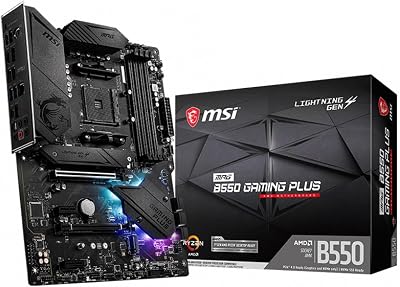
Storage: Two PCIe 5.0 M.2 slots plus two PCIe 4.0 M.2 slots. Four M.2 total without needing an add-in card.
Overclocking: ASUS’s AI Overclocking 3.0 handles auto-tuning well. Manual BIOS controls are deep and well-documented. PBO2 and Curve Optimizer integration is among the best on any AM5 board.
Gaming extras: ROG’s Armory Crate software has matured significantly. Fan control, RGB sync, and system monitoring are genuinely useful rather than bloatware.
Verdict: The default recommendation for anyone who wants X670E without overpaying for features they won’t use.
2. MSI MEG X670E ACE — Best for Extreme OC and Ryzen 9000 Flagship CPUs
The MEG X670E ACE is MSI’s flagship AM5 offering and it shows in every spec. If you’re running a Ryzen 9 9950X with a custom loop and pushing all-core overclocks, this is your board.
VRM: 22+2 power stages with 105A SPS MOSFETs — one of the highest-rated VRM implementations on any AM5 motherboard. Sustained all-core loads on the 9950X produce VRM temperatures that barely move. This is the board for delidded chips and LN2 experiments.
Connectivity: USB4 (2x), USB 3.2 Gen 2×2, Thunderbolt 4 headers, 10G LAN, Wi-Fi 7. The 10G LAN is a meaningful differentiator for content creators or anyone moving large files across a local network.
Storage: Three PCIe 5.0 M.2 slots plus two PCIe 4.0. Five M.2 total.
Overclocking: MSI’s BIOS is deep and hardware-focused. The SnapShot OC memory feature and per-CCX voltage control give experienced overclockers granular control that other boards don’t match.
Drawback: Price. The MEG ACE costs significantly more than the Crosshair Hero. For gaming — even at 4K with a flagship GPU — the additional VRM headroom produces zero in-game FPS difference. This board is for enthusiasts who want headroom, not gamers chasing frames.
3. Gigabyte X670E Aorus Master — Best Value at X670E Tier
The Aorus Master consistently undercuts the Crosshair Hero and MEG ACE on price while delivering X670E specs that hold up under scrutiny. It’s the value pick at the premium tier.
VRM: 18+2 power stages with 105A MOSFETs. Slightly less headroom than the ACE, but comparable to the Hero and sufficient for Ryzen 9 9950X at stock with modest PBO2 tuning.
Connectivity: USB4 (2x), USB 3.2 Gen 2×2, 2.5G LAN, Wi-Fi 6E (some revisions Wi-Fi 7 — check the SKU). Slightly behind the ACE on networking but covers all standard use cases.

Storage: Two PCIe 5.0 M.2 plus two PCIe 4.0. Four M.2 total — same as the Hero.
Software: Gigabyte’s APP Center and EasyTune have improved. BIOS is clean and straightforward. Aorus boards have historically had solid memory compatibility with high-speed DDR5 kits (6000–7200 MT/s range).
Who it’s for: The buyer who wants genuine X670E capability — PCIe 5.0 M.2, strong VRM, USB4 — but isn’t willing to pay the brand premium attached to ROG or MEG.
4. ASUS Prime X670-P WiFi — Best Budget X670 Entry for AM5
ASUS Prime X670-P WiFi
The Prime X670-P WiFi is the most pragmatic board in this list. It’s a standard X670 (not X670E), which means no mandatory PCIe 5.0 M.2, fewer USB lanes, and a simpler VRM — but the tradeoffs are acceptable for mainstream builds.
VRM: 14+2 power stages. Adequate for Ryzen 5 9600X and Ryzen 7 9700X at stock and moderate PBO2. Not recommended for 9900X or 9950X under all-core sustained load.
Connectivity: Wi-Fi 6E, USB 3.2 Gen 2 (10 Gbps), 2.5G LAN. No USB4. For gaming this is a non-issue — USB4 matters most for external GPU enclosures and Thunderbolt storage, not gaming peripherals.
Storage: One PCIe 5.0 M.2 slot (on some revisions) plus PCIe 4.0 slots. Check the exact revision — the X670-P WiFi has had minor spec adjustments across revisions.
Overclocking: EXPO and XMP memory support works reliably. CPU overclocking is functional but limited by the VRM compared to X670E boards. BIOS is clean and ASUS’s AI cooling features carry over from higher-end boards.
Who it’s for: Ryzen 5 or Ryzen 7 builders who want the AM5 platform without B650’s connectivity ceiling, but don’t need X670E’s top-tier VRM and PCIe 5.0 M.2 mandate. A smart bridge board for mid-range builds planning a future 9700X or 9600X drop-in.
5. ASRock X670E Steel Legend — Best Value-Oriented X670E
ASRock X670E Steel Legend
ASRock’s Steel Legend line punches above its price across chipset generations, and the X670E version continues that tradition. It’s a full X670E board — PCIe 5.0 GPU slot, PCIe 5.0 M.2, USB4 — at pricing that undercuts ROG and MSI flagships significantly.
VRM: 16+2+1 power stages with 70A MOSFETs. Lower per-phase amperage than the Hero or ACE, but the 16-phase count distributes load effectively. Suitable for 9900X at stock; aggressive 9950X all-core OC will push VRM temperatures higher than ideal.
Connectivity: USB4 (1x port — the notable limitation vs Hero/ACE’s dual USB4), USB 3.2 Gen 2×2, 2.5G LAN, Wi-Fi 6E.
Storage: Two PCIe 5.0 M.2 plus two PCIe 4.0. Four M.2 total — strong for a value-tier X670E.

Build quality: ATX form factor, decent heatsink coverage, clean layout without unnecessary RGB excess. The Steel Legend aesthetic is understated compared to ROG or Aorus branding.
Who it’s for: The budget-conscious enthusiast who wants X670E specs — specifically that PCIe 5.0 M.2 slot for a Gen 5 SSD — without the flagship price. Works best paired with Ryzen 7 or Ryzen 9 non-flagship CPUs.
Full Comparison Table
| Feature | ROG Crosshair X670E Hero | MSI MEG X670E ACE | Gigabyte X670E Aorus Master | ASUS Prime X670-P WiFi | ASRock X670E Steel Legend |
|---|---|---|---|---|---|
| Chipset | X670E | X670E | X670E | X670 | X670E |
| VRM Phases | 18+2 | 22+2 | 18+2 | 14+2 | 16+2+1 |
| MOSFET Rating | 110A | 105A | 105A | 60A | 70A |
| PCIe 5.0 GPU Slot | Yes | Yes | Yes | Yes | Yes |
| PCIe 5.0 M.2 Slots | 2 | 3 | 2 | 1 (revision-dependent) | 2 |
| Total M.2 Slots | 4 | 5 | 4 | 3 | 4 |
| USB4 Ports | 2 | 2 | 2 | 0 | 1 |
| USB 3.2 Gen 2×2 | Yes | Yes | Yes | No | Yes |
| Wi-Fi | Wi-Fi 7 | Wi-Fi 7 | Wi-Fi 6E/7 | Wi-Fi 6E | Wi-Fi 6E |
| LAN Speed | 2.5G | 10G | 2.5G | 2.5G | 2.5G |
| Recommended CPU | Up to 9950X | 9950X / Extreme OC | Up to 9950X | 9600X / 9700X | Up to 9900X |
| Price Tier | Premium | Flagship | Mid-Premium | Mid-Range | Mid-Premium |
What to Look For When Buying an X670 Motherboard
VRM quality over phase count. A 16-phase board with 105A MOSFETs beats a 20-phase board with 50A MOSFETs for high-core-count Ryzen. Always find the MOSFET model and its rated amperage.
PCIe 5.0 M.2 slot count. If you’re buying a Gen 5 SSD now or plan to, confirm the board has a PCIe 5.0 M.2 slot on the primary slot (closest to the CPU, direct CPU lanes). Secondary PCIe 5.0 M.2 via chipset lanes still benefits from Gen 5 speeds but doesn’t get the latency advantage of direct CPU attachment.
USB4 vs USB 3.2 Gen 2×2. USB4 (40 Gbps) is essential if you use external NVMe enclosures, eGPUs, or high-bandwidth peripherals. For standard gaming peripherals and displays, USB 3.2 Gen 2 (10 Gbps) is plenty.
Memory compatibility. DDR5 6000 MT/s is the sweet spot for Ryzen 9000 — it aligns with the Infinity Fabric clock at 2000 MHz. Confirm your board’s QVL (Qualified Vendor List) includes your specific kit at 6000 MT/s or higher. Boards with strong memory training algorithms (ROG and Aorus historically) make this easier with higher-speed kits.
Form factor and case compatibility. All five boards here are ATX. If your case is Micro-ATX or ITX, none of these apply — look at the X670E/B650 mini-ITX market instead.
BIOS maturity. AM5 launched with BIOS issues that have since been resolved. Check forums and Reddit (r/Amd, r/buildapc) for the current BIOS revision and any outstanding issues on your specific board before buying.
Verdict
Best overall: ASUS ROG Crosshair X670E Hero — the best X670 gaming motherboard for enthusiast builds pairing any Ryzen 9000 CPU without extreme overclocking. Strong VRM, dual USB4, two PCIe 5.0 M.2 slots, and a mature BIOS ecosystem make it the default recommendation.
Best for extreme OC / Ryzen 9 9950X all-core: MSI MEG X670E ACE — the 22+2 VRM and 10G LAN justify the flagship price if you’re pushing sustained all-core workloads or sub-zero overclocking.
Best value X670E: ASRock X670E Steel Legend — X670E specs at a significantly lower price. Minor compromises on VRM amperage and single USB4 port, but nothing that affects most gaming builds.
Best budget AM5 entry: ASUS Prime X670-P WiFi — if you’re pairing a Ryzen 5 or Ryzen 7 and don’t need X670E’s mandatory PCIe 5.0 M.2 mandate, this saves money without sacrificing the AM5 platform’s upgrade path.
The X670 chipset family has matured significantly since launch. BIOS updates have resolved most early AM5 issues, DDR5 pricing has normalized, and Gen 5 SSDs are now genuinely fast and reasonably priced. 2026 is a strong time to build on AM5.
Frequently Asked Questions
What does an X670 motherboard offer over B650?
X670 adds more PCIe 5.0 lanes, extra M.2 slots, more high-speed USB, and stronger VRMs. It targets high-end builds and heavy multitaskers rather than pure gaming.
Is X670 worth it for a gaming PC?
For pure gaming, B650 usually delivers the same experience for less. X670 is worth it if you want maximum expansion, multiple fast SSDs, or top-tier connectivity.
X670 or X670E for gaming?
X670E guarantees PCIe 5.0 on the graphics slot and storage, while X670 may use Gen4 for graphics. For gaming the difference is currently minimal, so X670 is the value pick of the two.
Does X670 support Ryzen 9000?
Yes. As an AM5 chipset, X670 supports Ryzen 7000 and 9000 CPUs, typically after a BIOS update, benefiting from AMD long-term socket commitment.
Related Articles
Looking for more on this topic? Browse the hand-picked guides below — each one applies the same scoring rubric used in this review.