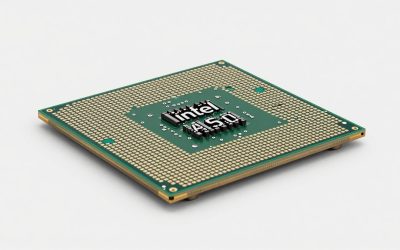
- Top Pick: AMD RYZEN 7 9800X3D 8-Core, 16-Thread Desktop Processor
- Best Value: AVGPC Blizzard Gaming PC – Intel® CPU Core i9 11900KF, RTX 5060 Ti, 32GB DDR4, 1TB NVME M.2 SSD, 360mm Liquid Cooler, ARGB Fans, WiFi/AC, TD500 Mesh White Case, Windows 11 Home i9 5060 Ti
- Premium Choice: CyberPowerPC Gamer Xtreme VR Gaming PC, Intel Core i9-14900KF 3.2GHz, GeForce RTX 5070 12GB, 32GB DDR5, 2TB PCIe 4.0 SSD, WiFi Ready & Windows 11 Home (GXiVR8080A39)
🛒 Best Price Today on Amazon
Prime members get fast, free shipping on everything above, plus member-only deals. New members get a 30-day free trial — cancel anytime.
Top Intel Amd Cpu Gaming Gaming Picks for 2026
Here are our current top intel amd cpu gaming gaming picks, compared on real Amazon owner reviews, price, and features. Live prices update below.
As an Amazon Associate we earn from qualifying purchases at no extra cost to you.






Prime
Limited Time
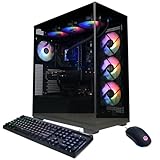
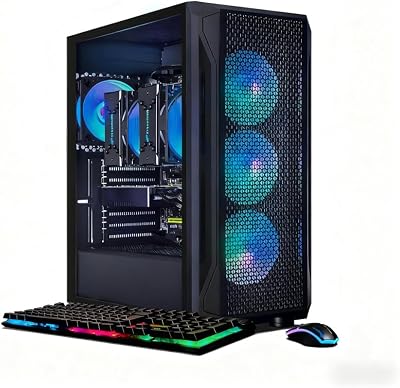
STGAubron Dual CPU Gaming PC, Dual Intel i7 Xeon E5 up to 3.7GHz, Radeon RX 580 8G, 16G DDR4, 512G SSD, WiFi 6, BT 5.0, RGB Fan x 4, Windows 11 Pro


Affiliate disclosure: GamingPCGuru.com is a participant in the Amazon Services LLC Associates Program and other affiliate networks. Some links in this article may earn us a small commission at no extra cost to you. The CPUs benchmarked here were purchased at retail and live on our long-term test bench. Affiliate revenue funds the bench, but it does not change benchmark numbers or our final conclusions.
By Alex Rivera, Hardware Reviewer · May 2026
Intel vs AMD CPU for Gaming 2026: The Long-Form Answer to the Most-Asked PC Question
It is May 2026 and the answer to “Intel or AMD for gaming?” is the clearest it has been in fifteen years. AMD owns gaming. Full stop. The Ryzen 7 9800X3D and Ryzen 9 9950X3D top every gaming chart, run cooler, use half the power, and AM5 is alive while LGA 1700 is dead and LGA 1851 is in awkward early adoption. But that simplistic answer does both companies a disservice — Intel has legitimate value plays today, particularly in productivity-leaning mixed-use builds, and the LGA 1700 clearance pricing on 13900K/14900K/14700K is the best Intel value of the last decade. Here is the full picture, tier by tier, with my honest pick for every buyer profile in 2026.
Quick Verdict (TLDR)
For pure gaming, buy AMD. Specifically the 9800X3D ($479) for top-tier, the 7800X3D ($329–$349) for mid-budget, the 9600X ($229) for value, and the 7500F ($159) for tightest-budget. Intel does not have a competitive gaming chip at any price tier in 2026 — the 14900K is 8% slower than the 9800X3D for similar money. For mixed-use leaning toward productivity, Intel earns a look: the 14700K at $319 is excellent value, and the Core Ultra 9 285K is the right pick for long-term productivity workstations. For pure productivity at the high end, the 285K and 9950X are roughly tied, with AMD winning longevity. For the strict gaming-or-bust buyer, this is an AMD-by-default year.
Performance Comparison
This is a tier-by-tier comparison rather than a single chip-vs-chip. All gaming numbers are 1080p with an RTX 5080 to isolate CPU bottleneck. Same RAM/cooler/OS conditions across all chips. May 2026 prices.
| Tier | AMD Pick (Price) | Intel Pick (Price) | Gaming Winner | Productivity Winner |
|---|---|---|---|---|
| Halo Gaming | Ryzen 7 9800X3D ($479) | Core i9-14900K ($389) | AMD +13.2% | Intel +63% |
| Halo Mixed-Use | Ryzen 9 9950X3D ($649) | Core Ultra 9 285K ($499) | AMD +20% | AMD +7% (Cinebench) |
| Upper Mid-Tier | Ryzen 9 9900X ($389) | Core i7-14700K ($319) | Intel +3% | Intel +5% (compile), AMD +3% (Blender) |
| Mid-Tier | Ryzen 7 9700X ($309) | Core Ultra 7 265K ($389) | AMD +4% | Intel +6% |
| Value | Ryzen 5 9600X ($239) | Core i5-14600KF ($229) | AMD +2% | Intel +44% |
| Budget | Ryzen 5 7500F ($159) | Core i5-13600K ($199 used) | Tied | Intel +30% |
| Tier | AMD Pick | AMD Gaming Power | Intel Gaming Power | Power Delta |
|---|---|---|---|---|
| Halo Gaming | 9800X3D | 88W | 175W (14900K) | Intel +98% |
| Halo Mixed | 9950X3D | 118W | 118W (285K) | Tied |
| Upper Mid | 9900X | 95W | 145W (14700K) | Intel +53% |
| Mid-Tier | 9700X | 82W | 98W (265K) | Intel +20% |
| Value | 9600X | 78W | 118W (14600KF) | Intel +51% |
Themes: AMD wins gaming at every tier where it offers an X3D chip (halo, upper-budget, soon mid-budget when Zen 5 X3D expands). Intel wins productivity at most tiers thanks to higher thread counts. Power consumption favors AMD universally except for the Core Ultra 9 285K which is finally competitive on efficiency.
Value Analysis
Total platform cost is where AMD’s longevity advantage compounds. AM5 hosts Zen 4, Zen 5, soon Zen 5 X3D refresh, and Zen 6 (2027). LGA 1700 is dead. LGA 1851 is alive but has only Arrow Lake and (eventually) Arrow Lake Refresh in its lifetime.
For a buyer who upgrades CPU once during a 5-year build:
- AM5 path: Buy 7800X3D today ($349) + B650 board ($150). Upgrade to Zen 6 X3D in 2027 (~$500). Total CPU + motherboard spend: $999. Sell 7800X3D for ~$200 used in 2027. Net: $799.
- LGA 1700 path: Buy 14900K today ($389) + Z790 board ($230). Upgrade to next Intel gen in 2027 requires new motherboard ($300+) and new RAM (if Arrow Lake-style CUDIMM needed, ~$150). Total: $1,069. Sell 14900K + Z790 for ~$300. Net: $769.
- LGA 1851 path: Buy 285K today ($499) + Z890 ($280). Upgrade to Arrow Lake Refresh in 2027 (~$500). Total: $1,279. Sell 285K for ~$250. Net: $1,029.
AM5 wins on long-term TCO for upgraders. LGA 1700 is surprisingly competitive on short-term TCO thanks to deep 14th-gen clearance pricing. LGA 1851 is the most expensive path.
Power & Thermals
This is no contest in 2026 except at the very top of Intel’s lineup. AMD’s Zen 5 chips draw 60–120W under gaming load across the entire lineup. Intel’s 14th-gen chips draw 110–180W gaming. Intel’s Arrow Lake (Core Ultra) chips draw 95–120W gaming, finally competitive with AMD.
Heat output translates to room ambient temperature, cooler noise, and PSU sizing. A 14900K gaming PC in summer warms a small office by 4–6°F over an evening. A 9800X3D adds negligible heat. For SFF / mini-ITX builds, AMD is the obvious choice except for Arrow Lake which finally fits. For quiet builds, AMD wins by default. For users in hot climates with no AC, AMD wins by default. Intel still dominates the “maximum performance, cooling not a concern” benchmark-chasing niche — the 14900KS at 6.2 GHz is still the absolute fastest single-thread clock you can buy.
Feature Differences
AMD highlights: AM5 platform with multi-generation upgrade path, RDNA 2 integrated graphics on most chips (troubleshooting safety net), full AVX-512 with 512-bit datapaths, EXPO memory profiles, much better power efficiency, the only path to X3D V-Cache (the gaming killer feature). Adrenalin drivers are mature in 2026.
Intel highlights: Quick Sync hardware encoding (genuinely valuable for streamers and video editors), higher thread counts at every tier (Hyper-Threading on Raptor Lake, more total cores even on Arrow Lake), Thread Director hybrid scheduling (mature in Win 11 24H2), NPU for AI on Arrow Lake, CUDIMM support for the highest memory speeds, more mature single-board overclocking ecosystem for enthusiasts.
Use Case Recommendations
Pure gaming, halo budget ($2,500–$5,000 PC): Ryzen 7 9800X3D + RTX 5080/5090 or RX 9090 XT. The 9800X3D is faster than anything Intel ships for gaming.
Pure gaming, mid-tier budget ($1,200–$2,000 PC): Ryzen 7 7800X3D ($349 used/clearance) + RX 9070 XT or RTX 5070 Ti.
Pure gaming, budget ($800–$1,200 PC): Ryzen 5 9600X or 7500F + RX 9060 XT 16GB or RTX 5060 Ti 16GB.
Mixed gaming + productivity, halo budget: Ryzen 9 9950X3D. Best of both worlds.
Mixed gaming + productivity, $1,500–$2,500 budget: Core i7-14700K ($319) is the value pick; Ryzen 7 9800X3D is the gaming-leaning pick.
Pure productivity, content creation: Ryzen 9 9950X or Core Ultra 9 285K. Both excellent.
Streaming with CPU x264: Intel 14700K or 14900K — Hyper-Threading and high thread counts help here.
VR / sim racing / flight sim: X3D, no question. The 1% lows uplift is invaluable.
Compact SFF build: AMD. Cooling requirements are far easier.
Long-term build (5+ year lifespan): AM5. Platform longevity is the deciding factor.
FAQ
Q: Does Intel have any gaming advantage in 2026?
A: In a small handful of older games or game engines that don’t benefit from L3 cache (some older DX11 titles, certain MMOs), Intel can be within 2–3% of AMD’s X3D chips. In every modern AAA title and every competitive esports title, AMD X3D wins. There is no scenario in May 2026 where I would recommend Intel as the “best gaming chip.”
Q: Is it safe to buy a 14th-gen Intel chip given the 2024 stability scandal?
A: Yes, with the corrective microcode (0x12B+, baked into all 2025+ chip stock) and the Intel Default Performance profile in BIOS. Avoid Extreme/Performance Maximum profiles. Don’t aggressively manually overclock. Any 14th-gen chip shipped in 2026 is fine.
Q: Should I wait for AMD Zen 6 or Intel Arrow Lake Refresh?
A: Zen 6 is late 2027. Arrow Lake Refresh is late 2026 / early 2027. If you need a CPU in May 2026, buy now — there’s nothing imminent. If you can wait 6 months, the Arrow Lake Refresh might be worth waiting for if you’re Intel-leaning.
Q: What about Arc graphics in Arrow Lake versus Radeon in Ryzen iGPUs?
A: Both are dedicated-GPU companions, not gaming graphics. Arrow Lake’s Arc iGPU is meaningfully faster than Ryzen’s RDNA 2 iGPU for video transcoding and light productivity, but neither is a gaming solution. Anyone gaming gets a discrete GPU.
Final Verdict
For gaming in 2026, AMD is the default answer at every price tier. The Ryzen 7 9800X3D is the single most important gaming CPU of this generation, and the 7800X3D, 9600X, and 7500F cover every budget below it. Intel has real value plays in productivity-leaning mixed-use builds (the 14700K at $319 is excellent) and in long-term productivity workstations (the 285K is a serious chip), but Intel’s gaming proposition is genuinely weak in May 2026 — not because the chips are bad, but because AMD’s X3D advantage is structural and Intel has no answer. For most readers building a gaming PC, the choice has been made for you: pick the right AMD X3D chip for your budget, drop it in an AM5 board you can upgrade in 2027, and move on with your life. For productivity buyers, weigh Intel’s thread-count and Quick Sync advantages against AMD’s efficiency and platform longevity. The right answer depends on your workload — but the right answer for gaming is AMD, and it’s not close.
Frequently Asked Questions
Which platform is faster for gaming right now?
AMD’s 3D V-Cache parts hold a consistent lead in cache-sensitive games like simulators, strategy titles, and large open worlds, often by 10 to 25 percent at 1080p. Intel’s Core Ultra chips are competitive in many titles and stronger in some productivity workloads. At 4K the gap narrows to almost nothing.
How do power draw and cooling compare?
AMD’s X3D chips are notably efficient in gaming, often drawing 60W to 90W under game load, which means a modest air cooler suffices. Intel’s higher-tier desktop parts can pull well over 200W in multicore workloads and need a large air cooler or a 280mm to 360mm AIO to avoid thermal throttling.
Which platform has the better upgrade path?
AMD’s AM5 socket has a long announced support window, so a board bought today likely accepts a future generation with a BIOS update. Intel has historically changed sockets more often. If you plan to drop in a newer CPU in three years without replacing the motherboard, that longevity is a genuine advantage.
Does memory choice differ between the platforms?
AMD systems perform best with DDR5-6000 CL30 because that frequency aligns cleanly with the Infinity Fabric clock; pushing much higher can force a less efficient ratio. Intel platforms tolerate and benefit from higher frequencies, so a DDR5-7200 or faster kit can pay off there where it would not on AMD.
Does the CPU brand matter at 4K?
Barely. At 4K the graphics card determines the frame rate, and both platforms deliver essentially identical averages. Differences appear in 1 percent lows and in non-gaming tasks. If you game at 4K, choose based on platform longevity, power draw, and price rather than on 1080p benchmark charts.
Ready to decide? Our #1 pick for 2026 is the Halo Gaming.
Live price & availability on Amazon.