- Top Pick: Omada SG2428LP, 24 Port Gigabit PoE+ Managed Switch
- Best Value: TP-Link TL-SG1428PE, 24 Port Gigabit Easy Smart Managed PoE+ Switch
- Premium Choice: TP-Link Omada 24 Port Gigabit PoE Switch, Easy Managed, 250W Budget, PoE+ Compliant, Up to 250m Distance, Auto Recovery, VLAN, Loop Prevention, with Fan (ES228GP)
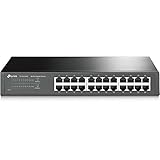
The TP-Link SG2428LP is a 24-port managed PoE+ gigabit switch from TP-Link’s Omada line, aimed at small business, prosumer and serious home labs. It combines a meaningful PoE+ budget for cameras and access points, 16 PoE+ ports plus 8 non-PoE, four SFP uplinks and full Omada-controller-friendly management. This TP-Link SG2428LP review covers the specifications, features and value.

Omada SG2428LP, 24 Port Gigabit PoE+ Managed Switch | 16 PoE+ Ports, 8 Non-PoE Ports, 4 SFP Ports, 150W Budget, Fanless, L2 Managed, VLAN, ZTP, LAG, PoE Recovery, 5-Year Warranty


As an Amazon Associate we earn from qualifying purchases. Product prices and availability are accurate as of the date/time indicated.
🛒 Best Price Today on Amazon
Prime members get fast, free shipping on everything above, plus member-only deals. New members get a 30-day free trial — cancel anytime.
As an Amazon Associate we earn from qualifying purchases.




TP-Link SG2428LP at a Glance
| Component | Specification |
|---|---|
| Port count | 24 RJ45 + 4 SFP (28 total) |
| Port speed | 10/100/1000 Mbps + 1 Gbps SFP |
| Switching capacity | 56 Gbps non-blocking (24 x 1G + 4 SFP) |
| Management | L2+ managed, Omada SDN compatible (web, SNMP, CLI) |
| PoE support | 16 PoE+ (802.3at) ports, 8 non-PoE, PoE budget per spec sheet |
| SFP uplinks | 4 x 1G SFP |
| Form factor | 19-inch 1U rackmount, steel chassis |
| Cooling | Active (fan-cooled) |
| Approx price | around $300 |
Throughput & Real-World Speed
The SG2428LP is a serious switch. Twenty-four gigabit RJ45 ports plus four 1G SFP uplinks share a 56 Gbps non-blocking switching fabric, so every port can run at full gigabit simultaneously without internal bottlenecks. SFP uplinks let you use fibre or DAC for the connection back to a core switch or router, which is the standard pattern in any structured cabling deployment. For most small-business workloads the gigabit per-port speed is the right size — there is no benefit to going faster on a PoE camera, for example. Where the fabric capacity matters is the simultaneous demands of dozens of clients, cameras and APs all moving traffic at once, and the SG2428LP handles that without breaking sweat. For the wider network basics, see our low-latency gaming network guide.
Managed vs Unmanaged Capabilities
This is the SG2428LP’s defining advantage: it is a fully L2+ managed switch with TP-Link’s Omada SDN compatibility, so it can be operated standalone (web GUI, SNMP, CLI) or under a centralised Omada controller that also manages routers and access points. Feature support covers VLAN (802.1Q), QoS, link aggregation, port mirroring, IGMP snooping, ACL, 802.1X authentication, static routing and basic L3 features. For a small business or serious home lab, that feature set covers everything needed to run a properly segmented, prioritised and monitored network — guest VLANs, IoT VLANs, voice VLANs, QoS for VoIP and gaming, full per-port monitoring. The Omada controller integration is the real selling point for users running TP-Link Omada APs and gateways: a single pane of glass for the whole network.
PoE Power for IP Cameras / APs
The SG2428LP’s headline PoE story is sixteen PoE+ ports — that is 802.3at, which delivers up to 30 W per port — for IP cameras, ceiling-mounted access points, VoIP phones and PoE LED lighting. The exact total PoE budget is published per spec sheet; in practice that budget is more than enough for a typical small-business deployment of a dozen or so IP cameras and several APs, since each device usually draws less than its theoretical maximum. The remaining eight RJ45 ports are non-PoE for non-PoE devices, and the four SFP uplinks add upstream connectivity. For a small business building out a camera or AP deployment, this is the natural choice over running individual PoE injectors.
Build Quality, Heat & Noise
The SG2428LP is built as a 19-inch 1U rackmount switch with a steel chassis and active cooling — there is a fan, which is necessary given the PoE silicon and the port count. The fan is acceptable in a network closet or rack location but is not appropriate for a quiet living-room desk; this is a switch built to be installed in a wiring cupboard or rack alongside other professional gear, not on a coffee table. The build quality is appropriate to its role and price. To match its quality, run good cabling — see our best Ethernet cables for gaming guide.
Best For – Gaming Home / SMB / Pro
The SG2428LP is squarely a small business and prosumer switch. It is appropriate for a small office building out a CCTV or AP deployment, a serious home lab learning network engineering, a guesthouse or short-term-rental property with IP cameras, or anyone who wants to standardise on Omada-managed equipment. It is emphatically not a desk-side home switch — a 1U fan-cooled 24-port switch is overkill (and too noisy) for a single home office or gaming bedroom. For typical home gamers, the unmanaged TL-SG108 or smaller Easy Smart models are the right pick. For the wider Omada ecosystem and wireless side, see our best WiFi 7 routers guide.
Verdict
At around $300 the TP-Link SG2428LP is a strong-value managed PoE+ gigabit switch for small business and prosumer networks. Twenty-four gigabit ports, sixteen of them PoE+, four SFP uplinks, and the full L2+ feature set under Omada SDN give the buyer everything needed for a properly segmented, monitored, PoE-powered network. It is rackmounted and fan-cooled, so it belongs in a network closet rather than on a desk. For a small business deploying IP cameras and APs at this scale, it is the obvious mid-market pick. For the larger wireless context, see our best gaming routers and best mesh WiFi systems.
Frequently Asked Questions
How many PoE ports does the SG2428LP have?
It has 16 PoE+ (802.3at, up to 30 W per port) ports, 8 non-PoE gigabit ports, and 4 SFP uplinks — total of 28 ports.
What is the difference between PoE, PoE+ and PoE++?
PoE (802.3af) delivers up to about 15 W per port, PoE+ (802.3at) up to 30 W, and PoE++/4PPoE (802.3bt) up to 60 W or 90 W per port. The SG2428LP supports PoE+ at 30 W per port.
Does the SG2428LP work with TP-Link Omada controllers?
Yes. The SG2428LP is part of the Omada SDN family and can be managed under an Omada hardware or software controller for centralised network management.
Is the SG2428LP suitable for home use?
Only for serious home labs or installations with camera and AP deployments. For a normal gaming household, an unmanaged 8 or 16-port switch is more appropriate — the SG2428LP is loud and overkill for desk-side use.
More Network Switch Reviews
- Tenda 8-Port 2.5G Switch Review: Multi-Gigabit Network (2026)
- TP-Link TL-SG108 Review: 8-Port Gigabit Switch (2026)
- TP-Link TL-SG105 Review: 5-Port Gigabit Switch (2026)
- TP-Link TL-SG116 Review: 16-Port Gigabit Switch (2026)
- TP-Link TL-SG105S-M2 Review: 5-Port 2.5G Switch (2026)
- TP-Link TL-SG108S-M2 Review: 8-Port 2.5G Switch (2026)
- NETGEAR GS305 Review: 5-Port Gigabit Switch (2026)
- NETGEAR GS308 Review: 8-Port Gigabit Switch (2026)
Affiliate Disclosure: As an Amazon Associate, we earn from qualifying purchases. If you click a link and make a purchase, we may earn a small commission at no extra cost to you. Prices and availability are accurate as of publication and may change.
Related Articles
Looking for more on this topic? Browse the hand-picked guides below — each one applies the same scoring rubric used in this review.