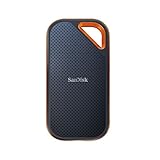
The SanDisk Portable SSD 1TB is SanDisk’s mainstream portable — a slim, non-rugged USB 3.2 Gen 2 drive that sits below the Extreme line in price and ruggedness. With more than 10,300 buyer reviews behind it and updated firmware addressing earlier issues seen in some predecessors, this version of the SanDisk Portable is the brand’s value-led portable SSD. This SanDisk Portable SSD review covers the capacity and interface, performance, durability and value.
- SanDisk Portable 1TB at a Glance
- Capacity and Interface
- Speed and Real-World Performance
- Durability, Form Factor and Portability
- Compatibility: PC, Mac, Console, Mobile
- Who Is the SanDisk 1TB Portable For?
- Pros and Cons
- Is the SanDisk 1TB Portable SSD Worth It?
- Frequently Asked Questions
- More Portable SSD Reviews
- Related Articles
- Related Articles

Sandisk 1TB Portable SSD, Up to 800MB/s Read Speeds, Black (Old Model) | External Solid State Drive, Compatible with Laptops & Tablets, Up to 2M Drop Protection, USB 3.2 Gen 2, USB-C to USB-A Cable


As an Amazon Associate we earn from qualifying purchases. Product prices and availability are accurate as of the date/time indicated.
🛒 Best Price Today on Amazon
Prime members get fast, free shipping on everything above, plus member-only deals. New members get a 30-day free trial — cancel anytime.
As an Amazon Associate we earn from qualifying purchases.





SanDisk Portable 1TB at a Glance
| Component | Specification |
|---|---|
| Capacity | 1TB |
| Interface | USB-C, USB 3.2 Gen 2 |
| Sequential read | Up to 800 MB/s |
| Sequential write | Up to 800 MB/s |
| Form factor | Slim compact chassis |
| Durability rating | 2 m drop protection, updated firmware addressing earlier issues |
| Compatible devices | Windows PC, Mac, PS4, PS5 (PS4 games / PS5 game storage), Xbox One, Android USB-C |
| Price | Around $154 |
Capacity and Interface
1TB is the right starting capacity for the SanDisk Portable — enough for a working photo library, a small to mid-sized game library or a complete laptop backup at a price below the Extreme. The interface is USB-C with USB 3.2 Gen 2, but unlike the Extreme the rated speed sits below the Gen 2 ceiling at up to 800 MB/s. That is still markedly faster than any portable hard drive and a useful step up from a Gen 1 SSD. For a comparison of where this drive fits in the USB standards landscape, see our USB 3.2 vs USB4 explained guide.
Speed and Real-World Performance
SanDisk rates the SanDisk Portable at up to 800 MB/s sequential read — slower than the 1,050 MB/s Extreme but a meaningful uplift over a portable hard drive. In real use the drive feels fast for everyday tasks: game transfers complete in a fraction of the time of a hard drive, photo library moves are quick, and 4K video plays back and edits comfortably in most NLEs. The lower headline speed means very large sustained transfers will take a little longer than on an Extreme. This version ships with updated firmware that addresses issues seen in some earlier SanDisk Portable variants, which is a meaningful positive for reliability.
Practical perspective on the 800 MB/s figure helps. It is roughly eight times the speed of a typical portable hard drive (~100 MB/s) and only about 25 per cent below the Gen 2 ceiling. For most everyday users — moving photos, transferring documents, syncing project folders, backing up a laptop — the difference between 800 MB/s and 1,050 MB/s is barely perceptible. The case for paying more for the Extreme is real only if you regularly move very large files or genuinely benefit from peak Gen 2 throughput.
Durability, Form Factor and Portability
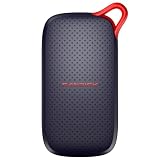
The SanDisk Portable is built for everyday carry rather than rugged use. The chassis is slim and light, with a clean matte finish and a small mounting slot. SanDisk rates it for 2 m drop protection but it is not IP-rated for dust or water. This is a desk-and-bag drive, not a fieldwork tool. For rugged alternatives, the Extreme and Extreme PRO are the natural step ups within SanDisk’s line. For more options, see our best rugged portable SSDs guide.
Compatibility: PC, Mac, Console, Mobile
The SanDisk Portable is broadly compatible. On Windows and macOS it works as a standard USB-C external SSD with no drivers required. On PS5 it works as PS5 cold storage and plays PS4 games directly — the same workflow as every other USB SSD, since PS5 games must run from the internal SSD or a Sony-approved internal M.2 NVMe expansion drive. On Xbox Series X|S the SanDisk Portable plays Xbox One games directly and stores (but does not play) Series X|S games. USB-C Android phones and iPads read it natively. For console-specific advice, see our best PS5 expansion SSD guide and best Xbox Series X|S storage guide guides.
On the firmware front, SanDisk distributes updates through its Memory Zone and Western Digital Dashboard tools on Windows and Mac. Checking for and applying firmware updates immediately after first use is a good habit for any portable SSD — it ensures the drive is running the latest tested firmware revision and helps avoid the kinds of issues seen in some earlier SanDisk Portable variants. This version ships with the addressed firmware in place, but keeping it current remains sensible.
Who Is the SanDisk 1TB Portable For?
The 1TB SanDisk Portable is for the buyer who wants a fast SanDisk portable SSD without paying the Extreme’s premium. Casual creators, students, backup users and gamers who want to add storage to a PC or console will find the up-to-800 MB/s speed and slim chassis comfortably exceed what a portable hard drive offers, at a price below most rivals. It is less ideal for buyers who need Gen 2-ceiling speeds (the Extreme is the upgrade) and for fieldwork users who need IP-rated ruggedness. The updated firmware in this version addresses earlier concerns about reliability. As a step up from a portable hard drive for general home and office use, the SanDisk Portable is one of the cleaner cost-versus-benefit purchases in the category — most of the upgrade in real-world feel, with little of the price premium of flagship portables.
Pros and Cons
Pros: Up to 800 MB/s on USB 3.2 Gen 2 — well above any portable hard drive; slim, light chassis; 2 m drop protection; updated firmware addressing earlier issues; broad cross-platform compatibility; competitive pricing; SanDisk brand backing and support tools.
Cons: Slower than the Extreme line’s 1,050 MB/s; no IP rating for dust or water; mainstream rather than premium feel; the updated firmware addresses earlier reliability concerns, but the line’s history is a factor buyers should weigh against newer rivals.
Is the SanDisk 1TB Portable SSD Worth It?
At around $154 the SanDisk 1TB Portable SSD is a strong choice for the buyer who wants a fast, slim, SanDisk-branded portable at a price below the Extreme. The updated firmware addresses the main concern in earlier versions. For higher Gen 2 speeds and ruggedness, the Extreme is the upgrade. For more budget-friendly internal NVMe alternatives, see our best internal NVMe SSDs for gaming guide. The brand strength of SanDisk and the slim, well-finished chassis also make the SanDisk Portable a sensible gift purchase or first portable SSD for new users stepping up from a portable hard drive.
Frequently Asked Questions
How is the SanDisk Portable different from the SanDisk Extreme?
The Extreme is faster (up to 1,050 MB/s versus up to 800 MB/s) and adds an IP65 rating and carabiner loop. The standard SanDisk Portable is slimmer, non-rugged and cheaper.
What about the firmware issues seen on earlier SanDisk Portables?
This version ships with updated firmware that addresses the reliability concerns raised in some earlier SanDisk Portable variants. Keeping firmware up to date through SanDisk’s tools remains a good practice.
Is the SanDisk Portable good for PS5?
Yes, as PS5 cold storage and to play PS4 games. PS5 games can be kept on it but only run from the internal SSD or a Sony-approved internal M.2 NVMe expansion drive.
Does the SanDisk Portable work with Mac and iPad?
Yes. It uses USB-C and works as a standard external SSD on macOS and on USB-C iPads with no drivers required.
More Portable SSD Reviews
- Seagate Storage Expansion Card 1TB Xbox SSD Review
- SanDisk 1TB Extreme Portable SSD Review
- SanDisk 2TB Extreme Portable SSD Review
- SanDisk 1TB Extreme PRO Portable SSD Review
- Samsung T7 Portable SSD 1TB Review
- Samsung T7 Shield 2TB Portable SSD Review (Rugged)
- Samsung T9 Portable SSD 1TB Review
- Crucial X9 Portable SSD 1TB Review
Affiliate Disclosure: As an Amazon Associate, we earn from qualifying purchases. If you click a link and make a purchase, we may earn a small commission at no extra cost to you. Prices and availability are accurate as of publication and may change.
Related Articles
Looking for more on this topic? Browse the hand-picked guides below — each one applies the same scoring rubric used in this review.