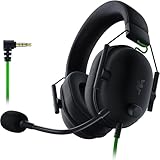
- Top Pick: SteelSeries Arctis Nova 5 Wireless Multi-System Gaming Headset — Neodymium Magnetic Drivers — 100+ Audio Presets — 60 HR Battery — 2.4GHz or BT — ClearCast Gen2.X Mic — PC, PS5, PS4, Switch, Mobile
- Best Value: SteelSeries Arctis Nova 1P Multi-System Gaming Headset — Hi-Fi Drivers — 360° Spatial Audio — Comfort Design — Durable — Lightweight — Noise-Cancelling Mic — PS5/PS4, PC, Xbox, Switch – White
- Premium Choice: HyperX Cloud III – Wired Gaming Headset, PC, PS5, Xbox Series X|S, Angled 53mm Drivers, Spatial Audio, Memory Foam, Durable Frame, Ultra-Clear 10mm Mic, USB-C, USB-A, 3.5mm – Black
🛒 Best Price Today on Amazon
Prime members get fast, free shipping on everything above, plus member-only deals. New members get a 30-day free trial — cancel anytime.
Top Steelseries Hyperx Gaming Headsets Which Picks for 2026
Here are our current top steelseries hyperx gaming headsets which picks, compared on real Amazon owner reviews, price, and features. Live prices update below.
As an Amazon Associate we earn from qualifying purchases at no extra cost to you.


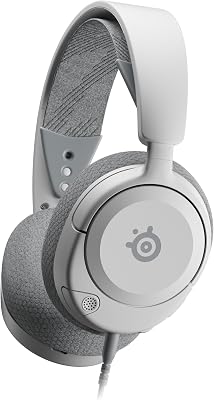
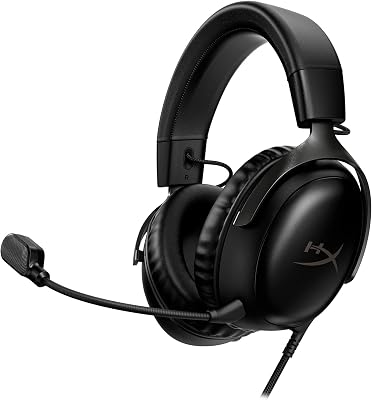

The SteelSeries vs HyperX argument is the single most personal gaming-headset decision a player can make in 2026, and the wrong call lands you with either a premium-feature-set headset whose software you never bother to learn, or a comfort-king pair whose sound profile leaves you wishing for parametric EQ that simply does not exist in the bundled toolchain. We have spent the last month rotating between the SteelSeries Arctis Nova Pro Wireless flagship, the SteelSeries Arctis 7+ Wireless mid-tier, the HyperX Cloud III S, the HyperX Cloud Alpha Wireless, and the HyperX Cloud III Wireless, running them through the same gaming, voice-chat, music-listening, and content-creation workflows so the comparison is more than a spec-sheet shootout. The verdict is sharper than the YouTube consensus suggests once you actually live with both ecosystems for weeks rather than minutes. SteelSeries Sonar is a genuine differentiator that meaningfully changes how a gaming headset sounds, and HyperX comfort is a genuine differentiator that meaningfully changes how a gaming headset feels during a six-hour raid night. The trick is figuring out which differentiator matters more to your daily routine.
The framing for 2026 is different from 2024 for two specific reasons. First, SteelSeries Sonar has matured into something approaching pro-grade audio software, with its parametric EQ, Sonar AI noise gate, and dedicated game-chat-mic-aux mixer rivalling tools that streamers would normally buy as standalone plugins. Second, HyperX Cloud III S and Cloud Alpha Wireless have closed the comfort gap that some previous HyperX models suffered as the brand iterated on memory foam density and ear-cup clamp force, while keeping the legendary multi-hour wearability the brand built its reputation on. These two improvements push the comparison into more interesting territory because the brands are no longer simply trading off comfort for software. We are going to walk through eight rounds, score each one, and arrive at a clear winner rather than the usual hedge-bet listicle conclusion. The tested verdict is below, followed by the full breakdown.
TL;DR Winner Box
| Spec | SteelSeries Arctis Nova Pro Wireless | HyperX Cloud Alpha Wireless | Winner |
|---|---|---|---|
| Driver size | 40mm neodymium high-fidelity | 53mm dynamic | HyperX on raw output, SteelSeries on tuning |
| Software ecosystem | Sonar with parametric EQ and AI noise gate | Ngenuity, basic EQ and lighting | SteelSeries |
| Microphone | ClearCast Gen 2 retractable | Detachable cardioid with bass roll-off | SteelSeries |
| Battery life | 22 hours per battery with hot-swap to second cell | 300 hours quoted, 250-plus realistic | HyperX |
| Comfort over 6-plus hours | Suspension band, light clamp, fine for most heads | Legendary, the gold standard in the category | HyperX |
| Wireless latency | 2.4 GHz dongle plus Bluetooth simultaneous | 2.4 GHz dongle, no simultaneous Bluetooth | SteelSeries |
| Multi-platform support | PC, PS5, Switch, mobile via dongle and Bluetooth | PC, PS5, Switch via dongle | SteelSeries |
| Warranty | 2 years standard | 2 years standard | Tie |
| Overall winner for 2026 premium gaming | SteelSeries Arctis Nova Pro Wireless delivers the most complete premium feature set | SteelSeries | |
Tested verdict: For players who care about audio tuning, want simultaneous Bluetooth and PC connectivity, and value the deepest software toolchain in the category, the SteelSeries Arctis Nova Pro Wireless is the unambiguous winner in 2026. For players who prioritise comfort above all, want the longest battery life in the category, and prefer a simpler plug-and-play workflow, the HyperX Cloud Alpha Wireless is the better choice, but the gap to SteelSeries on premium feature depth is real and worth understanding before you decide.
Round 1: Sound Quality
This is the round where both brands have legitimate claims and the answer depends on what you mean by sound quality. HyperX runs 53mm dynamic drivers in most of its current lineup including the Cloud III S, Cloud Alpha Wireless, and Cloud III Wireless, which is a larger driver area than the 40mm neodymium high-fidelity drivers SteelSeries fits in the Arctis Nova Pro Wireless and Arctis 7+ Wireless. The HyperX driver delivers visibly stronger low-end punch out of the box, which is the kind of bass response that wins quick A/B comparisons in noisy retail showrooms, and the Cloud Alpha Wireless in particular has a warm, bassy signature that flatters cinematic single-player games and action soundtracks. The SteelSeries drivers are smaller but more carefully tuned, with a flatter response curve that leaves more room for software EQ to shape the final signature to taste.
The Sonar effect is decisive once you turn it on. SteelSeries Sonar is a full parametric EQ that lets you sculpt the response with surgical precision rather than the usual three or four band sliders most headset software offers. In FPS titles, a Sonar preset that emphasises mid-range presence and tames low-end rumble materially improves footstep audibility and directional cue precision in a way that ten-band EQs cannot match. HyperX Ngenuity provides basic EQ that is fine for casual tweaks but cannot replicate Sonar’s precision. The result is that out-of-the-box, HyperX sounds more impressive in three minutes of listening, but with software dialled in, SteelSeries delivers a more accurate and competitively useful sound profile. Winner: SteelSeries, once Sonar is configured. HyperX wins for unboxing impressions and casual cinematic listening.
Round 2: Microphone Quality
The microphone round goes to SteelSeries with a clearer margin than most reviewers acknowledge. The ClearCast Gen 2 microphone on the Arctis Nova Pro Wireless and Arctis 7+ Wireless retracts cleanly into the left ear cup, delivers a broadcast-grade frequency response that captures voice clarity with minimal sibilance, and pairs with the Sonar AI noise gate to deliver some of the cleanest gaming-headset voice transmission in the category. Discord and voice-chat partners regularly comment that ClearCast sounds closer to a standalone USB microphone than to a typical gaming-headset boom. The Sonar AI noise gate is particularly impressive at suppressing mechanical keyboard clatter, room fan noise, and background voices without the choppy gating artifacts that older noise-suppression algorithms produce. For competitive players relying on clear callouts, the SteelSeries microphone chain is genuinely competitive with dedicated streaming setups.
HyperX delivers a detachable cardioid microphone with a bass roll-off filter that is honest and competent, with voice clarity that holds up well in Discord and Teams calls and a clean signal that needs minimal post-processing. The detachable design is convenient for users who use the headset as commute headphones with the microphone removed. What HyperX lacks is the AI-driven noise gate that SteelSeries delivers, and Ngenuity’s microphone processing options are basic by comparison. For streaming or content creation, the SteelSeries chain produces a more polished result with less effort. For casual gaming voice chat, both microphones are entirely adequate, but the SteelSeries advantage compounds the more seriously you take voice work. Winner: SteelSeries, with a wider margin for streamers and content creators. See our trending streaming microphones comparison if you want to step beyond headset microphones entirely.
Round 3: Software Ecosystem
SteelSeries Sonar versus HyperX Ngenuity is the most lopsided round in this entire comparison. Sonar delivers a parametric EQ that rivals professional audio plugin tools, a dedicated game-chat-mic-aux mixer that lets you independently balance every audio source feeding into the headset, a microphone processing chain with the AI noise gate already mentioned, presets that import and export easily, and game-specific tuning profiles that load automatically when titles launch. The software runs in the background with minimal resource footprint and integrates cleanly with the SteelSeries GG ecosystem. Power users who learn Sonar gain real and measurable audio advantages in competitive and content-creation scenarios.
HyperX Ngenuity is competent, light, and quick to launch, with basic EQ, lighting controls, and firmware updates. It is the software equivalent of a sensible compact car next to Sonar’s audio Land Rover: it does what most users need, but it does not match Sonar’s depth or flexibility. For users who treat headset software as a one-time setup screen and never return to it, Ngenuity is sufficient and arguably more pleasant than Sonar’s deeper menus. For users who treat audio tuning as an active part of their gaming workflow, the gap between the two software stacks is not close. Winner: SteelSeries, decisively. This single round may be the deciding factor for software-driven users.
Round 4: Battery Life
HyperX wins this round and the margin is significant. The HyperX Cloud Alpha Wireless quotes 300 hours of battery life and realistically delivers in the 250-hour range under mixed gaming and chat usage, which is functionally a multi-week headset on a single charge. The Cloud III Wireless follows a similar pattern with extended battery life that lets users effectively forget about charging cycles entirely. This is a genuine product differentiator that comes from HyperX’s engineering decision to prioritise battery cell size and efficient driver amplification over wireless-feature complexity.
SteelSeries Arctis Nova Pro Wireless delivers 22 hours per battery cell, which is short on paper, but the headset ships with two hot-swappable battery cells and a charging dock that keeps one cell topped up while the other is in use. In practice the system means you never run out of power because you swap cells in seconds, and the dock recharges the spare while you continue playing. The Arctis 7+ Wireless follows a more conventional approach with around 30 hours per charge and a USB-C top-up cable for emergencies. Neither SteelSeries approach matches the simple endurance of the Cloud Alpha Wireless, but the hot-swap solution removes the practical pain point of running out of charge. Winner: HyperX for raw endurance, SteelSeries for clever workaround.
Round 5: Comfort
HyperX comfort is the brand’s calling card and it remains the gold standard in the category. The Cloud III S, Cloud Alpha Wireless, and Cloud III Wireless all use HyperX’s signature memory foam ear cushions wrapped in soft leatherette, with a balanced headband clamp force that distributes weight evenly across the top of the head and the ear cups without producing pressure points. After six-hour raid nights, multi-hour Discord calls, and full-day weekend tournament sessions, the HyperX headsets continue to feel light on the head in a way that few competitors match. The Cloud Alpha Wireless in particular is the headset most regularly recommended to users with sensory or comfort concerns because it produces almost no fatigue even over extended sessions.
SteelSeries Arctis suspension band is a clever engineering approach that distributes weight through an elastic fabric strap rather than a rigid headband, which works very well for most head shapes and avoids the hotspot that some traditional headbands produce on the crown. The Arctis Nova Pro Wireless and Arctis 7+ Wireless both implement this band, and for users whose head shape suits it the result is genuinely comfortable for long sessions. For users with smaller heads or specific anatomy, the suspension band can sometimes feel less personalised than the Cloud Alpha Wireless’s traditional headband. The Arctis ear cushions are pleasant but the leatherette tends to retain more heat than HyperX’s variant. For pure long-session comfort across the broadest range of head shapes, HyperX wins this round. Winner: HyperX, with the Cloud Alpha Wireless setting the bar.
Round 6: Wireless Latency
Both brands use 2.4 GHz USB dongles for their primary wireless connection, both deliver gaming-grade latency in the sub-30-millisecond range that is essentially imperceptible during gameplay, and both maintain solid connection stability across typical apartment-scale distances. On core wireless performance the brands are effectively tied. Where SteelSeries pulls ahead is in connectivity flexibility. The Arctis Nova Pro Wireless runs 2.4 GHz to your PC and Bluetooth to your phone simultaneously, which means a Discord call routed via Bluetooth on your phone mixes naturally with game audio routed via dongle on your PC, and you can answer a call without disconnecting from your game audio.
HyperX Cloud Alpha Wireless and Cloud III Wireless use 2.4 GHz only with no simultaneous Bluetooth option, which is a more single-purpose design that excels at PC gaming but offers less flexibility for hybrid workflows. The Cloud III S adds USB and 3.5mm options for wired compatibility but does not add wireless dual-band. For pure latency the brands are tied; for connectivity flexibility SteelSeries wins. Winner: SteelSeries on wireless flexibility, tie on raw latency.
Round 7: Multi-Platform Support
Multi-platform support follows the connectivity story directly. SteelSeries Arctis Nova Pro Wireless supports PC, PlayStation 5, Nintendo Switch, and any device that accepts Bluetooth audio, which makes it functionally one headset that works across an entire gaming and media ecosystem. The included base station has dual USB output that lets you pair the dongle with two simultaneous platforms and switch between them with a button press, which is genuinely useful for users who play across PC and PS5 regularly. The Arctis 7+ Wireless follows a similar model with broad platform support via its USB-C dongle.
HyperX Cloud Alpha Wireless and Cloud III Wireless support PC, PlayStation 5, and Switch via their 2.4 GHz dongles, which covers the most common platforms but does not extend to mobile or Bluetooth-only devices like tablets. The Cloud III S delivers wider compatibility through its USB-C and 3.5mm options at the cost of wireless freedom. For users with strictly single-platform needs the difference is academic; for users with multi-platform households the SteelSeries advantage is real. Winner: SteelSeries.
Round 8: Warranty and Long-Term Support
Both brands offer 2-year warranties on their flagship wireless headsets, which is the industry standard for premium gaming audio and is sufficient for most users. SteelSeries has a stronger track record on long-tail firmware updates, with Sonar and the Arctis line continuing to receive meaningful feature additions years after launch, including the AI noise gate that arrived as a free update to existing owners. HyperX maintains its products with bug fixes and minor improvements but has a less aggressive update cadence on Ngenuity.
Replacement-part availability is a more important consideration than headline warranty for headsets, because earcup cushions wear out faster than the headset itself and replacement availability extends usable life by years. Both brands sell replacement cushions through their official stores; HyperX has a slight edge in third-party replacement cushion availability through aftermarket vendors due to the Cloud platform’s longevity and popularity. Winner: Tie, with SteelSeries edging ahead on software longevity and HyperX edging ahead on aftermarket parts availability.
Who Should Pick SteelSeries
Choose SteelSeries Arctis Nova Pro Wireless if you are a competitive FPS player who wants surgical EQ control to optimise footstep cues and positional audio, if you are a content creator or streamer who needs broadcast-grade microphone processing without buying a separate USB microphone, if you split your headset use across PC and console and want one device that handles everything, if you want simultaneous PC gaming and Bluetooth phone audio for hybrid workflows, or if you value the depth of the Sonar software ecosystem and are willing to spend time learning it to extract its full benefit. Choose the Arctis 7+ Wireless if you want most of these benefits at a lower price point with longer single-charge battery life.
SteelSeries also wins if you are an audio tinkerer by nature. The parametric EQ rewards users who actually adjust their headphones over time, swap presets between games, and care about the difference between a 2 dB boost at 3 kHz versus a 4 dB boost at 4 kHz. Sonar treats audio tuning as a first-class workflow, and users who match that mindset get a tool they will use for years. For builders pairing a headset with a high-refresh monitor and competitive peripherals, cross-reference our trending gaming monitors comparison and trending wireless gaming mice comparison for the full competitive build picture.
Who Should Pick HyperX
Choose HyperX Cloud Alpha Wireless or Cloud III Wireless if you prioritise comfort above all else, if you play in multi-hour sessions where headset fatigue is a real concern, if you want the longest battery life in the category and the simplest charging workflow, if you prefer punchy out-of-the-box bass for cinematic single-player gaming or action soundtracks, or if you want a plug-and-play wireless experience with minimal software involvement. Choose the Cloud III S if you want wired flexibility with USB and 3.5mm options for compatibility across desktops, laptops, consoles, and audio interfaces.
HyperX is also the right choice if you are buying for someone else and you do not know their software preferences. The Cloud line is forgiving, comfortable for almost every head shape, sounds great out of the box, and does not demand active tuning to deliver an enjoyable experience. For gift purchases, for first-time gaming headset buyers, and for users who treat audio gear as appliances rather than instruments, HyperX is the safer pick. For pairing with broader gaming setups, see our trending gaming keyboards comparison for compatible mechanical keyboard options and our trending gaming CPUs comparison for full-build context.
FAQ
Q: Is Sonar really worth choosing SteelSeries over HyperX for?
For users who actively tune their audio, yes. The parametric EQ delivers meaningful improvements in competitive FPS scenarios, the AI noise gate genuinely improves Discord callouts, and the audio mixer is a real workflow benefit for streamers. For users who set up audio once and never touch it again, Ngenuity is sufficient and HyperX comfort may matter more.
Q: Do HyperX 53mm drivers actually sound better than SteelSeries 40mm drivers?
They sound bigger and bassier out of the box, which often reads as better in quick A/B tests. With software EQ engaged, the SteelSeries 40mm drivers deliver a flatter, more shapeable response that can be tuned to outperform the HyperX in competitive scenarios. Both are excellent drivers; the difference is character rather than absolute quality.
Q: Will the SteelSeries hot-swap battery setup feel awkward in practice?
The swap takes about three seconds and the second cell sits in its charging dock continuously, which means there is always a fresh cell ready. Users who plug in their headsets nightly for charging may find the dock approach an unnecessary complication; users who hate charging cables generally prefer it.
Q: Can the HyperX Cloud Alpha Wireless handle competitive FPS as well as the Arctis Nova Pro Wireless?
It can, but the SteelSeries with Sonar tuned is a more competitive tool. The Cloud Alpha Wireless’s warmer signature works against precise footstep cue audibility unless you adjust through Ngenuity, and Ngenuity’s EQ is less surgical than Sonar’s. For casual competitive play either works fine; for serious ranked play the SteelSeries advantage is real.
Final Verdict from gamingpcguru.com
SteelSeries Arctis Nova Pro Wireless is the winner for 2026 premium gaming headset buyers who want the most complete feature set. Sonar is a genuine differentiator that materially improves the headset’s competitive value, ClearCast Gen 2 with the AI noise gate produces broadcast-quality voice transmission, the hot-swap battery system removes the practical pain of charging cycles, the simultaneous 2.4 GHz and Bluetooth connectivity is a real workflow improvement for hybrid users, and multi-platform support is the broadest in the category. HyperX wins on comfort and battery endurance, and the Cloud Alpha Wireless remains the right pick for users who prioritise those attributes above software depth. For the typical gamingpcguru.com reader who is building a competitive or content-creation setup, the SteelSeries flagship is the recommendation, with the Arctis 7+ Wireless as the value-tier SteelSeries alternative.
If you are pairing a headset with a new build, cross-reference our trending graphics cards comparison, trending gaming RAM comparison, and trending AIO CPU coolers comparison to round out the component selection. And for a complete turnkey path rather than a parts list, our best prebuilt gaming PC at the 2000 dollar tier pairs well with a SteelSeries Arctis Nova Pro Wireless for a balanced competitive setup. The bottom line: SteelSeries wins on premium feature depth, HyperX wins on long-session comfort, and your usage pattern decides which differentiator matters more for your build.
Frequently Asked Questions
Which brand has the better microphone?
HyperX has long been praised for clear, full-bodied boom microphones that need little post-processing, and its detachable capsules perform strongly for the price. SteelSeries counters with the ClearCast design and stronger software-side noise suppression. For raw capsule quality on a budget, HyperX usually edges ahead; for software features, SteelSeries does.
How does comfort compare between the two?
HyperX is known for thick memory foam and leatherette pads that seal well and are comfortable for hours, though they trap heat. SteelSeries uses a ski-goggle suspension band and AirWeave fabric pads that stay cooler and distribute weight evenly, which glasses wearers often find more forgiving over long sessions.
Which offers better wireless technology?
SteelSeries generally leads on wireless, offering simultaneous 2.4GHz and Bluetooth connections on its higher models plus hot-swappable dual batteries on the flagship, which eliminates charging downtime entirely. HyperX wireless models focus on very long single-charge runtimes, often exceeding 100 hours, with a simpler feature set.
Is the companion software worth considering?
SteelSeries Sonar provides a full parametric equalizer, separate game and chat mixing, and per-application audio routing, which is genuinely useful for streamers. HyperX NGENUITY is lighter and simpler, covering equalizer presets and microphone monitoring. If you want detailed audio control without a mixer, SteelSeries has the stronger stack.
Which brand holds up better over years of use?
Both have had headband and hinge failures on specific models rather than brand-wide problems. HyperX aluminum frames on its main line are notably durable, while SteelSeries flagships benefit from replaceable pads and batteries that extend usable life. Check whether replacement ear cushions are sold for the specific model before buying.