Theatre of War is the 2007 real-time tactics game from 1C Company: more than forty World War II missions built around unit-level realism, soldiers who gain experience and promotions, and battles drawn from actual records and maps. It still sells on Steam today, which raises the obvious question for a Linux player: is there a native build in there, or is this a Proton game?


The record answers that cleanly, and the answer is Proton. Every layer Valve publishes for this app — the purchase package, the platform flags, the requirements tabs and the depot table — describes a Windows game and nothing else. There is no withdrawn port to reconstruct: the Linux side of this record was never written. What follows is the layer-by-layer evidence, the small community file around the Windows build, and the one storefront trap the game’s name sets for buyers.
As an Amazon Associate, we earn from qualifying purchases.
Quick answer
Theatre of War has no native Linux build: the Steam package, platform flags and depot table are Windows-only at every layer, and no Linux file exists on the record. The route in is Proton — the ProtonDB file reads Gold headline, Platinum best-reported, on just six reports. Valve has never Deck-tested the game, so no badge exists.
What the Steam record actually sells
Start with the layer that governs a purchase. The game’s base package (4555, sold as “Theatre Of War”) reads windows true, mac false, linux false on packagedetails, and it grants the base app alone. The app-level platform flags repeat the same mask exactly. A second package, the Theatre of War Collection (14301), bundles this game with its sequels — Theatre of War 2: Africa 1943, Kursk 1943, Battle for Caen, Centauro and Theatre of War 3: Korea — separate game apps with their own records, not add-ons to this one. Nothing in either package sells a Linux build.
The requirements tabs tell the same story in the plainest shape. The Windows field is genuinely populated: Windows XP SP3 minimum and 64-bit Windows 7 recommended, a 2 GHz Pentium 4 or Athlon XP, 1 GB of memory rising to 4 GB, a dedicated card with full OpenGL 2.1 support, DirectX 9.0c and 4 GB of storage. The Mac and Linux requirements fields are empty lists outright — no tab in any form, no populated-field trap, no leftover text from a port that was planned and cut.
The depot table closes the question. SteamDB lists exactly two depots: the main content depot (46291) at 3.73 GiB and a Russian language depot (46292) at 444.53 MiB, 4.16 GiB on disk in total. Neither carries an operating-system split, and there is no Linux depot of any size — not real, not emptied, not stranded. The icon set agrees: client icon, clienttga, icon, logo and logo_small are registered, and no LinuxClientIcon, so no leftover-icon trap can form either. One modern wrinkle: the public branch was rebuilt as recently as September 2025 (build 19841158), a maintenance touch on an eighteen-year-old game — and that rebuild changed nothing about platforms. The record lists no DRM notice and no account notice, SteamDB’s detection finds only the JVM SDK behind the engine, and its categories are single-player, multiplayer, co-op and LAN play with Steam Cloud and a level editor.
The family sweep is the shortest in this series. The base record exposes no DLC array at all, and SteamDB associates no add-on apps: the expansions players remember were sold as the standalone sequels in the Collection package, under their own app ids. One associated app rides along in SteamDB’s package listing — the Theatre of War: Editor tool (46390) — but it publishes no store record of its own, so there are no flags to read. With no soundtrack or artbook app in sight, the family is effectively size zero: nothing attached to this game claims Linux support either.
Anti-cheat, from all three sources
All three sources are silent, and the article presents that as silence rather than a ruling. Steam names no anti-cheat: no category, no DRM notice, no account requirement. SteamDB’s technology detection finds only the JVM SDK. The AreWeAntiCheatYet dataset (games.json, master branch, 1,167 games) carries no entry for this app. For a 2007 tactics game whose multiplayer is LAN and peer play rather than a protected ladder, that silence is the expected shape.
The Proton file: Gold, on six reports
ProtonDB’s summary API reads in full for this app, and it is one of the thinnest files in the cluster: headline tier Gold, best-reported Platinum, trending Gold, on just six reports, with confidence rated low. The shape is still informative. A Platinum best-reported tier means some filers ran the Windows build under Proton without meaningful trouble, consistent with an old, undemanding DirectX 9 title. But six reports is a provisional evidence base: real, current, and one bad update away from being rewritten by a single new filing.
One check could not be completed. The ProtonDB game page renders as a script shell to every fetch route, so whether its requirements block carries the “Natively Supports:” heading could not be verified this session, and the article makes no claim about it. It does not matter to the verdict — Steam’s record is unambiguous — but the gap is disclosed rather than papered over.
Steam Deck: no test on file
There is no Deck verdict to report, because Valve has never published one for this game. Three routes converge on that: Valve’s compatibility endpoint returned empty responses on repeated reads this session; SteamDB publishes no republication sheet for the app; and the game’s own store page prints no Deck compatibility section at all. Per the standing rule for an untested record, this article claims no badge in either direction — not Playable, not Unsupported. The practical reading is simpler than a badge would be: this is a mouse-driven tactics game whose record lists no controller support of any kind, so the desktop is its natural home regardless of what a future test might say, and the gear below is framed for the desk.
The other storefront: a different game wearing the name
GOG needs care here, because the natural product address resolves — to the wrong game. The GOG page titled “Theatre of War” is a 1992 Artech Studios board-game adaptation, re-released by Ziggurat Interactive and powered by DOSBox: a tile-based, chess-like strategy title from a different studio, decade and genre, sold for Windows only. It is not this game, and its existence proves nothing about the 2007 title either way. Ruled properly — GOG’s catalogue API searched for the 2007 game, returning no matching product — GOG sells no edition of 1C’s Theatre of War at all. Steam is the only storefront carrying the game.
Gear for a desktop tactics game
The picks below follow the record: a keyboard and mouse game with no controller support listed, played at a desk under Proton.
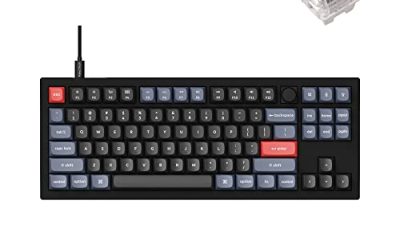
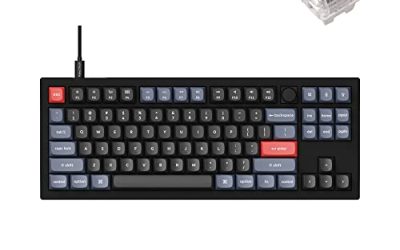
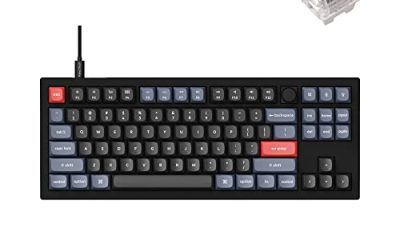
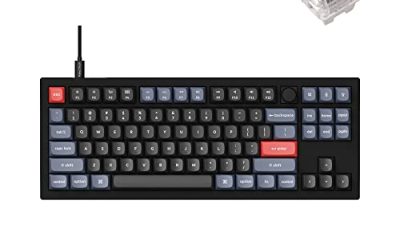
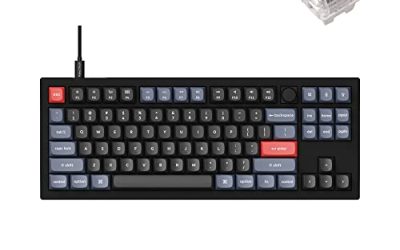
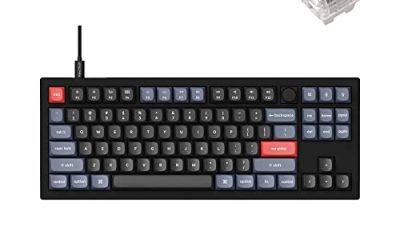
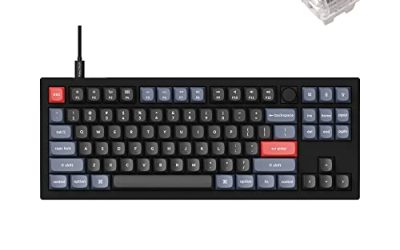
Keychron V3
The keyboard pick for desktop sessions: a tenkeyless board with QMK and VIA support lets you remap keys at the keyboard level, which keeps working across every Linux install you plug it into.
Specs
- Tenkeyless layout with rotary knob
- QMK and VIA remapping support
- Hot-swappable K Pro Brown switches
- Wired USB-C connection
- Maker-rated 1,000 Hz polling
Logitech G502 HERO
The primary input pick. Theatre of War is unit micromanagement with a mouse — hundreds of soldiers and vehicles to select, group and order — and eleven programmable buttons cover the inputs a long mission repeats.
Specs
- HERO optical sensor, up to 25,600 DPI
- 11 programmable buttons
- Adjustable weight system
- Wired USB connection
- On-board memory profiles
8BitDo Ultimate 2 Bluetooth Controller

A wider-library pick rather than a pick for this game, which lists no controller support: the pad covers the rest of a Linux library from the couch, with modern sticks and triggers plus back buttons for menu shortcuts.
Specs
- Connectivity: Bluetooth wireless and USB-C wired
- Joysticks: TMR electromagnetic, anti-drift design
- Triggers: Hall effect, with mode switching
- Extras: two remappable back buttons, motion control
- In the box: charging dock included
Xbox Wireless Controller, Carbon Black

The safest guest pad in PC gaming: Steam Input support is universal and it pairs over Bluetooth or its own wireless standard. Like the pad above, it is here for the wider library, not for this mouse-driven record.
- Connectivity: Xbox Wireless and Bluetooth
- Port: USB-C for wired play
- Controls: hybrid D-pad, dedicated Share button
- Power: AA batteries or optional rechargeable pack
Samsung T9 Portable SSD 2TB

For moving a Linux game library between machines, or keeping an offline backup of installers, a fast USB-C drive is the simple answer. The headline figure needs a Gen 2×2 host port; on a lesser port the drive runs at that ceiling.
Specs
- Capacity: 2 TB portable SSD
- Interface: USB 3.2 Gen 2×2, USB-C connector
- Maker-rated speeds: up to 2,000 MB per second read, 1,950 MB per second write
- Features: Dynamic Thermal Guard, maker-rated drop resistance
How to choose
Choose the Steam copy, because it is the only edition on sale anywhere and the exact build the ProtonDB file describes. Buy the base package unless you want the sequels, in which case the Collection package bundles all five follow-ups under their own records. Install under Proton and leave the compatibility tool at its default first; the Gold headline with a Platinum ceiling says that is the expected path. If a launch fails, the levers are the usual ones for a DirectX 9 title of this age — a different Proton branch, then the community file’s workarounds. Play it at a desk, with a mouse: the record lists no controller support, and no Deck badge exists to plan around.
Who should skip
Skip it if you need a native Linux build on principle: there is none, there never was one, and the September 2025 maintenance rebuild shows the publisher still touches this game without adding platforms. Skip it if your tactics time is handheld time — Valve has never reviewed it on Deck and the interface is mouse-first. Skip it if a six-report Proton file feels too thin to buy on. And skip the GOG page with this name entirely: it is a different, older game.
FAQ
Does Theatre of War run natively on Linux?
No. The purchase package, the platform flags and the depot table are Windows-only, the Linux requirements field is an empty list, and no Linux depot or Linux client icon exists on the record. The game was never ported, so the only route is running the Windows build under Proton.
How well does it run under Proton?
The ProtonDB summary reads Gold headline and Platinum best-reported across six reports, with low confidence. That points to a game current Proton builds handle well, but the file is thin enough that the tier should be read as provisional rather than settled.
Is Theatre of War verified or playable on Steam Deck?
Neither — Valve has never reviewed it. The endpoint returns nothing for the app, SteamDB publishes no test sheet, and the store page shows no Deck section, so no badge is claimed. The record also lists no controller support, which makes the desktop the sensible place to play it.
Can I buy a DRM-free copy on GOG instead?
No. GOG sells no edition of the 2007 game. The GOG page carrying this exact name is a different title — a 1992 board-game adaptation re-released by Ziggurat Interactive — verified by its studio, date and description, so check the identity of any same-name listing before buying.
Final verdict
Theatre of War on Linux is a simple record honestly told: a well-regarded 2007 tactics game that exists on Steam as a Windows build only, at every layer Valve publishes, with no port and no second storefront edition. Proton is the whole route, and the small Gold file behind it — Platinum at its best, six reports deep — says the route works. Buy it on Steam, play it at a desk, and let the thinness of that file set your expectations: this is a legacy title the compatibility layer carries, not a Linux release anyone maintains.
Product and ASIN Reference
| Product | ASIN |
|---|---|
| Keychron V3 | B0B2DMMMG2 |
| Logitech G502 HERO | B07GBZ4Q68 |
| 8BitDo Ultimate 2 Bluetooth Controller | B0F194QFT2 |
| Xbox Wireless Controller, Carbon Black | B08DF248LD |
| Samsung T9 Portable SSD 2TB | B0CHFS9K14 |