Silent Hunter III is Ubisoft’s 2005 U-boat simulation, the entry that defined the series: a full Atlantic campaign, manual targeting, a crew managed watch by watch. Two decades on, the Linux question is narrow — does the copy Steam sells today carry a native Linux build, and if not, how well does the Windows build travel through Proton and onto the Steam Deck?
The record behind this game is unusually small, and that smallness makes it unusually legible: one purchase package, one content depot and one platform flag set, all saying the same thing. What follows reads each layer in turn — package, depots, family, anti-cheat, the ProtonDB file, Valve’s Deck sheet and the second storefront.
As an Amazon Associate, we earn from qualifying purchases.
Quick answer
Silent Hunter III has no native Linux or Mac build: Steam’s package, depot and platform flags are Windows-only, and the Linux requirements field is an empty list. The practical route is Proton — ProtonDB rates the game Platinum across 29 reports — and Valve grades it Playable on Steam Deck.
One package, one depot, one platform
Start with the layer that governs a sale. The game’s single purchase package, package 809, reads windows true, mac false, linux false on packagedetails, and grants the base app alone. The app-level platform flags repeat the package exactly. A purchase today delivers the Windows build, and no other build exists anywhere in the record.
The requirements fields agree, in the plainest possible shape. The Windows field is genuinely populated with period hardware — Windows 2000 or XP, a Pentium III at 1.4 GHz, 512 MB of memory, a 64 MB graphics card, DirectX 9.0 and 1.5 GB of drive space. The Mac requirements field is an empty list outright. The Linux requirements field is also an empty list outright — not a populated tab with no build behind it, just absence. There is no Linux tab in any form.
The depot table closes the question. SteamDB lists exactly one content depot, depot 15211, holding 2.43 GiB with no operating-system split — the whole game in a single Windows payload. There is no Linux depot of any size, no emptied or stranded depot, and the icon set registers no LinuxClientIcon, so no leftover-icon trap can form. The public branch has been frozen on build 252099 since May 2014. SteamDB also notes the game runs without Steam servers, and the store lists English and German as its only languages.
Anti-cheat needs three sentences rather than a section. Steam’s record names none — no anti-cheat category, no DRM notice, no account notice. SteamDB’s detection finds only the Bink Video SDK. The AreWeAntiCheatYet dataset carries no entry for this app. Three sources, all silence, reported as silence rather than a ruling: nothing on the record blocks Proton.
The family that never formed
The base record exposes no DLC field at all, so the family was recovered from SteamDB’s DLC listing — which associates no add-on apps with this game. The family size is zero: no soundtrack app, no artbook, no expansion wearing platform flags of its own, so the common soundtrack trap has nothing to form on. The verdict on the base game is the verdict on everything attached to it.
The Proton file: Platinum, with two documented quirks
ProtonDB’s summary reads Platinum on the headline tier, Platinum on the best-reported tier and Gold on the trending tier, across 29 reports with good confidence. That is a strong file for a 2005 Windows-only release, and the report texture underneath it is mostly about two recurring quirks rather than about whether the game runs.
The first quirk is a rare hang: the screen can pause indefinitely when a mission launches. The fix recorded in the reports is procedural — verify the integrity of the game cache, then launch a different single mission rather than the Naval Academy. The second is a spinning camera tied to mouse sensitivity: players who raised sensitivity by editing the libinput or xinput transformation matrix get a rotating view when the mouse is captured, and restoring the default matrix values resolves it. Mods generally work, with one exception — a mod that installs through its own executable is best installed inside a Wine prefix and its files moved back afterwards.
One honesty note belongs here. ProtonDB’s game page rendered as report text only through every fetch route available, so the page’s own requirements heading could not be read and this article makes no claim about it. The tiers above come from the summary data, which read in full.
The Steam Deck sheet: Playable, on paperwork that still matches the build
Valve’s own compatibility endpoint returned garbled bytes on repeated reads this session, so the Deck verdict was read through SteamDB’s republication of Valve’s sheet, a route stated here rather than hidden. The sheet grades the game Playable on the Deck, with SteamOS separately rated Compatible — Valve’s own line is that the game runs successfully on SteamOS. The recommended runtime is proton-stable: Valve grading the Windows build under Proton, exactly as the package layer says it must.
The deductions are interface items, not performance ones: the game sometimes shows mouse, keyboard or non-Deck controller icons, some text entry requires manually invoking the on-screen keyboard, and some in-game text is small. Against those, the sheet credits the default controller configuration as fully functional and the default graphics configuration as performing well, and records that no internet connection is required for setup or single-player.
The paperwork question has a clean answer for once. Valve’s test ran on 19 April 2022 against build 252099 — still the current public branch build, untouched since 2014. The badge grades exactly the build sold today, so a 2022 test of a frozen build is current paperwork in every way that matters.
The second storefront: the sequel’s chair is empty
GOG was checked the way this project always checks it — never from the search box alone. The natural product address for this game redirects to GOG’s general catalogue, what that address does when no product sits behind it. GOG’s catalogue API, queried directly for the series name, returns exactly one Silent Hunter product: Silent Hunter 2, a different and older game from 2001, listed for Windows only. No edition of Silent Hunter III exists on GOG, and no Dreamlist entry counts here as an edition.
Gear that fits the record
The picks below follow the record’s shape: the handheld Valve graded, two pads for docked play, a wired mouse for the map table on desktop, and fast storage for a modded install worth keeping intact.
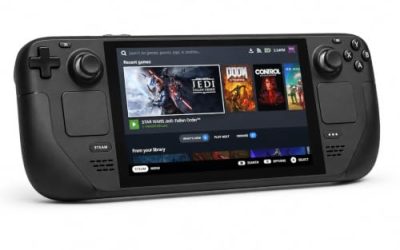
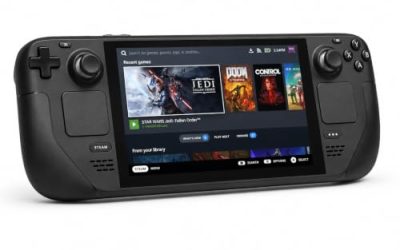
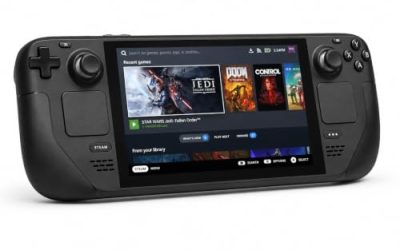
Valve Steam Deck OLED 512GB

The handheld the Playable badge was written for, with only icon, keyboard and text-size notes against it on Valve’s sheet.
Specs
- Display: 7.4-inch HDR OLED, 1280 by 800, up to 90 Hz
- Processor: AMD Zen 2 and RDNA 2 custom APU
- Memory: 16 GB LPDDR5
- Storage: 512 GB NVMe, plus a microSD slot
- Wireless: Wi-Fi 6E and Bluetooth
- Channel note: Valve sells the Deck mainly through its own store, so Amazon listings are third-party sellers
8BitDo Ultimate 2 Bluetooth Controller
The docked pad pick. Valve’s configuration for this game is gamepad-shaped, and this pad covers the couch case with modern sticks, triggers and back buttons for station shortcuts.
Specs
- Connectivity: Bluetooth wireless and USB-C wired
- Joysticks: TMR electromagnetic, anti-drift design
- Triggers: Hall effect, with mode switching
- Extras: two remappable back buttons, motion control
- In the box: charging dock included
Xbox Wireless Controller, Carbon Black
The safest guest pad in PC gaming: Steam Input support is universal, the glyphs match what most games display, and it pairs over Bluetooth or its own wireless standard. On the handheld, an external pad may need a manual Quick Access Menu switch before it takes over.
- Connectivity: Xbox Wireless and Bluetooth
- Port: USB-C for wired play
- Controls: hybrid D-pad, dedicated Share button
- Power: AA batteries or optional rechargeable pack
Logitech G502 HERO
Silent Hunter III is a mouse-driven simulation on desktop — chart work, periscope bearings, TDC dials — and a precise wired mouse is the natural instrument. Eleven programmable buttons cover the station keys a long patrol repeats.
Specs
- HERO optical sensor, up to 25,600 DPI
- 11 programmable buttons
- Adjustable weight system
- Wired USB connection
- On-board memory profiles
Samsung T9 Portable SSD 2TB
A modded Silent Hunter III install is a small archive worth keeping whole — the game is under 3 GB, so a fast portable drive holds the install, its mod folders and a backup. The headline figure needs a Gen 2×2 host port; on a lesser port the drive runs at that ceiling.
Specs
- Capacity: 2 TB portable SSD
- Interface: USB 3.2 Gen 2×2, USB-C connector
- Maker-rated speeds: up to 2,000 MB per second read, 1,950 MB per second write
- Features: Dynamic Thermal Guard, maker-rated drop resistance
How to choose
Choose the Steam copy, because it is the only edition on sale anywhere. On a Linux desktop or laptop, install it and leave the compatibility tool at its default: a Platinum headline across 29 reports says current Proton builds handle this game well, and Valve’s sheet recommends the stable Proton runtime. Know the two quirks before your first patrol — if a mission launch hangs, verify the cache and start a different single mission; if the view spins when you grab the mouse, check your input transformation settings first. On the Deck, the Playable badge plus build-current paperwork means install and launch, with the on-screen keyboard and small text as the only expected friction.
Who should skip
Skip this one if you need a native Linux binary on principle — none exists, none is hinted at anywhere on the record, and the frozen 2014 branch says none is coming. Skip it if your interest starts with the later games: this article covers the third entry only, and nothing in its record transfers to the other Silent Hunter titles. Skip it if small text and manual keyboard calls on a handheld are deal-breakers, because Valve’s sheet names both. And skip it if you want a living multiplayer scene: the record lists multiplayer categories but flags the game as running without Steam servers, so what remains is a single-player campaign game.
FAQ
Is Silent Hunter III native on Linux?
No. The purchase package, the app flags, the requirements fields and the depot table all read Windows-only: the Linux requirements field is an empty list and there is no Linux depot. The game runs on Linux through Proton, not through a native build.
How well does Silent Hunter III run under Proton?
ProtonDB’s summary rates it Platinum on the headline and best-reported tiers and Gold on the trending tier, from 29 reports with good confidence. Reports document two quirks — a rare hang on mission launch, fixed by verifying the cache and choosing a different single mission, and a spinning view tied to custom mouse-sensitivity settings.
Is Silent Hunter III playable on Steam Deck?
Yes — Valve grades it Playable, with SteamOS rated Compatible, read through SteamDB’s republication of Valve’s sheet after the direct endpoint returned garbled data. The April 2022 test ran on build 252099, still the current public build, so the paperwork is current. Expect non-Deck icons, manual keyboard calls and some small text.
Can I buy Silent Hunter III on GOG instead?
No. GOG’s catalogue, checked directly, holds only Silent Hunter 2 — an older, different game, Windows-only. The natural product address for the third game resolves to GOG’s general catalogue. Steam is the only storefront selling it.
Final verdict
Silent Hunter III is the plainest record shape in this cluster: one package, one depot, one platform, every layer agreeing the game is Windows-only. There is no port, no ghost build, no stranded depot and no family to argue about. The other half of the file is why the article exists — a Platinum Proton record with good confidence, a Playable Deck badge whose paperwork still matches the shipping build, and two small quirks with known fixes. Buy it on Steam, run it through Proton, and the 2005 Atlantic is open.
Product and ASIN Reference
| Product | ASIN |
|---|---|
| Valve Steam Deck OLED 512GB | B0CQ3RWQQZ |
| 8BitDo Ultimate 2 Bluetooth Controller | B0F194QFT2 |
| Xbox Wireless Controller, Carbon Black | B08DF248LD |
| Logitech G502 HERO | B07GBZ4Q68 |
| Samsung T9 Portable SSD 2TB | B0CHFS9K14 |