Sengoku Jidai: Shadow of the Shogun is Byzantine Games’ turn-based tactical wargame of sixteenth-century East Asia, published by Slitherine and released on Steam in May 2016. It covers the Sengoku civil wars in Japan, the Imjin War in Korea and the Ming collapse in China. Because its publisher’s catalogue is mostly Windows software, Linux players usually ask the same two questions before buying: is there a native build hiding anywhere in the record, and how well does the Windows build behave under Proton?


This article answers both from the primary records only: Steam’s appdetails and packagedetails data, the SteamDB depot table, the ProtonDB summary, Valve’s Steam Deck test sheet, and GOG’s catalogue. The short version: no Linux build exists at any layer, the Deck badge is a hard negative, and the Proton file is positive but very thin — four reports deep.
As an Amazon Associate, we earn from qualifying purchases.
Quick answer
Sengoku Jidai: Shadow of the Shogun is not native on Linux: Steam’s flags, the purchase package and the depot table all read Windows-only, and no Linux depot or requirements tab exists. ProtonDB rates the Windows build Gold with a Platinum best-reported tier across just four reports. Valve rates the game Unsupported on Steam Deck. Desktop Linux via Proton is the only route, and GOG’s Gold edition is Windows-only.
What the Steam record actually says
Start with the layer that decides what a purchase delivers. The app’s platform flags read windows true, mac false, linux false, and the game’s one purchase package — package 76606, the only option in its group — reads exactly the same, granting the base app alone. When flags and selling package agree, no second build hides behind a store-page quirk; the package is decisive, and here it is unanimous.
The requirements fields tell the same story. The Windows requirements are written out in full — Vista through 10, a Pentium 4 class processor, 1 GB of RAM, a 256 MB DirectX card and 1.5 GB of storage — while the Mac and Linux fields are empty lists outright: no populated field with no build behind it, no boilerplate, just absence. The depot table matches: SteamDB lists one content depot, 397191 at 1.48 GiB, plus the small PDF book depots, and the size filtered to Windows equals the total on disk. No depot carries a Linux configuration, none is emptied or stranded, and the icon set registers no Linux client icon. The public branch has been frozen since April 2017 on build 1722179; nothing suggests a port was started and withdrawn — the Linux build simply never existed on Steam.
The expansion family agrees
The base record’s DLC array holds eight apps, each read individually. Three are PDF rule and army books; five are game content: the Bjeongja Horan and Genko campaigns, the Genko multiplayer skirmishes, and the two larger expansions, Gempei Kassen and Mandate of Heaven. All eight flag windows true, mac false and linux false — the three PDF books included, whose document flags dissent in other families. The family is unanimous: no member claims a Mac or Linux build.
That matters because this publisher’s catalogue has produced split families before, where a base game is Windows-only but an expansion or soundtrack app flags extra platforms. No soundtrack app exists here, and SteamDB’s DLC listing names the same eight apps and nothing outside the array — no hidden ninth member.
The account layer: PBEM++, named precisely
One line deserves exact naming, because it is easy to misread. The app carries an external account notice: “Slitherine PBEM++ for Multiplayer”. PBEM++ is Slitherine’s asynchronous play-by-email system — an account layer for exchanging multiplayer turns, not an anti-cheat and not DRM. Steam carries no DRM notice, SteamDB’s detection finds only the Lua SDK and the Miles Sound System, and the AreWeAntiCheatYet dataset has no entry for this app. Silence is not a ruling, but the only named extra layer here is that account, touching multiplayer only. Single-player needs no account.
ProtonDB: Gold headline, four reports deep
The ProtonDB summary reads in full: headline tier Gold, best-reported tier Platinum, trending tier Gold, across four reports, with confidence rated low. That is one of the thinnest files in this wargame cluster: the Gold headline is real, but it rests on a handful of filings.
The report text fits that picture. Filings on Proton 5.0 and the 6.3 series describe the game running on desktop Linux, with two practical notes: one player had to edit the resolution line in the game’s options file to match their display, and one filing reports crashes on a laptop with integrated video while the same setup ran fine with a dedicated graphics card — a driver-shaped problem, not a game-shaped one. Four reports cannot certify every distribution and driver stack, and the low confidence rating says exactly that.
One labelling artefact needs naming. The ProtonDB page heads its requirements block “Natively Supports:”, a heading it attaches regardless of the record. Steam contradicts it at every layer, so this article follows Steam: the heading is wrong here, and the Gold tier describes the Windows build under Proton.
Steam Deck: Unsupported, on current paperwork
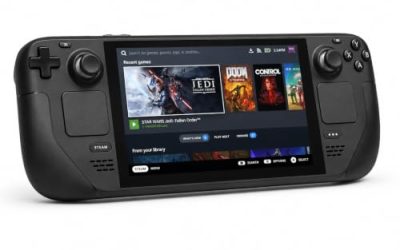
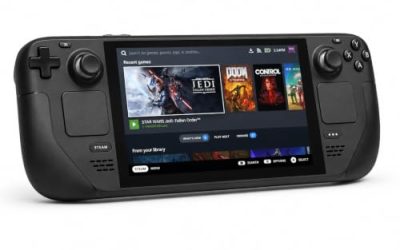
Valve’s compatibility sheet, read through SteamDB’s republication after the direct endpoint returned unreadable output, records the category as Unsupported, SteamOS compatibility also Unsupported, with the plain test result: SteamOS does not support the game. The notes list the usual interface deductions for a mouse-driven wargame — manual on-screen keyboard invocation, non-Deck glyphs, small text — and the recommended runtime is proton-stable. The record lists no controller support, fitting a mouse-and-keyboard design.
The paperwork has one virtue: it is current. Valve’s test, dated September 2023, ran on build 1722179, still the branch build today. Unlike the many wargame badges grading a build years behind the one on sale, this verdict grades exactly the build a buyer receives.
The other storefront: GOG’s Gold edition is Windows-only
GOG does sell this game, but not under the base title and not for Linux. The base game’s natural product address redirects to the general catalogue, and GOG’s search endpoints return nothing useful — which alone would prove nothing, since those endpoints are a known blind spot. The catalogue record, though, holds an identity-verified edition: Sengoku Jidai GOLD, developed by Byzantine Games, published by Slitherine, release date matching the Steam launch. It bundles the main game with Mandate of Heaven, Gempei Kassen and the Genko and Bjeongja Horan campaign packs, and its listed operating systems are Windows only. No storefront sells a Linux copy.
Gear for a desktop-first wargame
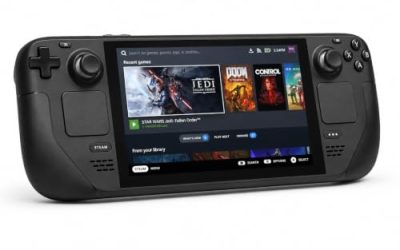
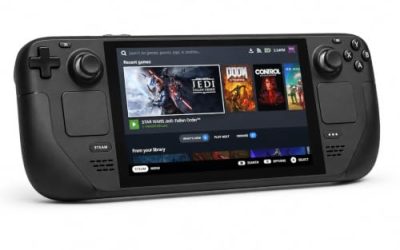
Because the Deck badge is Unsupported and the record lists no controller support, the sensible setup is a desktop or laptop with a real keyboard and mouse. The picks follow that shape: a remappable keyboard, two pads for the rest of a library, a precise mouse, and fast library storage.
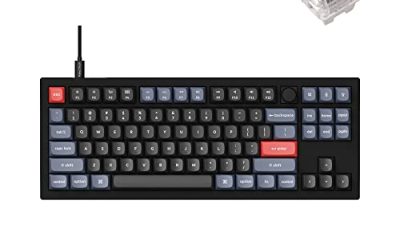
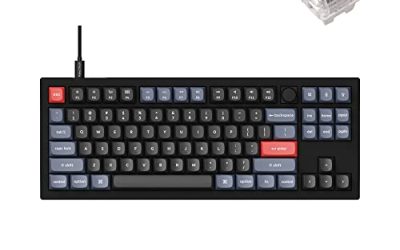
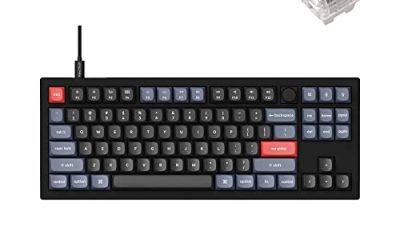
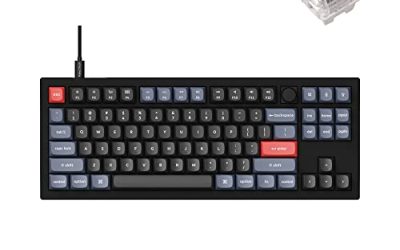
Keychron V3
The keyboard pick for desktop sessions: QMK and VIA support lets you remap keys at the keyboard level, so the layout survives every Linux reinstall.
Specs
- Tenkeyless layout with rotary knob
- QMK and VIA remapping support
- Hot-swappable K Pro Brown switches
- Wired USB-C connection
- Maker-rated 1,000 Hz polling
8BitDo Ultimate 2 Bluetooth Controller
Not for this game — it lists no controller support — but for the rest of a desktop library this is the pad to keep by the monitor: modern sticks, back buttons, and a charging dock.
Specs
- Connectivity: Bluetooth wireless and USB-C wired
- Joysticks: TMR electromagnetic, anti-drift design
- Triggers: Hall effect, with mode switching
- Extras: two remappable back buttons, motion control
- In the box: charging dock included
Xbox Wireless Controller, Carbon Black

The safest guest pad in PC gaming: Steam Input support is universal and it pairs over Bluetooth or its own wireless standard. It earns its place in a wider library, not in this wargame.
- Connectivity: Xbox Wireless and Bluetooth
- Port: USB-C for wired play
- Controls: hybrid D-pad, dedicated Share button
- Power: AA batteries or optional rechargeable pack
Logitech G502 HERO

The primary input for the game itself: a turn-based wargame lives on map clicks, unit selection and camera pans, and a precise wired mouse covers them all.
Specs
- HERO optical sensor, up to 25,600 DPI
- 11 programmable buttons
- Adjustable weight system
- Wired USB connection
- On-board memory profiles
Samsung T9 Portable SSD 2TB

For moving a game library between desktop and laptop, or backing up installers offline, a fast USB-C drive is the simple answer. The headline figure needs a Gen 2×2 host port; on a lesser port it runs at that ceiling.
Specs
- Capacity: 2 TB portable SSD
- Interface: USB 3.2 Gen 2×2, USB-C connector
- Maker-rated speeds: up to 2,000 MB per second read, 1,950 MB per second write
- Features: Dynamic Thermal Guard, maker-rated drop resistance
How to choose
Choose by where you will play. On desktop or laptop Linux, the Steam copy under Proton is the working route: the Gold headline and Platinum ceiling say the Windows build runs, and the minimum specification — Pentium 4 class, 1 GB of RAM — makes performance a non-issue. One manual fix may be needed: if it opens at the wrong resolution, the options file edit in the filings resolves it. Prefer a DRM-free installer? GOG’s Gold edition is the more complete bundle, but the same Windows build needing the same compatibility layer. For multiplayer, factor in the PBEM++ account — part of online play, while single-player asks for nothing. On Steam Deck, choose something else.
Who should skip
Skip this one if a native Linux build is a condition of purchase: none exists, none is recorded as planned, and the frozen branch means that is unlikely to change. Skip it if the Steam Deck is your only machine, since Valve rates it Unsupported on the exact build sold today. Skip it if you want a Proton file with depth — four reports is a signal, not a guarantee, and integrated graphics carry the one documented crash pattern. Finally, skip it if you dislike account layers: PBEM++ multiplayer runs through a Slitherine account, with no way around it for online turns.
FAQ
Does Sengoku Jidai: Shadow of the Shogun run natively on Linux?
No. Steam’s flags, the purchase package and the depot table all read Windows-only, the Linux requirements field is an empty list, and no Linux depot or client icon exists in the record. On Linux it runs only through Proton, using the Windows build.
How well does it run under Proton?
ProtonDB rates it Gold, with a Platinum best-reported tier and a Gold trending tier, but the file is only four reports deep and confidence is low. The filings describe successful desktop play, one resolution fix, and one crash pattern tied to integrated graphics. Treat Gold as a good sign with a small sample behind it.
Can I play it on Steam Deck?
Valve rates the game Unsupported, and SteamOS compatibility is Unsupported too. The September 2023 test ran on build 1722179, still the current public build, so the verdict grades the game as sold today. The record lists no controller support.
Does the game use anti-cheat or DRM?
Steam’s record carries no DRM notice, SteamDB detects only the Lua SDK and the Miles Sound System, and the AreWeAntiCheatYet dataset has no entry for the game. The one named extra layer is the Slitherine PBEM++ account for asynchronous multiplayer turns — an account system, not anti-cheat — and single-player does not need it.
Final verdict
The record is unusually tidy: every layer agrees this is a Windows-only release, the expansion family repeats the same platform mask, the only account layer is the labelled PBEM++ system, and GOG’s Gold bundle is Windows-only too. For a desktop Linux player it is a reasonable Proton purchase — a Gold headline with a Platinum ceiling, a featherweight footprint, and a build unchanged since 2017, so what the filings describe is what you will run. The caveats are equally clear: the Proton file is four reports thin, integrated graphics carry the one documented crash report, and the Deck is a firm no. Buy it for the desk, eyes open about the small sample.
Product and ASIN Reference
| Product | ASIN |
|---|---|
| Keychron V3 | B0B2DMMMG2 |
| 8BitDo Ultimate 2 Bluetooth Controller | B0F194QFT2 |
| Xbox Wireless Controller, Carbon Black | B08DF248LD |
| Logitech G502 HERO | B07GBZ4Q68 |
| Samsung T9 Portable SSD 2TB | B0CHFS9K14 |