Destroyer: The U-Boat Hunter, Iron Wolf Studio’s single-player simulation of a Fletcher-class destroyer hunting U-boats in the 1943 Atlantic, looks like a closed case on its Steam page. The store record flags the game for Windows and Mac, and Linux is absent from the platform line. Anyone who stops reading there walks away with the wrong answer.


One layer down, the record contradicts itself. The single purchase package grants three operating-system depots, and the third is a full Linux build of just under nine gigabytes, still receiving updates years after launch. This piece reads each layer in turn and rules on what a Linux buyer actually receives.
As an Amazon Associate, we earn from qualifying purchases.
Quick answer
Destroyer: The U-Boat Hunter ships a real Linux build that Steam’s store flags hide: the purchase package grants an 8.98 GB Linux depot, so owners on Linux get a native copy, while the store page lists Windows and Mac only. ProtonDB rates the Windows build Platinum, and Valve rates the game Playable on Steam Deck.
The flag layer: Windows and Mac, full stop
Start with what the store shows. Steam’s app record reads windows true, mac true, linux false, and the one purchase package repeats that mask exactly. The Mac half is genuine at every layer: the Mac requirements tab is properly written, asking for Mac OS X 10.15 at minimum and recommending macOS Monterey or later, and a macOS depot of 9.72 GiB sits in the depot table with Apple silicon support noted in the app configuration. Two builds really are sold.
The Linux paperwork exists but is carelessly kept. A Linux requirements tab is present with minimum and recommended tiers, yet its operating-system line reads simply “10 (64-bit)”, the Windows tab’s line with the word Windows dropped, and the hardware lines are copied across unchanged. That proves a Linux build was documented at some point; on its own it proves nothing about what ships. The record carries no DRM notice and no third-party account notice, so the flag layer’s whole story is the mask: Windows and Mac yes, Linux no.
The depot layer: the package sells a Linux build
Delivery on Steam is decided by depots, and here the depot layer outvotes the flags. The only purchase package grants three depots, one per operating system: Windows at 9.58 GiB, macOS at 9.72 GiB, and Linux at 8.98 GiB, a download of just under 5 GiB. The Linux depot is no launch-era fossil; its last update landed in September 2025, well after the December 2023 full release, and the public branch reached a new build in November 2026. A registered Linux client icon, with its own distinct file hash, completes the picture of a build that is packaged and maintained.
The ruling, stated plainly, is native by delivery. The store-facing flags deny Linux, and store filters will repeat that denial. But what a purchase actually transfers includes the Linux build, sized in line with the other two platforms and updated on the same cadence. Flags describe how a game is advertised; depots describe what an owner downloads. When the two disagree, the download is the fact that matters, and here the download is native.
The family sweep: one dissent, one false friend
The add-on family is small and split. The base record’s array holds exactly one app, the Supporter Pack, and its flags read Windows only: it denies even the Mac build the base game genuinely sells, and agrees with the flag-level denial of Linux. A scan that trusted flags alone would miss the Linux depot entirely.
SteamDB also associates a soundtrack app outside the base record’s array, and it flags all three platforms at once. That is the familiar soundtrack shape: a music app’s flags describe where audio files play, not where the game runs, and prove nothing in either direction. On anti-cheat, all three sources are silent, and the silence is recorded as silence: Steam names no anti-cheat and attaches no DRM or account notice, SteamDB’s detection lists the Epic Online Services SDK among the Unity tooling without naming any anti-cheat product, and the AreWeAntiCheatYet dataset carries no entry for this app. The game is single-player only, and nothing in its record suggests a hidden competitive layer.
ProtonDB: Platinum, earned the other way
ProtonDB’s summary file is complete and unanimous at the top: Platinum headline tier, Platinum best-reported tier, Platinum trending tier, across ten reports with moderate confidence. The page also heads its requirements block with a native-support claim, and for once that heading has a real referent, because the depot layer shows the native build exists. The irony is that every filed report grades the Windows build under Proton anyway. The community route is Proton regardless of what the package contains.
The report texture supports the tier. Recent filings on current Proton and GE-Proton builds describe full sessions with no steps beyond choosing the tool, and one reporter remarks on feeling the framerate runs higher on Proton than off it, a comparison that only makes sense from someone who has run both builds. The practical reading is comfortable: the native copy is what a purchase delivers, and if it misbehaves on a given distribution, a Platinum-graded fallback sits one setting away.
The Deck sheet: Playable, graded in Early Access
Valve’s own compatibility endpoint returned garbled bytes on repeated reads this session, so the Deck verdict was read from SteamDB’s republication of Valve’s test sheet, which is the route this article discloses and relies on. The category is Playable, with SteamOS separately rated Compatible. The deductions are interface items: some functionality is not accessible under the default controller configuration and needs the touchscreen, the virtual keyboard or a community configuration; the game sometimes shows mouse, keyboard or non-Deck controller icons; some text entry requires manually invoking the on-screen keyboard; and some in-game text is small. The default graphics configuration is credited as performing well.
The paperwork, though, is old. The test is dated 29 October 2022 and ran on an Early Access build, with proton-stable as the recommended runtime: Valve graded the Windows build through Proton more than a year before the December 2023 full release, and the current public branch build dates from November 2026. Treat the badge as a floor set during Early Access, not a fresh measurement, and note it says nothing about the native build at all.
How to choose
Buy the Steam copy, because it is the only edition that contains the Linux build. The GOG edition exists and was identity-checked against the developer and publisher of record, but its product record lists Windows as the only supported system. On a Linux desktop or laptop, install and launch: what downloads is the native depot the package grants. If it gives trouble on your distribution, force Proton and lean on the Platinum file; that is a supported detour, not a defeat. On Steam Deck, expect a playable game with touchscreen and keyboard moments. Mac players are properly served on Steam and should not expect the same from the GOG shelf.
Gear that fits the record
The picks below follow the record’s shape: the handheld Valve graded, two pads for docked play, a wired mouse for a station-driven simulation, and fast storage for a library that travels.
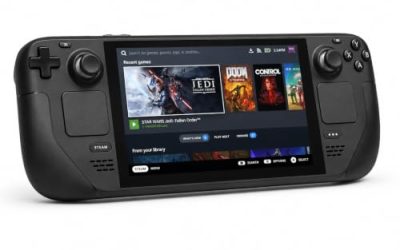
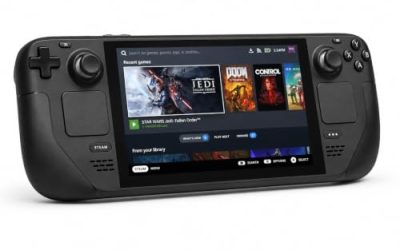
Valve Steam Deck OLED 512GB
The handheld on Valve’s test sheet. The badge is Playable rather than Verified, and the deductions are about interface, not performance: the sheet credits the default graphics configuration as performing well.
Specs
- Display: 7.4-inch HDR OLED, 1280 by 800, up to 90 Hz
- Processor: AMD Zen 2 and RDNA 2 custom APU
- Memory: 16 GB LPDDR5
- Storage: 512 GB NVMe, plus a microSD slot
- Wireless: Wi-Fi 6E and Bluetooth
- Channel note: Valve sells the Deck mainly through its own store, so Amazon listings are third-party sellers
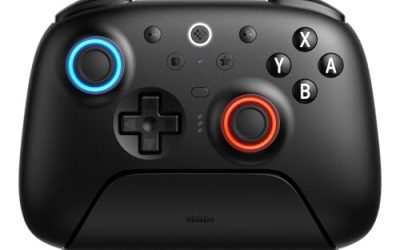
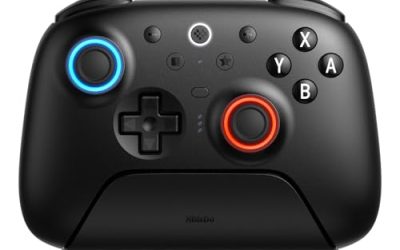
8BitDo Ultimate 2 Bluetooth Controller
The docked pick. Valve’s sheet warns that some functions sit outside the default controller configuration, and remappable back buttons pull the awkward inputs back onto the pad instead of the touchscreen.
Specs
- Connectivity: Bluetooth wireless and USB-C wired
- Joysticks: TMR electromagnetic, anti-drift design
- Triggers: Hall effect, with mode switching
- Extras: two remappable back buttons, motion control
- In the box: charging dock included
Xbox Wireless Controller, Carbon Black

The safe second pad for the couch. Steam Input support is universal, the glyphs match what most games draw on screen, and it pairs over Bluetooth when the Deck is docked across the room.
- Connectivity: Xbox Wireless and Bluetooth
- Port: USB-C for wired play
- Controls: hybrid D-pad, dedicated Share button
- Power: AA batteries or optional rechargeable pack
Logitech G502 HERO

Destroyer is worked from stations: sonar, radar, the tactical plot, gunnery. At a desk, a precise wired mouse is the natural instrument for that clicking, and eleven programmable buttons absorb the shortcuts a long convoy defence repeats.
Specs
- HERO optical sensor, up to 25,600 DPI
- 11 programmable buttons
- Adjustable weight system
- Wired USB connection
- On-board memory profiles
Samsung T9 Portable SSD 2TB

For moving a Linux game library between a desktop and a laptop, or keeping an offline backup of installers, a fast USB-C drive is the simple answer. The headline figure needs a Gen 2×2 host port; on a lesser port the drive runs at that ceiling instead.
Specs
- Capacity: 2 TB portable SSD
- Interface: USB 3.2 Gen 2×2, USB-C connector
- Maker-rated speeds: up to 2,000 MB per second read, 1,950 MB per second write
- Features: Dynamic Thermal Guard, maker-rated drop resistance
Who should skip
Skip it if you need your Linux support advertised and guaranteed. The build is delivered, not listed: the store flag is off, and a support conversation may start from that flag. Skip it if small text and touchscreen fallbacks on a handheld are deal-breakers, because Valve’s sheet lists both. Skip it if you want multiplayer, since the record is single-player only, and think twice about the Supporter Pack’s extras on Mac or Linux, because the pack’s own record is flagged Windows only.
FAQ
Is Destroyer: The U-Boat Hunter native on Linux?
By delivery, yes; by store flag, no. The platform flags on the game and its purchase package read Windows and Mac only, but that same package grants a Linux depot of 8.98 GiB that was still being updated in September 2025, so a Linux owner who buys the game downloads a native build. This article rules on the delivery.
Why does the Steam store page not list Linux?
Because the store page renders the platform flags, and those read linux false. Delivery runs on depots rather than flags, which is how the two can disagree. The record even keeps a Linux requirements tab, although its operating-system line is a careless copy of the Windows one, which is paperwork, not proof either way.
How well does the game run under Proton?
Very well on the filed evidence. ProtonDB’s complete summary reads Platinum on the headline, best-reported and trending tiers across ten reports at moderate confidence, and the reports describe full sessions on current Proton and GE-Proton builds. It is a strong fallback if the native build ever misbehaves on your setup.
Can I buy the game on GOG for Linux?
No. A GOG edition exists and was identity-checked against Iron Wolf Studio and Daedalic Entertainment, but its product record lists Windows as the only supported system. Steam is the only storefront whose copy contains the Linux build, and the Mac build is Steam-only as well.
Final verdict
Destroyer: The U-Boat Hunter is a native Linux game hiding behind its own store page. The flags say Windows and Mac; the purchase package delivers a maintained Linux build of comparable size to both, with its own registered client icon. Add a Platinum Proton file as fallback, a Playable Deck badge whose paperwork dates from Early Access, and a Windows-only GOG edition, and the advice is simple: buy it on Steam, play the native copy, keep Proton in reserve.
Product and ASIN Reference
| Product | ASIN |
|---|---|
| Valve Steam Deck OLED 512GB | B0CQ3RWQQZ |
| 8BitDo Ultimate 2 Bluetooth Controller | B0F194QFT2 |
| Xbox Wireless Controller, Carbon Black | B08DF248LD |
| Logitech G502 HERO | B07GBZ4Q68 |
| Samsung T9 Portable SSD 2TB | B0CHFS9K14 |