Field of Glory: Empires is Ageod’s 2019 grand-strategy game of the ancient world, published by Slitherine Ltd. and built around long, map-driven campaigns that can export their battles into the companion tactical game. Because the wider Field of Glory shelf mixes native and non-native records, the Linux question for this one deserves its own reading rather than a borrowed verdict from a neighbouring title.


That reading is short at the top and detailed underneath. Steam’s record is Windows-only at every layer that governs a purchase: the flags, the buying package, the requirements tabs and the single content depot all stop at Windows. Linux players are therefore looking at a Proton game on the desktop, and at a Deck badge written against a build the game has since moved past.
As an Amazon Associate, we earn from qualifying purchases.
Quick answer
No. Field of Glory: Empires has no native Linux build: Steam’s record, its purchase package and its single depot are Windows-only at every layer, and the one expansion agrees. On a Linux desktop the game runs through Proton, where ProtonDB rates it Gold across ten reports. Valve rates the Steam Deck version Unsupported, on paperwork written against an older build.
What the Steam record actually sells
Start with the layer that decides what a purchase delivers. The game’s single package reads windows true, mac false, linux false, and it grants the base app alone. The app-level flags repeat that mask exactly: a buyer on any system receives the Windows build.
The requirements tabs tell the same story more quietly. The Windows field is genuinely populated with period specifications: Windows 7, 8 or 10, a 2 GHz processor, 4 GB of RAM, a 1 GB DirectX 9 graphics card and 2 GB of storage. The Mac and Linux fields, by contrast, are empty lists outright. There is no Linux tab in any form — not a populated one hiding an absent build, not even an empty shell.
The depot table closes the question. SteamDB lists exactly one content depot, holding the full 2.20 GiB install with no operating-system split, and the only redistributable attached is a Windows .NET package. There is no Linux depot of any size, no emptied depot where one used to sit, no stranded depot from a withdrawn port. The icon set agrees: a standard client icon and logo assets, but no Linux client icon. Nothing in the delivery layer suggests a Linux build was ever assembled for this app.
One expansion, and it votes the same way
The game’s whole expansion family fits in a single line. The Persia 550 – 330 BCE expansion, released in May 2020, is the only app in the base record’s downloadable content array, and SteamDB associates nothing further outside it. On its own record the expansion flags windows true, mac false and linux false, its Mac and Linux fields are the same empty lists, and its own package reads Windows-only as well. That unanimity matters because family sweeps are where false positives breed: an expansion flagging all three platforms can make a Windows-only game look Linux-supported in a catalogue scan. No such trap forms here — no soundtrack app, no all-true outlier.
Anti-cheat and accounts: three kinds of silence
Three sources were checked for anti-cheat, and none names one. Steam’s record carries no anti-cheat category and no DRM notice. SteamDB’s technology detection finds only the Lua SDK and the Miles Sound System — scripting and audio plumbing, nothing that polices a process. The AreWeAntiCheatYet dataset carries no entry for this app at all. None of that silence is presented as a ruling; it simply means no source documents an anti-cheat layer for a turn-based game.
One absence is worth naming precisely because readers of this catalogue may expect the opposite. Many Slitherine records carry an account notice for the publisher’s PBEM++ play-by-email system. This record carries no such notice — no external account notice of any kind.
ProtonDB: Gold on top, Bronze underneath
ProtonDB’s full summary reads Gold as the headline tier, Platinum as the best-reported tier and Bronze as the trending tier, across ten reports with moderate confidence. That spread is the honest shape of the file: players who clear the first-launch hurdle report a game that then runs well, while the trend reflects how often the hurdle trips people up.
The page also heads its requirements block with a “Natively Supports:” label, and that heading does not survive contact with Steam’s record. Flags, package, tabs and depot are unanimous for Windows only, so the heading is a labelling artefact on ProtonDB’s side, not evidence of a port. This article follows Steam and treats the heading as stray.
The report texture explains the tiers. The recurring fault is a first launch that fails to detect the display resolution, fixed by a small options file naming the resolution and windowed mode; after that edit, filings describe long, stable campaigns. The other documented wrinkle is the signature feature: exporting a battle into Field of Glory II needs a symlink fix, because the two games keep their user folders in separate Wine prefixes.
The Deck badge was graded on a build that is now the legacy branch
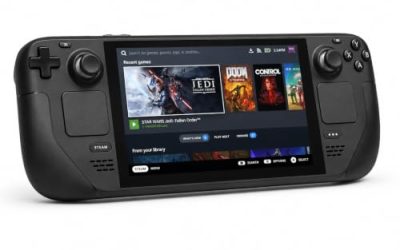
Valve’s own compatibility endpoint returned empty responses for this app in this session, so the Deck verdict was read through SteamDB’s republication of Valve’s test sheet. The sheet rates the game Unsupported on the Deck, with SteamOS rated Unsupported separately, and the single test result recorded is that SteamOS does not support the game. The configuration notes fill in the practical picture: a manual keyboard invocation, non-Deck glyphs, small text, and supported input classed as other rather than a gamepad layout — unsurprising for a mouse-driven interface with no controller support on record.
The paperwork, though, is old in a specific and checkable way. Valve’s test ran in October 2022 against build 6738820. That build still exists, but it now sits on the legacy branch, labelled version 1.3.9, while the public branch has moved on to a build dated November 2026. So the badge grades a superseded version, not the build a buyer downloads today. That does not overturn the verdict — nobody has re-tested the current build — but the badge should be read as a 2022 judgement, not a fresh measurement.
The second storefront
There is a second PC edition, and it changes nothing for Linux. GOG’s catalogue records were checked directly and identity-verified — the product matches on title, Ageod as developer and the July 2019 release — and the natural product page is live. That edition lists Windows as its only operating system, and the Persia expansion on the same shelf is Windows-only too. GOG sells the same Windows build without Steam’s client: a DRM-free route to the identical Proton question, not a native port.
Gear for a desktop campaign
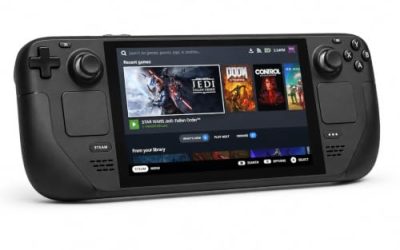
With the Deck rated Unsupported and the interface built for a mouse, the sensible setup is a desktop one: a proper keyboard for the game’s many panels, a precise mouse for map work, and storage for a growing strategy library.
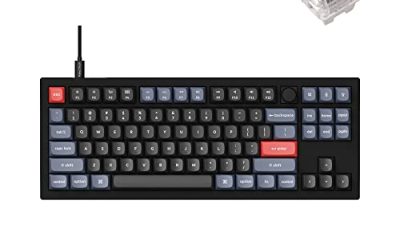
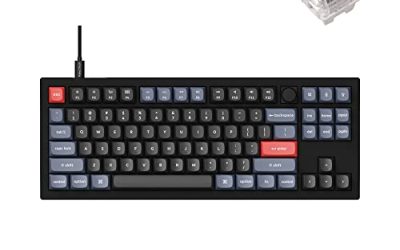
Keychron V3
The keyboard pick for desktop sessions: a tenkeyless board with QMK and VIA support lets you remap keys at the keyboard level, which keeps working across every Linux install.
Specs
- Tenkeyless layout with rotary knob
- QMK and VIA remapping support
- Hot-swappable K Pro Brown switches
- Wired USB-C connection
- Maker-rated 1,000 Hz polling
8BitDo Ultimate 2 Bluetooth Controller
The pad for the rest of a mixed library rather than for this game, whose record lists no controller support: modern sticks, Hall effect triggers and back buttons make it the flexible option for titles on the same machine that do play from a couch.
Specs
- Connectivity: Bluetooth wireless and USB-C wired
- Joysticks: TMR electromagnetic, anti-drift design
- Triggers: Hall effect, with mode switching
- Extras: two remappable back buttons, motion control
- In the box: charging dock included
Xbox Wireless Controller, Carbon Black

The safest guest pad in PC gaming: Steam Input support is universal, the glyphs match what most games display, and it pairs over Bluetooth or wireless.
- Connectivity: Xbox Wireless and Bluetooth
- Port: USB-C for wired play
- Controls: hybrid D-pad, dedicated Share button
- Power: AA batteries or optional rechargeable pack
Logitech G502 HERO

Empires is played through maps, panels and tooltips, and a precise wired mouse is the input the interface was drawn for. Eleven programmable buttons cover the confirm, cancel and camera inputs a campaign repeats.
Specs
- HERO optical sensor, up to 25,600 DPI
- 11 programmable buttons
- Adjustable weight system
- Wired USB connection
- On-board memory profiles
For moving a Linux game library between machines, or keeping an offline backup of installers, a fast USB-C drive is the simple answer. The headline figure needs a Gen 2×2 host port.
Specs
- Capacity: 2 TB portable SSD
- Interface: USB 3.2 Gen 2×2, USB-C connector
- Maker-rated speeds: up to 2,000 MB per second read, 1,950 MB per second write
- Features: Dynamic Thermal Guard, maker-rated drop resistance
How to choose
Choose either storefront freely: both sell the same Windows build, so the Steam copy and the GOG copy present the identical Proton task. On a Linux desktop, budget one small fix into the first launch — the resolution options file the ProtonDB reports describe — and treat the battle-export symlink as a second, optional step if you own Field of Glory II as well. Choose the desktop over the Deck as the place to play: the interface is a mouse interface, and Valve’s badge says Unsupported.
Who should skip
Skip this one if you require a native Linux build: none exists on either storefront, and the record shows no sign one was ever assembled. Skip it if the Steam Deck is your only machine — Valve rates it Unsupported, the text is small, and the controls were never drawn for a gamepad. Skip it if a split ProtonDB file worries you: a Gold headline over a Bronze trend is a workable game with a known fix, not a flawless one. And skip the Persia expansion’s Linux hopes with the base game’s; its record is the same shape.
FAQ
Is Field of Glory: Empires native on Linux?
No. The store flags, the purchase package, the requirements tabs and the single content depot are all Windows-only, and the Persia expansion reads the same way. ProtonDB’s page heading suggests native support, but Steam’s record contradicts it at every layer.
How well does Field of Glory: Empires run under Proton?
ProtonDB’s full summary rates it Gold overall, with a Platinum best-reported tier and a Bronze trending tier across ten reports at moderate confidence. Most successful reports first apply a small options-file fix for a resolution detection failure; after that, campaigns run stably.
Can I play Field of Glory: Empires on a Steam Deck?
Valve rates it Unsupported, for both the Deck and SteamOS, based on an October 2022 test. That test used a build that now sits on the legacy branch, so the badge is stale, but no newer test exists and the interface deductions — small text, manual keyboard, non-Deck glyphs — are structural, not build-specific.
Does the GOG version run natively on Linux?
No. GOG’s edition is identity-verified in its catalogue and lists Windows as its only operating system, for the base game and the Persia expansion alike. It removes the Steam client, not the need for Proton.
Final verdict
Field of Glory: Empires is a Windows-only game wearing one misleading label. Steam’s record is unanimous — flags, package, tabs, depot and the lone expansion all stop at Windows — and GOG’s edition repeats the shape. What remains is a genuinely playable Proton game on the desktop: a Gold headline, a documented first-launch fix, and a battle-export quirk with a known workaround. The Deck is the weak seat, rated Unsupported on paperwork that predates the current build. Buy it as a desktop Proton title with one small setup step and it is a sound purchase; buy it for native Linux or for the handheld, and it is the wrong game.
Product and ASIN Reference
| Product | ASIN |
|---|---|
| Keychron V3 | B0B2DMMMG2 |
| 8BitDo Ultimate 2 Bluetooth Controller | B0F194QFT2 |
| Xbox Wireless Controller, Carbon Black | B08DF248LD |
| Logitech G502 HERO | B07GBZ4Q68 |
| Samsung T9 Portable SSD 2TB | B0CHFS9K14 |