Not Tonight is a document-checking bouncer game from PanicBarn, published by No More Robots and released on 17 August 2018. You work the doors of clubs and venues, checking identity documents, ages, dress codes and guest lists against the rules of the night, turning away anyone whose papers fail. Steam files it under Adventure, RPG and Simulation, with single-player, Steam Achievements, Steam Cloud and Family Sharing on the record.
No native Linux build exists, and none is hidden anywhere in the record: the practical route is the Windows build under Proton, which the community file rates well. Two artefacts can mislead a quick reader — a soundtrack carrying a Linux flag it never earned, and a compatibility page heading claiming native support Steam contradicts — so this article walks every layer.
As an Amazon Associate, we earn from qualifying purchases.
Quick answer
Not Tonight is not native on Linux. Steam flags Linux false, the Linux requirements field is an empty list, and the delivery is one Windows depot of 3.89 GiB. ProtonDB rates the game Gold overall, with best-reported and trending tiers at Platinum across 37 reports at strong confidence. Valve rates the Deck Playable, and a GOG edition exists for Windows only.
What the store page actually promises
Start with the flags, because everything else agrees with them. Steam’s record for app 733790 reads windows true, mac false, linux false. The Windows requirements field is populated at both tiers: the minimum names Windows 8 or later, an Intel Core i5, 2 GB of memory, a GeForce GTX 550 class card, DirectX 10 and 3 GB of storage; the recommended tier names Windows 10, a high-range Core i5, 4 GB of memory, a GeForce GTX 760 class card and DirectX 11. The Mac and Linux requirements fields are empty lists outright — nothing published under either name.
Two absences are worth stating as gaps: the record carries no DRM notice and no external account notice. SteamDB’s detected technologies are the Unity Engine, the FMOD SDK and the Mono SDK — engine and audio plumbing. Are We Anti-Cheat Yet carries no entry for the game, searched by name and app number.
One depot, one operating system
The depot table closes the case the flags opened. SteamDB lists exactly one content depot: depot 733791, named Not Tonight Content, at 3.89 GiB — and the app’s total size on disk is the same 3.89 GiB, so it accounts for every delivered byte. Its package list includes the store package itself, sub 214180, billed as Store or CD Key — the one depot is what the store sells, not a key-only leftover.
Its current manifest reads like the Windows build it is: one executable, dozens of Windows libraries, FMOD audio banks and Unity asset bundles. The public branch sits on build 10039214, dated 29 November 2022. No Linux depot exists in any package, so the store-package question that decides so many of these records never arises. The One Love expansion’s depot holds zero bytes.
The soundtrack’s Linux flag proves nothing
The downloadable-content array holds exactly two apps, each read on its own record. The first is Not Tonight: One Love (app 1036480, released 25 June 2019), the story expansion: it flags Windows true, Mac and Linux false, in full agreement with the game. The second is the Original Soundtrack (app 954690, released 3 October 2018), a music product — and it flags all three platforms true, while its own Linux requirements field is an empty list outright.
That flag is the whole trap: a bare platform flag on an audio product, with no requirements text and no build behind it, says nothing about the game. The not-native case rests on the game alone — its flag, its empty field, its single Windows depot. The sequel, Not Tonight 2, is a separate game with its own record; it plays no part here.
Proton carries the game, and the file is strong
With only a Windows build in existence, the Linux experience is a Proton question — and here the record turns favourable. ProtonDB’s summary reads in full: an overall tier of Gold, a best-reported tier of Platinum, a trending tier of Platinum, 37 reports, and a confidence rating of strong.
One heading on that page needs naming. The game page heads its requirements block with the words Natively Supports, but Steam’s record contradicts the heading on the flag, the requirements field and the depot table, and every report beneath it was filed under a named Proton version. The heading is a stray label; this article follows Steam.
The report texture explains the Gold average under the Platinum trend. The newest reports, filed under the Proton 9.0 line, describe flawless runs that feel native; Deck reports under Proton 8 describe an out-of-the-box game played with the touchpad. Older reports, from the Proton 7 era and before, mention keyboard input occasionally failing to register until a restart, and cutscenes needing community Proton builds.
Deck Playable, on paperwork from an older build
Valve’s compatibility sheet, read here through SteamDB’s republication of Valve’s data, rates Not Tonight Playable on Steam Deck, with SteamOS separately rated Compatible. The functional items pass: all functionality is accessible on the default controller configuration, and the default graphics perform well. A single note holds the badge at Playable rather than Verified: some in-game text is small and may be difficult to read — which matters in a game built out of documents.
The paperwork deserves its dates. Valve tested the game on 6 July 2022, on build 8186526, with proton-stable recommended — so the badge certifies the Windows build under Proton, never a native port. The public branch has since moved to build 10039214 (November 2022): the sheet predates the build the store now serves, by one build step.
The GOG shelf offers the same Windows build
A GOG edition of Not Tonight exists, ruled from GOG’s own product record rather than search results: the live product page carries the same title and description Steam publishes, and GOG’s product data lists exactly one installer operating system — Windows. The two-storefront choice is a choice between two copies of the same Windows build, and a Linux player gains no platform advantage on GOG.
Gear for a document-heavy door shift
The record’s shape decides the gear: a Playable-rated handheld route under Proton, pads for docked play through Steam Input, a precise mouse for document checks, and library storage.
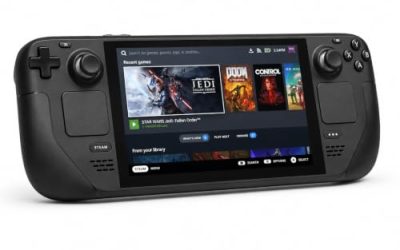
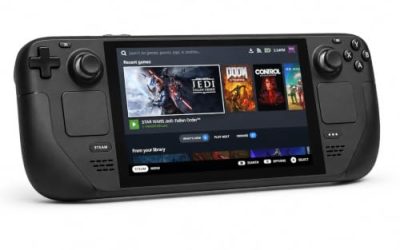
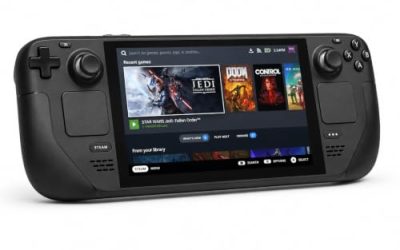
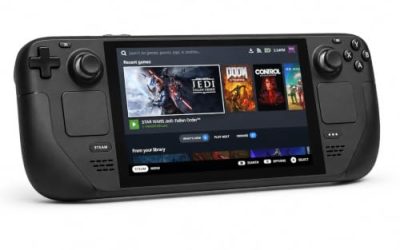
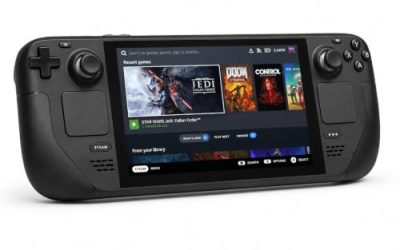
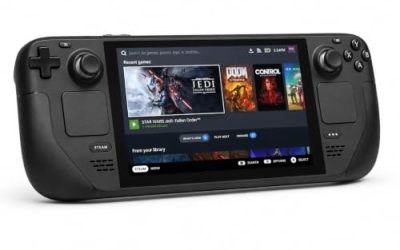
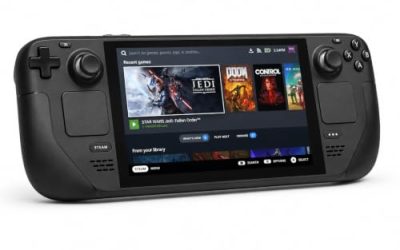
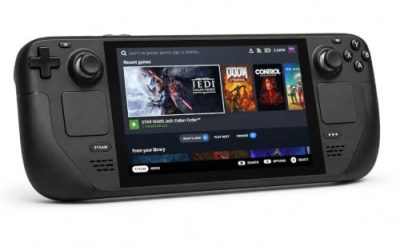
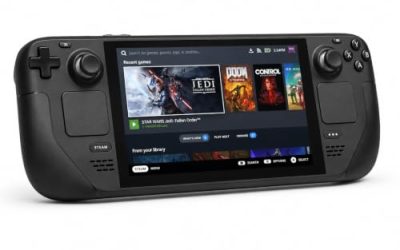
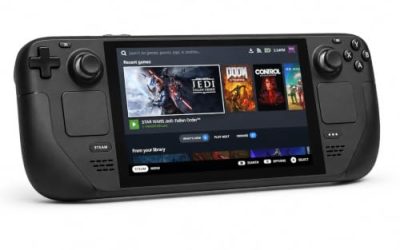
Valve Steam Deck OLED 512GB

The handheld on Valve’s Playable sheet. The game’s Windows requirements sit far below the Deck’s APU, the sheet’s recommended runtime is the proton-stable line, and the one caution — small text — is easier to live with on the OLED panel than on the older screen.
Specs
- Display: 7.4-inch HDR OLED, 1280 by 800, up to 90 Hz
- Processor: AMD Zen 2 and RDNA 2 custom APU
- Memory: 16 GB LPDDR5
- Storage: 512 GB NVMe, plus a microSD slot
- Wireless: Wi-Fi 6E and Bluetooth
- Channel note: Valve sells the Deck mainly through its own store, so Amazon listings are third-party sellers
8BitDo Ultimate 2 Bluetooth Controller

The docked pad pick, with a caveat this record makes necessary: Not Tonight’s Steam categories name no controller support, because the game is driven by pointer and keyboard. Through Steam Input the pad still covers the couch case, with back buttons for repeated confirm and cancel inputs.
Specs
- Connectivity: Bluetooth wireless and USB-C wired
- Joysticks: TMR electromagnetic, anti-drift design
- Triggers: Hall effect, with mode switching
- Extras: two remappable back buttons, motion control
- In the box: charging dock included
Xbox Wireless Controller, Carbon Black

The safest guest pad in PC gaming: Steam Input support is universal, the glyphs match what most games display, and it pairs over Bluetooth or its own wireless standard. For a mapped, pointer-led game like this one, it is the pad a second player can pick up without a setup conversation.
- Connectivity: Xbox Wireless and Bluetooth
- Port: USB-C for wired play
- Controls: hybrid D-pad, dedicated Share button
- Power: AA batteries or optional rechargeable pack
Logitech G502 HERO

Door work is pointer work: documents slide in, stamps land, queues get scanned. A precise wired mouse turns that loop into single clicks, and eleven programmable buttons cover the confirm, cancel and inspection inputs a shift repeats.
Specs
- HERO optical sensor, up to 25,600 DPI
- 11 programmable buttons
- Adjustable weight system
- Wired USB connection
- On-board memory profiles
Samsung T9 Portable SSD 2TB

For moving a Linux game library between a desktop and a laptop, or keeping a backup of installers, a fast USB-C drive is the answer. The headline figure needs a Gen 2×2 host port; on a lesser port the drive runs at that ceiling instead.
Specs
- Capacity: 2 TB portable SSD
- Interface: USB 3.2 Gen 2×2, USB-C connector
- Maker-rated speeds: up to 2,000 MB per second read, 1,950 MB per second write
- Features: Dynamic Thermal Guard, maker-rated drop resistance
How to choose
Read any game’s Linux status the way this record was read, in order. The flags give the headline, the requirements fields show whether a platform was ever prepared, and the depot table settles what a purchase delivers — one depot in the store package outweighs any number of stray flags in the family. Only then does the Proton file matter: the trending tier and newest reports describe the game as it plays now; the overall tier remembers older Proton releases. On the Deck sheet, compare tested build with current branch build before treating a badge as current.
Who should skip
Skip this one if a native build is a matter of principle — the record is unanimous and no port is promised anywhere in it. Skip the handheld route if small on-screen text strains your eyes, because Valve’s note lands on this game’s document-heavy screens. Skip it if time-pressured checking and queue management sound like paperwork rather than play, since that loop is the entire game. And skip the GOG copy if you hoped it hid a Linux build: it holds the same Windows build as Steam.
FAQ
Is Not Tonight native on Linux?
No. Steam flags Linux false, the Linux requirements field is an empty list, and the depot table holds a single Windows depot of 3.89 GiB granted by the store package. The only contrary signal — a Linux flag on the soundtrack — belongs to a music product with an empty requirements field.
Why does the soundtrack show Linux support?
Because platform flags on music apps are set loosely and mean little. The Original Soundtrack flags all three platforms true while publishing no Linux requirements at all, and a soundtrack has no build to deliver. The game’s record, the expansion’s record and the depot table all say Windows only.
How well does Not Tonight run under Proton?
Well, on a strong file. ProtonDB rates it Gold overall with best-reported and trending tiers at Platinum, across 37 reports at strong confidence. The newest reports describe flawless runs; the complaints — input not registering, cutscenes needing community builds — belong to reports under Proton 7 and earlier.
Is Not Tonight Steam Deck Verified?
No — Valve rates it Playable, one step down. The functional items pass and the default graphics perform well, but the sheet notes that some in-game text is small and may be difficult to read. The test dates from July 2022, on an earlier build than the one the store now serves.
Final verdict
Not Tonight is not native on Linux, and the record is unusually tidy about it: a false Linux flag, an empty Linux field, one Windows depot in the store package, an expansion that agrees, and a soundtrack flag that collapses under one sentence of scrutiny. What earns the game a Linux player’s attention anyway is the Proton file — Gold overall, Platinum at its best-reported and trending tiers, 37 reports at strong confidence, the newest reports reading like a native release. With a Playable Deck badge whose only note is small text, the Windows build under Proton is a sound way to work these doors — a Windows game Proton carries well, not a port.
Product and ASIN Reference
| Product | ASIN |
|---|---|
| Valve Steam Deck OLED 512GB | B0CQ3RWQQZ |
| 8BitDo Ultimate 2 Bluetooth Controller | B0F194QFT2 |
| Xbox Wireless Controller, Carbon Black | B08DF248LD |
| Logitech G502 HERO | B07GBZ4Q68 |
| Samsung T9 Portable SSD 2TB | B0CHFS9K14 |