THE LONGING is Studio Seufz’s 2020 experiment in waiting: you play a Shade, the last servant of a king sleeping beneath the earth, and the game counts down 400 days in real time, even while it is closed. For Linux players the first question is simpler than the premise: does a native build exist, or is this another Windows game wearing a stray flag? This time the record answers cleanly, and the answer is yes.
That yes is worth verifying, because this series has met every false shape a store record can take: soundtrack flags credited to games that lack them, empty-shell requirement tabs, Linux depots no purchase delivers. So the file was read layer by layer: flags, requirements, depots, packages, the add-on app, ProtonDB, the Deck sheet and the second storefront.
As an Amazon Associate, we earn from qualifying purchases.
Quick answer
Yes, THE LONGING is native on Linux. Steam flags all three platforms, publishes a populated Linux requirements tab, and delivers a real 2.09 GiB Linux depot through the store package. Valve rates it Verified on Steam Deck, tested on the native build, and GOG sells an edition listing Linux too.
The record at a glance
| Question | Answer from the record |
|---|---|
| Native Linux build | Yes — flag, requirements tab and depot all present |
| Linux depot | Depot 893852, 2.09 GiB, granted by the store package |
| ProtonDB record | Platinum tiers, 8 reports, low confidence, classified Native |
| Steam Deck verdict | Verified, tested July 2022 on the native runtime |
| GOG edition | Exists, and its record lists Linux |
What Steam’s own record shows
Steam’s appdetails record for THE LONGING (app 893850) names Studio Seufz as developer and Application Systems Heidelberg as publisher, released 5 March 2020. The platform flags read Windows true, Mac true, Linux true. A true flag alone proves little in this series, so the requirements fields matter more, and here all three are genuinely populated.
The Linux minimum asks for Ubuntu 16.04 or later, or SteamOS, a 1.2 GHz processor, 4 GB of RAM and 5 GB of storage. Its graphics line is the telling detail: Nvidia cards on the official proprietary driver, AMD cards on the Mesa driver — a sentence written for a real Linux build, not boilerplate copied from another platform. The Windows and Mac minimums sit at the same modest level, and no platform publishes a recommended tier: the minimum is the whole bar, and it is low.
The feature list reads single-player, Steam Achievements, full controller support, Steam Trading Cards, Steam Workshop, Steam Cloud and Family Sharing. Two gaps: no third-party DRM notice and no external account notice on the record, nothing naming an anti-cheat, launcher or separate sign-in, and Are We Anti-Cheat Yet carries no entry for the game either.
The depot check: a Linux build a purchase actually delivers
SteamDB’s depot table lists three content depots totalling 6.42 GiB: 893851 for Windows at 2.19 GiB, 893853 for macOS at 2.14 GiB, and 893852, named for the game and Linux, at 2.09 GiB. A named depot is not proof of delivery, so its package list was read directly: among them sits sub 285399, the package named for the game itself, billed Store or CD Key. The store package grants the Linux depot — the delivery test this series applies.
The depot’s manifest, dated April 2024, reads like a shipped Unity build: an x86 executable of about 26 MB and native shared libraries over the game data. The public branch has since reached build 20401889 (October 2025), so the build sits inside a game still being maintained, not one frozen at launch.
The family sweep: one soundtrack, carrying the usual flag
The game’s DLC array holds exactly one app, the THE LONGING Soundtrack (1275730), a music product. Read on its own record, it flags all three platforms true while its Linux requirements field is an empty list outright: the soundtrack trap in its standard shape, an audio product whose bare flag a family scan can credit to the game. Here the trap changes nothing. The native verdict rests on the game’s own flag, its own populated tab and its own store-granted depot; the soundtrack was judged separately, and its flag was given no weight either way.
ProtonDB: a Native classification that agrees, on a thin file
ProtonDB’s summary record, read in full this session, gives Platinum on the headline, best-reported and trending tiers, across 8 reports with low confidence. The game-page classification check was completed too: ProtonDB heads the record as natively supported, and for once the heading agrees with Steam’s flags, requirements and depots. In this series that heading is often a stray tag; here it agrees.
Two cautions keep the file at its proper weight. Eight reports is a thin base, and the low confidence score says so numerically; the Platinum tiers describe a small, happy sample, not a consensus. The reports split their runtime between the native build and named Proton versions, and one native-build report notes achievements did not trigger natively and arrived after switching to Proton: one report at report weight, but exactly the detail worth knowing before a 400-day wait.
The Steam Deck sheet: Verified, on the native runtime
Valve rates THE LONGING Verified on Steam Deck, its top category, with SteamOS separately Compatible. One evidence note: Valve’s own compatibility endpoint returned garbled output this session, so the verdict and its paperwork were read through SteamDB’s republication of Valve’s record, the project’s fallback route.
All four Verified checks pass: default configuration fully functional, Deck controller icons shown, interface text legible, default graphics performing well. The configuration carries no deductions: no small-text flag, no manual keyboard invocation, no internet requirement for single-player. The line that matters most is the recommended runtime, which reads native: the badge certifies the Linux build itself, not the Windows build carried by Proton, a distinction most Verified badges in this series cannot make.
The paperwork has one stale axis: tested 1 July 2022 on build 9030345, while the public branch now stands at build 20401889 from October 2025. The game remains Verified, but the sheet certifies a 2022 build, not the current one — a Deck-paperwork supplement candidate on the build axis.
The GOG ruling: a second edition, and it lists Linux too
There is a genuine second storefront to weigh. GOG’s own catalogue record for The Longing lists its operating systems as Windows, Linux and OS X, so a GOG edition exists claiming the same three platforms. The ruling comes from GOG’s own product data, read directly, not from a wishlist entry.
That makes the choice a real one: Steam for the build the Deck sheet and ProtonDB file describe, with Workshop support, or GOG for the same native platform on its own record — a rarity in this series.
Gear that fits the record
The gear below follows the record’s shape: the handheld whose sheet names the native runtime, two pads, a mouse, and library storage.
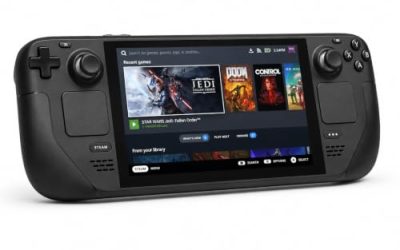
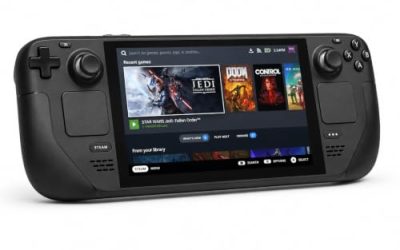
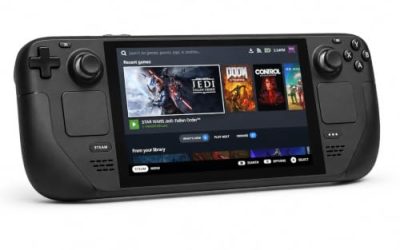
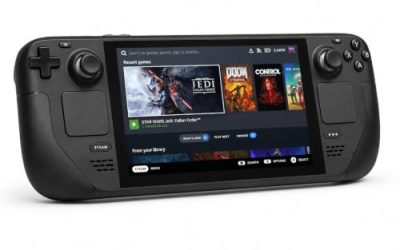
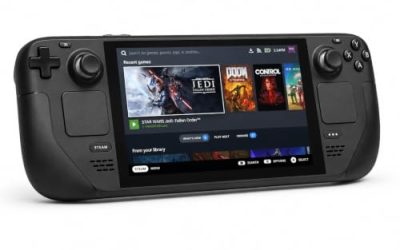
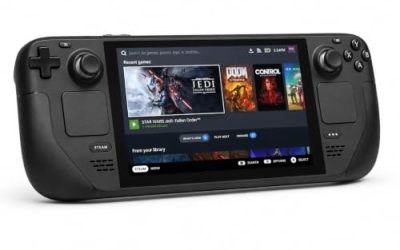
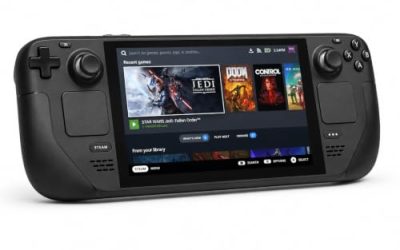
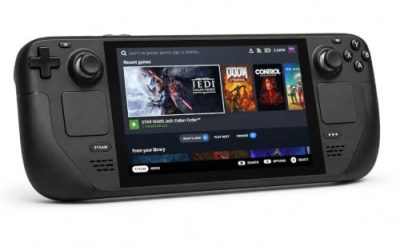
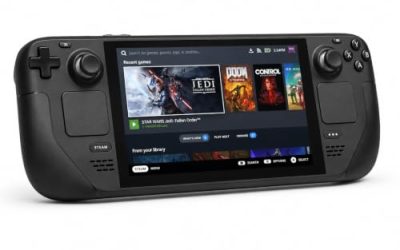
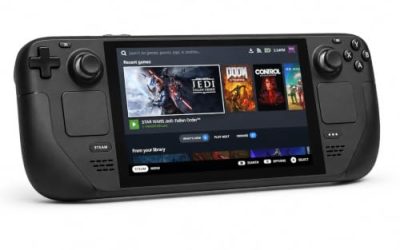
Valve Steam Deck OLED 512GB

The handheld the Verified badge was written for, and one of the few whose test sheet names the native runtime. A game of brief visits across 400 days suits a device that wakes fast.
Specs
- Display: 7.4-inch HDR OLED, 1280 by 800, up to 90 Hz
- Processor: AMD Zen 2 and RDNA 2 custom APU
- Memory: 16 GB LPDDR5
- Storage: 512 GB NVMe, plus a microSD slot
- Wireless: Wi-Fi 6E and Bluetooth
- Channel note: Valve sells the Deck mainly through its own store, so Amazon listings are third-party sellers
8BitDo Ultimate 2 Bluetooth Controller

The docked and desktop pad pick: full controller support is on the record, and this pad covers the couch case with modern sticks, triggers and back buttons for menu shortcuts.
Specs
- Connectivity: Bluetooth wireless and USB-C wired
- Joysticks: TMR electromagnetic, anti-drift design
- Triggers: Hall effect, with mode switching
- Extras: two remappable back buttons, motion control
- In the box: charging dock included
Xbox Wireless Controller, Carbon Black

The safest guest pad in PC gaming: Steam Input support is universal, the glyphs match what most games display, and it pairs over Bluetooth or its own wireless standard. Valve’s sheet raises no controller caveats for this game, so pairing one is straightforward.
- Connectivity: Xbox Wireless and Bluetooth
- Port: USB-C for wired play
- Controls: hybrid D-pad, dedicated Share button
- Power: AA batteries or optional rechargeable pack
Logitech G502 HERO

THE LONGING is a point-and-click at heart, and at a desk a precise wired mouse suits its slow exploration and reading sessions. Eleven programmable buttons cover the inputs a long session repeats.
Specs
- HERO optical sensor, up to 25,600 DPI
- 11 programmable buttons
- Adjustable weight system
- Wired USB connection
- On-board memory profiles
Samsung T9 Portable SSD 2TB

For moving a Linux game library between machines, or keeping an offline backup of installers, a fast USB-C drive is the simple answer. The headline figure needs a Gen 2×2 host port; lesser ports run at their own ceiling.
Specs
- Capacity: 2 TB portable SSD
- Interface: USB 3.2 Gen 2×2, USB-C connector
- Maker-rated speeds: up to 2,000 MB per second read, 1,950 MB per second write
- Features: Dynamic Thermal Guard, maker-rated drop resistance
How to choose
Choose either storefront on its own merits: Steam for the edition the Deck sheet and ProtonDB file describe, or GOG if you prefer that shelf. On desktop, install the native build and start there; the published minimum is too low for hardware to be the decision. Keep Proton in mind for one narrow reason: the single report of achievements failing to trigger natively. If achievements matter across a 400-day run, weigh it before the clock starts. On Deck, the Verified badge means no configuration work is expected.
Who should skip
Skip the premise, not the port, if a game advancing in real time over 400 days sounds like a chore: the countdown is the game. Skip the native build for Proton if the achievement report would bother you across the run. Skip both editions if you only buy on high-confidence community files: this one is Platinum but thin, 8 reports at low confidence. And skip the Deck paperwork as buying evidence if you need a test of the current build; the sheet dates to 2022.
FAQ
Is THE LONGING native on Linux?
Yes. Steam flags Linux true, publishes a populated Linux requirements tab naming Ubuntu and SteamOS, and the store package grants a 2.09 GiB Linux depot. The verdict rests on the game’s own record, not its soundtrack’s flag.
How does the 400-day timer work?
The game counts down 400 days in real time from your first start, and the clock keeps running while the game is closed. What you do with the Shade’s time underground — exploring, reading, decorating — is the game itself.
Is THE LONGING Steam Deck Verified?
Yes. Valve gives it the top category, Verified, with all four checks passing, and the test sheet’s recommended runtime reads native, so the badge certifies the Linux build. The test dates to July 2022, on an older build than the current branch.
Can I buy THE LONGING on GOG instead?
Yes. GOG’s own catalogue record lists Windows, Linux and OS X, so a GOG edition exists and claims the same native support as the Steam copy, which remains the edition the Deck and ProtonDB records describe.
Final verdict
THE LONGING is that rare entry in this series where every layer points the same way: a true Linux flag backed by a requirements tab written for real drivers, a 2.09 GiB Linux depot delivered by the store package, a ProtonDB Native classification that agrees instead of straying, and a Deck Verified badge earned on the native runtime. The caveats are about weight, not direction: the community file is thin at 8 reports, one flags an achievement quirk on the native build, and Valve’s sheet dates to 2022. None of it overturns the verdict. On Linux this is a native game, on either storefront, and the only real decision it asks is whether you want to spend 400 days with it.
Product and ASIN Reference
| Product | ASIN |
|---|---|
| Valve Steam Deck OLED 512GB | B0CQ3RWQQZ |
| 8BitDo Ultimate 2 Bluetooth Controller | B0F194QFT2 |
| Xbox Wireless Controller, Carbon Black | B08DF248LD |
| Logitech G502 HERO | B07GBZ4Q68 |
| Samsung T9 Portable SSD 2TB | B0CHFS9K14 |