ScourgeBringer is a fast-paced roguelite platformer from Flying Oak Games and E-Studio, published by Dear Villagers and released on 21 October 2020. You play Kyhra, the strongest warrior of her clan, sent into a shifting machine-tower over a post-apocalyptic world, fighting room to room with a sword, a drone companion and an air-dash. Runs are short, deaths are permanent, and progress between runs is bought with what the fallen drop.
For a Linux player the question is narrower: does the store record deliver a real Linux build, or does the platform flag rest on paperwork alone? This article rules on the record as it stands today — Steam’s store data, the depot table, every app in the family, the community compatibility file, Valve’s Deck sheet and the GOG catalogue, each read directly.
As an Amazon Associate, we earn from qualifying purchases.
Quick answer
Yes — ScourgeBringer is genuinely native on Linux. Steam flags all three platforms, its Linux requirements are filled in at both tiers, and the store package delivers a dedicated Linux depot. Valve rates it Verified on Steam Deck, and a GOG edition lists Linux too. The family flags need care: the soundtrack’s Linux flag is bare paperwork.
What Steam’s own record says
The store record for app 1037020 is titled ScourgeBringer, and it names Flying Oak Games and E-Studio as developers and Dear Villagers as publisher, with a release date of 21 October 2020. Its platform flags read Windows true, Mac true and Linux true. The genres are Action, Adventure and Indie, and the category list is long: Single-player, Steam Achievements, Full controller support, Steam Trading Cards, accessibility entries including Camera Comfort, Adjustable Difficulty and Save Anytime, Steam Cloud, a level editor, Remote Play and Family Sharing.
The Linux requirements field is genuinely populated at both tiers, the first thing that separates a real port from a flag. The minimum tier names Ubuntu 18.04 or Debian 9 in 64-bit form, a 64-bit processor at 1.5 GHz, 2048 MB of RAM, an OpenGL 3.0 compliant card and driver, and 500 MB of storage. The recommended tier raises the processor to a multi-core chip at 2 GHz and adds that a game controller is recommended. The Windows and Mac fields are populated at both tiers as well.
Two gaps belong on the record. The store data carries no DRM notice field and no external account notice — nothing on the record asks for a second account or names an additional protection layer, stated here as an absence rather than a promise.
The depot table and the store package
Paperwork can be filled in without a build behind it, so the depot table decides the case. SteamDB lists four platform depots: Windows 64-bit at 347.04 MiB, macOS at 398.69 MiB, a dedicated Linux depot, numbered 1037023, at 349.23 MiB, and Windows 32-bit at 359.68 MiB. The Linux depot’s own page lists the store package — named simply ScourgeBringer, Store or CD Key billing — among its packages, so the build is delivered to buyers, not merely documented. Its manifest holds 83 files, including a native shared library and a shell script.
The public branch stands on a build dated 28 April 2026, so the branch still moves; alongside it sit an editor branch for the modding tools and a legacy branch for pre-2026 compatibility builds. Two metadata fields complete the picture: the architecture field reads 64, and the extended OS field reads macos64 — Mac packaging metadata that says nothing against the Linux build.
The family: a soundtrack flag and a supporter pack caveat
The full add-on array holds exactly two apps, each read individually. The Supporter Pack flags all three platforms true and carries a Linux requirements field populated at the minimum tier — but its own notes state that the prototypes included in the pack are not compatible with Linux, so its flag carries that maker-stated exception. Its content depot is the largest in the family at 2.16 GiB.
The Soundtrack is the trap in its classic form. It flags all three platforms true, while its Mac and Linux requirements fields are empty lists outright and its Windows field holds only a storage line — a bare flag on an audio product, named here so nobody buys on it. The family flag count reads three of three on paper, but only the game’s flag carries the native case, and that case never rests on the music.
Anti-cheat, from three sources
The three sources were kept separate, and all three come back negative. Steam’s record names no anti-cheat: the category list is single-player only, and neither notice field exists. The depot database’s detected technologies are the MonoGame and XNA engines with the FMOD and SDL libraries and a dotnet entry — engine and audio plumbing, no anti-cheat among them. The community anti-cheat tracker’s full dataset, searched by name and by app id, carries no entry for this game. There is no multiplayer here for an anti-cheat to guard.
The ProtonDB file
ProtonDB’s summary feed could not be read this session — the summary address returned a page-not-found response on repeated attempts — so this article claims no tier split and no confidence figure from it. What the game’s ProtonDB page itself shows can still be reported at the weight it carries: the page classifies ScourgeBringer as Native under its Natively Supports heading, agreeing with Steam’s own record, and the file holds 13 reports. Several were filed as native runs; a few others concern the separate GOG copy run through community launchers, a different store copy rather than the Steam record’s position.
The Steam Deck sheet
Valve’s own compatibility endpoint answered directly this session: resolved category three, Verified, with all four Verified items passing — default controller configuration, glyphs, legible text, and a performant default graphics setup. SteamOS separately rates the game Compatible.
The dated paperwork comes from the depot database’s republication of Valve’s compatibility data, disclosed here as in the article: the test is dated 2 March 2022, with proton-7.0-1 named as the recommended runtime. That line matters: the badge as tested certifies the Windows build running under Proton, even though the same package delivers a native Linux build. The paperwork also predates the current public branch build, which moved in April 2026. Both points are stated rather than smoothed over.
The GOG edition
A GOG edition exists, and it lists Linux. The ruling rests on GOG’s own records, not its search results: the live product page’s works-on line names Windows, Linux and Mac OS X, and GOG’s product record marks all three systems compatible, with a release date matching Steam’s. The DRM-free storefront is a second Linux route.
Gear that fits the record
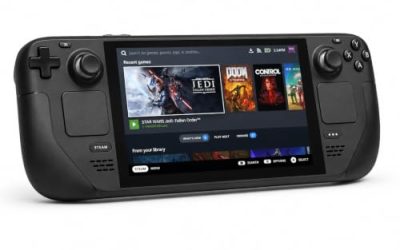
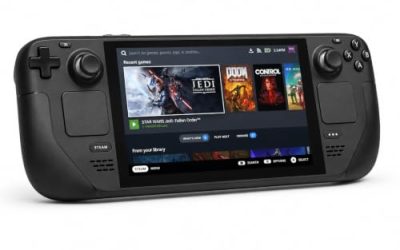
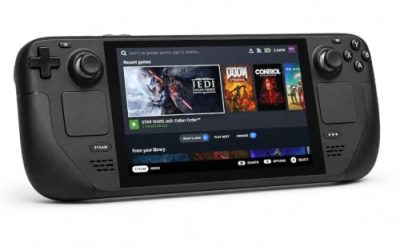
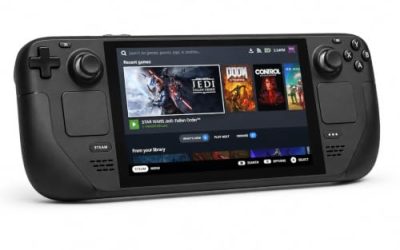
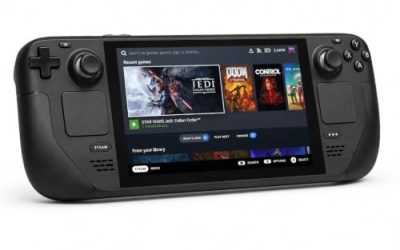
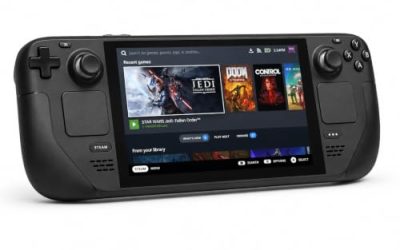
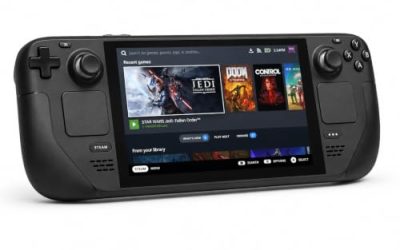
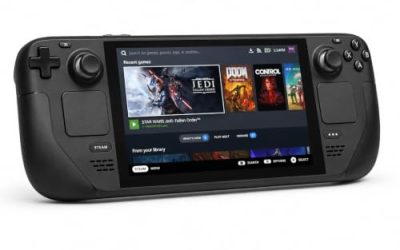
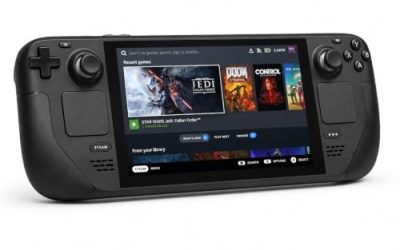
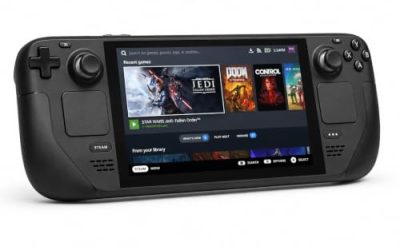
Valve Steam Deck OLED 512GB

The handheld the Verified badge was written for. The game’s requirements sit far below the Deck’s APU, and the native build sits in the package for it to run.
Specs
- Display: 7.4-inch HDR OLED, 1280 by 800, up to 90 Hz
- Processor: AMD Zen 2 and RDNA 2 custom APU
- Memory: 16 GB LPDDR5
- Storage: 512 GB NVMe, plus a microSD slot
- Wireless: Wi-Fi 6E and Bluetooth
- Channel note: Valve sells the Deck mainly through its own store, so Amazon listings are third-party sellers
8BitDo Ultimate 2 Bluetooth Controller

The record’s recommended tier says a game controller is recommended, and this is the pad for the docked and desktop case: modern sticks and triggers, back buttons, and a charging dock.
Specs
- Connectivity: Bluetooth wireless and USB-C wired
- Joysticks: TMR electromagnetic, anti-drift design
- Triggers: Hall effect, with mode switching
- Extras: two remappable back buttons, motion control
- In the box: charging dock included
Xbox Wireless Controller, Carbon Black

The safest guest pad in PC gaming: Steam Input support is universal, the glyphs match what most games display, and it pairs over Bluetooth or its own wireless standard.
- Connectivity: Xbox Wireless and Bluetooth
- Port: USB-C for wired play
- Controls: hybrid D-pad, dedicated Share button
- Power: AA batteries or optional rechargeable pack
Logitech G502 HERO

ScourgeBringer can be aimed with the mouse — the category list even carries a Mouse Only Option — and at a desk a precise wired mouse makes that style exact. Eleven programmable buttons cover the dash, shot and menu inputs a fast run repeats.
Specs
- HERO optical sensor, up to 25,600 DPI
- 11 programmable buttons
- Adjustable weight system
- Wired USB connection
- On-board memory profiles
Samsung T9 Portable SSD 2TB

For moving a Linux game library between machines or keeping offline installer backups, a fast USB-C drive is the simple answer. The headline figure needs a Gen 2×2 host port; on a lesser port the drive runs at that ceiling.
Specs
- Capacity: 2 TB portable SSD
- Interface: USB 3.2 Gen 2×2, USB-C connector
- Maker-rated speeds: up to 2,000 MB per second read, 1,950 MB per second write
- Features: Dynamic Thermal Guard, maker-rated drop resistance
How to choose
Install the native build first. It is the route the store package delivers, the tab describes it honestly at both tiers, and its demands are modest enough that almost any Linux machine clears the recommended line. Choose your storefront on preference: Steam and GOG both list Linux, so buy where your library already lives. On the Deck, either route ends at the same Verified badge; the native install is the simpler default, and the old Proton-based test sheet is a historical note, not a setup instruction. If you want the Supporter Pack for its prototypes, read its own note first — the makers state those prototypes are not compatible with Linux.
Who should skip
Skip the soundtrack’s platform flags as buying evidence; they are a bare flag on a music product. Skip the Supporter Pack if the prototypes are the whole reason for buying — on Linux the pack’s own paperwork excludes them. Skip the game itself if short, punishing runs are not your shape of fun: permadeath and repetition are the design, though the Adjustable Difficulty category softens the landing. And skip any decision resting on ProtonDB summary figures for this title — the feed did not answer this session, so the honest file is the Native classification and the 13 reports, nothing more.
FAQ
Is ScourgeBringer native on Linux?
Yes. Steam flags Linux true, the requirements tab is populated at both tiers, and the store package contains a dedicated Linux depot whose manifest lists a native shared library.
Is ScourgeBringer Steam Deck Verified?
Yes. Valve’s own record rates it Verified, all four items passing, and SteamOS separately rates it Compatible. The dated test paperwork names a Proton runtime and an older build, so the badge as tested describes the Windows build under Proton; the native build ships in the same package.
Does the soundtrack prove a Linux build?
No. The Soundtrack flags all three platforms while its Mac and Linux requirements fields are empty lists outright — a bare flag on an audio product. It is named here so nobody buys on it; the game’s native build is proven by the game’s own tab, depot and package.
Can I buy ScourgeBringer on GOG for Linux?
Yes. A GOG edition exists, and both its product page and its product record list Linux alongside Windows and Mac — a real second route, separate from the Steam record.
Final verdict
ScourgeBringer is one of the clean native records: a true flag backed by a populated two-tier tab, a sized Linux depot inside the store package, a GOG edition listing Linux in its own right, and a Verified Deck badge. The wrinkles are clerical, not substantive: a soundtrack flag with nothing behind it, a supporter pack whose prototypes its own notes exclude from Linux, Deck paperwork that names Proton and predates the current build, and a ProtonDB summary feed that did not answer this session. On Linux, install the native build and climb.
Product and ASIN Reference
| Product | ASIN |
|---|---|
| Valve Steam Deck OLED 512GB | B0CQ3RWQQZ |
| 8BitDo Ultimate 2 Bluetooth Controller | B0F194QFT2 |
| Xbox Wireless Controller, Carbon Black | B08DF248LD |
| Logitech G502 HERO | B07GBZ4Q68 |
| Samsung T9 Portable SSD 2TB | B0CHFS9K14 |