WHAT THE GOLF? is Triband’s physics comedy in which almost nothing that gets hit is a golf ball: cars, chairs, houses and the golfer all take turns flying toward the hole. It reached Steam on 22 October 2020 with single-player courses, shared-screen multiplayer and a level editor. For Linux players, the useful question is narrower than the joke: does this party game ship a real penguin build, or is the Linux line on its store page another flag with nothing behind it?
The record answers cleanly, and it answers yes. Steam flags all three desktop platforms true, the Linux requirements tab carries real values at both tiers, and the depot table holds a dedicated Linux build still being updated on the current branch. Valve’s Steam Deck paperwork names the native runtime, and GOG sells an edition listing Linux outright.
As an Amazon Associate, we earn from qualifying purchases.
Quick answer
Yes. WHAT THE GOLF? ships a genuine native Linux build: Steam flags Linux true, the Linux requirements tab carries real values, and a dedicated 64-bit Linux depot of about 667 MB sits in the store package on the current build. Valve rates it Steam Deck Verified with the native runtime named, and GOG sells a Linux edition too.
Three flags, three depots: the platform record
Start with the flags. Steam’s record for app 785790 reads windows true, mac true and linux true, and the requirements tabs back the Linux flag with content. The Linux minimum and recommended tiers are identical and admittedly thin — 2 GB of RAM and 1 GB of available storage, with no operating system, processor or graphics line at either tier — but they are published values under both headings, not an empty shell and not an empty list. The Windows tab is fuller, so that brevity reads as clerical laziness rather than a missing port.
The depot table settles what the thin tab leaves open. SteamDB lists three content depots: Windows at 668.36 MiB, macOS at 655.70 MiB and a dedicated Linux depot, named WHAT THE GOLF? Linux, at 666.85 MiB in a 64-bit configuration. The Linux depot’s own page lists the store package among its packages, so the build is what buyers receive, and its current manifest belongs to the public branch’s December 2024 build, native shared libraries among its files — no fossil port, but a build that moved with the game’s latest branch update. The app’s osarch reads 64, while osextended reads macos64 and macosnotarized, Mac packaging metadata.
Two gaps belong on the record. Steam publishes no drm_notice and no external account notice, so nothing is claimed about copy protection beyond that silence. The asset list’s Linux client icon, leftover artwork in other games, is here backed by the real depot.
The one relative: a soundtrack that proves nothing
The full downloadable content array holds exactly one app, read individually: the WHAT THE GOLF? Soundtrack, a music product released a year after the game. It flags all three platforms true while its Linux requirements field is an empty list outright — the classic soundtrack shape, a bare flag on an audio file, named here so nobody mistakes it for evidence. The game’s native case never needed it: flag, tab and depot all belong to the game itself.
Anti-cheat and the multiplayer question
The category list includes multi-player and PvP entries, but read closely they are the shared and split screen kinds: couch multiplayer on one machine, plus Remote Play Together, not an online ladder with a server to protect. Three sources, kept separate, agree there is nothing running. Steam names no anti-cheat and publishes no account requirement. SteamDB’s detected technologies are the Unity Engine, the Mono SDK and the UnityIL2CPP SDK — engine plumbing, not a watchdog. The Are We Anti-Cheat Yet dataset carries no entry for this app, searched by name and by app id. Local multiplayer with no anti-cheat and no account layer is the whole story.
ProtonDB: a Gold headline over a native file
ProtonDB’s summary API answered in full: headline tier Gold, best-reported Platinum, trending Platinum, across 22 reports at moderate confidence. The game page classifies the title as native under its Natively Supports heading, and for once the heading and the store record agree completely — the clean-agreement case, not the stray-tag pattern seen on so many Windows-only games.
The Gold headline needs one sentence of framing. The pool mixes two routes: reports filed under the native runtime, describing clean play on desktop and Deck alike, and older reports filed under named Proton versions. Pooled across both routes the grade lands at Gold, though the native reports read like a Platinum file: untroubled apart from a recurring minor note of texture flicker in a boss fight and later episodes, while the outright failures date from 2020 and early Proton versions. Judge the game by its native reports, not the pooled letter.
Steam Deck: Verified, and the badge names the native runtime
Valve rates WHAT THE GOLF? Steam Deck Verified, with SteamOS separately Compatible. The verdict and paperwork were read from SteamDB’s republication of Valve’s compatibility data, because Valve’s own endpoint returned an unreadable response this session; that path is disclosed rather than hidden. All the Verified items pass: full functionality on the default controller configuration, legible interface text, and a default graphics configuration that performs well.
The dated paperwork matters more than the badge. Valve’s test ran on 23 February 2022 against build 7742468, and its recommended runtime is native — the sheet certifies the Linux build itself, not a Windows build carried by Proton. One caveat: the public branch has since moved to a December 2024 build, so the paperwork predates the build a buyer downloads today. The depot is current and community Deck reports under the native runtime remain clean, but the stamp was earned on an older build.
GOG: a second shelf, also listing Linux
A GOG edition of WHAT THE GOLF? exists and lists Linux. The ruling rests on GOG’s own live product page — identity checked against the title and the Triband credit — whose structured data names Windows, Linux and macOS as its operating systems. GOG’s catalogue search returned nothing for the name, that storefront’s known blind spot rather than evidence of absence; the product page itself is the record.
Gear for a game that launches the furniture
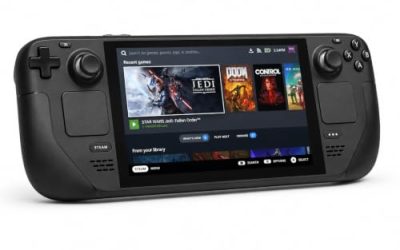
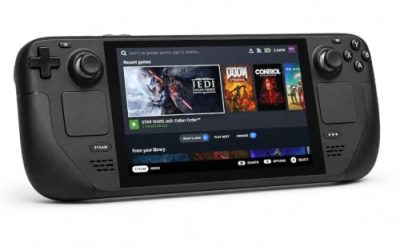
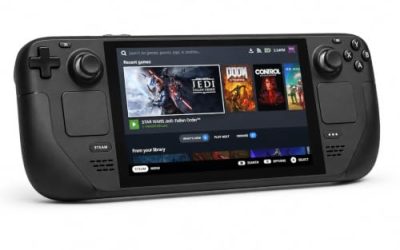
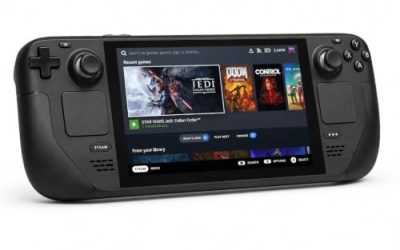
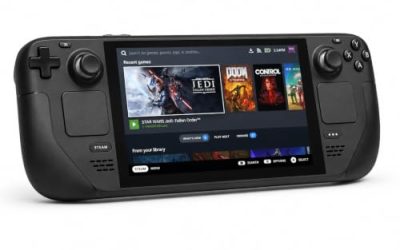
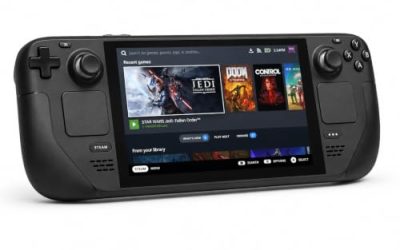
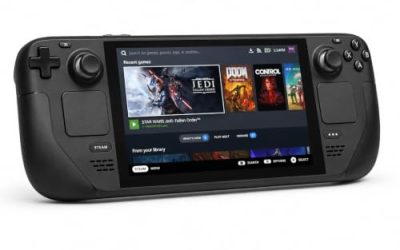
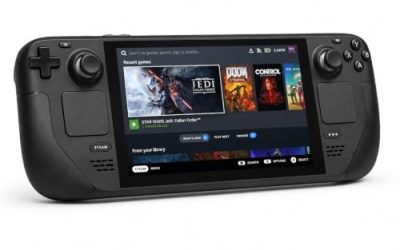
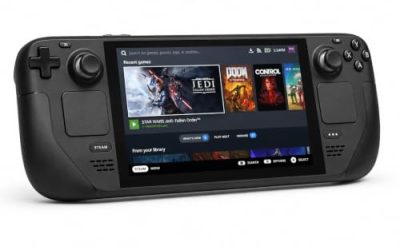
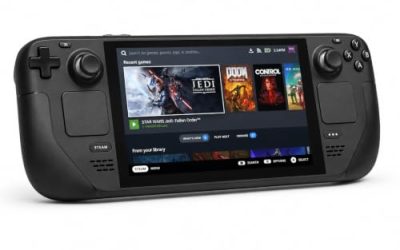
Valve Steam Deck OLED 512GB

The handheld whose test sheet this game passed on its native runtime. A 667 MB Linux build with a 2 GB memory floor asks almost nothing of the APU, and the shared-screen modes suit a handheld passed around the room.
Specs
- Display: 7.4-inch HDR OLED, 1280 by 800, up to 90 Hz
- Processor: AMD Zen 2 and RDNA 2 custom APU
- Memory: 16 GB LPDDR5
- Storage: 512 GB NVMe, plus a microSD slot
- Wireless: Wi-Fi 6E and Bluetooth
- Channel note: Valve sells the Deck mainly through its own store, so Amazon listings are third-party sellers
8BitDo Ultimate 2 Bluetooth Controller

The extra pad a couch game always needs. Steam lists partial controller support for this title, and this pad covers the spare seats with modern sticks, triggers and back buttons.
Specs
- Connectivity: Bluetooth wireless and USB-C wired
- Joysticks: TMR electromagnetic, anti-drift design
- Triggers: Hall effect, with mode switching
- Extras: two remappable back buttons, motion control
- In the box: charging dock included
Xbox Wireless Controller, Carbon Black

The safest guest pad in PC gaming: Steam Input support is universal, the glyphs match what most games display, and it pairs over Bluetooth or its own wireless standard. For one-screen multiplayer, that plug-and-play record is the point.
- Connectivity: Xbox Wireless and Bluetooth
- Port: USB-C for wired play
- Controls: hybrid D-pad, dedicated Share button
- Power: AA batteries or optional rechargeable pack
Logitech G502 HERO

The level editor is the one part of this game that rewards a mouse: a precise wired sensor makes placing hazards and platforms a deliberate click at a time, and eleven programmable buttons cover the editor’s repeated inputs.
Specs
- HERO optical sensor, up to 25,600 DPI
- 11 programmable buttons
- Adjustable weight system
- Wired USB connection
- On-board memory profiles
Samsung T9 Portable SSD 2TB

For moving a Linux game library between machines, or keeping an offline backup of installers, a fast USB-C drive is the simple answer. The headline figure needs a Gen 2×2 host port; on a lesser port the drive runs at that ceiling.
Specs
- Capacity: 2 TB portable SSD
- Interface: USB 3.2 Gen 2×2, USB-C connector
- Maker-rated speeds: up to 2,000 MB per second read, 1,950 MB per second write
- Features: Dynamic Thermal Guard, maker-rated drop resistance
How to choose
Route first, storefront second. On Steam, install and play: the native build is the default, the depot is current, and no compatibility layer needs configuring. On GOG, the edition lists Linux on its own product page, so the same no-layer route applies. On the Deck, the Verified badge was earned under the native runtime the handheld runs by default; the only asterisk is the paperwork’s age against the current build, answered by the still-clean run of native community reports. The hardware bar is the published one — 2 GB of memory, a gigabyte of storage — so the real choice is controllers: one pad per couch player, a mouse if the level editor is part of the plan.
Who should skip
Skip it if your golf has to be golf: the premise is a joke told at the sport’s expense, and players wanting licensed courses, realistic ball physics or a career ladder will find none here. Skip it if you only play online — the multiplayer is shared-screen and Remote Play, with no online matchmaking on the record. Skip it if a thin requirements tab bothers you on principle; the depot evidence is strong, but Triband’s published Linux paperwork is two lines long. And skip the Deck badge’s reassurance if you demand a current-build test: it dates from 2022, though the native line it certified is the one the store still ships.
FAQ
Is WHAT THE GOLF? native on Linux or does it need Proton?
Native. Steam flags Linux true with a populated requirements tab, and a dedicated 64-bit Linux depot of 666.85 MiB sits in the store package on the current public build, its manifest carrying native shared libraries. Proton is an option some early reporters used, not a requirement.
Does the Steam Deck Verified badge cover the Linux build?
Yes. Valve’s test sheet names the native runtime as recommended, so the badge certifies the Linux build itself. The test dates from February 2022, on an older build than the one now served.
Is there a Linux version on GOG?
Yes. GOG’s own product page for the game lists Windows, Linux and macOS in its structured operating system data. The ruling comes from that page, not from GOG search, which returned nothing for the name.
Does the soundtrack’s Linux flag mean anything?
No. The soundtrack app flags all three platforms while publishing an empty Linux requirements list — a bare flag on an audio product. The game’s native case rests on its own flag, tab and depot, and would stand without the soundtrack.
Final verdict
WHAT THE GOLF? is one of the straightforward files in this series: a true Linux flag, a populated if brief Linux tab, a sized Linux depot in the store package that still tracks the current build, a Deck Verified badge earned on the native runtime, and a GOG edition listing Linux on its own page. The caveats are small — Deck paperwork from 2022, a pooled Gold headline that undersells ProtonDB’s native reports, a tab that says less than the depots prove. Buy it on either storefront and play the build the store serves; no layer, no workaround.
Product and ASIN Reference
| Product | ASIN |
|---|---|
| Valve Steam Deck OLED 512GB | B0CQ3RWQQZ |
| 8BitDo Ultimate 2 Bluetooth Controller | B0F194QFT2 |
| Xbox Wireless Controller, Carbon Black | B08DF248LD |
| Logitech G502 HERO | B07GBZ4Q68 |
| Samsung T9 Portable SSD 2TB | B0CHFS9K14 |