Teslagrad is Rain Games’ hand-drawn puzzle platformer about a boy crossing the abandoned Tesla Tower with magnetism and electromagnetic powers, in a steampunk vision of old Europe. It launched on 13 December 2013, and with a remaster and a sequel now crowding the store, the original’s platform record is easy to misread. This article checks that record layer by layer.
The short version is unusually clean. Steam’s record supports a native Linux build on every layer that matters: the platform flag, the published requirements and the depot table all agree, and the Linux depots sit inside the package a purchase delivers. Valve has also tested the game on Steam Deck using that native build.
As an Amazon Associate, we earn from qualifying purchases.
Quick answer
Yes. The original Teslagrad is native on Linux. Steam flags Linux support, publishes Linux system requirements at both tiers, and ships separate 32-bit and 64-bit Linux depots inside the store package. Valve rates it Playable on Steam Deck, tested on the native build, and GOG sells the same game with a Linux installer.
What the Steam record says
Start with the store record for app 249590, the original Teslagrad and nothing else. It names Rain Games as both developer and publisher, gives the release date as 13 December 2013, and flags all three desktop platforms as supported: Windows, Mac and Linux are each marked true. The categories are single-player, Steam Achievements, full controller support, Steam Trading Cards, Steam Cloud, Remote Play on TV and Family Sharing; the genre field reads Indie.
The requirements fields back the flag up. The Linux minimum field is genuinely populated: a dual-core processor at 2 GHz, 2 GB of RAM, hardware-accelerated graphics with dedicated memory, and 1 GB of storage. The recommended field is populated too, asking for the same processor, 4 GB of RAM and graphics hardware with 1 GB of memory. One quirk worth stating exactly: the Linux field names no operating system line, listing only processor, memory, graphics and storage, while the Windows minimum starts from Windows XP with Service Pack 3. A populated two-tier Linux field is the first thing fake listings usually lack.
Two absences belong on the record as gaps: no DRM notice and no external account notice, so no third-party DRM or linked account stands in a buyer’s way.
The depot layer: two Linux builds in the store package
Flags and text fields are claims; depots are deliveries. SteamDB’s depot table lists a Windows build at 754.94 MiB, a Mac build at 497.61 MiB, a Linux 32-bit build named Teslagrad Linux32 at 760.33 MiB, and a Linux 64-bit build named Teslagrad Linux64 at 758.64 MiB. The Linux64 manifest is a real Unity build, holding asset files alongside native shared libraries, not an empty placeholder.
The package question decides whether any of this reaches a buyer, and it settles cleanly. Both Linux depots belong to the package named Teslagrad, sub 30242, whose billing type is Store or CD Key: the package a normal purchase grants, so the Linux builds are delivered by buying the game, not locked inside a press or developer package. SteamDB also lists an osextended value of macos64: Mac packaging metadata that changes nothing on the Linux side. The public branch sits on build 5498089 from September 2020, which matters for the Deck section below.
The family sweep: one soundtrack, judged separately
The game’s full downloadable-content array holds exactly one app: the Teslagrad Soundtrack, app 650900, released on 15 June 2017 as a separate purchase. Read on its own record, the soundtrack flags Windows, Mac and Linux all true, and its requirements fields on every platform reduce to one line saying the operating system is any. That is the standard soundtrack shape: a bare flag on an audio product, whose files play anywhere and whose flag proves nothing about any game.
The soundtrack is therefore set aside, and the verdict rests on the game alone: its own flag, requirements and depots. Teslagrad Remastered and Teslagrad 2 are likewise separate apps with their own records; this article rules only on the 2013 original.
Steam Deck: Playable, and tested on the native build
Valve’s compatibility file for the game, read through SteamDB’s republication of Valve’s data (Valve’s own endpoint returned nothing usable in this session), rates Teslagrad Playable on Steam Deck, with SteamOS separately marked Compatible. The default graphics configuration performs well, and in-game interface text is legible. One note holds it at Playable rather than Verified: some functionality is not accessible under the default controller configuration, requiring the touchscreen, a virtual keyboard or a community configuration.
The paperwork is current. Valve tested the game on 8 October 2022 against build 5498089, and the public branch still serves build 5498089 today, so the badge describes the exact build a buyer downloads now. The configuration block adds the detail that makes this entry unusual: the recommended runtime Valve recorded is the native one. The test ran against the Linux build itself, not the Windows build under Proton: independent confirmation that the native build is the shipping article.
ProtonDB: a thin file, reported exactly
ProtonDB’s summary endpoint answered in full, and its file is thin enough to state in one breath. The overall tier stands at pending, as does the trending tier, because the file holds only two reports. The best-reported tier across those reports is Platinum, and the provisional tier is also Platinum, but ProtonDB marks its own confidence in the file as inadequate, with a score of 0.21. The community file barely exists for this title.
The thinness is expected: ProtonDB grades Windows builds under Proton, and a native Linux build gives most desktop players no reason to file a report. The two Platinum-leaning reports describe the fallback route working; the primary route is the native build, and Valve’s Deck test is what grades it.
Anti-cheat and account checks
Three sources, kept separate, all come back negative. Steam’s record names no anti-cheat and carries no notices, which fits a single-player-only game. SteamDB’s detected technologies are the Unity Engine and the Mono SDK, engine plumbing only. The Are We Anti-Cheat Yet dataset, all 1,167 entries searched by name and app number, carries no entry for Teslagrad.
GOG: the original is sold there with a Linux installer
GOG’s own product record settles the second-storefront question. The GOG product titled Teslagrad, from Rain Games, matching the Steam record’s developer and description, lists three installers: Windows, Mac and Linux. So a GOG edition of the original exists, carrying a native Linux build of its own. Identity matters here, because the remaster circulates as its own product; the record ruled on is the original game’s.
Gear that fits the record
The gear below follows the record’s shape: the handheld Valve tested the native build on, two pads for docked and desktop play, a mouse for the desk, and library storage.
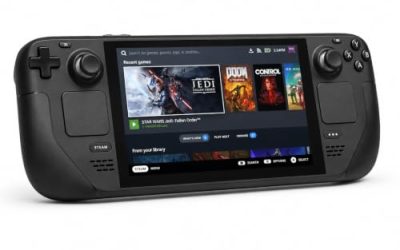
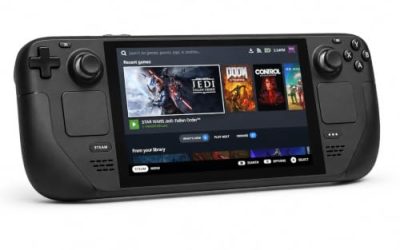
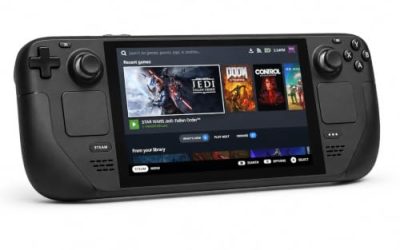
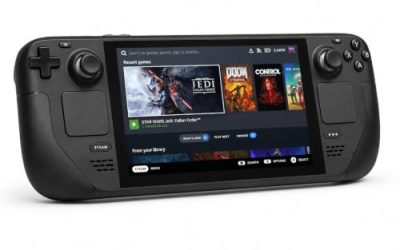
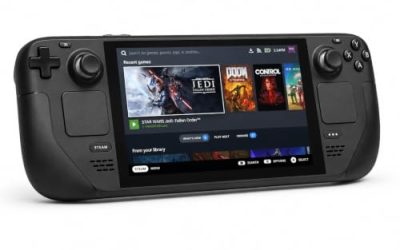
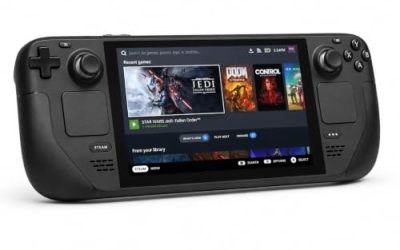
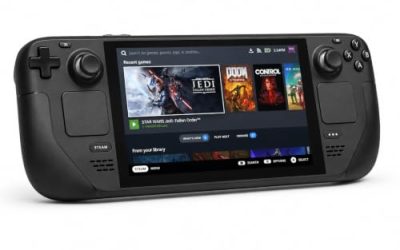
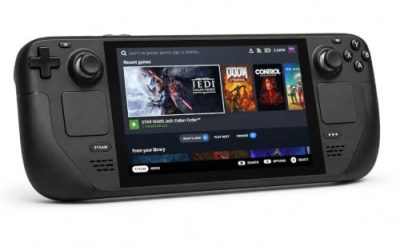
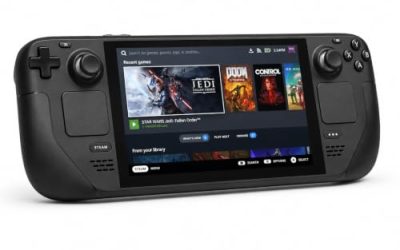
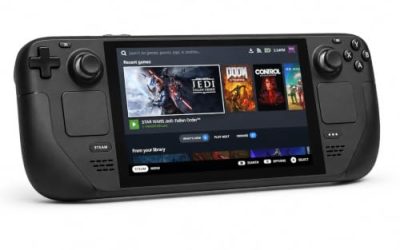
Valve Steam Deck OLED 512GB

The handheld Valve’s test sheet covers. The badge was earned by the native build rather than a Proton fallback, and the game’s requirements are a rounding error next to the Deck’s APU; the one caveat is the controller note.
Specs
- Display: 7.4-inch HDR OLED, 1280 by 800, up to 90 Hz
- Processor: AMD Zen 2 and RDNA 2 custom APU
- Memory: 16 GB LPDDR5
- Storage: 512 GB NVMe, plus a microSD slot
- Wireless: Wi-Fi 6E and Bluetooth
- Channel note: Valve sells the Deck mainly through its own store, so Amazon listings are third-party sellers
8BitDo Ultimate 2 Bluetooth Controller

The docked and desktop pad pick. Steam lists full controller support, and this pad covers the couch case with modern sticks, triggers and back buttons.
Specs
- Connectivity: Bluetooth wireless and USB-C wired
- Joysticks: TMR electromagnetic, anti-drift design
- Triggers: Hall effect, with mode switching
- Extras: two remappable back buttons, motion control
- In the box: charging dock included
Xbox Wireless Controller, Carbon Black

The safest guest pad in PC gaming: Steam Input support is universal, the glyphs match what most games display, and it pairs over Bluetooth or its own wireless standard.
- Connectivity: Xbox Wireless and Bluetooth
- Port: USB-C for wired play
- Controls: hybrid D-pad, dedicated Share button
- Power: AA batteries or optional rechargeable pack
Logitech G502 HERO

Teslagrad is a pad-first game, but desktop sessions still pass through menus, maps and library screens, and a precise wired mouse turns those into single clicks. Eleven programmable buttons cover the inputs a long session repeats.
Specs
- HERO optical sensor, up to 25,600 DPI
- 11 programmable buttons
- Adjustable weight system
- Wired USB connection
- On-board memory profiles
Samsung T9 Portable SSD 2TB

For moving a Linux game library between machines, or keeping an offline backup of installers such as the GOG Linux build, a fast USB-C drive is the simple answer. The headline figure needs a Gen 2×2 host port; on a lesser port the drive runs at that ceiling.
Specs
- Capacity: 2 TB portable SSD
- Interface: USB 3.2 Gen 2×2, USB-C connector
- Maker-rated speeds: up to 2,000 MB per second read, 1,950 MB per second write
- Features: Dynamic Thermal Guard, maker-rated drop resistance
How to choose
Choose the Steam copy if the Deck badge matters to you, because Valve’s Playable rating belongs to that edition, and the store package delivers both Linux depots with Steam Cloud saves on top. Choose the GOG copy if a standalone Linux installer matters more; its product record lists one for the same original game. On either storefront, install and launch the native build directly: no compatibility layer to configure, and ProtonDB’s pending tier describes a fallback you should not need.
Who should skip
Skip the original if the remaster is the edition you want; it is a separate app, and nothing here grades it. Skip the Deck plan if the controller note bothers you: some functionality sits outside the default configuration, and reaching it means the touchscreen, a virtual keyboard or a community layout. Skip the Proton route if your evidence standard is a deep community file: ProtonDB holds just two reports. And skip the soundtrack as buying evidence; it is an audio product, judged separately above.
FAQ
Is the original Teslagrad native on Linux?
Yes, on every layer of the record. Steam flags Linux as supported, the Linux requirements field is populated at both tiers, and SteamDB’s depot table lists separate 32-bit and 64-bit Linux builds belonging to the store package a purchase delivers.
Does the soundtrack’s Linux flag change the verdict?
No. The soundtrack is a separate app whose record flags all three platforms with a requirements field that simply says the operating system is any. Audio files carry platform flags without shipping a build of anything. The verdict rests on the game’s own flag, requirements and depots.
How does Teslagrad run on Steam Deck?
Valve rates it Playable, with SteamOS marked Compatible, from a test run in October 2022 on the same build the public branch still serves: default graphics perform well and interface text is legible. One note keeps it below Verified: some functionality is not accessible under the default controller configuration, so expect occasional touchscreen or community-layout use.
Is this article about Teslagrad Remastered or Teslagrad 2?
Neither. Both are separate store apps with their own records, and neither was merged into this verdict. This article covers only the original Teslagrad, app 249590, released on 13 December 2013 by Rain Games. The remaster’s Linux status needs its own check.
Final verdict
The original Teslagrad is native on Linux, and the record is one of the cleanest in this series: a true platform flag, a two-tier populated Linux requirements field, two real Linux depots granted by the store package, and a Deck test Valve ran against the native build on the build still served today. The soundtrack’s flag is the family’s only false signal, disarmed by reading its own record. Buy it on Steam for the badge and cloud saves, or on GOG for the standalone Linux installer; either way, no compatibility layer stands between you and the Tesla Tower.
Product and ASIN Reference
| Product | ASIN |
|---|---|
| Valve Steam Deck OLED 512GB | B0CQ3RWQQZ |
| 8BitDo Ultimate 2 Bluetooth Controller | B0F194QFT2 |
| Xbox Wireless Controller, Carbon Black | B08DF248LD |
| Logitech G502 HERO | B07GBZ4Q68 |
| Samsung T9 Portable SSD 2TB | B0CHFS9K14 |