Jenny LeClue – Detectivu, Mografi’s hand-drawn detective adventure from September 2019, gives Linux players two different answers depending on the shop. Steam’s record is a no: the platform flags list Windows and Mac, the Linux flag is off, and a purchase delivers the Windows and Mac builds. GOG’s shelf says the opposite, listing Linux among the systems its edition works on.
The Steam side also hides the strangest evidence this series has logged: a filled-in Linux requirements tab, and a real 1.26 GiB Linux depot inside the store package that never appears in the app’s own depot table, untouched since May 2021. This piece separates the shelves: what Steam flags, what its depots deliver, what GOG lists, and how the Windows build travels under Proton and on Steam Deck.
As an Amazon Associate, we earn from qualifying purchases.
Quick answer
Jenny LeClue – Detectivu is not native on Steam: the Linux flag is off and the depot table holds only Windows and Mac builds, so Steam players use Proton, where Valve rates it Deck Verified. A native Linux edition exists on one shelf: GOG lists Linux support.
The status at a glance
| Question | Answer from the record |
|---|---|
| Native Linux build on Steam | No — flag off, no Linux depot in the app’s depot table |
| Linux requirements tab | Populated at the minimum tier only |
| Linux depot | Real 1.26 GiB build, stranded in the package since May 2021 |
| ProtonDB record | Best-reported Platinum, headline Pending, 4 reports |
| Steam Deck verdict | Verified, tested May 2026 on the Windows build under Proton |
| GOG edition | Exists, and lists Linux support |
| Anti-cheat or launcher | None named on the store record |
What Steam’s flags and requirements say
Steam’s appdetails record for Jenny LeClue – Detectivu (app 319870) names Mografi as developer and publisher, released 19 September 2019. The platform flags read Windows true, Mac true, Linux false. Genres run Action, Adventure, Casual and Indie, and the categories include Single-player, Steam Achievements, Full controller support, Steam Cloud and Family Sharing.
The requirements fields are where a quick reader gets misled. The Windows minimum is genuinely populated (Windows 7, Intel i5 Quad-Core, 2 GB RAM, Intel HD 4000, 2 GB storage, 64-bit), the Mac minimum matches it from Mac OS X 10.8, and both recommended tiers are effectively empty. The Linux field follows the Mac shape: its minimum tier names Ubuntu 12.04 and SteamOS 2.0 with the same core figures, recommended tier empty.
That Linux tab is text, not a build: a requirements field is store-page text, and here it sits under a platform flag that is switched off. The record names no third-party DRM and no external account requirement — both notice fields are absent. SteamDB’s detected technologies are the Unity Engine, Mono, SteamworksNET, UnityBurst and cURL, engine plumbing only, and Are We Anti-Cheat Yet carries no entry for it — the expected silence for a single-player adventure.
The Linux depot Steam never hands over
The delivery question is settled by the depot table, and here the record turns unusual. The app’s depot list on SteamDB holds three depots: 319874, the Windows 64-bit build at 2.23 GiB; 319872, the macOS depot at 1.23 GiB; and 319871, a Windows content depot marked unused, with no size. The two real builds account for the game’s full 3.46 GiB on disk. No Linux depot appears in the app’s table.
A Linux depot does exist. Depot 319873, named Jenny LeClue – Detectivu Linux Depot, is no empty shell: its manifest, dated 13 May 2021, holds 1.26 GiB on disk, with executables, shared libraries and a Unity data file of over half a gigabyte among its 290 files. The store package, sub 49653, even names it among its depots. Yet the depot’s own page records that no app references it, so the client delivers the two builds in the app’s table and the Linux build stays on the shelf. Its last public update was 14 May 2021; the Windows depot moved as recently as July 2026 (public branch build 24043907).
So the Steam verdict is precise rather than simple. A native Linux build was made, and its files still sit in Valve’s system with the store package pointing at them, but Steam does not sell or deliver it: the flag is off, the depot table omits it, and a purchase on a Linux machine hands over the Windows build for Proton. Any page calling the Steam version native is reading the requirements tab, or the depot’s existence, one step short of the delivery check.
The GOG exception
GOG sells the same game — the identity checks line up: same title, Mografi, the same 19 September 2019 release date, and the same account of Jenny’s investigation in Arthurton, her mother accused of murder. On GOG’s product page, the compatibility line reads Works on: Windows, Linux, Mac OS X, and the page’s own FAQ answers that the game is officially supported on Windows, Linux and macOS.
This is a split-storefront game. The native Linux edition exists and is on sale; it is simply not the Steam copy. Neither page is wrong about its own stock: Steam’s record describes a Windows and Mac delivery with a Proton route, GOG’s a three-system edition with offline installers. The two shelves sell genuinely different products, which is why the storefront must be named before the verdict makes sense.
ProtonDB: a Platinum best on a four-report file
ProtonDB’s summary record for app 319870 was read in full, and it is thin. Best-reported and provisional tiers: Platinum. Headline and trending tiers: Pending. Total reports: 4, with confidence rated inadequate. Read plainly, the Windows build can run cleanly under Proton, and the sample is far too small to settle the question — a promising file, not a documented one.
One check could not be completed: the game page did not load in time this session, so its native-classification heading went unread. The article neither claims agreement nor alleges the stray Natively Supports heading seen elsewhere; the gap is stated rather than papered over.
Steam Deck: Verified on the Windows build
Valve’s compatibility record, read through SteamDB’s republication of Valve’s data, gives the game the top category: Verified, SteamOS Compatible. All four Verified items pass: every function is accessible on the default controller configuration, the game shows Steam Deck controller icons, the in-game text is legible, and the default graphics configuration performs well.
Two details keep the badge in proportion. The recommended runtime is a Proton 11.0 beta build, so the badge certifies the Windows build under Proton, not a native port. And the paperwork is one step behind the branch: Valve tested on 16 May 2026 against build 23238417; the public branch has since moved to build 24043907. The verdict is Valve’s latest word, written against the previous build.
Gear that fits the case
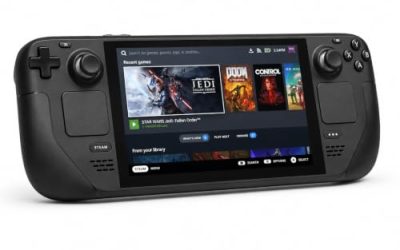
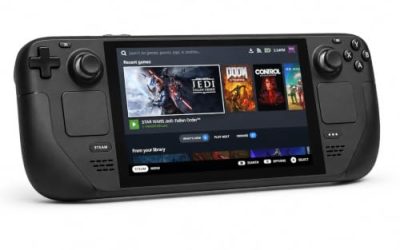
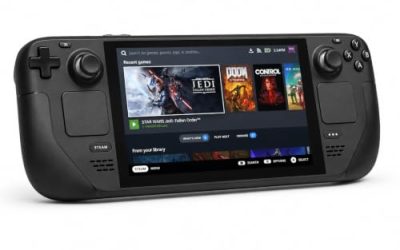
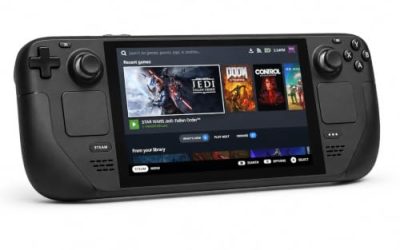
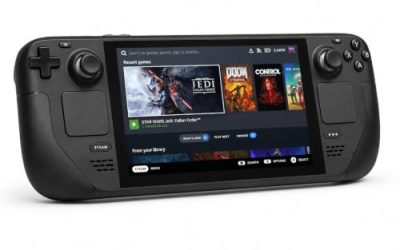
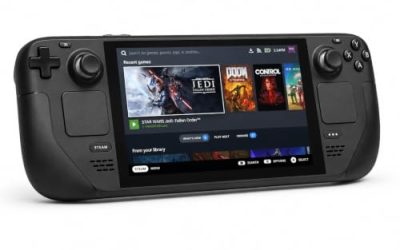
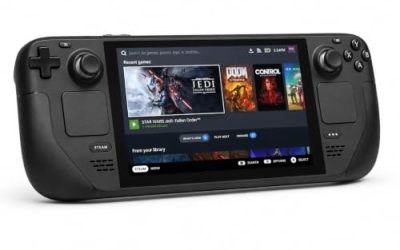
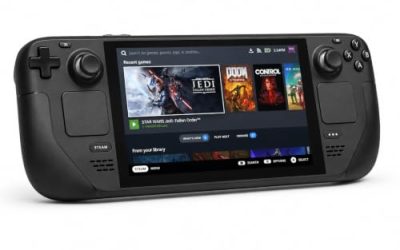
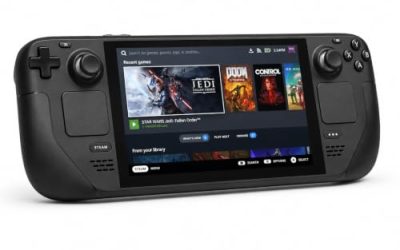
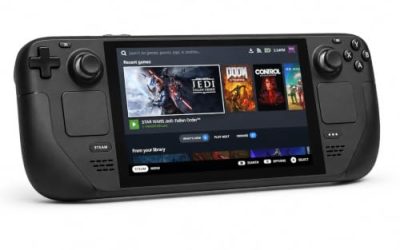
Valve Steam Deck OLED 512GB

The handheld Valve’s Verified sheet describes: all four checks pass, text is legible at native resolution, and the game’s small footprint is a rounding error on this drive.
Specs
- Display: 7.4-inch HDR OLED, 1280 by 800, up to 90 Hz
- Processor: AMD Zen 2 and RDNA 2 custom APU
- Memory: 16 GB LPDDR5
- Storage: 512 GB NVMe, plus a microSD slot
- Wireless: Wi-Fi 6E and Bluetooth
- Channel note: Valve sells the Deck mainly through its own store, so Amazon listings are third-party sellers
8BitDo Ultimate 2 Bluetooth Controller

The store page adds a gamepad-recommended note to its full controller support, and this pad covers the docked and desktop cases with modern sticks, triggers and back buttons.
Specs
- Connectivity: Bluetooth wireless and USB-C wired
- Joysticks: TMR electromagnetic, anti-drift design
- Triggers: Hall effect, with mode switching
- Extras: two remappable back buttons, motion control
- In the box: charging dock included
Xbox Wireless Controller, Carbon Black

The safest guest pad in PC gaming: Steam Input support is universal, the glyphs match what games display, and it pairs over Bluetooth or its own wireless standard.
- Connectivity: Xbox Wireless and Bluetooth
- Port: USB-C for wired play
- Controls: hybrid D-pad, dedicated Share button
- Power: AA batteries or optional rechargeable pack
Logitech G502 HERO

Jenny’s investigation scenes are pointer work: sweeping a room for the detail that cracks a conversation. At a desk, a precise wired mouse speeds that up, and eleven buttons cover the confirm, cancel and camera inputs.
Specs
- HERO optical sensor, up to 25,600 DPI
- 11 programmable buttons
- Adjustable weight system
- Wired USB connection
- On-board memory profiles
Samsung T9 Portable SSD 2TB

For moving a Linux game library between machines, or keeping an offline backup of installers such as the GOG edition’s, a fast USB-C drive is the simple answer. The headline figure needs a Gen 2×2 host port; on a lesser port the drive runs at that ceiling instead.
Specs
- Capacity: 2 TB portable SSD
- Interface: USB 3.2 Gen 2×2, USB-C connector
- Maker-rated speeds: up to 2,000 MB per second read, 1,950 MB per second write
- Features: Dynamic Thermal Guard, maker-rated drop resistance
How to choose
Choose by shelf first. If a native Linux build is the requirement, the GOG edition is the copy that lists one, sold with offline installers. If your library lives on Steam, the Steam copy under Proton is the route: the Verified badge covers the Deck experience, and the best-reported ProtonDB tier is Platinum on a file too small to treat as settled. On desktop, leave the compatibility tool at its default; nothing in the four-report record justifies pinning a version. For input, follow the store page’s steer: a pad is the recommended shape, a mouse earns its place at a desk.
Who should skip
Skip the Steam copy if you are shopping for a native Linux build there: the flag is off and the one Linux depot on file is never delivered, whatever the requirements tab suggests. Skip it if a four-report ProtonDB file with inadequate confidence is not reassurance enough. Skip the game if you need a finished story today — this is part one of Jenny’s case and closes on a to-be-continued note — or if dialogue-led adventures are not your pace, because conversation and observation carry this one.
FAQ
Is Jenny LeClue native on Linux?
On Steam, no: the Linux flag is off and the depot table holds only Windows and Mac builds, so a purchase delivers the Windows build for Proton. On GOG, yes: that edition lists Linux, so the native build is sold there instead.
Why does the Steam page show Linux system requirements?
Because the requirements field is populated text, not a delivery promise. The minimum tier names Ubuntu 12.04 and SteamOS 2.0, but the platform flag above it is off and no Linux depot appears in the app’s depot table. A real Linux depot is on file, depot 319873, but no app references it, so the client never hands it over.
How well does Jenny LeClue run under Proton?
The best reports are excellent, the evidence thin: Platinum on the best-reported and provisional tiers, Pending on headline and trending, from only 4 reports with inadequate confidence. Valve’s Deck testing, under a Proton 11.0 beta runtime, passed every check.
Is Jenny LeClue Steam Deck Verified?
Yes: Verified, all four items passing, tested 16 May 2026 against build 23238417. The branch has since moved to build 24043907, so the paperwork predates the current build by one step, and the badge certifies the Windows build under Proton, not a native port.
Final verdict
Jenny LeClue is the rare game whose Linux answer changes with the shop. Steam’s record is a layered almost: a populated Linux requirements tab and a genuine 1.26 GiB Linux depot unreferenced since May 2021, under a flag that is off — so the Steam copy is a Windows and Mac delivery, played through Proton with a Verified Deck badge and a promising but four-report community file. GOG’s record is the plain yes. Buy the GOG copy for a native build, the Steam copy for the Deck paperwork and your library, and do not let a filled-in requirements tab sell you a Steam port that never ships.
Product and ASIN Reference
| Product | ASIN |
|---|---|
| Valve Steam Deck OLED 512GB | B0CQ3RWQQZ |
| 8BitDo Ultimate 2 Bluetooth Controller | B0F194QFT2 |
| Xbox Wireless Controller, Carbon Black | B08DF248LD |
| Logitech G502 HERO | B07GBZ4Q68 |
| Samsung T9 Portable SSD 2TB | B0CHFS9K14 |