Deadside is a hardcore online shooter-survival game from developer Bad Pixel, published on Steam by Bad Pixel and tinyBuild exactly as the store record reads today. It left Early Access with its full release on 5 December 2024, and Steam’s category list frames the whole design: Multi-player, MMO, PvP, Online PvP, Co-op and Online Co-op. There is no offline mode to fall back on, so for a Linux player the question is not just whether the build starts, but whether the anti-cheat layer lets a Proton session stay connected.
The short answer is that the record closes the door twice. Steam flags the game Windows-only with an empty Linux tab behind the flag, and the anti-cheat paperwork is the real wall: Steam’s own listing names BattlEye, Valve’s Deck test sheet rules the game Unsupported because its anti-cheat is not configured for the platform, and the trackers describe a Proton file slid from workable to broken.
As an Amazon Associate, we earn from qualifying purchases.
Quick answer
Deadside has no native Linux build: Steam flags Windows only and the Linux tab is an empty shell. Steam’s own listing names BattlEye anti-cheat, the trackers rate the Proton route broken, ProtonDB’s headline is Bronze trending Borked across 32 reports, and Valve rules the Steam Deck Unsupported. Desktop Linux players face a gated, deteriorating route, not a supported one.
The Steam record
Steam’s appdetails record for app 895400, confirmed as the game app through Steam’s own store search, sets windows true, mac false and linux false. The linux_requirements field is an empty shell: Minimum and Recommended headings printed over empty lists, the Mac field in the same shape. SteamDB’s depot fields carry no Linux marker either, the extended operating-system field reading as an empty string, so flag, tab and depots all agree. This is not a split record.
The published Windows minimum gives the shape of the build Proton would be asked to carry: a 64-bit Windows 7, 8.1 or 10 system, a Core i3 or AMD FX processor, 4 GB of RAM, a GeForce GT 1030 or Radeon RX 550 class card, DirectX 11, a broadband connection and 25 GB of storage. The record names no controller-support category, so gamepads enter only as Steam Input mapping devices.
The family sweep closes one familiar loophole. All sixteen add-on apps were read individually: the Supporter Pack and fifteen skin sets, from Hooligan and Tribal through DragonSkin, Anatomical Atlas and Flags. Every one is typed as downloadable content and flags Windows only. No music-type app exists in the family and there is no demo, so the soundtrack trap cannot form: the Linux-flag count is zero of seventeen including the game.
On protection, the record is silent in the formal fields: no drm_notice and no external account notice, so no DRM product is named there and no third-party account is required by the paperwork. That silence should be read narrowly; it says nothing about the anti-cheat layer, which lives in a different part of the record and is covered next.
Anti-cheat, source by source
The three records are kept separate here, because they do not say the same thing the same way.
Steam’s own record first. The structured appdetails fields name no anti-cheat category and carry no anti-cheat notice, but Steam’s store-level anti-cheat listing for this game, republished in SteamDB’s record of the game’s Steam data, names it in plain text: BattlEye, with the note that it requires manual removal after the game uninstalls. The same record carries a dependency mapping a runtime from Windows to Linux, app 1826330, commented as the EAC runtime: the shape of a Proton anti-cheat runtime wired into the package. Neither line promises that the anti-cheat accepts Proton sessions, and the Deck sheet below shows Valve reading the configuration the other way.
SteamDB’s detected-technologies scan independently names BattlEye AntiCheat in the build, alongside the Unreal Engine and the audio, physics and voice components. Detection is not enablement: finding the anti-cheat’s files says the software is present, not that its Linux-facing support switch is on.
Are We Anti-Cheat Yet, matched by name and by app id 895400, lists Deadside with two anti-cheats named, Easy Anti-Cheat and BattlEye, marks the game as not native, and gives the status as Broken. Its update trail runs in an instructive order: an entry dated March 2022 records the game as seemingly still broken, and one dated April 2022 records EAC support being enabled, yet the standing status remains Broken, the entry last changed in September 2024. Whatever was switched on in 2022, the configuration is not, today, one that supports the Linux route. Tools that spoof or bypass an anti-cheat check are terms violations that risk the account, never a route.
What the ProtonDB file says
ProtonDB’s summary record answered in full this session, and it is a divided file. The headline tier is Bronze, the best-reported tier is Platinum, and the trending tier is Borked, across 32 reports with strong confidence. Those lines describe a game some players once ran at the highest level, whose recent reports have collapsed: the trend, not the historical best, is the current position. An online-only game whose gatekeeper is not configured for Proton produces exactly this shape of history, a workable past and a broken present.
Steam Deck: Unsupported, and the sheet says why
Valve’s own compatibility endpoint returned empty and garbled responses this session, so the Deck record was read through SteamDB’s republication of Valve’s compatibility data for this app, the fallback route this project uses and discloses. The verdict is Unsupported, category 1, with SteamOS separately Unsupported. What makes this sheet unusual is that it gives its reason in words: the display lines state that this game’s anti-cheat is not configured to support Steam Deck, and the same line is repeated for SteamOS. The platform refusal is an anti-cheat refusal, stated by Valve itself.
The test paperwork is current: the sheet is dated 26 August 2026, on build 23853884, with a recommended runtime from the Proton 11 release-candidate line. Its configuration notes record supported input as other, flag small in-game text, and note that invoking the keyboard manually is required. Because the verdict is Unsupported, the gear below is framed for desktop and laptop play only.
The storefront ruling
There is no second copy to weigh. GOG’s embed search returns no Deadside product, and the would-be product address redirects to GOG’s general games catalogue, that storefront’s behaviour for a title it does not sell. No GOG edition exists, so the Steam copy is ruled the only PC edition: the question is never which store to buy from, only whether the gated Proton route above is one a Linux player accepts.
Gear that fits the record
With the Deck ruled out by its own test sheet, the gear below is a desktop set: a remappable keyboard, a precision mouse, two pads for the Steam Input route, and fast library storage.
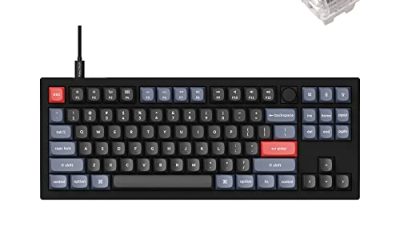
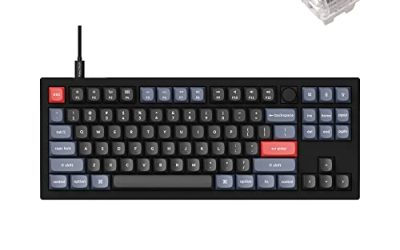
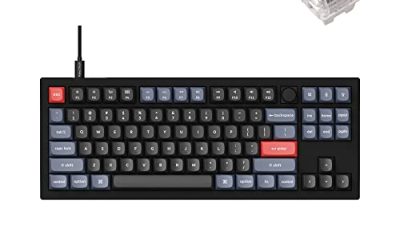
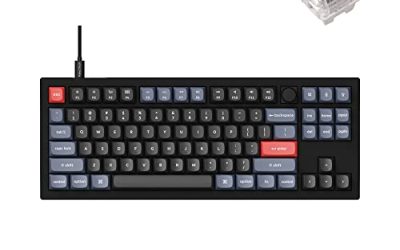
Keychron V3

The keyboard pick for desktop sessions: a tenkeyless board with QMK and VIA support lets you remap keys at the keyboard level, which keeps working across every Linux install.
Specs
- Tenkeyless layout with rotary knob
- QMK and VIA remapping support
- Hot-swappable K Pro Brown switches
- Wired USB-C connection
- Maker-rated 1,000 Hz polling
8BitDo Ultimate 2 Bluetooth Controller

The pad pick for players who prefer a controller through Steam Input: modern sticks and triggers, back buttons for repeated inputs, and a dock that keeps it charged.
Specs
- Connectivity: Bluetooth wireless and USB-C wired
- Joysticks: TMR electromagnetic, anti-drift design
- Triggers: Hall effect, with mode switching
- Extras: two remappable back buttons, motion control
- In the box: charging dock included
Xbox Wireless Controller, Carbon Black

The safest guest pad in PC gaming: Steam Input support is universal and it pairs over Bluetooth or its own wireless standard. Deadside publishes no controller category, so any pad here works as a Steam Input device rather than a natively supported one.
- Connectivity: Xbox Wireless and Bluetooth
- Port: USB-C for wired play
- Controls: hybrid D-pad, dedicated Share button
- Power: AA batteries or optional rechargeable pack
Logitech G502 HERO

A hardcore shooter lives on aim and quick inventory work, and at a desk a precise wired mouse is the native tool for both. Eleven programmable buttons cover the inputs a long session repeats.
Specs
- HERO optical sensor, up to 25,600 DPI
- 11 programmable buttons
- Adjustable weight system
- Wired USB connection
- On-board memory profiles
Samsung T9 Portable SSD 2TB

For moving a game library between machines, or keeping an offline backup of installers, a fast USB-C drive is the simple answer. The headline figure needs a Gen 2×2 host port; on a lesser port the drive runs at that ceiling.
Specs
- Capacity: 2 TB portable SSD
- Interface: USB 3.2 Gen 2×2, USB-C connector
- Maker-rated speeds: up to 2,000 MB per second read, 1,950 MB per second write
- Features: Dynamic Thermal Guard, maker-rated drop resistance
How to choose
Choose with the anti-cheat record, not the store page, in front of you. The Steam copy is the only PC edition, so the real decision is whether to buy an online-only game whose paperwork names BattlEye, whose tracker status reads Broken, and whose ProtonDB trend reads Borked. A player who games on Windows, or dual-boots for titles in this class, can treat the Linux sections as a warning label and buy normally. A Linux-only player should read the Bronze headline and the Borked trend as the answer, and spend the money on a survival title whose record leaves the door open.
Who should skip
Skip this one if you are Linux-only and play online: Deadside has no offline mode, so a blocked anti-cheat gate is the whole game out of reach, not an inconvenience. Skip it if you are shopping for Steam Deck play, because Valve’s sheet rules the game Unsupported and names the anti-cheat configuration as the reason. Skip it if a divided ProtonDB file is not reassurance enough: the Platinum best-reported tier is a historical line, and the trending tier describes recent attempts. And skip it if you want a DRM-free offline installer, because no GOG edition exists.
FAQ
Is Deadside native on Linux?
No. Steam’s record for app 895400 flags Windows only, the Linux requirements field is an empty shell of headings over empty lists, and no app in the sixteen-item add-on family flags Linux either.
Does Deadside’s anti-cheat work under Proton?
The records say the route is broken. Steam’s own listing names BattlEye, Are We Anti-Cheat Yet lists Easy Anti-Cheat and BattlEye with a Broken status, and Valve’s Deck sheet states the anti-cheat is not configured for the platform.
How well does Deadside run under Proton?
ProtonDB’s summary reads Bronze on the headline tier, Platinum on the best-reported tier and Borked on the trending tier, across 32 reports with strong confidence. The split describes a game that once ran well for some reporters and whose recent reports fail.
Is Deadside playable on Steam Deck?
No. Valve’s record rates it Unsupported, SteamOS also Unsupported, and the sheet’s display lines give the reason: the anti-cheat is not configured to support Steam Deck. The sheet was last tested on 26 August 2026.
Final verdict
Deadside is a Windows-only online shooter whose Linux file closes from three directions at once: an empty platform record with no native build anywhere in its family, an anti-cheat layer Steam itself attaches BattlEye’s name to while Valve states it is not configured for the platform, and a ProtonDB file whose trend has fallen to Borked. Windows and dual-boot players can buy the Steam copy as the only PC edition and play as designed. Linux-only players, and anyone shopping for the Deck, should treat this as a pass until the anti-cheat configuration changes on the record.
Product and ASIN Reference
| Product | ASIN |
|---|---|
| Keychron V3 | B0B2DMMMG2 |
| 8BitDo Ultimate 2 Bluetooth Controller | B0F194QFT2 |
| Xbox Wireless Controller, Carbon Black | B08DF248LD |
| Logitech G502 HERO | B07GBZ4Q68 |
| Samsung T9 Portable SSD 2TB | B0CHFS9K14 |