Sunkenland is Vector3 Studio’s post-apocalyptic survival game, launched in August 2023 and still carrying the Early Access genre label on its Steam record today: dive into drowned cities, scavenge the skyscrapers and subway tunnels, build a base above the waterline, trade, fight and survive, alone or in online co-op. The Linux question has a short answer and a longer one. The short answer is that no native Linux build exists. The longer one is that the Windows build carries a strong Proton file, and Valve has reviewed it on Steam Deck.
This article reads the record end to end: the platform flags, the whole app family, the DRM and anti-cheat paperwork from three sources, the ProtonDB file, Valve’s Deck test sheet, and the GOG catalogue.
As an Amazon Associate, we earn from qualifying purchases.
Quick answer
Sunkenland does not run natively on Linux: Steam flags the game Windows-only and publishes no Linux requirements at all. The Windows build runs through Proton instead, where 18 reports support a Platinum headline with a Gold trending tier. Valve rates it Playable on Steam Deck, with controller support needing a manual switch inside the game’s own settings. There is no GOG edition.
The native question, read from the record
Steam’s appdetails record for app 2080690 flags Windows true, Mac false and Linux false. The Linux requirements field is an empty list outright: no Linux tab in any form, not even the empty shell of headings other records carry, and the Mac field reads the same way. SteamDB’s depot record backs the flags: its operating-system architecture and extended-platform fields are both empty strings, so no Linux depot hides behind the flag. This is not a split record, and the native count for this game is zero.
The published Windows minimum is modest: Windows 7, an Intel Dual-Core processor at 2.4 GHz, 8 GB of RAM and a GeForce 8800GT, with no storage or DirectX line published at all. The recommended tier raises the processor to a quad core, memory to 16 GB and the graphics card to a GeForce GTX 560. The category list shows the game’s shape: Single-player, Multi-player, Co-op, Online Co-op and Family Sharing. Just as notable is an absence: no controller-support category and no controller support field of any kind, which matters again on the Deck sheet below.
The family sweep is the shortest in recent batches. The record lists no DLC array and no demo, and Steam’s store search returns exactly one app under this name. There is no soundtrack app, so the soundtrack trap cannot form: the family’s Linux-flag count is zero of one, the game app itself, and there is nothing else to misread.
DRM and anti-cheat: three sources, two gaps
The record carries no DRM notice and no external account notice. No DRM product is named anywhere on it, and no account or launcher layer is named either. Both silences are stated here as gaps, not certifications: this article names no product the record does not.
Anti-cheat is reported from three sources, kept separate. Steam names none: no notice and no category, despite the published Online Co-op category. SteamDB’s detected technologies are the Unity Engine with its Mono, Burst and HDRP components, the Photon SDK, SteamworksNET and cURL: engine and library plumbing, with Photon in its usual place as the networking layer under the co-op. No anti-cheat system appears in that list. Are We Anti-Cheat Yet carries no entry for this game: its full dataset, read directly from the project’s own repository, was searched by name and by app id 2080690 and returned nothing. The Deck test sheet carries no anti-cheat deduction either, so the desktop and Deck positions agree: co-op is a published feature with no gate named by any readable source.
The Proton file: Platinum headline, Gold trend
ProtonDB’s summary record answers in full. The headline tier is Platinum, the best-reported tier is Platinum, the trending tier is Gold, across 18 reports, with confidence rated good. That split is the honest shape of the file: the strongest reports describe a game running at the ceiling, while the recent trend sits one tier lower.
One contradiction needs naming. ProtonDB’s game page carries a “Natively Supports” header for this title. Steam’s own record refutes it: the Linux flag reads false, the requirements field is an empty list, and no Linux depot exists. The header is a leftover label on the community page, not a build, and this article follows Steam throughout.
The report texture is consistent with the split. Multiplayer is the reassuring part: several reports rate online play Good or Excellent, describing co-op sessions that work without Linux-specific problems, matching the record’s silence on anti-cheat. The friction is performance over time: a strand of reports describes sessions slowing down after half an hour or more, with a reload restoring speed. The route stands: install the Steam copy, leave the compatibility tool at its default, and treat the trending tier as the expectation for long sessions.
Steam Deck: Playable, with one switch to flip
Valve’s own compatibility endpoint returned empty and garbled responses this session, so the Deck record below was read from SteamDB’s republication of Valve’s compatibility data, the established fallback route for this series. The verdict is Playable, category 2, and SteamOS separately reads Compatible.
The passing items are the load-bearing ones: all functionality is accessible with the default controller configuration, interface text is legible, and the default graphics configuration performs well. The deductions are input-side. The game sometimes shows mouse, keyboard or non-Steam-Deck controller icons. Entering some text requires manually invoking the on-screen keyboard. And the sheet’s most distinctive item: this game requires manually enabling controller support using its in-game settings, a direct echo of the desktop record, which names no controller support at all. A note adds that external controllers do not take over by default and may need a manual Quick Access Menu switch.
The test sheet is dated: tested 1 September 2023, build 12038838, with proton-stable as the recommended runtime. That is launch-week paperwork, written days after the August 2023 release, and the article claims it exactly as published while resting the current desktop case on the fresher ProtonDB file.
The other storefront: no GOG edition
GOG does not sell Sunkenland. Its catalogue and embed searches return no product for the title, and the address a product page would occupy redirects to the storefront’s general games catalogue, how that shop treats a game it does not carry. The Steam copy is therefore ruled the only PC edition and the buy.
Gear that fits the record
The gear below follows the record’s shape: the handheld Valve tested, two pads for co-op, a mouse for base-building sessions, and fast storage.
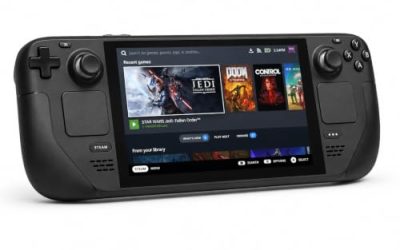
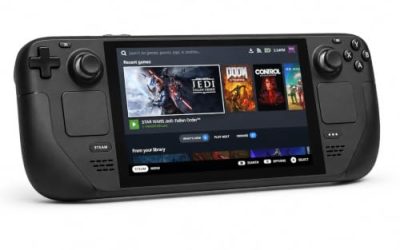
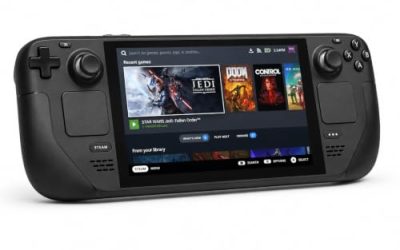
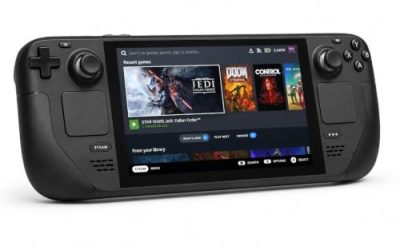
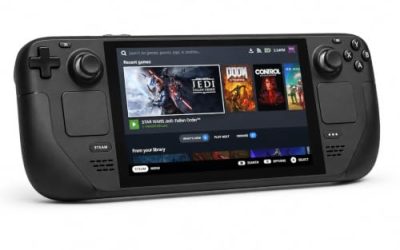
Valve Steam Deck OLED 512GB

The handheld Valve’s Playable sheet was written for. The published Windows requirements are light next to the Deck’s APU; the one job the sheet assigns you is enabling controller support inside the game’s own settings.
Specs
- Display: 7.4-inch HDR OLED, 1280 by 800, up to 90 Hz
- Processor: AMD Zen 2 and RDNA 2 custom APU
- Memory: 16 GB LPDDR5
- Storage: 512 GB NVMe, plus a microSD slot
- Wireless: Wi-Fi 6E and Bluetooth
- Channel note: Valve sells the Deck mainly through its own store, so Amazon listings are third-party sellers
8BitDo Ultimate 2 Bluetooth Controller

The co-op pad pick. Sunkenland is built around multiplayer sessions, and this pad covers the second seat with modern sticks, triggers and back buttons for inventory and build shortcuts.
Specs
- Connectivity: Bluetooth wireless and USB-C wired
- Joysticks: TMR electromagnetic, anti-drift design
- Triggers: Hall effect, with mode switching
- Extras: two remappable back buttons, motion control
- In the box: charging dock included
Xbox Wireless Controller, Carbon Black

The safest guest pad in PC gaming: Steam Input support is universal, and it pairs over Bluetooth or its own wireless standard. On the handheld, the test sheet’s note applies: an external pad may need a manual Quick Access Menu switch before it takes over.
- Connectivity: Xbox Wireless and Bluetooth
- Port: USB-C for wired play
- Controls: hybrid D-pad, dedicated Share button
- Power: AA batteries or optional rechargeable pack
Logitech G502 HERO

Base building, inventory sorting and trading menus are pointer work, and at a desk a precise wired mouse turns them into single clicks. Eleven programmable buttons cover the inputs a session repeats.
Specs
- HERO optical sensor, up to 25,600 DPI
- 11 programmable buttons
- Adjustable weight system
- Wired USB connection
- On-board memory profiles
Samsung T9 Portable SSD 2TB

For moving a Linux game library between machines, or keeping an offline backup of installers, a fast USB-C drive is the simple answer. The headline figure needs a Gen 2×2 host port; on a lesser port the drive runs at that ceiling.
Specs
- Capacity: 2 TB portable SSD
- Interface: USB 3.2 Gen 2×2, USB-C connector
- Maker-rated speeds: up to 2,000 MB per second read, 1,950 MB per second write
- Features: Dynamic Thermal Guard, maker-rated drop resistance
How to choose
Choose the Steam copy, because it is the only PC edition on sale and the exact build both records describe. On desktop or laptop, install under Proton and leave the compatibility tool at its default; the Platinum headline says the ceiling is high, and the Gold trending tier says to expect the occasional long-session slowdown rather than a flawless run. For co-op, the record names no anti-cheat gate and the report file backs working online play. On a Steam Deck, budget one extra minute at first launch: open the game’s settings and enable controller support, exactly as Valve’s sheet instructs, before judging the controls.
Who should skip
Skip this one if a native build is a hard requirement: the flag, the empty requirements list and the depot record all agree there is none. Skip it if you want current Deck paperwork, because Valve’s sheet dates from launch week in September 2023. And skip it if slowdowns deep into long sessions would spoil the game for you, since that is the one recurring complaint in an otherwise strong report file.
FAQ
Is Sunkenland native on Linux?
No. Steam flags the game Windows-only, its Linux requirements field is an empty list with no tab in any form, and SteamDB’s depot record shows no Linux build. The “Natively Supports” header on the ProtonDB page is a leftover label Steam’s record contradicts; the game runs through Proton.
How well does Sunkenland run under Proton?
ProtonDB’s summary record reads Platinum at headline and best-reported, with a Gold trending tier, across 18 reports at good confidence. Co-op is reported working well; the recurring friction is performance fading during longer sessions, which a reload addresses.
Is Sunkenland Steam Deck Verified?
It is rated Playable, one step below Verified, on a test sheet dated 1 September 2023 with proton-stable as the recommended runtime. The deductions are input-side: controller support must be enabled in the game’s settings, text entry needs a manually invoked keyboard, and the game sometimes shows non-Deck icons.
Can I buy Sunkenland on GOG instead?
No. GOG’s catalogue returns no product for this title and no GOG edition exists. The Steam copy is the only PC edition, and it is the build both the ProtonDB file and Valve’s Deck sheet describe.
Final verdict
Sunkenland’s Linux record is unusually tidy: a Windows-only flag with no tab, no depot and no family member to argue with it, silence on DRM and anti-cheat from every source, and a Proton file whose Platinum headline and Gold trend bracket what players report. Add a Playable Deck sheet whose only real demand is one settings toggle, and the recommendation writes itself: buy the Steam copy and play it through Proton. Just do not call it native, because nothing in the record does.
Product and ASIN Reference
| Product | ASIN |
|---|---|
| Valve Steam Deck OLED 512GB | B0CQ3RWQQZ |
| 8BitDo Ultimate 2 Bluetooth Controller | B0F194QFT2 |
| Xbox Wireless Controller, Carbon Black | B08DF248LD |
| Logitech G502 HERO | B07GBZ4Q68 |
| Samsung T9 Portable SSD 2TB | B0CHFS9K14 |