Starbound is one of the easy cases in this series, and it earns that status on paperwork rather than reputation. Chucklefish’s 2D sandbox launched on 22 July 2016, and Steam’s record for app 211820 still flags Windows, Mac and Linux all true today, with a fully written Linux requirements tab behind the flag and a named Linux depot in the build. No compatibility layer is involved: the Linux build has been there since the 1.0 release.
Two honest footnotes come with that headline. The first is input: the desktop record carries no controller-support field, and Valve’s Steam Deck sheet rates the game Playable rather than Verified, with deductions on controller configuration and text entry. The second is that ProtonDB’s file, a Gold headline over Platinum tiers, describes the Windows build under Proton, the fallback route for a native game.
As an Amazon Associate, we earn from qualifying purchases.
Quick answer
Starbound is genuinely native on Linux. Steam flags app 211820 for Linux with a populated requirements tab, SteamDB lists a live Linux depot, and GOG sells an edition that lists Linux too. ProtonDB’s file (Gold headline, Platinum best-reported, 48 reports) grades the Windows build under Proton. On Steam Deck, Valve rates it Playable, tested 23 February 2022 with a native recommended runtime.
The status at a glance
- Native status: genuinely native. Flags read Windows, Mac and Linux all true; the Linux tab is populated at both tiers; SteamDB lists a Linux depot.
- Family count: two of three apps flag Linux, one of them the game itself.
- DRM and anti-cheat: the record names no DRM product and no account layer, and no source names an anti-cheat system.
- ProtonDB: Gold headline, Platinum best-reported and trending, 48 reports, against the Windows build.
- Steam Deck: Playable, tested 23 February 2022, native runtime.
- GOG: an edition exists, listing Linux.
What Steam’s own record says
The appdetails record for 211820 is a deliberate three-platform release, and the Linux side is written out in full. The published Linux minimum asks for Debian Stable or Ubuntu 12.04 LTS or later, a Core 2 Duo, 2 GB of RAM, an OpenGL 2.1 compatible graphics card with 256 MB of memory, broadband and 3 GB of storage. The recommended tier raises the processor to a Core i3, memory to 4 GB and storage to 4 GB, with a discrete OpenGL 2.1 card. Those figures mirror the published Windows minimum (Windows XP or later, Core 2 Duo, 2 GB of RAM, a 256 MB DirectX 9.0c card, 3 GB) almost line for line. Any current Linux machine clears that 2016 specification.
SteamDB’s depot listing backs the tab with build evidence: alongside the shared content and the Windows and macOS depots sits depot 211825, named Starbound Linux Depot, and the public branch’s build was updated in November 2024, so the native build is part of the maintained package, not a frozen leftover.
Steam publishes single-player, multi-player, PvP, online PvP, co-op, online co-op and cross-platform multiplayer, plus achievements, trading cards, Steam Workshop and family sharing. Cross-platform multiplayer matters: a Linux player is not fenced off from Windows-hosted sessions. What the record does not publish is any controller-support field. Desktop Starbound is a mouse and keyboard game on paper, and that shapes the Deck sheet and product picks below.
The family sweep: a soundtrack flag that changes nothing
The game’s DLC array contains exactly one entry: the Starbound Soundtrack, app 268090, a music-type app released in December 2013. It flags Windows, Mac and Linux all true, with an empty list where its Linux requirements would go. In a Windows-only family that flag would be the classic soundtrack trap. Here it cannot mislead, because the game app’s own flag reads Linux true behind a populated tab: the album’s flag is corroboration, not the family’s only evidence. The Linux-flag count is two of three.
The third app, Starbound Free Avatars (321700), is a downloadable-content app from Holotech Studios outside the game’s DLC array. It flags Windows only and says nothing about the game either way. There is no demo app.
DRM and anti-cheat: silence from every source
The record carries no drm_notice and no ext_user_account_notice. No DRM product and no external account layer is named; the silence is a gap in the record, not a certification.
Anti-cheat is reported from three sources, kept separate. Steam names none: no notice and no anti-cheat category, despite the published online PvP and co-op categories. SteamDB’s detected technologies are Discord SDK, Qt SDK, SDL SDK and Vorbis SDK: social, interface, platform and audio libraries, not a competitive-integrity system. Are We Anti-Cheat Yet carries no entry; its dataset was searched by name and app id, with zero hits. Desktop and Deck agree.
The Proton file: a verdict on the fallback route
ProtonDB’s summary record for app 211820 reads Gold on the headline tier, Platinum on the best-reported tier and Platinum on the trending tier, across 48 reports with strong confidence. Those numbers grade the Windows build running under Proton. Because a native Linux build exists and is the primary route, the Proton file is the fallback measure, for a reader who forces the Windows build for a specific mod setup.
ProtonDB’s game page classifies the title as Native and carries its Natively Supports heading, and here that heading agrees with Steam’s record: flag, tab and depot all point the same way. The report pool is mixed, with many reports under the native runtime and others under named Proton builds.
The Steam Deck sheet: Playable, on the native runtime
Valve’s compatibility record, read from the publisher’s own endpoint, resolves to category Playable for Steam Deck, with SteamOS separately rated Compatible. Passing: interface text is legible, and the default graphics configuration performs well. Deducted: some functionality is not accessible with the default controller configuration, requiring the touchscreen, virtual keyboard or a community configuration; the game sometimes shows non-Deck controller icons; and text entry requires manually invoking the on-screen keyboard. External controllers do not take over by default and may need a Quick Access Menu switch.
The paperwork behind the badge comes from SteamDB’s republication of Valve’s test record, disclosed here as its source: tested 23 February 2022, against build 4369387. The configuration lists gamepad input and names the recommended runtime as native, so the rating was earned on the Linux build itself. The deductions are purely an input story: performance and legibility are fine, while a mouse-designed game’s controls need a community layout or the touchscreen.
The storefront ruling: two editions list Linux
GOG sells Starbound, and its edition lists Linux. The ruling rests on GOG’s own records rather than its search endpoints, which returned no product in this session: GOG’s catalogue record lists its operating systems as Windows, Linux and Mac, and its live product page is up and selling. The DRM-free storefront is a genuine second route to the same native build. The Steam copy is pointed to first here only because its page carries the Workshop, where Starbound’s modding life runs.
Gear that fits the record
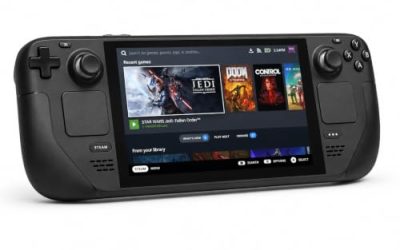
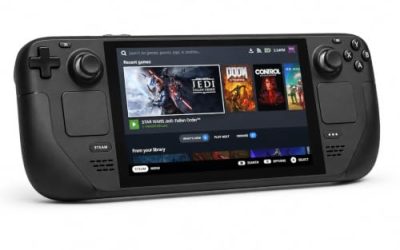
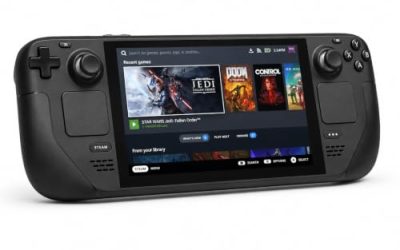
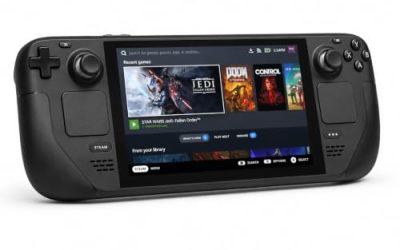
Valve Steam Deck OLED 512GB

The handheld on Valve’s test sheet. The published requirements are far below the Deck’s APU, the recommended runtime is the native build, and the Playable deductions concern control layouts, not power.
Specs
- Display: 7.4-inch HDR OLED, 1280 by 800, up to 90 Hz
- Processor: AMD Zen 2 and RDNA 2 custom APU
- Memory: 16 GB LPDDR5
- Storage: 512 GB NVMe, plus a microSD slot
- Wireless: Wi-Fi 6E and Bluetooth
- Channel note: Valve sells the Deck mainly through its own store, so Amazon listings are third-party sellers
8BitDo Ultimate 2 Bluetooth Controller

The docked pad pick. The record names no controller support, so pad play runs through Steam Input and community layouts; this pad adds back buttons for layout shortcuts.
Specs
- Connectivity: Bluetooth wireless and USB-C wired
- Joysticks: TMR electromagnetic, anti-drift design
- Triggers: Hall effect, with mode switching
- Extras: two remappable back buttons, motion control
- In the box: charging dock included
Xbox Wireless Controller, Carbon Black

The safest guest pad for a co-op session: Steam Input support is universal and community layouts are plentiful. On the handheld, an external pad may need the manual Quick Access Menu switch.
- Connectivity: Xbox Wireless and Bluetooth
- Port: USB-C for wired play
- Controls: hybrid D-pad, dedicated Share button
- Power: AA batteries or optional rechargeable pack
Logitech G502 HERO

Starbound is shaped around a mouse: mining, building, inventory and menus all assume a pointer, and eleven programmable buttons cover the hotbar inputs a long session repeats.
Specs
- HERO optical sensor, up to 25,600 DPI
- 11 programmable buttons
- Adjustable weight system
- Wired USB connection
- On-board memory profiles
Samsung T9 Portable SSD 2TB

For carrying a modded install and its universe saves between machines, or an offline backup of the GOG installer. The headline figure needs a Gen 2×2 host port; on a lesser port the drive runs at that ceiling.
Specs
- Capacity: 2 TB portable SSD
- Interface: USB 3.2 Gen 2×2, USB-C connector
- Maker-rated speeds: up to 2,000 MB per second read, 1,950 MB per second write
- Features: Dynamic Thermal Guard, maker-rated drop resistance
How to choose
Choose the Steam copy if the Workshop matters, since Steam’s record is where the mod catalogue lives and where both compatibility records were written. Choose the GOG copy for the offline installer; its edition lists Linux, so nothing is lost on platform support. On desktop or laptop, install the native build as delivered; reach for Proton only if a mod setup demands the Windows build, where the file says Gold with a Platinum ceiling. On a Steam Deck, expect a Playable experience: pick a community layout first, keep the touchscreen in mind for text entry, and remember the manual switch for an external pad.
Who should skip
Skip the handheld plan if you want a Verified badge and a controller-first game: this sheet says Playable, its deductions all about a mouse-shaped game meeting a gamepad. Skip it if you read ProtonDB’s Gold headline as a verdict on the native build; it is not one. Skip it if you need a DRM answer in writing, because the record names none either way. And skip the pad-first desktop plan if you will not work through Steam Input layouts, because the record publishes no controller support.
FAQ
Is Starbound native on Linux?
Yes. Steam’s record for app 211820 flags Linux true, the Linux requirements tab is populated at both tiers, and SteamDB lists a Starbound Linux depot. ProtonDB classifies the game as Native as well.
Why does ProtonDB show Gold if the game is native?
Because that tier grades the Windows build under Proton: Gold on the headline, Platinum on the best-reported and trending tiers, across 48 reports. For a native game it describes the fallback route, not the default install.
Is Starbound Steam Deck Verified?
No, it is rated Playable. Valve’s sheet, tested 23 February 2022, passes legible text and performance but deducts for a default controller configuration that is not fully functional, non-Deck glyphs and manual keyboard invocation. Its recommended runtime is native.
Can I buy Starbound on GOG instead?
Yes, and the GOG edition lists Linux alongside Windows and Mac, per GOG’s own catalogue record. The Steam copy is pointed to first here only because its record carries the Workshop.
Final verdict
Starbound is the straightforward case: Linux support that is real in every layer of the record. The flag reads true, the tab is populated, a Linux depot sits in the build, ProtonDB classifies it Native, and a second storefront sells an edition listing Linux. The caveats are about input, not existence: no controller support on the desktop record, and a Playable rather than Verified Deck sheet. Buy either edition and install the native build.
Product and ASIN Reference
| Product | ASIN |
|---|---|
| Valve Steam Deck OLED 512GB | B0CQ3RWQQZ |
| 8BitDo Ultimate 2 Bluetooth Controller | B0F194QFT2 |
| Xbox Wireless Controller, Carbon Black | B08DF248LD |
| Logitech G502 HERO | B07GBZ4Q68 |
| Samsung T9 Portable SSD 2TB | B0CHFS9K14 |