Suicide Squad: Kill the Justice League is Rocksteady’s third-person co-op shooter, released on Steam on 2 February 2024, and its Linux position is decided by a short set of public records. Steam’s store record is the first of them, and it lists exactly one operating system. Everything else here — the ProtonDB file, Valve’s Deck test sheet, the anti-cheat tracker’s entry and the GOG catalogue — is read from the record that publishes it, and each record is kept separate.
The short version: there is no native Linux build, and the game’s one add-on carries none either. The Windows build is the only build, and its Linux life runs through Proton, where the report file is mid-sized and mostly positive. Valve rates that build Playable on the Steam Deck, with an internet condition solo players need to read first.
As an Amazon Associate, we earn from qualifying purchases.
Quick answer
Suicide Squad: Kill the Justice League is not native on Linux: Steam flags the game Windows only and publishes no Linux requirements. Under Proton it holds a Gold headline tier on ProtonDB, with a Platinum best-reported tier, across 44 reports. Valve rates the Steam Deck build Playable, tested 10 February 2024, and notes that even single-player play requires an active internet connection.
The status at a glance
| Question | Record answer |
|---|---|
| Native Linux build | No — Steam flags Windows only |
| Linux requirements on Steam | None — the field is an empty list |
| ProtonDB tier | Gold, best-reported Platinum, 44 reports |
| Steam Deck | Playable, tested 10 February 2024 |
| Anti-cheat | Easy Anti-Cheat, listed as Supported |
| GOG edition | None — wishlist entry only |
What Steam’s record says
Steam’s app record for the game (app 315210) sets its platform flags at Windows true, Mac false and Linux false. The Linux requirements field is an empty list outright: there is no Linux tab in any form. The Mac field is in the same position, so the store sells one build for one operating system.
The same record names the protection on the Windows build: its DRM notice reads “Denuvo Anti-Tamper”, quoted exactly as Steam prints it. The notice states no machine activation limit, and the record carries no external account notice. The category list describes the game’s shape: single-player, multi-player, co-op and online co-op, cross-platform multiplayer, full controller support, in-app purchases and Family Sharing.
The published Windows minimum is the only system target the record offers: Windows 10 in its 64-bit form, an Intel Core i5-8400 or AMD Ryzen 5 1600 processor, 16 GB of memory, an NVIDIA GTX 1070 or AMD Radeon RX Vega 56 graphics card, DirectX 12, and 65 GB of storage with a solid-state drive recommended. A Linux player is therefore always running this Windows build through Proton.
The family sweep: one upgrade, no soundtrack
The game’s record lists exactly one add-on app: the Digital Deluxe Edition Upgrade (app 2716350). Read individually, it is typed as downloadable content, and its platform flags repeat the parent record exactly — Windows true, Mac false, Linux false, with the same empty Linux requirements list. Steam’s store search for the full title returns two apps, the game and this upgrade, and no demo app exists.
That small family settles the usual trap before it can fire. Some games look Linux-friendly in a family scan because a separate soundtrack app flags all three platforms; no music-type app exists in this family, so there is no album to misread. The Linux-flag count across the game and its add-on is zero. Nothing in the family changes the Windows-only verdict.
Anti-cheat: Easy Anti-Cheat, listed as switched on
Steam’s store record names no anti-cheat, so the identification comes from the two records that track it. SteamDB’s detected-technologies list for the current build names EasyAntiCheat, alongside the Unreal Engine and the Epic Online Services SDK. The tracker Are We Anti-Cheat Yet lists the game with Easy Anti-Cheat and a status of Supported, its entry last changed on 6 February 2024, days after launch.
Supported is the tracker’s word for an anti-cheat the developer has enabled for Linux play, and Valve’s Deck sheet agrees by silence: it carries no anti-cheat deduction. Desktop and Deck positions do not diverge here. Tools that claim to bypass anti-cheat are terms-of-service violations carrying ban risk, and are presented as nothing else; the record needs no bypass, because the protection is switched on for Proton.
The ProtonDB file
ProtonDB’s summary record for app 315210 reads: headline tier Gold, best-reported tier Platinum, trending tier Gold, across 44 reports, with strong confidence. The split is claimed from the summary feed itself, read directly for this article.
Two honest qualifications belong with those numbers. The pool is modest — 44 reports is a thin file next to the hundreds behind older Rocksteady titles — and a Gold headline with a Platinum best-reported tier means the typical report is good rather than flawless. ProtonDB does not classify the game as native, which agrees with Steam’s flags: every report describes the Windows build under Proton.
The Steam Deck sheet
Valve’s compatibility record rates the game Playable on the Steam Deck, one step below Verified, and SteamOS separately Compatible. The verdict and its test date are read from SteamDB’s republication of Valve’s compatibility data, because Valve’s own endpoint returned no readable record in this session.
The test was carried out on 10 February 2024, on build 13328208, with proton-stable as the recommended runtime. Three checks pass: all functionality is accessible with the default controller configuration, the game shows Steam Deck controller icons, and the default graphics configuration performs well. One deduction keeps the badge at Playable: some in-game text is small and may be difficult to read. The configuration record shows no manual keyboard step and no launcher navigation.
The two notes on the sheet matter more than the deduction. Valve records that first-time setup requires an active internet connection, and that single-player gameplay requires one as well. That is the connection requirement exactly as the published sheet states it, and it applies to the solo campaign, not only to co-op. A Deck owner planning offline travel play should treat this game as an online one.
The storefront ruling
There is no GOG edition. GOG’s catalogue record for the title returns no purchasable product; the game appears there only as a Dreamlist wishlist entry, which is a voting page and not an edition. The Steam copy is therefore the only PC edition on sale, and it is the build both compatibility records describe. Buy the Steam copy.
Gear that fits the record
The gear below follows the record’s shape: the handheld Valve tested, two pads for co-op and docked play, a mouse for desktop loadout screens, and storage for a 65 GB install.
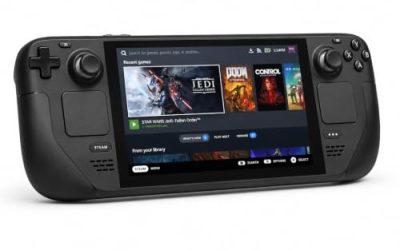
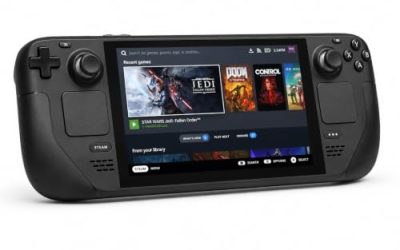
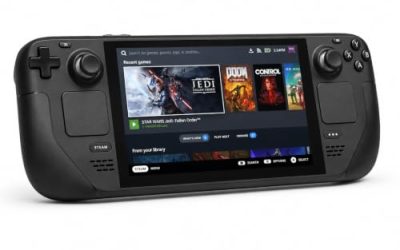
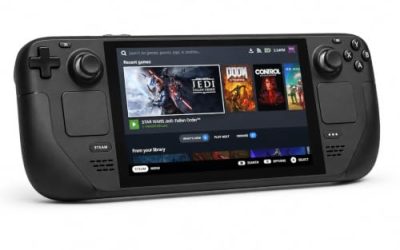
Valve Steam Deck OLED 512GB

The handheld the Playable badge was written for. Valve’s test sheet passes the Windows build under proton-stable with one small-text deduction, and the 65 GB install fits the internal drive with room to spare.
Specs
- Display: 7.4-inch HDR OLED, 1280 by 800, up to 90 Hz
- Processor: AMD Zen 2 and RDNA 2 custom APU
- Memory: 16 GB LPDDR5
- Storage: 512 GB NVMe, plus a microSD slot
- Wireless: Wi-Fi 6E and Bluetooth
- Channel note: Valve sells the Deck mainly through its own store, so Amazon listings are third-party sellers
8BitDo Ultimate 2 Bluetooth Controller

The docked and desktop pad pick. Steam lists full controller support for the game, and this pad covers the couch case with modern sticks and triggers plus back buttons for the traversal and gadget inputs a co-op session repeats.
Specs
- Connectivity: Bluetooth wireless and USB-C wired
- Joysticks: TMR electromagnetic, anti-drift design
- Triggers: Hall effect, with mode switching
- Extras: two remappable back buttons, motion control
- In the box: charging dock included
Xbox Wireless Controller, Carbon Black

The safest guest pad in PC gaming: Steam Input support is universal, the glyphs match what most games display, and it pairs over Bluetooth or its own wireless standard. For a four-player squad, it is the spare pad that always works.
- Connectivity: Xbox Wireless and Bluetooth
- Port: USB-C for wired play
- Controls: hybrid D-pad, dedicated Share button
- Power: AA batteries or optional rechargeable pack
Logitech G502 HERO

At a desk, a precise wired mouse turns loadout, loot and menu screens into single clicks, and covers third-person aiming for players who prefer it to a stick. Eleven programmable buttons hold the melee, traversal and ability inputs.
Specs
- HERO optical sensor, up to 25,600 DPI
- 11 programmable buttons
- Adjustable weight system
- Wired USB connection
- On-board memory profiles
Samsung T9 Portable SSD 2TB

For moving a Linux game library between machines, or backing up a 65 GB install, a fast USB-C drive is the simple answer. The headline figure needs a Gen 2×2 host port; on a lesser port the drive runs at that ceiling.
Specs
- Capacity: 2 TB portable SSD
- Interface: USB 3.2 Gen 2×2, USB-C connector
- Maker-rated speeds: up to 2,000 MB per second read, 1,950 MB per second write
- Features: Dynamic Thermal Guard, maker-rated drop resistance
How to choose
Choose the Steam copy, because it is the only PC edition on sale. On a desktop or laptop, install under Proton and leave the compatibility tool on its default runtime; the Gold headline with a Platinum best-reported tier says the current build runs the game well for most reporters. On a Steam Deck, expect the Playable badge to hold as tested — default configuration, Deck glyphs, good performance — and plan around the small-text deduction for menu-heavy play. A pad is the native input shape on every platform; a mouse earns its place only at a desk.
Who should skip
Skip it if you need offline play: Valve’s own sheet records that even the single-player campaign requires an active internet connection, so it is the wrong pick for travel or unreliable connections. Skip it if you hoped for a native port, because none exists and none is listed. Skip the Deck version if small interface text is a deal-breaker, since that is the one deduction Valve recorded. And skip it if a 44-report Proton file feels too thin to trust.
FAQ
Is Suicide Squad: Kill the Justice League native on Linux?
No. Steam’s record flags the game Windows only, its Linux requirements field is an empty list, and its one add-on app repeats the same flags. The only build is the Windows build, played through Proton.
How well does it run under Proton?
ProtonDB’s summary record gives a Gold headline tier, a Platinum best-reported tier and a Gold trending tier across 44 reports, with strong confidence. The pool is modest, so treat the rating as a good typical result rather than a guarantee.
What did Valve’s Steam Deck test find?
A Playable rating, tested 10 February 2024 on proton-stable. The default controller configuration works fully, Deck icons are shown and default graphics perform well; the one deduction is small in-game text, and the sheet notes that setup and single-player play require an internet connection.
Can I buy it on GOG instead?
No. GOG’s catalogue holds no purchasable edition of this game; the title appears there only as a Dreamlist wishlist entry. The Steam copy is the only PC edition on sale.
Final verdict
The records agree at every point. Steam sells a Windows-only build protected by Denuvo Anti-Tamper, with no native Linux or Mac version and a one-app family that adds no flags of its own. Proton carries that build at a Gold standard, the anti-cheat is enabled for Linux on desktop and Deck alike, and Valve’s Playable badge comes with an internet condition that defines who the game suits. Buy the Steam copy if you play connected; look elsewhere if you do not.
Product and ASIN Reference
| Product | ASIN |
|---|---|
| Valve Steam Deck OLED 512GB | B0CQ3RWQQZ |
| 8BitDo Ultimate 2 Bluetooth Controller | B0F194QFT2 |
| Xbox Wireless Controller, Carbon Black | B08DF248LD |
| Logitech G502 HERO | B07GBZ4Q68 |
| Samsung T9 Portable SSD 2TB | B0CHFS9K14 |