Most games in this series coverage arrive on Linux through a compatibility layer, and Dying Light 2 is one of them. The first Dying Light is the exception: Techland shipped a real Linux port with the 2015 launch, and Steam’s record still carries that build today, flags, requirements tab and all. This article reads the current record end to end — the game app, its large DLC family, the ProtonDB file, the Steam Deck sheet and the GOG catalogue — to show exactly what a Linux buyer gets now.
The short version is that the native build never left. Steam flags the game for Linux with a fully written requirements tab, the ProtonDB file sits at Platinum, Valve marks it Verified on Steam Deck, and the only store selling the native build is Steam itself, because GOG’s edition lists Windows alone.
As an Amazon Associate, we earn from qualifying purchases.
Quick answer
Dying Light is genuinely native on Linux. Steam’s record for app 239140 flags Linux support and publishes a full Ubuntu requirements tab, most of its DLC flags Linux too, ProtonDB rates it Platinum across 308 reports, and Valve’s test sheet marks it Steam Deck Verified. GOG sells an edition, but its record lists Windows only, so the Steam copy is the Linux buy.
What Steam’s own record says
Steam’s store record for Dying Light, app 239140, developed and published by Techland and released in January 2015, flags all three desktop platforms: Windows, Mac and Linux are all switched on. This is not the empty-shell pattern seen on so many Windows-only games. The Linux requirements tab behind the flag is genuinely populated. Its published minimum names Ubuntu 14.04 64-bit, an Intel Core i5-2500 or AMD FX-8320, 4 GB of DDR3 memory, 40 GB of free space and a GeForce GTX 560 or Radeon HD 6870 with 1 GB of video memory. The recommended tier raises that to an i5-4670K or FX-8350, 8 GB of memory and a GTX 780 or Radeon R9 290. One dated note survives in both tiers: JFS and XFS file systems are not supported, a quirk of the port’s era.
The rest of the record matches a full-featured release. Categories list single-player, multi-player, player-versus-player and online co-op, full controller support, Steam Workshop, an included level editor and Family Sharing. The published Windows minimum mirrors the Linux one almost line for line — same processors, memory and storage, with DirectX 11 named — underlining that the Linux build was a peer of the Windows build, not an afterthought.
Two absences matter as much as the flags. The record carries no third-party DRM notice and no external account notice: Steam names no DRM product for this game, so this article names none either. What the record does name is anti-cheat. The category list includes Valve Anti-Cheat enabled, and the tracker Are We Anti-Cheat Yet lists the game with VAC at a status of Supported. Multiplayer on Linux therefore stands as published, and anything that tampers with the game or its anti-cheat is a terms violation carrying ban risk, never a route.
The DLC family sweep
The game’s record lists a long add-on family — 41 list entries resolving to 38 unique apps once repeats are removed — and every one was read individually. The pattern is unusually consistent. Thirty-five of the 38 flag all three platforms, Windows, Mac and Linux alike. The playable expansions are in that group: The Following, The Bozak Horde, Hellraid and the Season Pass all carry the Linux flag, alongside the long tail of weapon, outfit and bundle packs and the book and artbook extras.
Three apps break the pattern, and none is playable content. Cuisine and Cargo flags Windows only, and so do the two edition-upgrade entitlements, Standard to Definitive Upgrade and Standard to Enhanced Upgrade.
The soundtrack deserves its own sentence, because it is where family sweeps usually mislead. The Dying Light Original Soundtrack is a separate music-type app, and it flags all three platforms too. In a Windows-only family that flag would be a trap, an album masquerading as Linux support. Here it proves nothing either way: the game app itself already carries the genuine native record, so the album’s flag simply agrees with the family’s wider pattern.
ProtonDB status
ProtonDB’s summary record for this app reads Platinum at every level: headline tier Platinum, best-reported Platinum and trending Platinum, across 308 reports, with the confidence field reading strong.
One qualification keeps the number honest. For a native title the report pool is mixed by construction: some reporters file on the native build itself, while others deliberately force the Windows build through Proton and file on that instead, and individual reports say exactly that. The Platinum file therefore describes the game’s overall Linux reception across both routes rather than a verdict on one build alone.
Steam Deck status
Valve’s compatibility record, read from the publisher’s endpoint, resolves this app to category Verified. All four Verified checks pass: all functionality is accessible with the default controller configuration, the game shows Steam Deck controller icons, in-game interface text is legible, and the default graphics configuration performs well. The separate SteamOS line reads Compatible. No deductions appear anywhere on the sheet.
SteamDB’s republication of Valve’s data adds the fields the endpoint does not print, taken from there and disclosed as such: the test is dated 25 October 2022, the tested build is 8847175, and the configuration block is clean — no manual keyboard invocation, no launcher navigation, no small text, no internet required for setup or single-player. One line deserves care. The record’s recommended runtime reads proton-stable, the compatibility runtime, even though a native Linux build exists. That is what Valve’s sheet says, so that is what is reported here: the badge certifies the build Valve tested, under the runtime Valve named.
The GOG question and the route ruling
GOG does sell this game, so the question is what its edition contains. GOG’s catalogue record for Dying Light: Definitive Edition lists its operating systems as Windows alone, and every other Dying Light product in GOG’s catalogue — bundles, weapon packs, even the soundtrack — carries the same Windows-only listing. No GOG product record for this game names Linux at all.
The ruling follows directly. The native Linux build is sold on Steam and nowhere else in this comparison, so the Steam copy is the buy for a Linux player: it carries the flagged native build and is the edition both compatibility records describe. The GOG edition remains a Windows product on its own record.
Gear that fits the record
The gear below follows the record’s shape: the handheld the badge was written for, two pads for co-op and docked play, a mouse for desktop sessions, and fast library storage.
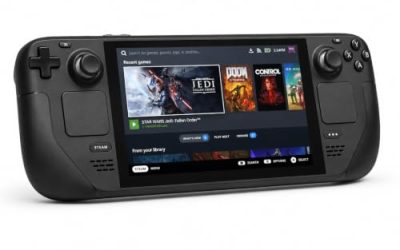
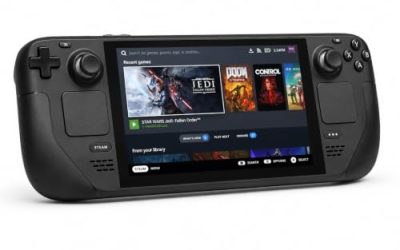
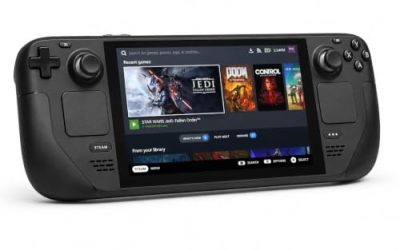
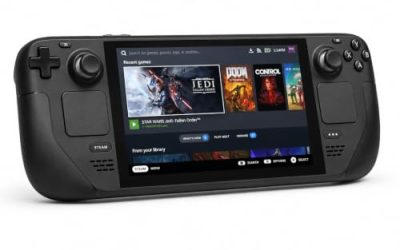
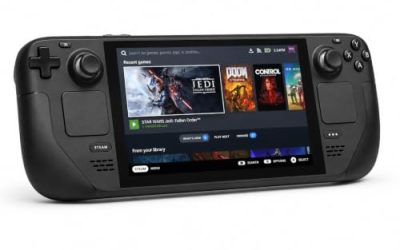
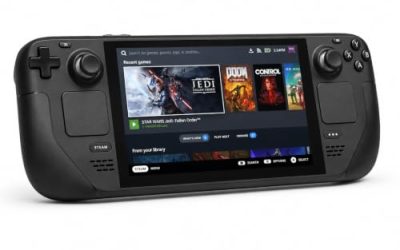
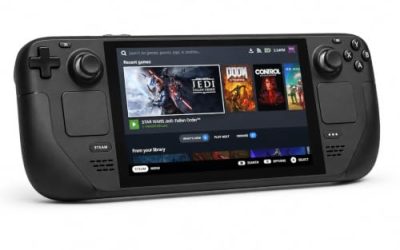
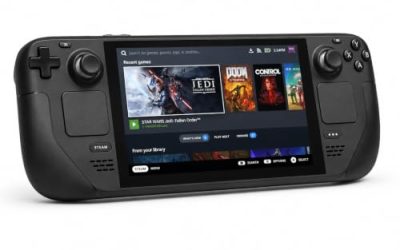
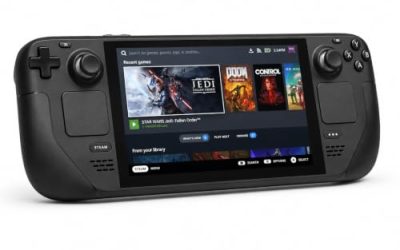
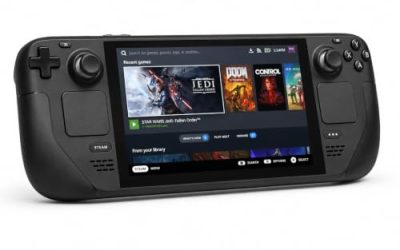
Valve Steam Deck OLED 512GB

The handheld the Verified badge was written for. Full controller support and first-person parkour suit a handheld, and Valve’s test sheet passes the default configuration on every check it publishes.
Specs
- Display: 7.4-inch HDR OLED, 1280 by 800, up to 90 Hz
- Processor: AMD Zen 2 and RDNA 2 custom APU
- Memory: 16 GB LPDDR5
- Storage: 512 GB NVMe, plus a microSD slot
- Wireless: Wi-Fi 6E and Bluetooth
- Channel note: Valve sells the Deck mainly through its own store, so Amazon listings are third-party sellers
8BitDo Ultimate 2 Bluetooth Controller

The docked and desktop pad pick. Steam lists full controller support, and this pad covers the couch co-op case with modern sticks and triggers plus back buttons for the inputs a long session repeats.
Specs
- Connectivity: Bluetooth wireless and USB-C wired
- Joysticks: TMR electromagnetic, anti-drift design
- Triggers: Hall effect, with mode switching
- Extras: two remappable back buttons, motion control
- In the box: charging dock included
Xbox Wireless Controller, Carbon Black

The safest guest pad in PC gaming: Steam Input support is universal, the glyphs match what most games display, and it pairs over Bluetooth or its own wireless standard.
- Connectivity: Xbox Wireless and Bluetooth
- Port: USB-C for wired play
- Controls: hybrid D-pad, dedicated Share button
- Power: AA batteries or optional rechargeable pack
Logitech G502 HERO

At a desk, a precise wired mouse turns inventory, crafting and map work into single clicks between parkour runs. Eleven programmable buttons cover the inputs a long session repeats.
Specs
- HERO optical sensor, up to 25,600 DPI
- 11 programmable buttons
- Adjustable weight system
- Wired USB connection
- On-board memory profiles
Samsung T9 Portable SSD 2TB

For moving a Linux game library between machines, or keeping an offline backup, a fast USB-C drive is the simple answer. The headline figure needs a Gen 2×2 host port; on a lesser port the drive runs at that ceiling instead.
Specs
- Capacity: 2 TB portable SSD
- Interface: USB 3.2 Gen 2×2, USB-C connector
- Maker-rated speeds: up to 2,000 MB per second read, 1,950 MB per second write
- Features: Dynamic Thermal Guard, maker-rated drop resistance
How to choose
Choose the Steam copy, because it is the only edition in this comparison whose record carries the native Linux build. On a desktop or laptop, the default install is the native build itself: no compatibility tool needs selecting, and the populated requirements tab is the specification to measure your machine against. Forcing the Windows build through Proton is a choice the client offers for any title, and the ProtonDB pool shows reporters filing on both routes; the records support either, with the native route the one Techland published. On a Steam Deck, the Verified badge means the tested configuration is the default one, so install and launch.
Who should skip
Skip the GOG edition if Linux is your platform: its own catalogue record lists Windows alone, so it cannot deliver the native build whatever else it bundles. Skip the two edition-upgrade apps as standalone purchases too — they are entitlement records, not playable content. Players whose interest is only the sequel can also pass: this article covers the 2015 game and its expansions, a different record from Dying Light 2. And anyone who needs a currently maintained port rather than a 2015-era build should weigh that the Linux tab’s named distribution is of its launch era; the record is genuine, but it is a record of its time.
FAQ
Is Dying Light native on Linux, or does it need Proton?
It is native. Steam’s record for app 239140 flags Linux support and publishes a complete Ubuntu requirements tab, and the major expansions flag Linux as well. Proton is an optional route some players force, not a requirement.
What does ProtonDB say about Dying Light?
The summary record reads Platinum for the headline, best-reported and trending tiers, across 308 reports with strong confidence. The pool mixes reports on the native build with reports on the Windows build forced through Proton, so the tier describes the game’s Linux reception across both routes.
Is Dying Light Steam Deck Verified?
Yes. Valve’s compatibility record resolves the game to Verified with all four checks passing, and the SteamOS line reads Compatible. SteamDB’s republication dates the test to 25 October 2022 and names the recommended runtime as proton-stable.
Does the multiplayer work on Linux?
Steam’s category list includes Valve Anti-Cheat enabled alongside the co-op and online categories, and Are We Anti-Cheat Yet lists the game’s VAC status as Supported. On the records as published, multiplayer stands; tampering tools are terms violations with ban risk.
Final verdict
Dying Light is a rarity in a modern series audit: a big-budget game whose Linux support is not a workaround but a shipped native build. Steam’s flags and requirements tab are genuine, the expansion family follows the same pattern, ProtonDB’s deep file sits at Platinum, and Valve’s Deck sheet is a clean Verified. Buy it on Steam, install the native build, and leave the compatibility layer for the sequel.
Product and ASIN Reference
| Product | ASIN |
|---|---|
| Valve Steam Deck OLED 512GB | B0CQ3RWQQZ |
| 8BitDo Ultimate 2 Bluetooth Controller | B0F194QFT2 |
| Xbox Wireless Controller, Carbon Black | B08DF248LD |
| Logitech G502 HERO | B07GBZ4Q68 |
| Samsung T9 Portable SSD 2TB | B0CHFS9K14 |