Spirittea, the bathhouse management game from Cheesemaster Games and publisher No More Robots, sends you to a small town where drinking a special tea lets you see the spirits drifting through daily life. Your job is to get the old bathhouse running again: find the lost spirits, seat them in the baths and brew tea. It is a single-player game of management, exploration and errands, and its record is tidy in every respect but one.
That one respect is the platform line. Steam sells Spirittea as a Windows game, full stop, yet its own family tree contains a Linux flag that turns up in searches and points at the wrong app entirely. This article reads the record the way a Linux buyer needs it: the game’s flags, its tab, its depots, every app in its family, the community file and Valve’s Deck sheet, each kept separate.
As an Amazon Associate, we earn from qualifying purchases.
Quick answer
No. Spirittea has no native Linux build: Steam flags the game Windows-only, publishes no Linux requirements and ships no Linux depot, so Linux players run the Windows build through Proton. ProtonDB rates that route Platinum, but on only three reports at low confidence. Valve rates the game Verified on Steam Deck from a pre-release test.
What the game’s own record says
Steam’s record for Spirittea (app 1931010, released 13 November 2023) sets the platform flags to Windows true, Mac false and Linux false. The Linux requirements field is an empty list outright: there is no Linux tab in any form, not even the empty shell of headings some Windows-only games carry. The published requirements are Windows-only at both tiers, and tiny: a 2 GHz processor, 2 GB of RAM and a GeForce GTX 550 class card at minimum, a GTX 760 class card recommended.
SteamDB’s depot listing backs the flags with the delivery record. The game ships a single content depot of about 473 MiB, plus a small depot for its Travel Guide add-on, and no Linux depot anywhere in the set; SteamDB’s extended-OS field is an empty string. Flag, tab and depots all agree, so this is not a split record: no native build was ever delivered through Steam, and the record’s categories (single-player, Steam Achievements, full controller support, Steam Cloud, Family Sharing) describe a Windows game.
The family’s only Linux flag is on the soundtrack
Spirittea’s Steam family has four apps: the game, a demo, a Travel Guide add-on, and the Spirittea Soundtrack. The demo flags Windows only, the Travel Guide flags Windows only, and the game flags Windows only. The soundtrack, a music app, flags Windows, Mac and Linux all true, with its own Linux requirements field an empty list.
The family count is one Linux flag out of four apps, and it sits on the album, not the game. A soundtrack is a folder of audio files; its flags say nothing about any build of the game. But storefront summaries that scan a whole family can surface that flag as if the game supported Linux: an unearned native reputation. The deciding flag is the one on app 1931010 itself, and it reads false.
ProtonDB: Platinum, on a file of three reports
ProtonDB’s summary record is unanimous and tiny at the same time: headline Platinum, best-reported Platinum, trending Platinum, across three reports, with confidence rated low. The tier is claimed here at exactly that size: three reports is a promising start, not a settled verdict, and one bad report would move this file as it never could a file of three hundred.
The report texture matters more than usual at this size. Two of the three reports come from Steam Decks on current Proton builds and describe a game that runs; one lowered the Deck’s power and GPU limits to stretch battery life, a tuning choice rather than a fix. The third, from a desktop on integrated Intel graphics, states that Experimental and newer builds did not work as of that report and that the game ran on an older Proton 6.3 series build instead. So the Platinum headline and the tinker strand are both real, in the same three-report file. One more caution: ProtonDB’s game page carries a “Natively Supports” header for this title, contradicting the flag, the missing tab and the depot set all at once; this article names it as a stray tag and follows Steam.
Steam Deck: Verified, on paperwork from before launch
Valve’s own compatibility endpoint returned an unusable response in this session, so the Deck record below was read from SteamDB’s republication of Valve’s compatibility data, the established fallback route. It rates Spirittea Verified, with all four Verified checks passing: the default controller configuration is fully functional, the game shows Steam Deck controller icons, interface text is legible, and the default graphics configuration performs well. SteamOS is separately rated Compatible. The sheet names gamepad input, with no internet required for setup or single-player play.
The date on that sheet deserves its own sentence: the test was recorded on 18 October 2023, on a recommended runtime of Proton 8.0-4, nearly a month before the game’s 13 November 2023 release, so the Verified badge rests on pre-release paperwork. The public build has been updated many times since, with updates continuing into 2026; the badge describes the launch-era build, not today’s download. The two recent Deck reports on ProtonDB, on much newer Proton builds, are the fresher signal, and they describe the game running.
DRM, accounts and anti-cheat: three silences
Steam’s record carries no DRM notice of any kind, so no DRM product is named for this game in either direction. It carries no external account notice either: no launcher account, publisher account or linking requirement, in a game that is single-player only.
Anti-cheat gets the same answer from three separate sources. Steam names none, which fits a single-player record with no multiplayer category. SteamDB’s detected technology is the GameMaker engine, with no anti-cheat entry. And Are We Anti-Cheat Yet carries no entry for this game at all, searched by name and by app id across its full dataset. There is no anti-cheat question to solve: there is none in the build and no opponent across the table.
The storefront question is short
There is no GOG edition: the would-be product address resolves to that storefront’s general catalogue, and its search returns nothing. Steam is the only PC edition.
Gear for the Proton route
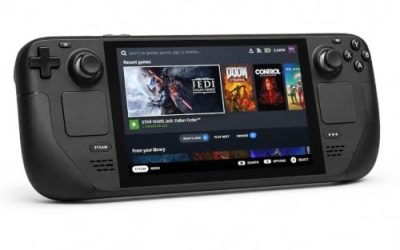
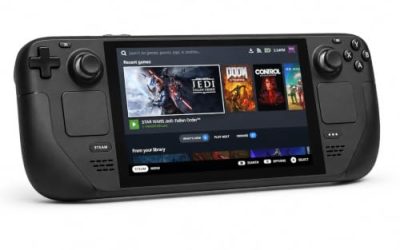
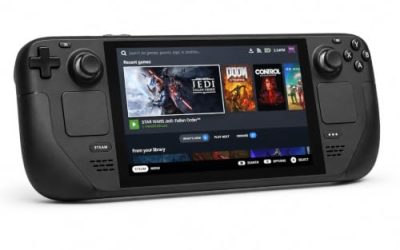
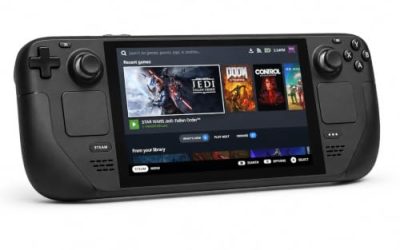
Valve Steam Deck OLED 512GB

The handheld carries this game’s Verified badge, and the game’s requirements are a rounding error next to the Deck’s APU. Buy it for the badge and the reports behind it, remembering the badge predates launch.
Specs
- Display: 7.4-inch HDR OLED, 1280 by 800, up to 90 Hz
- Processor: AMD Zen 2 and RDNA 2 custom APU
- Memory: 16 GB LPDDR5
- Storage: 512 GB NVMe, plus a microSD slot
- Wireless: Wi-Fi 6E and Bluetooth
- Channel note: Valve sells the Deck mainly through its own store, so Amazon listings are third-party sellers
8BitDo Ultimate 2 Bluetooth Controller

Steam lists full controller support and calls a gamepad recommended, so a pad is the native input shape. This one covers the docked and desktop cases with modern sticks and triggers plus back buttons for menu shortcuts.
Specs
- Connectivity: Bluetooth wireless and USB-C wired
- Joysticks: TMR electromagnetic, anti-drift design
- Triggers: Hall effect, with mode switching
- Extras: two remappable back buttons, motion control
- In the box: charging dock included
Xbox Wireless Controller, Carbon Black

The safest guest pad in PC gaming: Steam Input support is universal, the glyphs match what most games display, and it pairs over Bluetooth or its own wireless standard. On the handheld, an external pad may need a manual Quick Access Menu switch before it takes over.
- Connectivity: Xbox Wireless and Bluetooth
- Port: USB-C for wired play
- Controls: hybrid D-pad, dedicated Share button
- Power: AA batteries or optional rechargeable pack
Logitech G502 HERO

Bathhouse management is menu work: rotas, inventories and shop lists. At a desk, a precise wired mouse turns those screens into single clicks, and eleven programmable buttons cover the repeated inputs.
Specs
- HERO optical sensor, up to 25,600 DPI
- 11 programmable buttons
- Adjustable weight system
- Wired USB connection
- On-board memory profiles
Samsung T9 Portable SSD 2TB

For moving a Linux game library between machines, or keeping an offline backup of installers, a fast USB-C drive is the simple answer. The headline figure needs a Gen 2×2 host port; on a lesser port the drive runs at that ceiling instead.
Specs
- Capacity: 2 TB portable SSD
- Interface: USB 3.2 Gen 2×2, USB-C connector
- Maker-rated speeds: up to 2,000 MB per second read, 1,950 MB per second write
- Features: Dynamic Thermal Guard, maker-rated drop resistance
How to choose
Choose the Steam copy: it is the only PC edition and the exact build every record here describes. On a desktop or laptop, install it under Proton and start with the current default build; if that misbehaves, the report file’s one desktop strand points at an older Proton 6.3 series build as the fallback that worked there. On a Steam Deck, install and launch: the Verified checks all pass, and recent Deck reports on newer Proton builds agree with the badge even though it predates launch. For input, treat a gamepad as the default, as Steam’s own listing recommends; a mouse earns its place for long desktop menu sessions.
Who should skip
Skip this one if you are shopping for a native Linux bathhouse game: there is no native build here, and the Linux flag you may have seen belongs to the soundtrack. Skip it if you want a DRM-free offline installer, because no GOG edition exists. Skip it if a Platinum tier resting on three reports is not evidence enough for you; this file is thin, and waiting for it to deepen costs nothing. And skip it if you need multiplayer, because the record is single-player from top to bottom.
FAQ
Is Spirittea native on Linux?
No. Steam flags the game Windows-only, its Linux requirements field is an empty list, and its depot set contains no Linux build. The family’s only Linux flag sits on the separate soundtrack app, a music release that says nothing about the game.
How well does Spirittea run under Proton?
ProtonDB rates it Platinum across headline, best-reported and trending tiers, but on three reports at low confidence. Two Deck reports on current Proton builds describe it running; one desktop report needed an older Proton 6.3 series build after newer builds failed there.
Is Spirittea Verified on Steam Deck?
Yes. Valve’s sheet, read through SteamDB’s republication after Valve’s endpoint returned an unusable response, rates it Verified with all four checks passing, and SteamOS Compatible. The test date is 18 October 2023, before the game’s release, so treat the badge as launch-era paperwork backed by newer reports.
Is there a GOG version of Spirittea?
No. Its product address for this title resolves to the general catalogue and its search returns nothing, the behaviour for a game it does not sell. Steam is the only PC storefront carrying it.
Final verdict
Spirittea on Linux is a Proton story with unusually tidy paperwork and one loud exception. The tidy part: a Windows-only flag, no Linux tab, no Linux depot, no DRM named, no account named, no anti-cheat anywhere, and no second storefront. The loud exception is the soundtrack, whose Linux flag is the family’s only one and the source of this game’s unearned native reputation. Underneath the paperwork, the game asks almost nothing of hardware and, on thin but unanimous early evidence, runs well through Proton on desktop and Deck alike. Buy it as a Windows game that travels well, not as a native title.
Product and ASIN Reference
| Product | ASIN |
|---|---|
| Valve Steam Deck OLED 512GB | B0CQ3RWQQZ |
| 8BitDo Ultimate 2 Bluetooth Controller | B0F194QFT2 |
| Xbox Wireless Controller, Carbon Black | B08DF248LD |
| Logitech G502 HERO | B07GBZ4Q68 |
| Samsung T9 Portable SSD 2TB | B0CHFS9K14 |