Stoneshard is a turn-based RPG from Ink Stains Games, published by HypeTrain Digital, in which a lone mercenary crosses a war-torn kingdom one grid step at a time, managing injuries, hunger and morale as turn-by-turn mechanics. It launched in Early Access on 6 February 2020 and is still filed that way today. For Linux players the first question is simpler than the game: is there a native build, or only a Windows version wrapped in Proton?
The answer is the clean one. Steam’s record for app 625960 flags Linux, publishes a full Linux requirements tab and delivers a Linux depot, so the native build is the default install. The complications sit one layer down: the community file is split between clean native runs and players who hit launch faults and switched to Proton, and the Deck paperwork describes a mouse-driven game squeezed onto a handheld.
As an Amazon Associate, we earn from qualifying purchases.
Quick answer
Yes — Stoneshard is genuinely native on Linux. Steam’s record flags Linux, publishes a full Ubuntu requirements tab, and SteamDB shows a live Linux depot, so no compatibility layer is required. The ProtonDB file is divided (Gold headline, Silver trending across 27 reports) because some players hit native launch faults and switch to Proton. Steam Deck is Playable, tested March 2022, and GOG sells a Linux edition too.
The Steam record: flag, tab and depot all agree
Steam’s appdetails record reads windows true, mac false, linux true — and the flag is backed by paperwork. The Linux requirements tab is genuinely populated at both tiers: Ubuntu 18.04.2, an Intel i3 5050U and a GeForce GT 430 class card at minimum, an Intel i5 3150 and a GeForce GTX 660 at recommended, 4 GB of RAM and 1 GB of storage at both tiers.
SteamDB’s depot listing closes the case: alongside depot 625961, the Windows content, sits depot 625962, named Linux Stoneshard Linux at 510.77 MiB — a live Linux depot in the current build. Flag, tab and depots all agree.
The family record agrees. The DLC array holds three apps, and every one flags Linux: the Supporter Pack — OST and Extras (1230230) and the Character Pack (3423690), both with populated Linux tabs, and the Nomad Caravan Appearance pack (4716860), which flags Linux while its own requirements field is an empty list. With the deciding flag on the game itself, the soundtrack pack’s flag is corroboration, not a trap. One separation matters: the free Stoneshard Demo (3413960) is a separate app outside the DLC array, flags Windows only and carries an empty-shell Linux field. Do not judge the game by the demo’s flags.
The game is still in Early Access — today’s genre list still carries the tag, and SteamDB shows the public build still moving — so the build is a living target, not a finished port. And the category list is single-player only, with no multiplayer and no controller-support category: a mouse-and-keyboard game on paper, which shapes the Deck section below.
DRM, accounts and anti-cheat: three quiet fields
The record names no DRM product — there is no drm_notice on the app — and no account layer either: the external account field is empty, so no publisher account or launcher is required.
Anti-cheat is a three-source negative, kept separate as always. Steam names none: no category, no notice, and a single-player-only list with nothing for an anti-cheat to protect. SteamDB’s detected-technologies scan finds a single entry, the GameMaker Engine. Are We Anti-Cheat Yet carries no entry: its full dataset was searched by name and by app id 625960 and returned nothing. Three sources, three silences.
ProtonDB: a Gold headline over a split file
ProtonDB’s summary record reads Gold on the headline tier, Platinum on the best-reported tier and Silver on the trending tier, across 27 reports with strong confidence. The game’s own page classifies it as Native, which agrees with Steam — no stray-tag contradiction to resolve. The tiers instead price a divided set of experiences: the native build, and the Windows build under Proton.
The texture, stated as filed: several reports describe the native version playing cleanly for long sessions, no tinkering. A recurring second strand describes it failing to launch on some systems — one report ties the fault to an outdated library the Linux build looks for — and those players running the Windows build through Proton instead. Other native reports note mouse lag and pixelated lighting artifacts. Neither strand cancels the other: the native build is real and is the default, and on some systems Proton is the pragmatic route. A Steam purchase keeps both doors open: the same copy can be forced through a compatibility tool.
Steam Deck: Playable, and the paperwork is old
Valve’s compatibility endpoint returned unusable responses this session, so this record is read from SteamDB’s republication of Valve’s data, disclosed as such. It gives Stoneshard category 2, Playable, with SteamOS separately Compatible. The test sheet is dated 19 March 2022, against build 7774527 — launch-era Deck paperwork, never revised since.
The sheet’s passes are legible interface text and a default graphics configuration that performs well. Its deductions follow the game’s shape: some functionality is not accessible with the default controller configuration, requiring the touchscreen, the virtual keyboard or a community configuration, and the game sometimes shows mouse, keyboard or non-Steam-Deck controller icons. The configuration requires no internet for setup or single-player, and carries one note with real consequences: this game does not support cross-platform saved games, so a save started on Windows does not travel to the Linux build. ProtonDB’s Deck reports line up — players lean on community layouts, and more than one describes the mouse cursor misbehaving in game mode. One oddity, stated as published: the sheet’s recommended runtime reads proton-stable, a Proton line on a native game’s paperwork.
GOG: a second native edition
A GOG edition exists, and it lists Linux. GOG’s catalogue search returned fuzzy near-misses, so the ruling rests on GOG’s own records: the live product page’s record, which lists system compatibility as Windows true, Linux true and macOS false. The DRM-free copy is the same native build in another storefront — the choice is about the storefront, not the port.
Gear that fits the record
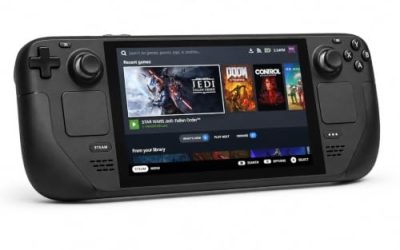
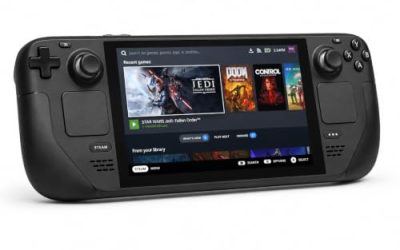
The gear follows the record: the badge’s handheld, two pads for Steam Input mapping, the mouse the game was designed around, and library storage.
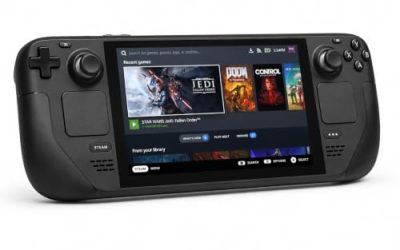
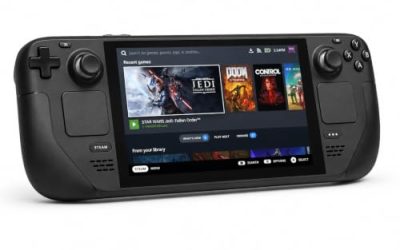
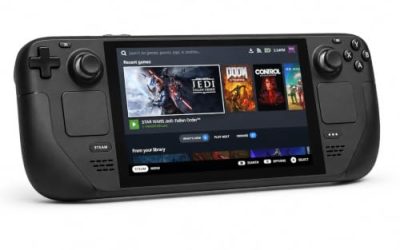
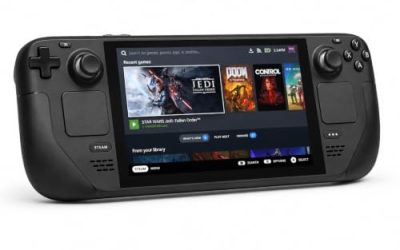
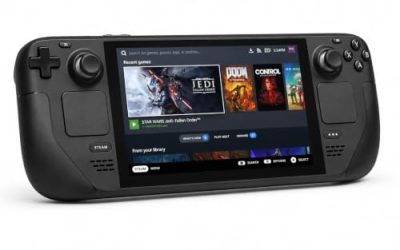
Valve Steam Deck OLED 512GB

The handheld on Valve’s test sheet. The published requirements sit far below the Deck’s APU, and the Playable deductions are about input, not performance — expect community layouts and touchscreen help.
Specs
- Display: 7.4-inch HDR OLED, 1280 by 800, up to 90 Hz
- Processor: AMD Zen 2 and RDNA 2 custom APU
- Memory: 16 GB LPDDR5
- Storage: 512 GB NVMe, plus a microSD slot
- Wireless: Wi-Fi 6E and Bluetooth
- Channel note: Valve sells the Deck mainly through its own store, so Amazon listings are third-party sellers
8BitDo Ultimate 2 Bluetooth Controller

The docked pad pick. Stoneshard publishes no controller-support category, so any pad works through Steam Input mapping rather than native prompts; this one brings modern sticks, hall-effect triggers and back buttons for menu work.
Specs
- Connectivity: Bluetooth wireless and USB-C wired
- Joysticks: TMR electromagnetic, anti-drift design
- Triggers: Hall effect, with mode switching
- Extras: two remappable back buttons, motion control
- In the box: charging dock included
Xbox Wireless Controller, Carbon Black

The familiar second pad for a docked Deck or desktop. Steam Input support is universal and pairing is painless over Bluetooth; for a turn-based game it is a couch convenience over a mouse-shaped design.
Specs
- Connectivity: Xbox Wireless and Bluetooth
- Port: USB-C for wired play
- Controls: hybrid D-pad, dedicated Share button
- Power: AA batteries or optional rechargeable pack
Logitech G502 HERO

The natural fit. Stoneshard is mouse-driven — grid movement, inventory, menus — and a precise wired mouse is the input its record describes. Eleven programmable buttons cover the hotbar and menu shortcuts a long expedition repeats, in a game where one misclick can end a run.
Specs
- HERO optical sensor, up to 25,600 DPI
- 11 programmable buttons
- Adjustable weight system
- Wired USB connection
- On-board memory profiles
Samsung T9 Portable SSD 2TB

For carrying a Linux library between desktop and laptop, or backing up offline installers, a fast USB-C drive is the simple answer. Its headline figure needs a Gen 2×2 host port.
Specs
- Capacity: 2 TB portable SSD
- Interface: USB 3.2 Gen 2×2, USB-C connector
- Maker-rated speeds: up to 2,000 MB per second read, 1,950 MB per second write
- Features: Dynamic Thermal Guard, maker-rated drop resistance
How to choose
Both stores sell the native build with Linux listed. Steam is the safer first buy on an unusual system, because the same copy can be forced through Proton, and it is the copy Valve’s Deck sheet describes. Choose GOG if a DRM-free installer matters more than the fallback. On desktop, install native first and reach for a compatibility tool only if it fails to start. Plan on a mouse at a desk; pads and the Deck are mapping exercises. And do not start a long run on Windows expecting the save to follow you to Linux — Valve’s sheet says it will not.
Who should skip
Skip it if you want a finished game: the record still says Early Access, years in. Skip it if you require native gamepad support — the record publishes none, and every pad route runs through mapping. Skip the free demo as a Linux trial: the demo app is Windows-only and says nothing about the full game’s build. Skip it if cross-platform saves are part of your routine. And skip it if a divided community file worries you more than a verified native flag reassures you — the launch-fault strand is real.
FAQ
Is Stoneshard native on Linux?
Yes. Steam flags Linux, the requirements tab is populated at both tiers with Ubuntu 18.04.2 and named hardware, and SteamDB lists a live Linux depot, 625962, in the current build. The native build is the default Linux install — not a soundtrack flag or a leftover tab.
Why is the ProtonDB tier only Gold if the game is native?
Because the file mixes two routes. The summary reads Gold headline, Platinum best-reported and Silver trending across 27 reports with strong confidence. Clean native runs sit beside reports of the native build failing to launch on some systems, whose authors played the Windows build under Proton. The split prices those experiences, not the build’s existence.
Is Stoneshard Steam Deck Verified?
No — Playable, one tier down. The record, read through SteamDB’s republication of Valve’s data after Valve’s endpoint returned unusable responses, was tested on 19 March 2022. Text is legible and default graphics perform well; the deductions are a default controller configuration that is not fully functional and occasional mouse and keyboard icons — fitting a mouse-driven game with no published controller support.
Can I buy Stoneshard on GOG instead?
Yes, and the GOG copy is a Linux edition too. GOG’s product record lists Windows and Linux, with no macOS build. Same native build, sold DRM-free; the Steam copy’s advantage is the Proton fallback and the Deck paperwork, not the port.
Final verdict
Stoneshard is genuinely native by every layer of the record: the flag is set, the tab is filled in with real hardware, a Linux depot ships in the current build, every DLC app flags Linux, and GOG sells the same build DRM-free. The caveats are about polish, not existence — still in Early Access, a community file split between clean native runs and launch faults, a 2022 Playable Deck badge for a mouse-driven game with no native controller support, and saves that do not cross platforms. Buy it on either store; keep the Proton switch as the documented fallback, not the main road.
Product and ASIN Reference
| Product | ASIN |
|---|---|
| Valve Steam Deck OLED 512GB | B0CQ3RWQQZ |
| 8BitDo Ultimate 2 Bluetooth Controller | B0F194QFT2 |
| Xbox Wireless Controller, Carbon Black | B08DF248LD |
| Logitech G502 HERO | B07GBZ4Q68 |
| Samsung T9 Portable SSD 2TB | B0CHFS9K14 |