Titanfall 2, Respawn Entertainment’s pilot-and-Titan shooter, published by Electronic Arts, first released on 28 October 2016 and arrived on Steam on 18 June 2020, never received a Linux build. Steam’s record flags Windows alone, the Linux requirements tab is an empty shell, and SteamDB shows no Linux content behind the flag. The Linux question here is a Proton question from the first line.
What makes the record friendlier than most of its publisher’s catalogue is where the friction sits. The anti-cheat works on the server rather than as a client driver, the community Proton file is deep, and Valve has published a Deck test sheet. The awkward layer is the account one: the record requires an EA Account, and its activation notice still carries older client wording. This piece reads each record separately.
As an Amazon Associate, we earn from qualifying purchases.
Quick answer
Titanfall 2 is not native on Linux: Steam flags Windows only, the Linux requirements tab is an empty shell, and SteamDB shows no Linux depot. It runs through Proton instead, with a Gold headline across 826 reports at strong confidence. Its FairFight anti-cheat works server-side, the Deck badge is Playable, and an EA Account is required. No GOG edition exists.
What Steam’s own record says
The platform flags read windows true, mac false, linux false. The Linux requirements field is the empty shell — a Minimum and a Recommended heading over empty lists — and the Mac field is the same. No populated tab exists in any form, so nothing on the store page promises a native build.
The published categories are Single-player, Multi-player, PvP and Online PvP, with Steam Achievements, Full controller support and Steam Trading Cards. Two absences are worth naming: no Steam Cloud and no Family Sharing category.
The Windows minimum asks for 64-bit Windows 7 through 10, an Intel Core i3-6300t or equivalent, 8 GB of RAM, a GeForce GTX 660 2GB or Radeon HD 7850 2GB, DirectX 11 and 45 GB of storage. SteamDB’s depot table puts the real footprint higher — the content depot alone is about 63 GB — so budget more room than the store line suggests.
The family sweep: no soundtrack to hide behind
The game’s record carries five add-on apps, each read on its own record: the Monarch’s Reign, Colony Reborn and Prime Titan bundles, the Angel City’s Most Wanted Bundle and the Nitro Scorch Pack. All five are typed as downloadable content, and all five flag Windows only. No music-type app exists in this family, so the soundtrack trap cannot form here. The Linux-flag count is zero of six including the game itself. Two separations matter: the first Titanfall is a different app with its own record, and Apex Legends is a different game again — nothing here is drawn from either record.
The account and activation layer
Two fields name this layer exactly. The account notice reads “EA Account (Supports Linking to Steam Account)”. The activation notice reads “EA on-line activation and Origin client software installation and background use required” — older wording the record still carries; SteamDB’s technology scan detects the EA App Launcher in the build, the current client that layer runs through.
Valve’s Deck sheet adds two notes belonging to this layer rather than to performance: first-time setup requires an active Internet connection, and singleplayer gameplay requires one too. Even the campaign sits behind the account check.
The fragile point in the community file is this launcher layer, not the game build. A recent ProtonDB report describes an EA App update leaving the launcher stuck, then crashing before the game could start, on clean and modified installations alike. One report, kept at report weight — but it matches the record’s shape: the game travels well; the client wrapped around it is what can break.
Anti-cheat: three sources, kept separate
Steam’s structured record names no anti-cheat: no category, no notice, nothing in the activation field. SteamDB agrees in its own way: its detected technologies are the Source Engine, the EA App Launcher and graphics, video and security libraries — no client anti-cheat detected in the build.
Are We Anti-Cheat Yet, matched by name and by app id, names the system the other two sources do not need to: FairFight, with status Supported. FairFight is a server-side statistical system: it watches behaviour from the server and makes its calls there, so no client driver sits inside the game for Proton to fail against. That is why this record reads differently from the client-driver cases elsewhere in the publisher’s catalogue: the permission question never reaches the player’s machine.
The multiplayer routes follow: official-server play is the route the trackers describe, and Northstar, the community client hosting custom servers, documents Linux support in its own materials, with a dedicated community Proton build maintained for it. Anything that tampers with the client or evades the server-side checks is a terms violation with ban risk, never a route in.
The Proton file
ProtonDB’s summary record answered in full: headline Gold, best-reported Platinum, trending Gold, across 826 reports with strong confidence — one of the deeper files a Windows-only game of this age can have.
The texture matches the records above. The campaign is the dependable half, needing no game servers at all, with the account layer’s internet requirement as its one condition. Multiplayer reports describe a long history of the official servers working through Proton. The recurring complaints cluster where this article has already pointed: the launcher and account layer, not the Source engine build underneath. The game page’s classification header could not be read this session, so no page-level tag is claimed either way; the figures rest on the summary record.
The Steam Deck sheet
Valve’s own compatibility endpoint returned unusable responses in this session, so the verdict and paperwork were read from SteamDB’s republication of Valve’s compatibility data. The category is Playable, and SteamOS is separately marked Compatible.
The test date claimed is 12 May 2023, on build 9911828, with a recommended runtime of Proton Experimental. The passing items: all functionality accessible with the default controller configuration, Deck controller icons shown, interface text legible, and the default graphics configuration performing well. The deductions are launcher-shaped: the launcher or setup tool may require the touchscreen or virtual keyboard or have difficult to read text, and entering some text requires manually invoking the on-screen keyboard. The two internet notes from the account layer appear on this sheet as well. The configuration names gamepad input.
The storefront ruling
No GOG edition exists: the embed search returns no products for this title, the catalogue search surfaces only unrelated games, and the would-be product address redirects to GOG’s general games catalogue — that storefront’s behaviour for a title it does not sell. The Steam copy is the only PC edition the records above describe.
Gear that fits the record
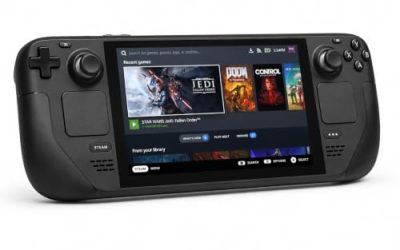
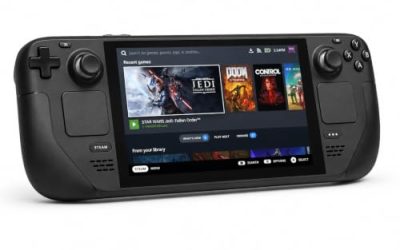
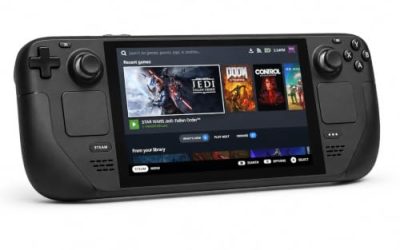
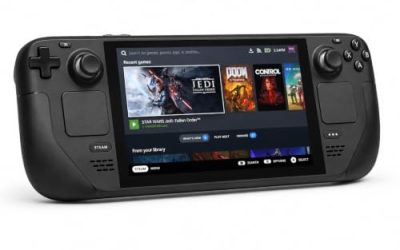
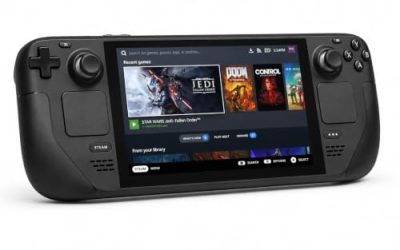
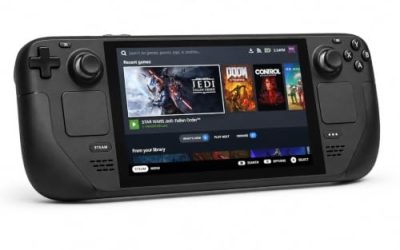
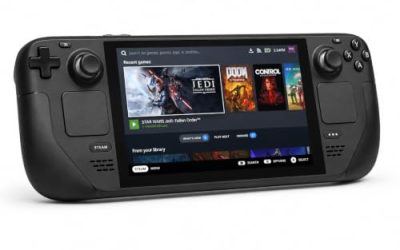
Valve Steam Deck OLED 512GB

The handheld Valve’s Playable sheet was written on: it rates the default graphics configuration as performing well, and its deductions are touchscreen-shaped, which this hardware answers directly.
Specs
- Display: 7.4-inch HDR OLED, 1280 by 800, up to 90 Hz
- Processor: AMD Zen 2 and RDNA 2 custom APU
- Memory: 16 GB LPDDR5
- Storage: 512 GB NVMe, plus a microSD slot
- Wireless: Wi-Fi 6E and Bluetooth
- Channel note: Valve sells the Deck mainly through its own store, so Amazon listings are third-party sellers
8BitDo Ultimate 2 Bluetooth Controller

The docked and desktop pad pick. Steam lists full controller support for the game, and Valve’s sheet names gamepad as the tested input, so a modern pad with back buttons covers pilot and Titan play alike.
Specs
- Connectivity: Bluetooth wireless and USB-C wired
- Joysticks: TMR electromagnetic, anti-drift design
- Triggers: Hall effect, with mode switching
- Extras: two remappable back buttons, motion control
- In the box: charging dock included
Xbox Wireless Controller, Carbon Black

The safest guest pad in PC gaming: Steam Input support is universal, the glyphs match what most games display, and it pairs over Bluetooth or its own wireless standard.
- Connectivity: Xbox Wireless and Bluetooth
- Port: USB-C for wired play
- Controls: hybrid D-pad, dedicated Share button
- Power: AA batteries or optional rechargeable pack
Logitech G502 HERO

At a desk, pilot play is mouse-aim work, and a precise wired mouse fits a fast Source-engine shooter. Eleven programmable buttons cover the melee, ordnance and Titan-core inputs a session repeats.
Specs
- HERO optical sensor, up to 25,600 DPI
- 11 programmable buttons
- Adjustable weight system
- Wired USB connection
- On-board memory profiles
Samsung T9 Portable SSD 2TB

The install is large; a fast portable drive is the simple way to carry a Steam library between desktop and laptop or keep a backup. Its headline speed needs a Gen 2×2 host port.
Specs
- Capacity: 2 TB portable SSD
- Interface: USB 3.2 Gen 2×2, USB-C connector
- Maker-rated speeds: up to 2,000 MB per second read, 1,950 MB per second write
- Features: Dynamic Thermal Guard, maker-rated drop resistance
How to choose
Choose by which half you are buying. For the campaign, the record is at its strongest: a Gold Proton file, a Playable Deck sheet and no server dependency in the mode itself, behind an account check. For multiplayer, the server-side anti-cheat position is the deciding fact: official servers are the documented route, and the community Northstar client is the alternative its documentation describes for Linux. On Deck, accept the launcher caveats: keep the touchscreen in reach for setup and text entry. On any machine, run a current Proton build; Valve’s test sheet names Proton Experimental as its recommended runtime.
Who should skip
Skip it for a native Linux build: none exists and no record hints at one. Skip it if you will not create or link an EA Account. Skip it for offline play — Valve’s sheet states that singleplayer gameplay requires an active Internet connection. Skip it if you counted on Steam Family Sharing, which the publisher has marked the game ineligible for. And if the game you actually want is the first Titanfall or Apex Legends, those are separate apps with separate records; this verdict does not transfer.
FAQ
Is Titanfall 2 native on Linux?
No. Steam flags Windows only, the Linux requirements tab is an empty shell, and SteamDB shows no Linux depot. The family agrees: all five add-on apps flag Windows only, and no soundtrack app exists to muddy the count.
Does the anti-cheat block Linux play?
Not in the way client drivers do. Are We Anti-Cheat Yet names FairFight, listed as Supported; it works server-side, so no client anti-cheat exists for Proton to fail against. Steam names none, and SteamDB detects none.
Is Titanfall 2 Steam Deck Verified?
No — Playable, tested on 12 May 2023 per SteamDB’s republication of Valve’s record. The deductions: a launcher that may need the touchscreen or virtual keyboard, manual on-screen keyboard invocation for text entry, and internet requirements for setup and singleplayer.
Can I buy Titanfall 2 on GOG instead?
No. GOG sells no edition of this game: its searches return nothing for the title, and the product address redirects to the general catalogue. The Steam copy is the edition the records describe.
Final verdict
Titanfall 2 on Linux is a Proton story with unusually clean paperwork. No native build exists on any layer, and the family offers no soundtrack flag to argue otherwise. What exists instead is a Gold community file across 826 reports, a server-side anti-cheat that never gates the player’s machine, and a Playable Deck sheet whose caveats are all launcher-shaped. The price of admission is the account layer: an EA Account, an activation notice, and an internet connection even for the campaign. Readers who accept that layer get one of the best-documented Windows-only shooters on Linux; readers who do not should skip it without regret.
Product and ASIN Reference
| Product | ASIN |
|---|---|
| Valve Steam Deck OLED 512GB | B0CQ3RWQQZ |
| 8BitDo Ultimate 2 Bluetooth Controller | B0F194QFT2 |
| Xbox Wireless Controller, Carbon Black | B08DF248LD |
| Logitech G502 HERO | B07GBZ4Q68 |
| Samsung T9 Portable SSD 2TB | B0CHFS9K14 |