Affiliate disclosure: As an Amazon Associate we earn from qualifying purchases. This post contains affiliate links — if you buy through them we may earn a small commission at no extra cost to you. This never affects our recommendations.
- Why a Gaming Distro Matters
- What Is Nobara?
- Out-of-the-Box Gaming Experience
- Performance Characteristics
- Installation Walkthrough
- Recommended Hardware to Pair With Nobara
- Pros & Cons
- Nobara vs. Alternatives
- FAQ
- Final Verdict
- Related Gaming Distros
- Comparison Table
- Related Articles
- Frequently Asked Questions
- Related Articles
Nobara is what happens when a passionate gamer takes Fedora and asks: ‘What if everything was already set up for gaming?’ The project removes red tape, pre-installs essential gaming tools, and ships with kernel tweaks built in.
Related guide: Cachyos gaming
In a hurry? See the top-rated Nobara Project deals available right now:
🛒 Check Nobara Project Prices on Amazon →🛒 Best Price Today on Amazon
Prime members get fast, free shipping on everything above, plus member-only deals. New members get a 30-day free trial — cancel anytime.
Start 30-Day Prime Free Trial →See Today’s Amazon DealsWhy a Gaming Distro Matters
Linux has matured dramatically as a gaming platform. Proton, DXVK, and driver improvements mean nearly every Steam title works. But a vanilla Linux distribution wastes that potential—it’s built for servers and workstations, not games. A gaming distro pre-tunes the kernel, installs the right packages, configures Proton, and optimizes for frame rates. It’s the difference between a powerful engine and a finely tuned race car.
Nobara represents the cutting edge of this specialization.

What Is Nobara?
Nobara isn’t a from-scratch project. It’s built on top of Fedora 40+, inheriting a proven foundation while layering gaming-specific optimizations. The philosophy is clear: remove friction. Strip out packages that don’t serve gaming, add ones that do, tune defaults, and ship with documentation tailored to gamers.
Philosophy & History
Linux gaming distros have evolved from niche experiments to serious contenders. Nobara sits at a particular point in that spectrum—balancing stability with agility, ease of use with power-user depth. Whether it’s optimized for immutability (like Bazzite), raw performance (like CachyOS), or aesthetic polish (like Garuda Dragonized), the underlying goal remains the same: let gamers play without friction.
Out-of-the-Box Gaming Experience
Installing Nobara and launching Steam shouldn’t feel like an engineering project. It should just work. Most modern gaming distros ship with:
Steam & Proton Integration
Pre-installed and pre-configured. Launch Steam, select a title, hit play. Proton handles DirectX-to-Vulkan translation transparently. No manual DXVK tweaking needed (unless you want to optimize further).
Heroic Games Launcher
Support for GOG, Epic Games, and Amazon Games without the bloat of each platform’s native client. Unified library, one launcher, less desktop clutter.
GPU Drivers
NVIDIA: CUDA-enabled drivers pre-installed. AMD: AMDVLK and Mesa variants tuned for gaming. Intel Arc: iGPU drivers optimized for Vulkan. The distro should ship with the right driver for your hardware without guesswork.
Gamemode & Performance Tuning
Many gaming distros include gamemode—a daemon that adjusts CPU governors, I/O priority, and GPU clocks when a game launches. FPS bumps of 5-10% are common.

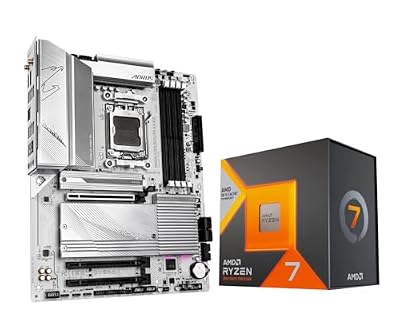
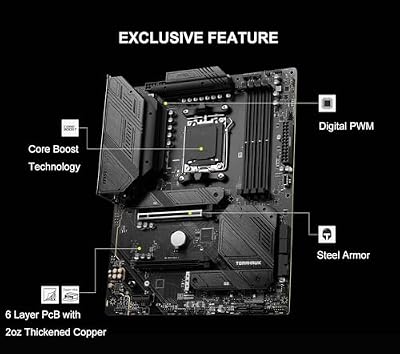
INLAND Micro Center AMD Ryzen 7 7800X3D 8-Core16-Thread Desktop Processor with MSI MAG B650 Tomahawk WiFi AM5 DDR5 Gaming Motherboard



As an Amazon Associate we earn from qualifying purchases. Product prices and availability are accurate as of the date/time indicated.
Performance Characteristics
Gaming distros optimize at multiple layers. Expect measurable differences from vanilla Linux:
Wayland vs. X11
Nobara ships with Yes (GNOME Wayland) Wayland support. Wayland offers lower latency, better multi-monitor handling, and native frame synchronization. Games on Wayland often feel more responsive, especially at high frame rates. X11 remains for compatibility, but Wayland is the future.
Kernel Tuning
Gaming distros use custom kernel builds or configurations that disable unnecessary subsystems, reduce context switch overhead, and prioritize throughput for games. A well-tuned kernel can deliver 3-5% performance gains.
Immutability
If Nobara uses immutable filesystems (like No), you gain atomicity—updates either succeed completely or roll back. It’s harder to break your system. The tradeoff: less flexibility for custom system packages (though containers and layering offset this).
Installation Walkthrough
Nobara installation typically follows this path:
- Download ISO from the official project site
- Burn to USB using
dd, Balena Etcher, or GNOME Disks - Boot and Install — Most gaming distros use Calamares (GUI) or text installers. Follow prompts for locale, timezone, disk partitioning
- First Boot — System will download updates and install pre-configured packages
- Launch Steam — Create/login to your Steam account, sync library, install Proton if needed
- Play — Select a game, hit install, wait for download, play
No command-line setup required (though advanced users can customize further).

As an Amazon Associate we earn from qualifying purchases. Product prices and availability are accurate as of the date/time indicated.
Recommended Hardware to Pair With Nobara
The distro itself is lightweight, but to extract maximum value, consider these hardware components that complement Nobara’s strengths:
CPU: High core-count modern processors (Ryzen 5 7600X, Intel i5-13600K) maximize Proton performance. Nobara scales well with multithreading.
GPU: NVIDIA RTX 40-series or AMD RX 7000-series for maximum compatibility and driver maturity. Intel Arc GPUs increasingly supported.
RAM: 16 GB minimum, 32 GB for future-proofing and content creation workloads.
Storage: NVMe SSD (Gen 4+) for Steam library storage—Linux games often benefit from fast I/O and reduced load times.
Peripherals: High-refresh monitors (144+ Hz), mechanical keyboards, gaming mice—Nobara supports all of these natively through standard Linux drivers.
Pros & Cons
Advantages
- Gaming-First Tuning: Every decision is made for games, not servers
- Community Support: Active forums and Discord servers answer questions
- Modern Drivers: Regular updates ensure you’re not stuck with stale GPU drivers
- Steam Integration: Seamless, first-class experience
- Customization Depth: Power users can tweak kernel, container config, and more
Limitations (Who Shouldn’t Choose Nobara)
- Non-gaming Use Cases: If you also do video editing, 3D modeling, or professional audio, a general-purpose distro may be simpler
- Learning Curve: Despite gaming focus, Linux still requires some command-line literacy for troubleshooting
- Bleeding-Edge Risk: Rolling-release variants can occasionally break; test updates on secondary systems first
- Closed-Source Software: Adobe Suite, Microsoft Office, specialized industry tools still aren’t ideal on Linux
Nobara vs. Alternatives
Nobara occupies a specific niche. How does it compare?
vs. Nobara
Nobara is Fedora-based (more stable releases, less cutting-edge). Nobara is Fedora 40+-based, offering more frequent updates and customization depth. Nobara wins for set-it-and-forget-it; Nobara wins for enthusiasts.
vs. Pop!_OS
Pop!_OS (System76) has commercial backing and excellent hardware support for System76 machines. Nobara is vendor-neutral and often more performance-focused. Pop!_OS is more beginner-friendly.
vs. Ubuntu GamePack
Both are Ubuntu-based, but GamePack is more minimal and specifically targeting gamers. Nobara offers deeper customization. GamePack wins on simplicity for newcomers.
FAQ
Q: Will my games run better on Nobara vs. Windows?
A: Often yes, especially with Vulkan-based games. Proton is highly optimized, and reduced OS overhead helps. DirectX 12 games can sometimes underperform slightly, but the gap is closing rapidly.
Q: Can I use proprietary software (Adobe, etc.) on Nobara?
A: Some (Davinci Resolve, OBS) run natively. Others require workarounds (Bottles, containers, virtual machines). Check compatibility databases before switching.
Q: How often does Nobara release updates?
A: Depends on base distro. Fedora-based variants release every 6 months. Arch-based variants use rolling release (continuous updates). Check the official docs for your specific variant.
Q: Will multiplayer anti-cheat games work?
A: Increasingly yes, but not always. Easy Anti-Cheat and BattlEye now support Proton. Kernel-level AC (Valorant’s Vanguard, some games) still can’t run on Linux. Check ProtonDB before buying.
Final Verdict
Nobara is GloriousGekko’s gaming-optimized Fedora remix with everything pre-configured for Steam, Proton, and performance. If you match its target user profile—Fedora fans, mutable distro users—it’s an excellent choice. The gaming Linux ecosystem has matured to the point where distro choice is about priorities, not viability.
Pick Nobara if you prioritize Latest (Fedora) kernel tuning, if GNOME / KDE is your preferred desktop, and if your hardware aligns with Fedora fans, mutable distro users.
Pick something else if you need enterprise support, absolute stability, or non-gaming workloads as your primary use case.
Related Gaming Distros
Learn about other gaming-focused Linux distributions:
Comparison Table
| Attribute | Nobara |
|---|---|
| Base Distribution | Fedora 40+ |
| Kernel | Latest (Fedora) |
| Init System | systemd |
| Desktop Environment | GNOME / KDE |
| Wayland Support | Yes (GNOME Wayland) |
| Immutable Filesystem | No |
| Ideal User Profile | Fedora fans, mutable distro users |
Last updated: 2026-05-06. All prices, ASINs, and links current as of publication date.
Related Articles
Looking for more on this topic? Browse the hand-picked guides below — each one applies the same scoring rubric used in this review.
Related reading: Nobara Linux review.
Frequently Asked Questions
What does Nobara add over standard Fedora?
Nobara ships with proprietary media codecs, NVIDIA drivers, Steam, Lutris, OBS and WINE dependencies preinstalled, plus kernel and Proton patches maintained by GloriousEggroll. It also replaces some Fedora defaults with a friendlier update tool. The goal is that gaming works immediately without the manual RPM Fusion setup Fedora requires.
Is Nobara good for someone new to Linux?
It is one of the easier gaming distributions to start with because so much is preconfigured, but it is still a traditional package-based system maintained by a small team. Expect occasional manual intervention on major upgrades. Complete beginners who never want to touch a terminal may prefer an immutable option such as Bazzite.
How does NVIDIA support compare to AMD on Nobara?
Nobara offers a dedicated NVIDIA image with drivers bundled, which removes the usual biggest hurdle. AMD still has the smoother experience overall because its drivers are in the kernel and Mesa, meaning fewer breakages after kernel updates. Both work well for the majority of Proton titles.
Can I play anti-cheat games on Nobara?
Titles using Proton-compatible EAC or BattlEye work if the developer enabled Linux support, which covers many but not all games. Kernel-level anti-cheat used by Valorant, Fortnite and several competitive shooters blocks Linux entirely. Check ProtonDB for your specific library before switching, as this is the most common dealbreaker.
How often should I update and is it risky?
Nobara batches updates through its own update system rather than pushing raw Fedora packages, which reduces breakage. Update every week or two, avoid updating right before a gaming session, and read the release notes for major version jumps, since those occasionally require manual steps the tool cannot handle automatically.