The Planet Crafter is Miju Games’ terraforming survival game: dropped on a barren planet, you raise its temperature, pressure and oxygen through machines and planting until it turns habitable, alone or in online co-op. It left Early Access on 10 April 2024. The game app flags Windows true, Mac false and Linux false, and its linux_requirements field is an empty list outright: no Linux tab in any form.
So the native question answers itself in one line, and the real questions sit underneath it. The family carries exactly one Linux flag, on the soundtrack album. ProtonDB’s file is unanimous Platinum across a deep pool. Valve’s testers gave the game the top Steam Deck badge, on paperwork predating the full release by about a month. And a second storefront sells the game, but only for Windows.
As an Amazon Associate, we earn from qualifying purchases.
Quick answer
The Planet Crafter has no native Linux build: Steam’s record flags Linux false and publishes no Linux requirements at all. The Windows build is the game on Linux, and it travels well: ProtonDB rates it Platinum across 169 reports with strong confidence, and Valve rates it Verified on Steam Deck. The family’s only Linux flag sits on the soundtrack.
The native question, from Steam’s own record
Steam’s appdetails record for app 1284190 lists Windows only. The Linux requirements field is an empty list, thinner paperwork than the empty shell some publishers leave: here the field was never opened at all. Nothing in the record points the other way. The ruling is plain: not native, and not a split record.
One wrinkle: the Mac flag also reads false, yet the mac_requirements field carries a populated minimum naming an older Mac OS release, an Intel Mac processor and a small memory figure — leftover tab text under a false flag, and the flags govern. The published Windows minimum is the only specification describing a real edition: a 64-bit Windows 10, a Core2 Duo class processor at 2.4 GHz, 4 GB of memory, a graphics card with 3 GB of video memory, and 4 GB of storage.
Steam’s category list publishes Single-player, Multi-player, Co-op and Online Co-op, alongside Achievements, full controller support with named DualShock and DualSense support, and Family Sharing. Multiplayer is a designed feature here, so the anti-cheat question gets a direct answer below.
The family sweep: one flag, on the music
Every related app was read individually. The Toxicity (4078590), Planet Humble (3142540) and Magnetaris (5478920) expansions, all type dlc, flag Windows only. The Prologue (1830840, a standalone game app) and the Demo (1754850) flag Windows only. Then the Original Soundtrack (2902050, type music) flags Windows, Mac and Linux all true.
That is the soundtrack trap in its textbook shape: the family’s Linux-flag count is one of seven apps including the game, and the one flag belongs to an album of audio files, deliverable to any platform Steam runs on. Its flags say nothing about a game build; the game app’s own flag is false, its Linux field is an empty list, and the article rules on the game app.
DRM and account layers: the record names neither
The record carries no drm_notice and no external account notice. No DRM product is named anywhere in it, and no third-party account or launcher layer either. That silence is a gap in both directions: the record does not certify the game DRM-free, and it does not warn of an activation layer.
Anti-cheat, source by source
Three sources were read separately, and they agree. Steam’s record names no anti-cheat: no notice, no category. SteamDB’s detected technologies are the Unity Engine, the Azure PlayFab Party SDK, Mono, SteamworksNET, UnityBurst, UnityURP and cURL; PlayFab Party is a networking and voice services library, the plumbing behind co-op sessions, not an anti-cheat system, and nothing else in the list is one either. Are We Anti-Cheat Yet carries no entry for the game, by name or app id.
So the co-op position, stated exactly as the records state it, is that online play is a published feature with no anti-cheat gate named by any source. Desktop and Deck positions agree, and the Deck sheet carries no anti-cheat deduction. The records describe the build, not anyone’s current session.
ProtonDB: a unanimous Platinum file
The ProtonDB summary record answers in full: headline Platinum, best-reported Platinum, trending Platinum, across 169 reports, with confidence rated strong. A file of that depth with no daylight between headline, ceiling and trend is about as settled as this database gets, and it describes the only route Linux players have: the Windows build under Proton.
Individual reports add texture rather than contradiction. Most describe the game installing and running as expected on current Proton builds. A minority describe tinkering on particular hardware before reaching a stable result. That spread is normal for a Platinum file of this size.
Steam Deck: Verified, on pre-release paperwork
Valve’s own compatibility endpoint returned empty and garbled responses this session, so the Deck record was read through SteamDB’s republication of Valve’s compatibility data for this app: Verified, the top category, with SteamOS separately Compatible.
All four Verified checks pass: all functionality is accessible with the default controller configuration, the game shows Steam Deck controller icons, interface text is legible, and the default graphics configuration performs well. The configuration block names gamepad input, no manual keyboard invoke, no launcher navigation, and no internet requirement for setup or single-player.
The paperwork carries one honest caveat. The test is dated 13 March 2024, on build 13578268, with a Proton 9.0 release candidate as the recommended runtime: about a month before the 10 April 2024 full release, so the badge was earned on a late pre-release build rather than the shipping one. It is claimed exactly as published, and the fresher evidence for the current build is the ProtonDB file above.
The storefront ruling
A GOG edition exists, but it is Windows-only. GOG’s embed search returned no product for this title, the known blind spot in that storefront’s search, so the ruling rests on GOG’s live product page for the game: its compatibility line reads Windows alone, and the page is this game’s own. That edition carries no Linux or Mac build. The Steam copy is ruled the buy for Linux readers, as the edition both compatibility records above were written against.
Gear that fits the record
The gear below follows the record’s shape: the badge’s handheld, pads for co-op and docked play, a desk mouse, and library storage.
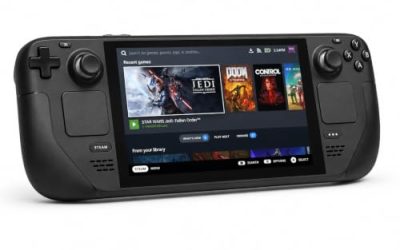
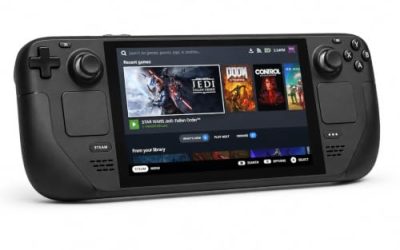
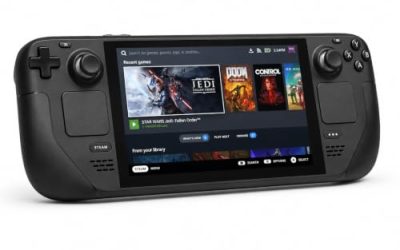
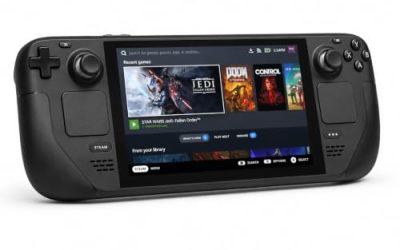
Valve Steam Deck OLED 512GB

The handheld the Verified badge was written for. Valve’s sheet passes the Windows build on all four checks, and a terraforming loop of short building sessions suits a handheld; the badge certifies the game under Proton, the only build there is.
Specs
- Display: 7.4-inch HDR OLED, 1280 by 800, up to 90 Hz
- Processor: AMD Zen 2 and RDNA 2 custom APU
- Memory: 16 GB LPDDR5
- Storage: 512 GB NVMe, plus a microSD slot
- Wireless: Wi-Fi 6E and Bluetooth
- Channel note: Valve sells the Deck mainly through its own store, so Amazon listings are third-party sellers
8BitDo Ultimate 2 Bluetooth Controller

The docked and desktop pad pick. Steam lists full controller support with named DualShock and DualSense support, and this pad covers the couch case with modern sticks and triggers plus back buttons for build-menu shortcuts.
Specs
- Connectivity: Bluetooth wireless and USB-C wired
- Joysticks: TMR electromagnetic, anti-drift design
- Triggers: Hall effect, with mode switching
- Extras: two remappable back buttons, motion control
- In the box: charging dock included
Xbox Wireless Controller, Carbon Black

The co-op guest pad. The record publishes Online Co-op, and a second pad is the simplest way to seat a visiting player; Steam Input support is universal and the glyphs match what most games display.
- Connectivity: Xbox Wireless and Bluetooth
- Port: USB-C for wired play
- Controls: hybrid D-pad, dedicated Share button
- Power: AA batteries or optional rechargeable pack
Logitech G502 HERO

Terraforming is inventory and machine-placement work, and at a desk a precise wired mouse turns blueprint placement and crafting queues into single clicks. Eleven programmable buttons cover the inputs a long session repeats.
Specs
- HERO optical sensor, up to 25,600 DPI
- 11 programmable buttons
- Adjustable weight system
- Wired USB connection
- On-board memory profiles
Samsung T9 Portable SSD 2TB

For moving a Linux game library between machines, or keeping an offline backup of installers, a fast USB-C drive is the simple answer. The headline figure needs a Gen 2×2 host port; on a lesser port the drive runs at that ceiling.
Specs
- Capacity: 2 TB portable SSD
- Interface: USB 3.2 Gen 2×2, USB-C connector
- Maker-rated speeds: up to 2,000 MB per second read, 1,950 MB per second write
- Features: Dynamic Thermal Guard, maker-rated drop resistance
How to choose
Choose the Steam copy: it is the edition the ProtonDB file and the Deck sheet describe, and the GOG edition offers Windows only. On desktop or laptop, install and leave the compatibility tool at its default; the Platinum file says the current build is the settled case. On Deck, the Verified badge means no configuration work is expected, caveat aside. For co-op, the record publishes Online Co-op with no anti-cheat gate named by any source, so multiplayer is a session question, not a compatibility one. A pad is a first-class way to play; a mouse earns its place for long building sessions.
Who should skip
Skip this one if you are shopping for a native Linux build: none exists, and the soundtrack’s Linux flag is not one. Skip the GOG edition if your plan was a DRM-free Linux installer, because that edition is Windows-only. Skip it if you need a record that names its DRM position: this one names neither a DRM product nor an account layer. And if you only trust Deck paperwork written against a shipping build, weigh the ProtonDB file instead: the Verified test predates the full release by about a month.
FAQ
Is The Planet Crafter native on Linux?
No. Steam’s record flags Linux false and the Linux requirements field is an empty list outright, with no tab in any form. The Windows build under Proton is the only route, and ProtonDB rates that route Platinum.
The soundtrack flags Linux. Does that change the answer?
No. The Original Soundtrack app flags all three platforms, but it is an album: its flags describe audio delivery, not a game build. It is the family’s only Linux flag, one of seven apps, and the game app itself flags Linux false.
Can I play the online co-op on Linux?
The record publishes Multi-player, Co-op and Online Co-op, and no anti-cheat system is named by Steam, by SteamDB’s technology list, or by Are We Anti-Cheat Yet, which has no entry for the game. Nothing in the paperwork gates co-op behind a compatibility block.
Is it really Verified on Steam Deck?
Yes, on Valve’s record as republished by SteamDB: all four checks pass and SteamOS separately reads Compatible. The test is dated 13 March 2024, about a month before the full release, so treat the ProtonDB file as the fresher evidence for the current build.
Final verdict
The Planet Crafter is a Windows game on Linux, and a well-documented one. The native answer is a clean no, and a soundtrack flag that should fool nobody. The compatibility answer is about as strong as the records allow: a unanimous Platinum ProtonDB file across 169 reports, a Verified Deck badge whose only soft spot is its pre-release test date, published co-op with no anti-cheat named by any source, and a Windows-only GOG edition that leaves the Steam copy as the obvious buy. What the records certify is the build, and the build travels well.
Product and ASIN Reference
| Product | ASIN |
|---|---|
| Valve Steam Deck OLED 512GB | B0CQ3RWQQZ |
| 8BitDo Ultimate 2 Bluetooth Controller | B0F194QFT2 |
| Xbox Wireless Controller, Carbon Black | B08DF248LD |
| Logitech G502 HERO | B07GBZ4Q68 |
| Samsung T9 Portable SSD 2TB | B0CHFS9K14 |