Minami Lane is a small street-management game from developers Blibloop and Doot, published by Doot Tiny Games and Wholesome Games Presents and released on 28 February 2024. Players build up one Japanese-inspired street of shops and houses, fielding villagers’ requests. The Linux question here is not the usual Proton question: Steam’s record flags the game for Windows, Mac and Linux alike, and the layers underneath the flag hold up.
So this piece reads each layer separately: the depot record, the add-on app, the DRM and account fields, the anti-cheat sources, the Proton file, the Deck sheet and the storefront ruling.
As an Amazon Associate, we earn from qualifying purchases.
Quick answer
Minami Lane is genuinely native on Linux: Steam flags the game for Linux, its requirements tab names Ubuntu and CentOS systems, and a live Linux depot sits in the current branch. ProtonDB rates it Platinum across 16 reports, and Valve rates it Verified on Steam Deck. The Steam copy is the only PC edition.
The status at a glance
| Question | Answer from the record |
|---|---|
| Native Linux build | Yes — flag, tab and depot all agree |
| Linux requirements tab | Populated — full minimum, sparse recommended |
| Linux depot | Depot 2678992, about 252 MB on disk |
| Family apps | Soundtrack only; it flags Linux too |
| ProtonDB record | Platinum headline, best and trending, 16 reports |
| Steam Deck verdict | Verified, tested 11 June 2024 |
| GOG edition | None |
| DRM or account | Neither field present on the record |
| Anti-cheat | None named by any source |
What Steam’s record says
Steam’s platform fields read Windows true, Mac true and Linux true. A flag alone is a claim, so the next layer is the tab behind it. The Linux tab is genuinely populated at the minimum tier: it names Ubuntu 20.04, Ubuntu 18.04 and CentOS 7, an x64 processor with SSE2 support, 2 GB of RAM, integrated graphics as sufficient, and 250 MB of storage. The recommended tier exists but is sparse — one storage line asking for 3 GB.
The third layer is the download itself. SteamDB lists three content depots: Windows, macOS, and depot 2678992 for Linux at about 252 MB on disk. The public branch carrying them was updated in October 2025 — the build a buyer downloads today. One field dissents: SteamDB’s extended OS string lists only the two Mac architectures. That string describes the Mac build’s packaging; the flag, tab and depot outvote it.
The family sweep: two apps, two Linux flags
Steam’s record lists exactly one DLC app: the Minami Lane Original Soundtrack, a music app released a day after the game and credited to Doot, Blibloop and Zakku. On its own record, the soundtrack flags Windows, Mac and Linux all true, while its Linux requirements field is an empty list — a flag with no tab behind it.
The family count is therefore two of two, the game included, and the soundtrack trap does not fire. The trap matters when the music app’s flag is the only Linux flag in a family, where a reader scanning the rows can mistake it for the game’s. Here the deciding flag sits on the game and reads true, backed by a populated tab and a live depot; the soundtrack’s flag is corroboration, and a weaker form of it, since the music app publishes no requirements.
DRM and accounts: an empty file
Steam’s record carries no DRM notice field at all, and no external account notice either — nothing named in either direction: no third-party DRM to report, no account to link. The category list matches that plain picture: single-player, Steam Achievements, full controller support with DualShock and DualSense support named separately, Steam Trading Cards, Steam Cloud and Family Sharing. No launcher category, no always-online category.
Anti-cheat: three sources, three silences
Anti-cheat is checked three ways, the sources kept separate. Steam itself names none: no anti-cheat category on the record and no notice in any field, which fits a single-player-only game. SteamDB’s detected technologies are the Unity Engine, the Mono, SteamworksNET, UnityBurst and UnityURP SDKs and a cURL library — engine and networking plumbing, none of it anti-cheat software. The third source, the Are We Anti-Cheat Yet dataset, holds no entry for this game, by name or app number. Three sources, three silences: there is no anti-cheat layer in this record to clear.
The Proton file: Platinum that prices two routes
ProtonDB’s summary feed answered in full for this app: a Platinum headline tier, Platinum as the best-reported tier and Platinum as the trending tier, across 16 reports, at moderate confidence. Its game page classifies it as Native, agreeing with Steam — no stray classification to correct. Sixteen reports is a thin file, and the tier should be read at that size.
The texture underneath explains the file: the pool prices two routes together. Several reporters describe clean native runs out of the box, including on Steam Deck. A minority strand reports faults on the native build specifically — one Deck reporter found severe input problems after a few minutes of native play and flawless behaviour through Proton; another found the native build had no sound where the Proton route had it; a desktop reporter saw the native build close after its opening screen and played through Proton instead. Those reports stay at report weight. Both routes are documented — native first, forcing Proton as the known fallback.
The Steam Deck sheet
Valve’s own compatibility endpoint answers directly for this game, returning the strongest result the service gives: category three, Verified. Its published checks: all functionality accessible with the default controller configuration, interface text legible, and the default graphics configuration performing well. SteamOS compatibility is recorded separately as Compatible.
The paperwork behind the badge comes from SteamDB’s republication of Valve’s compatibility data. The game was tested on 11 June 2024, and the sheet’s recommended runtime is the native one — Valve tested the Linux build itself, not the Windows build under Proton. The configuration entries name gamepad input, no manual keyboard invocation, no launcher navigation, and no internet requirement for setup or single-player play. One caution: the public branch has moved on since, most recently in October 2025, so the badge describes a first-year build. The trending Platinum tier is the fresher signal, and it points the same way.
The storefront ruling
There is exactly one place to buy this game on PC. GOG does not sell Minami Lane: the address a product page would occupy redirects to the store’s general games catalogue, its behaviour for titles it does not carry. The shop’s search returning nothing is weaker evidence — the search has a known blind spot — so the ruling rests on the redirect. The Steam copy is the native build, the Proton fallback and the Deck-tested copy in one.
Gear that fits the record
The gear below follows the record’s shape: the badge’s handheld, two pads, a mouse for a menu-and-clicks game, and library storage.
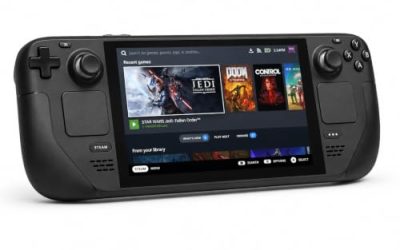
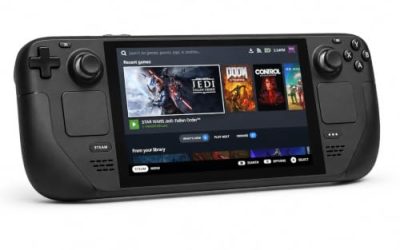
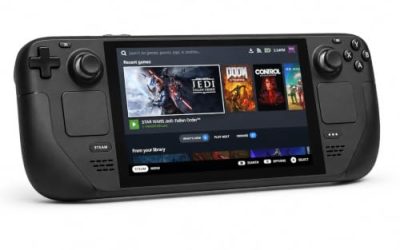
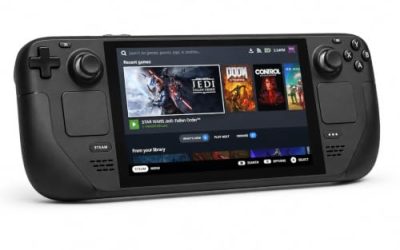
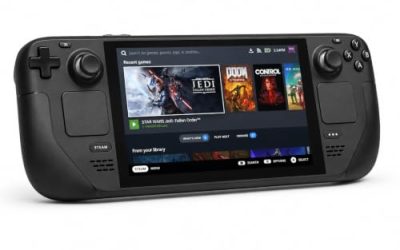
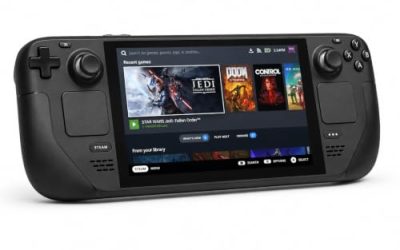
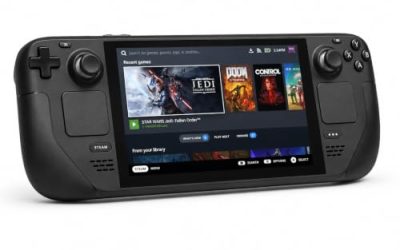
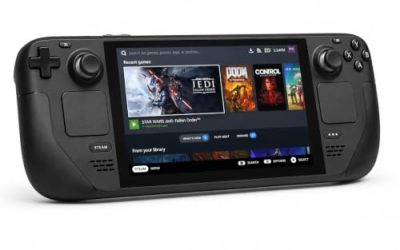
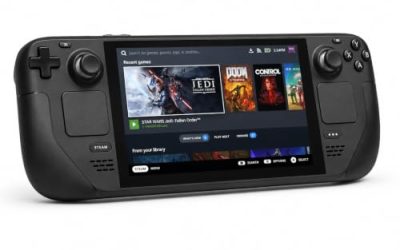
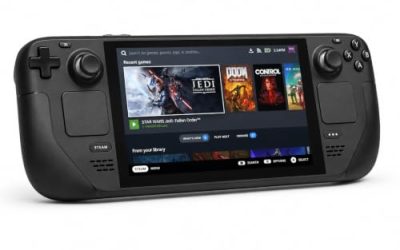
Valve Steam Deck OLED 512GB

The handheld the Verified badge was written for. Valve’s sheet names the native runtime for this game, and the published requirements are a rounding error next to the Deck’s APU.
Specs
- Display: 7.4-inch HDR OLED, 1280 by 800, up to 90 Hz
- Processor: AMD Zen 2 and RDNA 2 custom APU
- Memory: 16 GB LPDDR5
- Storage: 512 GB NVMe, plus a microSD slot
- Wireless: Wi-Fi 6E and Bluetooth
- Channel note: Valve sells the Deck mainly through its own store, so Amazon listings are third-party sellers
8BitDo Ultimate 2 Bluetooth Controller

The docked and desktop pad pick. Steam lists full controller support for the game, and this pad covers the couch case, with back buttons for menu shortcuts.
Specs
- Connectivity: Bluetooth wireless and USB-C wired
- Joysticks: TMR electromagnetic, anti-drift design
- Triggers: Hall effect, with mode switching
- Extras: two remappable back buttons, motion control
- In the box: charging dock included
Xbox Wireless Controller, Carbon Black

The safest guest pad going: Steam Input support is universal, the glyphs match what most games display, and it pairs over Bluetooth or its own wireless standard.
- Connectivity: Xbox Wireless and Bluetooth
- Port: USB-C for wired play
- Controls: hybrid D-pad, dedicated Share button
- Power: AA batteries or optional rechargeable pack
Logitech G502 HERO

Minami Lane is played by clicking through menus, placing buildings and reading requests, and at a desk a precise wired mouse turns those trips into single clicks. Eleven programmable buttons cover the inputs a session repeats.
Specs
- HERO optical sensor, up to 25,600 DPI
- 11 programmable buttons
- Adjustable weight system
- Wired USB connection
- On-board memory profiles
Samsung T9 Portable SSD 2TB

For moving a Linux game library between a desktop and a laptop, a fast USB-C drive is the simple answer. The headline figure needs a Gen 2×2 host port; on a lesser port the drive runs at that ceiling instead.
Specs
- Capacity: 2 TB portable SSD
- Interface: USB 3.2 Gen 2×2, USB-C connector
- Maker-rated speeds: up to 2,000 MB per second read, 1,950 MB per second write
- Features: Dynamic Thermal Guard, maker-rated drop resistance
How to choose
Buy the Steam copy — it is the only PC edition — and install it the ordinary way: Steam serves the native build by default on Linux, the route Valve tested for the Deck badge. Give the native build the first run. If your system reproduces a fault a minority of reporters describe — input trouble, missing sound — forcing Proton is a documented fallback with a Platinum file behind it. Deck owners can buy on the strength of the Verified badge, keeping in mind the test predates the current branch.
Who should skip
Skip this one if you want a long management campaign: this is a small game about a single street, built around short missions and villager requests. Skip it if you buy only from GOG or want a store-independent copy, because no such edition exists. And if a possible native-build quirk would spoil the game for you and you have no interest in switching runtimes, the thin 16-report file argues for waiting on a deeper record.
FAQ
Is Minami Lane native on Linux?
Yes. Steam flags the game for Linux, the Linux requirements tab is populated with named Ubuntu and CentOS systems and modest hardware, and SteamDB shows a live Linux depot in the current public branch. All three layers agree.
Why does a native game have a Platinum ProtonDB rating?
The rating prices the Windows build under Proton. ProtonDB’s summary returns Platinum as the headline, best-reported and trending tier across 16 reports at moderate confidence, and a minority of those reports describe native-build faults that pushed their authors to the Proton route.
Is Minami Lane Steam Deck Verified?
Yes. Valve’s record returns Verified, with the default controller configuration fully functional, interface text legible and the default graphics configuration performing well. The test behind the badge dates to 11 June 2024 and names the native runtime; SteamOS is separately rated Compatible.
Can I buy Minami Lane on GOG instead?
No. GOG does not carry the game — the address its product page would use redirects to the general catalogue — so the Steam copy is the only PC edition, and it carries the native Linux build.
Final verdict
Minami Lane is the straightforward case this series rarely gets: a genuine native build whose flag, requirements tab and depot all agree, no DRM or account layer, no anti-cheat from any source, a Platinum community file covering the fallback route, and a Verified Deck badge earned on the native runtime. The caveats are evidentiary, not substantive — the badge paperwork is from the game’s first year, the Proton file is 16 reports thin, and a minority of players report native-build faults that Proton sidesteps. Buy the Steam copy and run the native build first.
Product and ASIN Reference
| Product | ASIN |
|---|---|
| Valve Steam Deck OLED 512GB | B0CQ3RWQQZ |
| 8BitDo Ultimate 2 Bluetooth Controller | B0F194QFT2 |
| Xbox Wireless Controller, Carbon Black | B08DF248LD |
| Logitech G502 HERO | B07GBZ4Q68 |
| Samsung T9 Portable SSD 2TB | B0CHFS9K14 |