Need for Speed Heat, Ghost Games’ day-and-night street racer set in Palm City, never received a Linux build. Steam’s record (app 1222680, from Steam’s own store search) flags it for Windows alone, and nothing underneath contradicts that: the requirements tab is an empty shell and the depot set is Windows-only.
What makes Heat worth a full status check is everything wrapped around the build. Electronic Arts names an account and an activation layer on the record itself, the community Proton file is deep and settled, and Valve’s Steam Deck sheet carries a note that changes what Playable means here: even single-player play is recorded as needing an internet connection.
As an Amazon Associate, we earn from qualifying purchases.
Quick answer
Need for Speed Heat is not native: Steam flags the game Windows only, its Linux requirements tab is an empty shell, and no Linux depot exists. The route is Proton: ProtonDB rates the build Gold across 338 reports, Valve rates it Playable on Steam Deck, and an EA Account plus online activation are required, even for single-player.
The status at a glance
| Question | Answer from the record |
|---|---|
| Native Linux build | No — Steam flags read Windows only |
| Linux requirements tab | Empty shell — headings over empty lists |
| ProtonDB record | Gold headline, Platinum best reported, 338 reports |
| Steam Deck verdict | Playable, tested 18 January 2023 |
| GOG edition | None — the Steam copy is the only PC edition |
| Account and activation | Both named on the record: EA Account, EA online activation |
What Steam’s own record says
The platform flags read Windows true, Mac false, Linux false. The Linux requirements field is the empty-shell shape: Minimum and Recommended headings published over empty lists, an outline with nothing under it. The Mac field is the same shell.
SteamDB’s depot listing closes the question. The content depot (1222681) plus language depots are the whole delivery, the redistributables are the Windows Visual C++ and DirectX packages, and SteamDB’s extended-OS field is an empty string: no Linux depot, and no split record hiding behind the flag. The public branch build dates to January 2023: a settled build, not a moving target.
Two smaller record facts belong here. Steam lists controller support as partial, not full, unusual for a pad-first arcade racer. And the publisher has marked the game ineligible for Steam Family Sharing, so the copy cannot be lent through a family library.
The family sweep: no soundtrack trap can form
The DLC array holds exactly two apps: the McLaren F1 Black Market Delivery (1281880) and Keys to the Map (1281881). Both were read on their own records; both flag Windows only. No soundtrack app exists in this family (a store search under the game’s name returns nothing), so the recurring pattern in this series, a music app flagging Linux and making a Windows-only game look supported, cannot form here. The family Linux-flag count is zero of three, the game included.
The named layers: account and activation
Most games in this series leave the account and DRM fields blank. Heat fills both in, quoted here as published. The account notice reads “EA Account (Supports Linking to Steam Account)”. The activation notice reads “EA on-line activation and Origin client software installation and background use required.”
The second line deserves a careful read. The store text still names the Origin client, EA’s retired launcher, while SteamDB’s scan of the current build detects an EA App Launcher component. Two separate records, stated separately rather than merged: the store wording is old, and the software that installs inside the Proton prefix today is the EA app, so first-time setup runs through it.
Anti-cheat: three sources, all silent
Heat is an online title, with online PvP and co-op categories on the record, so the anti-cheat question decides whether the Proton file means anything. Three sources were read separately. Steam’s structured record names no anti-cheat system: no category, no notice. SteamDB’s detected technologies are the Frostbite Engine, the EA App Launcher, the AMD GPU Services SDK and the Oodle SDK, and its record carries no anti-cheat software field. Are We Anti-Cheat Yet carries no entry for this game at all, by name or by app id.
That silence is the finding. Nothing on any current record gates Linux out of this game’s online modes the way a kernel-level driver gates other EA titles, and the folder’s own EA app guide lists Heat among the EA games that run through Proton, agreeing with the record read here. Bypass tools are terms violations with ban risk, and nothing in this record makes them necessary.
The Proton file
ProtonDB’s summary record reads Gold on the headline tier, Platinum on the best-reported tier and Gold on the trending tier, across 338 reports, with strong confidence. The trending tier matches the headline, so the Gold describes current reports, not just launch-era reputation.
The honest texture sits at report level. The most recent report visible on the game’s page describes friction with the EA overlay inside the prefix, black screens and freezes worked around by disabling overlay pieces: one report against a 338-report Gold file, kept at that weight. The game page’s classification header could not be read in this session’s fetches, so no page-level tag is claimed either way.
The Steam Deck sheet
Valve’s own compatibility record, read from Valve’s endpoint directly, resolves to category 2: Playable; SteamOS is separately Compatible. The test date and build come from SteamDB’s republication of the same data: tested 18 January 2023, on build 9896005, with Proton Experimental as the recommended runtime.
The passes are the ones that matter for a racer: default controller configuration fully functional, Steam Deck controller icons shown, default graphics performing well. The deductions are a launcher that may need the touchscreen or a manually invoked keyboard, and some small in-game text. Then come the two notes that define this game’s Deck position. First-time setup requires an active internet connection, common for account-layer games. Single-player gameplay also requires one, which is not common at all, and it follows directly from the activation layer named above. A Playable badge with an always-online condition is a different promise from one without.
The storefront ruling
There is no GOG edition: the would-be product address redirects to that storefront’s general games catalogue, its behaviour for a title it does not sell, and its product records return nothing for this game. The Steam copy is the only PC edition.
Gear that fits the record
The gear below follows the record’s shape: the handheld the Playable sheet was written for, two pads, a mouse for menu-heavy desktop sessions, and library storage.
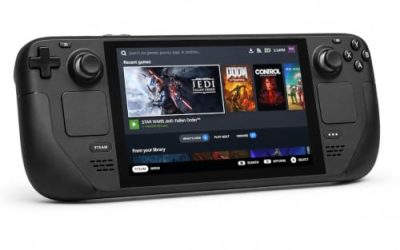
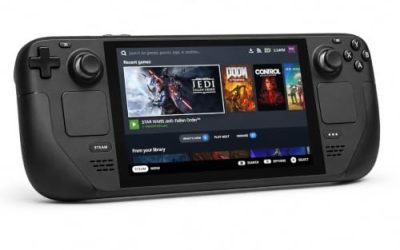
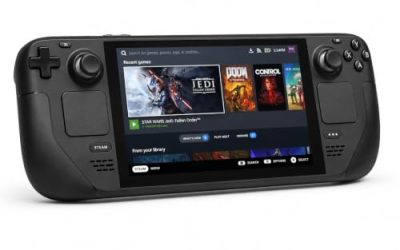
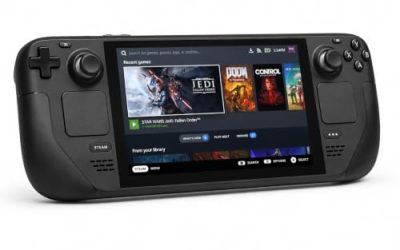
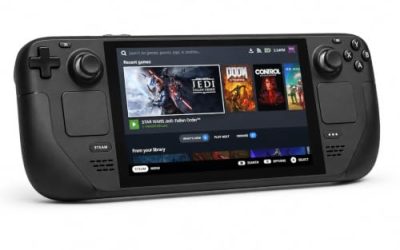
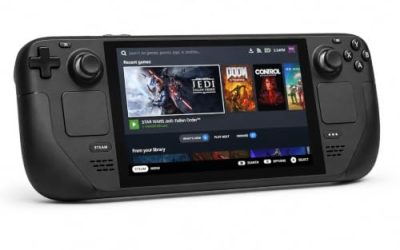
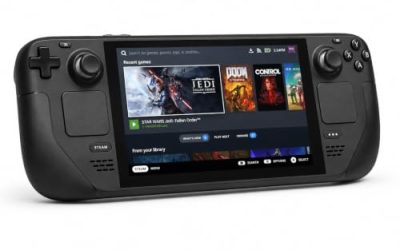
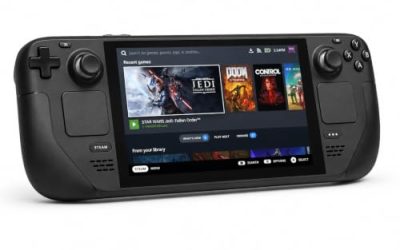
Valve Steam Deck OLED 512GB

The handheld behind the Playable verdict. Valve’s sheet confirms the default configuration performs well; the always-online note is the condition to plan around, not performance.
Specs
- Display: 7.4-inch HDR OLED, 1280 by 800, up to 90 Hz
- Processor: AMD Zen 2 and RDNA 2 custom APU
- Memory: 16 GB LPDDR5
- Storage: 512 GB NVMe, plus a microSD slot
- Wireless: Wi-Fi 6E and Bluetooth
- Channel note: Valve sells the Deck mainly through its own store, so Amazon listings are third-party sellers
8BitDo Ultimate 2 Bluetooth Controller

The docked and desktop pad pick, covering the couch case with modern sticks and triggers plus back buttons for menu shortcuts.
Specs
- Connectivity: Bluetooth wireless and USB-C wired
- Joysticks: TMR electromagnetic, anti-drift design
- Triggers: Hall effect, with mode switching
- Extras: two remappable back buttons, motion control
- In the box: charging dock included
Xbox Wireless Controller, Carbon Black

The safest guest pad in PC gaming: Steam Input support is universal, the glyphs match what most games display, and it pairs over Bluetooth or its own wireless standard.
- Connectivity: Xbox Wireless and Bluetooth
- Port: USB-C for wired play
- Controls: hybrid D-pad, dedicated Share button
- Power: AA batteries or optional rechargeable pack
Logitech G502 HERO

Heat’s garage and map screens are menu-driven, and at a desk a precise wired mouse turns shop trips into single clicks. Eleven programmable buttons cover the confirm, cancel and camera inputs a long session repeats.
Specs
- HERO optical sensor, up to 25,600 DPI
- 11 programmable buttons
- Adjustable weight system
- Wired USB connection
- On-board memory profiles
Samsung T9 Portable SSD 2TB

For moving a Linux game library between machines, or keeping an offline backup of installers, a fast USB-C drive is the simple answer. The headline figure needs a Gen 2×2 host port; on a lesser port the drive runs at that ceiling.
Specs
- Capacity: 2 TB portable SSD
- Interface: USB 3.2 Gen 2×2, USB-C connector
- Maker-rated speeds: up to 2,000 MB per second read, 1,950 MB per second write
- Features: Dynamic Thermal Guard, maker-rated drop resistance
How to choose
Start with the account question, because it outranks the platform one. If an EA Account and an online activation step are acceptable, the Steam copy is the only edition to buy, and the Proton route is well documented: a Gold headline with a matching Gold trending tier across 338 reports is a settled profile. Desktop players should expect the EA app at first-time setup inside the prefix; that is the record working as published, not a fault.
Deck players should choose with the sheet’s condition in view. The performance and controller items pass; the deciding factor is whether your Deck play happens somewhere with a connection, because the sheet records single-player as requiring one. If your racing is mostly offline and portable, that note, not the badge, is the answer.
Who should skip
Skip this one if you will not create an EA Account: the requirement is on the record and no storefront sells a copy without it. Skip it if your play is offline, since the activation layer and the Deck sheet both tie even single-player sessions to a connection. Skip it if you wanted a native build, a DRM-free edition or a family-library lend: none of the three exists on any current record.
FAQ
Is Need for Speed Heat native on Linux?
No. Steam flags the game Windows only, the Linux requirements field is an empty shell, SteamDB confirms a Windows-only depot set with an empty extended-OS field, and both add-on apps flag Windows only.
Does Need for Speed Heat need an EA Account on Linux?
Yes. The store record names it directly: an EA Account that supports linking to a Steam account, plus EA online activation. SteamDB’s scan of the current build detects the EA App Launcher, so first-time setup runs through the EA app inside the prefix.
How well does Need for Speed Heat run through Proton?
ProtonDB rates it Gold on the headline and trending tiers, Platinum on the best-reported tier, across 338 reports with strong confidence. Individual reports describe occasional EA-overlay friction inside the prefix, at report level against that settled file.
Is Need for Speed Heat playable on Steam Deck?
Valve rates it Playable, tested 18 January 2023, with SteamOS separately Compatible. The performance and controller items pass; the conditions are a launcher that may need touch or keyboard input, some small text, and an internet connection required for setup and for single-player gameplay.
Final verdict
Need for Speed Heat on Linux is a Proton story with a paperwork tax. The build travels well: a Gold file 338 reports deep with a trending tier to match, no anti-cheat named by any source, and a Playable Deck sheet whose performance items all pass. The costs are named on the record rather than hidden: an EA Account, an online activation whose store wording still mentions a retired launcher, and a single-player mode Valve’s sheet ties to a live connection. Readers who accept those terms get a settled runner; the rest should skip it for reasons unrelated to Linux performance.
Product and ASIN Reference
| Product | ASIN |
|---|---|
| Valve Steam Deck OLED 512GB | B0CQ3RWQQZ |
| 8BitDo Ultimate 2 Bluetooth Controller | B0F194QFT2 |
| Xbox Wireless Controller, Carbon Black | B08DF248LD |
| Logitech G502 HERO | B07GBZ4Q68 |
| Samsung T9 Portable SSD 2TB | B0CHFS9K14 |