ENDER LILIES: Quietus of the Knights, the dark fantasy action RPG from Live Wire and Adglobe, sends the priestess Lily through a kingdom of blighted, undying knights whose purified spirits fight at her side. Its Steam record contradicts itself: the store paperwork denies Linux entirely, while the package the store delivers contains a Linux build.
That split decides everything practical. A player reading only the flags would file this as a Proton title; a player reading only the depot table would call it native and stop asking. Both miss half the record, and the community files pull both ways too: ProtonDB grades the Windows build, and Valve’s Deck test names a Proton runtime, even though a native build sits in the package.
As an Amazon Associate, we earn from qualifying purchases.
Quick answer
Ender Lilies is a split record. Steam flags the game Windows only and its Linux requirements tab is an empty shell, yet the store package delivers a real Linux depot of the same size as the Windows one. ProtonDB rates the Windows build Platinum across 75 reports, and the Deck badge is Verified.
The status at a glance
| Question | Answer from the record |
|---|---|
| Steam platform flag for Linux | False — Windows only |
| Linux requirements tab | Empty shell over empty lists |
| Linux depot in the store package | Yes — depot 1369632, 1.22 GiB, current branch build |
| Family Linux flags | 1 of 2 — the soundtrack app only |
| ProtonDB record | Platinum on all tiers, 75 reports, strong confidence |
| Steam Deck | Verified, tested January 2023 under Proton |
| GOG edition | None |
The flag, the tab and the depot disagree
Start with the layer most scans read first. The record for app 1369630, developed by Live Wire and Adglobe and published by Binary Haze Interactive, released 21 June 2021, flags Windows true and both Mac and Linux false. The linux_requirements field is an empty shell: Minimum and Recommended headings printed over empty lists. The Mac field is the same shell. On paperwork alone, this is a Windows-only release.
The depot table tells a different story. SteamDB lists two content depots: depot 1369631, the Windows 64-bit build at 1.22 GiB, and depot 1369632, named ENDER LILIES Linux, also at 1.22 GiB. The Linux depot is no leftover stub. Its current manifest, dated 30 May 2022, holds 23 files: Unreal packages, six audio banks, ten native shared libraries and a shell script. Nor is it stranded outside the delivery system like the unpackaged depots this series has caught before: it belongs to the store package, and its build ID, 8834157, is exactly the build the public branch still serves. A buyer on Linux receives this build with the game.
So the ruling follows the delivery layer. The Mac side shows what a genuinely absent platform looks like in this same record: false flag, empty-shell tab and no depot at all, three layers in agreement. Linux has the false flag and the empty shell, but the third layer delivers a sized, current, packaged build. The game is native on Linux in the only sense that reaches a disk; the flags and the tab never caught up. Two smaller fields say nothing either way: osextended is an empty string, and the record carries neither a DRM notice nor an external account notice, two gaps stated here as gaps, not as promises.
The family’s only Linux flag is on the music
The full DLC array holds exactly one app: the Original Soundtrack, app 1658570, a music release credited to Mili and Live Wire. It flags all three platforms true, while its own Linux requirements field is an empty list outright. The family count is one Linux flag out of two readable records, and the flag sits on the audio files.
In most articles in this series that is where the trap closes: a soundtrack’s bare flag inflates a family scan, making a Windows-only game look supported. Here the trap is disarmed by the game’s own depot table, which settles the native question independently. The soundtrack flag proves nothing in either direction, and this article rests the native case on the game’s package, never on its sibling. The sequel, ENDER MAGNOLIA, is a separate app and is kept out of this count entirely.
Anti-cheat, from three separate sources
This is a single-player game; Steam’s categories name no multiplayer mode and run to Single-player, Steam Achievements, Full controller support, Steam Cloud and Family Sharing. Steam’s record names no anti-cheat. SteamDB’s detected technologies are engine and middleware entries only: the Unreal Engine, FMOD audio, NVIDIA physics and cloth libraries, and Ogg and Vorbis audio. The Are We Anti-Cheat Yet dataset, searched by name and app ID, carries no entry for this title. Three sources, kept separate, all negative: no anti-cheat layer blocks Linux play on either route.
The Proton file grades the other build
ProtonDB’s summary record for this app answered in full: Platinum on the headline tier, Platinum on the best-reported tier and Platinum on the trending tier, across 75 reports with strong confidence, scored at 0.91. Those are complete figures, claimed at exactly that size.
One framing point matters. A Platinum file of that depth grades the Windows build under Proton; it says nothing direct about the native build in the same package, which most reporters never select. Treat it as a measure of the fallback route: if the native build misbehaves, the Proton path behind it is as strong as community files get. One check could not be completed: the classification header on the game’s ProtonDB page did not return readable content in this session, so no claim is made about whether that page labels the game native. The gap is disclosed rather than filled.
A Verified badge earned under Proton
Valve’s own compatibility record, read directly from Valve’s endpoint, places the game in the Verified category: the default controller configuration is fully functional, interface text is legible, and the default graphics perform well. SteamOS separately rates it Compatible.
The dated paperwork behind the badge, read through SteamDB’s republication of Valve’s compatibility data, adds two qualifications. The test was run on 26 January 2023 on build 7554209, not the build the public branch now serves, so the paperwork predates the current branch build. And the test configuration’s recommended runtime is proton-stable: the Verified grade, as tested, certifies the Windows build under Proton, not the native build in the same package.
The storefront ruling
Steam is the only storefront of the two checked selling this game. The natural GOG product address resolves to GOG’s general games catalogue, that store’s behaviour for titles it does not carry, and both GOG searches return no product for the game, only unrelated titles. No GOG edition exists.
Gear that fits this record
The record points at a pad-first game with a Verified handheld badge, so the gear follows that shape: the handheld itself, two pads, a desk mouse, and fast storage for a travelling library.
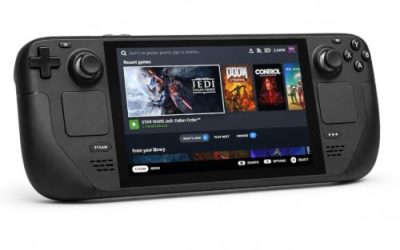
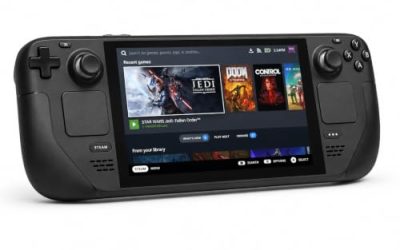
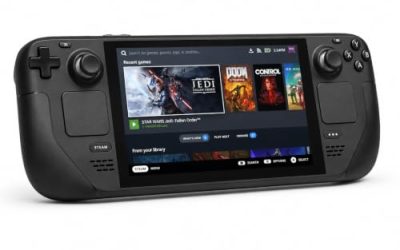
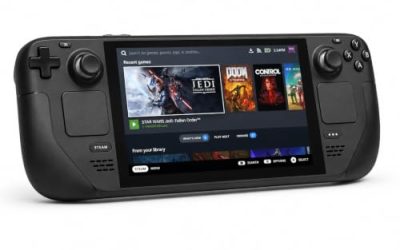
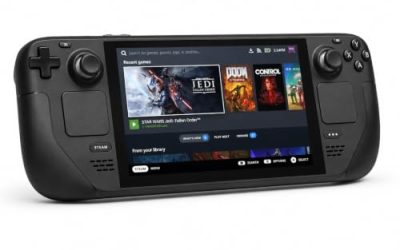
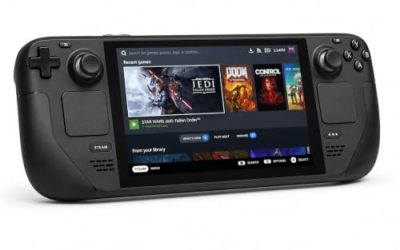
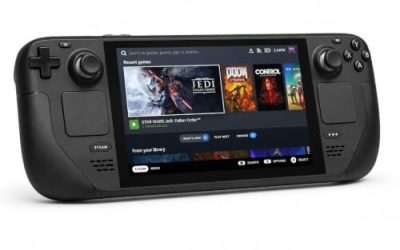
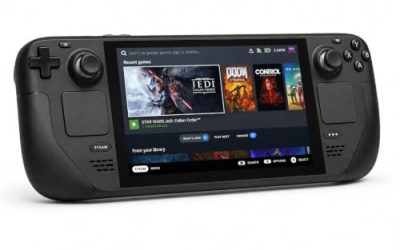
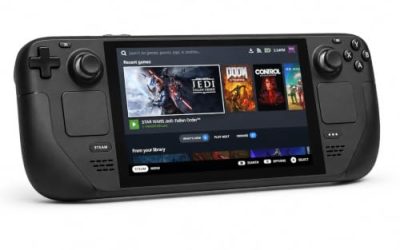
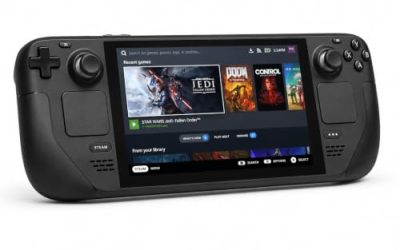
Valve Steam Deck OLED 512GB

The handheld the Verified badge was written for. Ender Lilies is a 2D action game whose demands sit far inside the Deck’s APU, and Valve’s sheet passes the default configuration cleanly on it.
Specs
- Display: 7.4-inch HDR OLED, 1280 by 800, up to 90 Hz
- Processor: AMD Zen 2 and RDNA 2 custom APU
- Memory: 16 GB LPDDR5
- Storage: 512 GB NVMe, plus a microSD slot
- Wireless: Wi-Fi 6E and Bluetooth
- Channel note: Valve sells the Deck mainly through its own store, so Amazon listings are third-party sellers
8BitDo Ultimate 2 Bluetooth Controller

The desktop pad pick. Steam lists full controller support, and this pad covers precision platforming with modern sticks and triggers, plus back buttons for a game built around quick spirit abilities.
Specs
- Connectivity: Bluetooth wireless and USB-C wired
- Joysticks: TMR electromagnetic, anti-drift design
- Triggers: Hall effect, with mode switching
- Extras: two remappable back buttons, motion control
- In the box: charging dock included
Xbox Wireless Controller, Carbon Black

The safest guest pad in PC gaming: Steam Input support is universal, the glyphs match what most games display, and it pairs over Bluetooth or its own wireless standard.
- Connectivity: Xbox Wireless and Bluetooth
- Port: USB-C for wired play
- Controls: hybrid D-pad, dedicated Share button
- Power: AA batteries or optional rechargeable pack
Logitech G502 HERO

Ender Lilies is pad-first, but desktop sessions still involve menus, maps and inventory screens, where a precise wired mouse speeds things up.
Specs
- HERO optical sensor, up to 25,600 DPI
- 11 programmable buttons
- Adjustable weight system
- Wired USB connection
- On-board memory profiles
Samsung T9 Portable SSD 2TB

For moving a Linux game library between desktop and laptop, or keeping an offline backup of installers, a fast USB-C drive is the simple answer. The headline figure needs a Gen 2×2 host port; on a lesser port the drive runs at that ceiling.
Specs
- Capacity: 2 TB portable SSD
- Interface: USB 3.2 Gen 2×2, USB-C connector
- Maker-rated speeds: up to 2,000 MB per second read, 1,950 MB per second write
- Features: Dynamic Thermal Guard, maker-rated drop resistance
How to choose
Choose the Steam copy: the only PC edition on sale, and the package that carries both builds. On a Linux desktop, install the game and check which build launches before reaching for a compatibility tool. If the native build gives trouble, the fallback is unusually strong, since ProtonDB’s unanimous Platinum file across 75 reports describes the Windows build under Proton. On Steam Deck, install and play; the only decision is whether to leave the runtime at Valve’s tested Proton setting or try the native build.
Who should skip
Skip this one if you want paperwork that agrees with itself: here the flag, the tab and the depot tell two different stories, and only the depot is right. Skip it if you want a DRM-free offline installer, because no GOG edition exists. Skip it if you want the sequel; ENDER MAGNOLIA is a separate app. And skip the native-build experiment if you prefer the exact configuration Valve tested, since the Verified paperwork was earned under Proton on an earlier build.
FAQ
Is Ender Lilies native on Linux?
By delivery, yes. Steam’s flag says Windows only and the Linux requirements tab is an empty shell, but the store package contains a dedicated Linux depot of 1.22 GiB, with native libraries in its manifest, on the current branch build.
Why does the soundtrack list Linux support?
Because its record flags all three platforms while its Linux requirements field is an empty list. It is a music product, and a bare flag on audio files is not a game build. The game’s native case rests on its own depot.
How well does Ender Lilies run under Proton?
ProtonDB’s summary reads Platinum on all three tiers, across 75 reports with strong confidence. That file grades the Windows build under Proton, so it measures the fallback route rather than the native build.
Is Ender Lilies Steam Deck Verified?
Yes. Valve’s record gives the game its Verified category with the controller, legibility and performance checks passing, and SteamOS separately rates it Compatible. Its dated test sheet is from January 2023, names a Proton runtime and an earlier build, and so predates the current branch build.
Final verdict
Ender Lilies is the rare record where the pessimistic layer is the wrong one. The flag and the tab describe a Windows-only game; the package delivers a native Linux build the same size as the Windows one, on the current branch, inside the store purchase. Around that split sit a unanimous Platinum Proton file and a Verified Deck badge earned, on its own paperwork, under Proton. Buy the Steam copy, try the build already in the package first, and keep the Platinum route in reserve.
Product and ASIN Reference
| Product | ASIN |
|---|---|
| Valve Steam Deck OLED 512GB | B0CQ3RWQQZ |
| 8BitDo Ultimate 2 Bluetooth Controller | B0F194QFT2 |
| Xbox Wireless Controller, Carbon Black | B08DF248LD |
| Logitech G502 HERO | B07GBZ4Q68 |
| Samsung T9 Portable SSD 2TB | B0CHFS9K14 |