Curse of the Dead Gods is Passtech Games’ single-player roguelike about fighting through a cursed temple, balancing a torch against your weapons and stacking curses that cut both ways. Steam’s record names Passtech Games as developer, Focus Entertainment as publisher, and dates the full release to 23 February 2021. The store lists full controller support and Steam Cloud, and the temple theme stays inside the fiction: traps, monsters and corruption meters are game systems.
The Linux question has a short answer and a longer paper trail. No native Linux build exists, and every layer of the record agrees on that. What the game does have is a strong community compatibility file, the strongest badge Valve gives handheld games, and one misleading flag in its own family. This piece reads each layer separately: the flags, the fields, the depots, the add-on app, the Proton file, the Deck sheet and the GOG ruling.
As an Amazon Associate, we earn from qualifying purchases.
Quick answer
No. Curse of the Dead Gods is not native on Linux: Steam flags it Windows only, its Linux requirements field is an empty list, and its depot table holds one Windows content depot. That build travels well: ProtonDB’s file is Platinum at the headline across 42 reports with strong confidence, and Valve rates the game Steam Deck Verified. The family’s one Linux flag sits on the soundtrack, not the game.
The record at a glance
| Layer | What the record shows |
|---|---|
| Steam platform flags | Windows true, Mac false, Linux false |
| Requirements fields | Windows populated at both tiers; Mac and Linux empty lists |
| Depots | One content depot (2.78 GiB); no Linux or macOS depot |
| Family | One add-on app; the soundtrack flags Linux over an empty field |
| ProtonDB | Platinum headline, Platinum best, Gold trending, 42 reports |
| Steam Deck | Verified, tested under a Proton runtime |
| GOG | An edition exists; it is Windows-only |
What Steam’s own record holds
Start with the flags, because they settle the headline question. Steam’s platform line reads Windows true, Mac false and Linux false, and the requirements fields match: the Windows tab is genuinely populated at both tiers, naming Windows 7, 8 or 10, an Intel Core i3-2125 at minimum and a Core i7-3820 recommended, 4 GB of memory rising to 8 GB, a GeForce GTX 660 rising to a GTX 760, and 2 GB of storage. The Mac and Linux requirements fields are empty lists outright.
The depot table tells the same story in build form. There is exactly one content depot, the Lost Temple content at 2.78 GiB on disk, beside two Unused regional depots carrying no size. No Linux depot and no macOS depot exists in any branch, so no second build hides behind the flags. SteamDB’s information page reads both osextended and osarch as empty strings. The record also carries no DRM notice and no third-party account notice; both are recorded as gaps. Its categories, stated exactly as listed, are Single-player, Steam Achievements, Full controller support, Steam Trading Cards, Gamepad Recommended, Steam Cloud, Remote Play on TV and Family Sharing.
The soundtrack flags Linux; the game does not
The full add-on array holds exactly one app: the trap this series keeps meeting. The Curse of the Dead Gods Original Soundtrack, a music product, flags all three platforms true: Windows, Mac and Linux. Its own Linux requirements field is an empty list outright, a bare flag on an audio product with no build behind it.
So the family count is one of two readable records flagging Linux, and the one flag belongs to the soundtrack. It does not. The not-native case rests on the game alone: false flag, empty-list field, single unsplit depot.
ProtonDB: a Platinum file, and a header to ignore
ProtonDB’s summary record answered in full. The headline tier is Platinum, the best-reported tier is Platinum, the trending tier is Gold, the file holds 42 reports, and the confidence rating is strong. That is one of the healthier files a Windows-only game can carry: the bulk of reports describe runs that start and play without intervention, on desktop distributions and the Deck alike.
The game’s ProtonDB page also carries a classification heading reading “Natively Supports”, and it should be ignored. Steam’s own record contradicts it at every layer just read, and every report beneath that heading was filed under a named Proton version. Where the two disagree, this article follows Steam: the heading is a labelling artifact, not a build. The texture underneath is still useful at report weight: Deck players praise the fit, and a few reports note minor particle-effect artifacts.
Steam Deck: Verified, on Proton paperwork
Valve’s own compatibility endpoint answered directly for this app, and the verdict is Verified, the strongest category: the default controller configuration is fully functional, the game shows Steam Deck controller glyphs, interface text is legible, and the default graphics configuration performs well. One note item stands beside the four passes: external controllers do not take over as the primary player’s pad by default, and may need a manual switch through the Quick Access Menu. SteamOS, rated separately, reads Compatible.
The dated paperwork behind the badge comes from SteamDB’s republication of Valve’s compatibility data. The test is dated 16 February 2022, run on build 6806445, and the sheet names proton-stable as the recommended runtime. So the badge as tested certifies the Windows build under Proton, not a native build, and the paperwork predates the current branch build: the public branch now stands on build 8515592, built in April 2022.
Anti-cheat, from three sources
This is a single-player game, and the anti-cheat picture matches that shape on all three sources. Steam’s record names no anti-cheat and no account requirement. SteamDB’s detected-technologies list contains a single entry, the FMOD audio middleware: sound plumbing, nothing else. The Are We Anti-Cheat Yet dataset, read in full, carries no entry for this game at all.
The GOG ruling
A GOG edition of Curse of the Dead Gods exists, and it does not change the answer. GOG’s own product record, read directly, lists its system compatibility as Windows true and both Mac and Linux false: the GOG copy is the same Windows build family. One caution belongs with the ruling: GOG’s embed catalogue search returned no product for this title even though the store demonstrably sells it, a known blind spot in that search. The ruling rests on the product page and the record behind it, never on search results.
Gear that fits the record
The picks below follow the record’s shape: the handheld the badge was written for, two pads, a mouse for menu-heavy sessions, and fast portable storage.
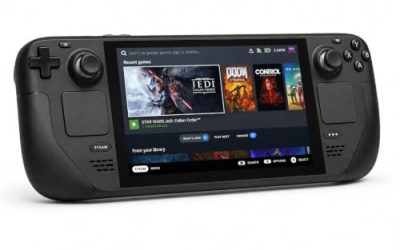
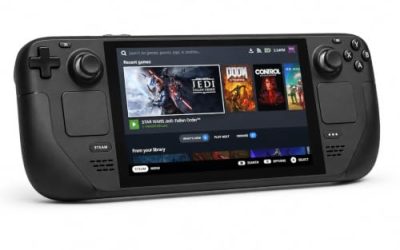
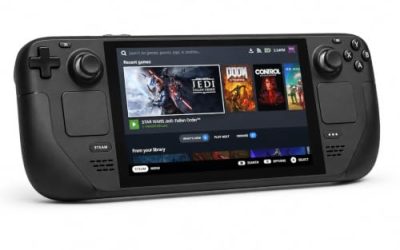
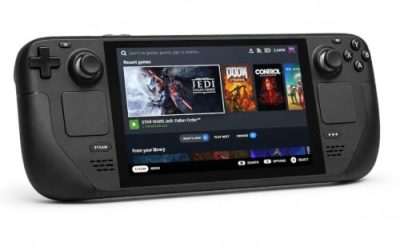
Valve Steam Deck OLED 512GB

The handheld the Verified badge was written for. Valve’s test sheet passes this game’s Windows build under proton-stable, and its modest requirements leave the Deck’s APU headroom to spare.
Specs
- Display: 7.4-inch HDR OLED, 1280 by 800, up to 90 Hz
- Processor: AMD Zen 2 and RDNA 2 custom APU
- Memory: 16 GB LPDDR5
- Storage: 512 GB NVMe, plus a microSD slot
- Wireless: Wi-Fi 6E and Bluetooth
- Channel note: Valve sells the Deck mainly through its own store, so Amazon listings are third-party sellers
8BitDo Ultimate 2 Bluetooth Controller

The docked and desktop pad pick. Steam lists full controller support, and this pad covers the couch case with modern sticks and triggers plus back buttons for torch and weapon swaps.
Specs
- Connectivity: Bluetooth wireless and USB-C wired
- Joysticks: TMR electromagnetic, anti-drift design
- Triggers: Hall effect, with mode switching
- Extras: two remappable back buttons, motion control
- In the box: charging dock included
Xbox Wireless Controller, Carbon Black

The safest guest pad in PC gaming: Steam Input support is universal, the glyphs match what most games display, and it pairs over Bluetooth or its own wireless standard. On the handheld, the test sheet’s note applies: an external pad may need a manual Quick Access Menu switch.
- Connectivity: Xbox Wireless and Bluetooth
- Port: USB-C for wired play
- Controls: hybrid D-pad, dedicated Share button
- Power: AA batteries or optional rechargeable pack
Logitech G502 HERO

Runs pause constantly over weapon and relic choices, and at a desk a precise wired mouse turns those menus into single clicks. Eleven programmable buttons cover the confirm, cancel and inventory inputs.
Specs
- HERO optical sensor, up to 25,600 DPI
- 11 programmable buttons
- Adjustable weight system
- Wired USB connection
- On-board memory profiles
Samsung T9 Portable SSD 2TB

For moving a Linux game library between machines, a fast USB-C drive is the simple answer. The headline figure needs a Gen 2×2 host port; on a lesser port the drive runs at that ceiling.
Specs
- Capacity: 2 TB portable SSD
- Interface: USB 3.2 Gen 2×2, USB-C connector
- Maker-rated speeds: up to 2,000 MB per second read, 1,950 MB per second write
- Features: Dynamic Thermal Guard, maker-rated drop resistance
How to choose
Choose the Steam copy if you want the edition both compatibility records describe: it is the build the ProtonDB file grades and the build Valve tested. The GOG copy suits buyers who prefer client-free installers, though it is the same Windows build under the same Proton layer. On desktop, install and leave the compatibility tool at its default; a Platinum headline across 42 reports says most systems need nothing more. On a Steam Deck, the Verified badge means install and launch, with the caveat that a paired external pad may need the Quick Access Menu switch. Budget buyers lose nothing: the game is the same file on either store, and the mid-range pad covers every input the record lists. Premium money is best spent on the handheld or storage, not on a Linux edition that does not exist.
Who should skip
Skip this game if a native Linux build is a condition of purchase rather than a preference: there is none, on either storefront. Skip it if you will not run a compatibility layer at all, since Proton is the only route on Linux. Skip the soundtrack’s platform flags as buying evidence; they describe an audio product, not the game.
Questions readers ask
Is Curse of the Dead Gods native on Linux?
No. Steam flags the game Windows only, its Linux requirements field is an empty list, and its depot table holds one Windows content depot. The GOG edition is Windows-only as well.
Why does the soundtrack listing show Linux support?
Because the soundtrack is a separate music app whose platform flags read true for all three systems while its own Linux requirements field sits empty: a bare flag on an audio product. The game’s record flags Linux false at every layer.
How well does the game run under Proton?
ProtonDB’s summary record gives a Platinum headline and best-reported tier, trending Gold, across 42 reports with strong confidence. Most reports describe clean runs on desktop Linux and Steam Deck; a minority note minor particle-effect artifacts.
Is the game Steam Deck Verified?
Yes. Valve’s own record rates it Verified, with all four checks passing and one note that external controllers do not take over by default. The test sheet behind the badge is dated February 2022, ran under proton-stable, and predates the build the branch serves today.
Final verdict
Curse of the Dead Gods is a Windows-only game whose paperwork is unusually easy to read once the soundtrack’s stray flag is set aside: false Linux flag, empty-list field, one content depot, and a second storefront selling that same build. What makes it a comfortable Linux buy anyway is the fallback route: a Platinum ProtonDB file with strong confidence, and a Verified Deck badge with a test sheet predating the current build. Buy it on Steam for the tested, graded copy, and play it through Proton.
Product and ASIN Reference
| Product | ASIN |
|---|---|
| Valve Steam Deck OLED 512GB | B0CQ3RWQQZ |
| 8BitDo Ultimate 2 Bluetooth Controller | B0F194QFT2 |
| Xbox Wireless Controller, Carbon Black | B08DF248LD |
| Logitech G502 HERO | B07GBZ4Q68 |
| Samsung T9 Portable SSD 2TB | B0CHFS9K14 |