Brutal Legend is Double Fine Productions’ heavy-metal action adventure, released on Steam on 26 February 2013 with the studio as its own publisher. Eddie Riggs fights across a world built from album-cover imagery; Steam’s content descriptors list Some Nudity or Sexual Content, Frequent Violence or Gore and General Mature Content, cited here as label facts. The Linux question for a 2013 port is whether the advertised support is a real build or a leftover flag; this record answers it at every layer.
The short version is that the native build is real: the store flag, the requirements tab, the depot table and the package list all point the same way. Two clerical wrinkles follow: the Linux tier is headed Recommended while sitting in the minimum slot, and the Deck badge, although current, was earned under Proton rather than on the native build.
As an Amazon Associate, we earn from qualifying purchases.
Quick answer
Yes — Brutal Legend is genuinely native on Linux. Steam flags Windows, Mac and Linux true, the Linux requirements field is populated, and a dedicated Linux content depot of 8.38 GiB sits inside the store package buyers receive. Steam Deck carries a Verified badge, and a GOG edition also lists Linux. No Proton layer is required.
The store record: three flags, three populated tabs
Steam’s platform line for app 225260 reads Windows true, Mac true and Linux true, and unlike the empty-shell records elsewhere in this series, the paperwork stands behind all three flags: the Windows and Mac tabs are each populated at both tiers, opening on XP SP3 and Snow Leopard 10.6.8 respectively.
The Linux field is populated too, but holds a single tier with a clerical quirk: the text is headed Recommended while sitting in the slot the store uses for minimum requirements. It names Ubuntu 12.04 LTS, fully updated, a 2.2 GHz dual core processor, 2 GB of memory, a 256 MB GeForce 220, Radeon HD 4550 or Intel HD 4000 class card with OpenGL 2.1, and 9 GB of space. There is no second tier; the one list is the whole published specification.
Two fields are absent: no DRM notice and no account notice, both recorded as gaps rather than filled in from reputation. The metadata’s one dissent is the extended OS field, which reads as Mac packaging data; the architecture field is an empty string.
The depot layer: the build buyers actually receive
A flag and a tab are paperwork; the depot table is delivery. SteamDB’s depot list holds a dedicated Linux content depot, numbered 225274, at 8.38 GiB on disk, beside the Windows content depot at 8.06 GiB, two macOS depots and five small Linux language configuration depots. The public branch stands on a June 2020 build, unmoved since that August.
Delivery is confirmed at the package layer: the depot’s own page lists the store package named for the game among the packages that contain it, so the build is part of what a purchase downloads. Its manifest lists a 31 MB class x86 executable and native shared libraries among 452 files. This is the clean shape: flag, tab, depot and package all agree.
The family scan: one soundtrack, one bare flag
The downloadable content array holds exactly one app: the Brutal Legend Soundtrack, a music product released on 13 February 2013. It flags all three platforms true while every requirements field is an empty list outright — a bare flag on an audio product, the standard soundtrack trap. The family count is two of two records flagging Linux, and the trap is harmless: the native ruling stands on the game’s own flag, tab, depot and package, and the soundtrack’s empty paperwork is asked to prove nothing.
Multiplayer and anti-cheat: three separate answers
Steam’s category list reads, exactly as published: Single-player, Multi-player, PvP, Online PvP, Steam Achievements, Full controller support, Steam Trading Cards, Steam Cloud, Remote Play on Phone, Remote Play on Tablet, Remote Play on TV and Family Sharing. The genres are Action, Adventure and Strategy. The online categories are stated as the store lists them; nothing here claims anything about any server today.
Anti-cheat is checked from three sources, kept separate. Steam’s record names none and carries neither a DRM notice nor an account notice. SteamDB’s detected technologies are the Buddha Engine with Bink Video, FMOD, Lua and SDL libraries — engine, film, audio and scripting plumbing, nothing in the anti-cheat class. The Are We Anti-Cheat Yet dataset, read in full and searched by name and app number, carries no entry for this game.
What the player reports say
ProtonDB’s summary record could not be read for this session: the summary address returned a page-not-found response through every route tried, so this article claims no tier split and no confidence figure from that feed, and the gap is disclosed rather than smoothed over. The game’s own ProtonDB page could be read, and it classifies the title as Native under its Natively Supports heading — a classification Steam’s record agrees with on every layer: the clean-agreement case, not a stray tag.
The page’s file holds 45 reports, used at report weight only, mixing native and Proton runs. Native reporters note a 30 frame rate cap unless the Hi-Fi Sim option is enabled, controller detection that occasionally needs Steam Input switched on, and a couple of native audio problems answered by Proton or a 32-bit audio library. Deck reporters include completed campaign playthroughs — texture beside the record, never a record fact.
Steam Deck: Verified, on paperwork that names Proton
Valve’s own compatibility endpoint answered directly for this app and returns the top category: Verified, with all four checks passing — default controller configuration fully functional, glyphs matching the Deck, legible interface text, and a performant default graphics configuration. SteamOS separately rates the game Compatible.
The dated paperwork comes from SteamDB’s republication of Valve’s compatibility data, disclosed here as the source: tested on 26 March 2022, on the same June 2020 build the public branch still serves today, so the paperwork is current on the build axis — a rarity in this series. One wrinkle remains: the sheet’s recommended runtime is a named Proton release, proton-7.0-1, so the badge as tested certifies the Windows build under Proton, not the native build in the same depot table. A native build is delivered, and Valve’s test ran through the compatibility layer; both are true at once.
The GOG edition
A GOG edition of Brutal Legend exists, and it lists Linux. The ruling rests on GOG’s own live product page, whose identity checks against the Steam record on title and studio and whose system line reads Windows, Linux and macOS — so the DRM-free route does not cost the buyer the Linux version.
Hardware for the metal tour
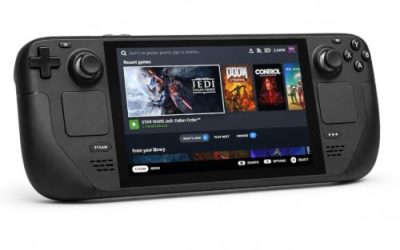
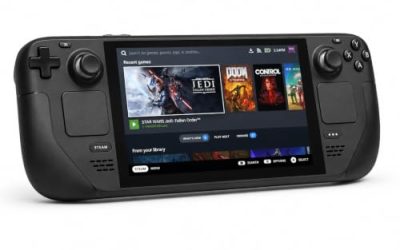
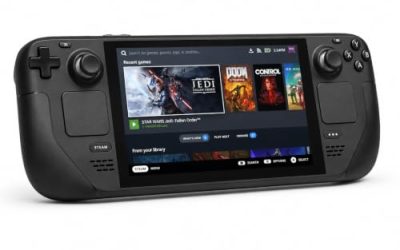
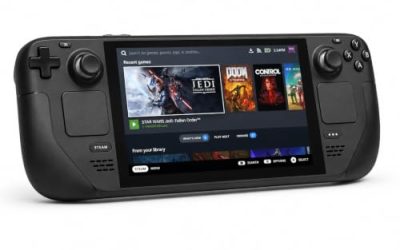
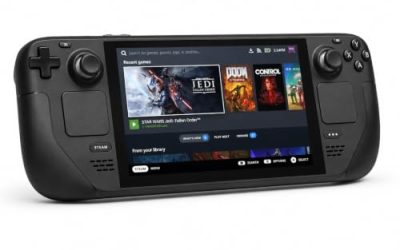
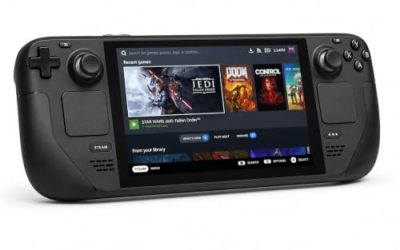
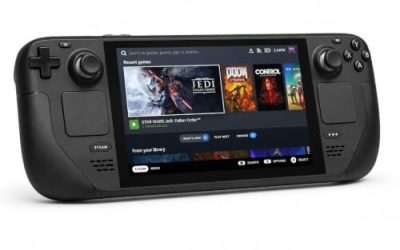
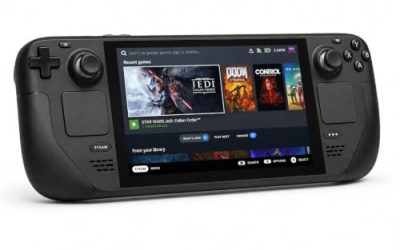
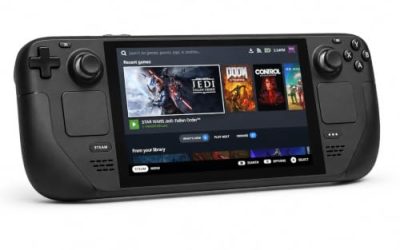
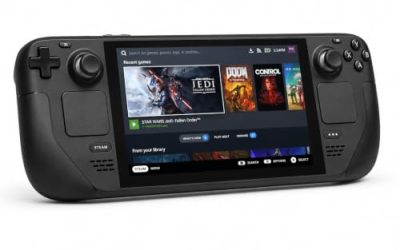
Valve Steam Deck OLED 512GB

The handheld whose test sheet this game passes, running the game’s Linux build rather than a translation of it.
Specs
- Display: 7.4-inch HDR OLED, 1280 by 800, up to 90 Hz
- Processor: AMD Zen 2 and RDNA 2 custom APU
- Memory: 16 GB LPDDR5
- Storage: 512 GB NVMe, plus a microSD slot
- Wireless: Wi-Fi 6E and Bluetooth
- Channel note: Valve sells the Deck mainly through its own store, so Amazon listings are third-party sellers
8BitDo Ultimate 2 Bluetooth Controller

The couch and docked pick. Player reports mention enabling Steam Input for an 8BitDo pad in this game — a settings toggle, not a fault — and the dock keeps the pad charged.
Specs
- Connectivity: Bluetooth wireless and USB-C wired
- Joysticks: TMR electromagnetic, anti-drift design
- Triggers: Hall effect, with mode switching
- Extras: two remappable back buttons, motion control
- In the box: charging dock included
Xbox Wireless Controller, Carbon Black

The reference pad for Steam Input on Linux, and the one whose glyphs the game already expects. One report describes removing a bundled library file so an Xbox controller registered in the native build — a per-machine tinker note, not a general requirement.
- Connectivity: Xbox Wireless and Bluetooth
- Port: USB-C for wired play
- Controls: hybrid D-pad, dedicated Share button
- Power: AA batteries or optional rechargeable pack
Logitech G502 HERO

The stage battles are real-time strategy from a third-person view, and at a desk a precise mouse makes army selection and menu work faster than a stick. Eleven programmable buttons cover the repeated commands.
Specs
- HERO optical sensor, up to 25,600 DPI
- 11 programmable buttons
- Adjustable weight system
- Wired USB connection
- On-board memory profiles
Samsung T9 Portable SSD 2TB

The full depot set runs past 33 GB across platforms; a fast portable drive is the easy way to carry a Linux library between machines or back up the GOG installer offline.
Specs
- Capacity: 2 TB portable SSD
- Interface: USB 3.2 Gen 2×2, USB-C connector
- Maker-rated speeds: up to 2,000 MB per second read, 1,950 MB per second write
- Features: Dynamic Thermal Guard, maker-rated drop resistance
How to choose
Choose the edition by store preference, because both stores sell the native build: Steam if your library and Deck are already there, GOG if you want the DRM-free installer. Install and launch the Linux build directly; keep Proton in reserve only if your machine hits an audio or controller quirk from the player file. In the budget tier, any pad you already own is enough; the mid-range move is a modern wireless pad for the couch; the premium move is the Deck OLED. Enable Hi-Fi Sim if the frame rate cap bothers you.
Who should skip
Skip the native-first plan if your audio setup is fragile: a couple of player reports describe silent native runs fixed by a library install or by Proton, so be ready for one settings detour. Skip this game if the content descriptors at the top are a problem in your household. Skip the soundtrack listing if you arrived expecting bonus levels — its flags carry no requirements at all. And skip the purchase if you only play through Proton on principle: here the layer is the fallback, not the product.
FAQ
Is Brutal Legend native on Linux, or does it need Proton?
It is genuinely native. Steam flags Linux true, the requirements field is populated, and a dedicated Linux depot of 8.38 GiB sits inside the store package, with an executable and native libraries in its manifest. Proton is only a fallback for audio or controller quirks.
Why does the Linux requirements list call itself Recommended?
A clerical quirk of the record. The game’s single Linux tier sits in the slot the store uses for minimum requirements, but its own heading reads Recommended. With no second tier, the Ubuntu 12.04 list is the complete published specification either way.
Is Brutal Legend Steam Deck Verified?
Yes. Valve’s own compatibility record, read directly, gives the game its top category with all four checks passing. The test sheet is from March 2022 on the build the branch still serves, so the paperwork is current — but it names a Proton runtime, so the badge as tested certifies the Windows build, even though a native build exists.
Does the GOG version include the Linux build?
Yes. GOG’s product page lists Windows, Linux and macOS, and both editions carry the native build, so the store choice is about the store, not the port.
Final verdict
Brutal Legend is one of the clean native records of its era: a true flag backed by a populated tab, a sized depot inside the store package, a readable manifest, and a second store selling the same build. Its quirks are honest ones — a requirements tier wearing the wrong heading, a soundtrack flag with nothing behind it, a Deck badge earned through Proton on a game that never needed it. Buy it in either store, install the native build, and keep Proton for the rare audio detour.
Product and ASIN Reference
| Product | ASIN |
|---|---|
| Valve Steam Deck OLED 512GB | B0CQ3RWQQZ |
| 8BitDo Ultimate 2 Bluetooth Controller | B0F194QFT2 |
| Xbox Wireless Controller, Carbon Black | B08DF248LD |
| Logitech G502 HERO | B07GBZ4Q68 |
| Samsung T9 Portable SSD 2TB | B0CHFS9K14 |