Crash Bandicoot N. Sane Trilogy collects the first three Crash games in one package: the record names Vicarious Visions and Iron Galaxy Studios as developers, Activision as publisher, and a release date of 29 June 2018. What does that record say about Linux? Every layer of it points the same way. Steam sells a Windows build, no Linux build exists anywhere in the record, and the game’s Linux life runs entirely through Proton, where it holds one of the strongest compatibility files in this series.
That split matters for how you buy and set up. There is no native port to wait for and no second storefront edition to compare: the Steam copy is the only PC edition, and its behaviour on Linux is described by two independent records: ProtonDB’s player file and Valve’s Steam Deck test sheet. Both are unusually favourable, and both are read in full below.
As an Amazon Associate, we earn from qualifying purchases.
Quick answer
No native Linux build exists. Steam flags Crash Bandicoot N. Sane Trilogy for Windows only, its Linux requirements field is an empty list, and no Linux depot exists in any branch. Linux play runs through Proton, where 223 reports hold a Platinum file, and Valve rates the game Verified on Steam Deck.
The record at a glance
| Layer | What it shows |
|---|---|
| Steam platform flags | Windows true, Mac false, Linux false |
| Linux requirements field | An empty list outright |
| Content depots | Two, no Linux depot |
| Public branch | Build 2964270, standing since July 2018 |
| ProtonDB file | Platinum across 223 reports |
| Steam Deck | Verified, current branch build |
| GOG | No edition |
Three remasters, one Windows build
Start with the flags. Steam’s record marks the game Windows true and both Mac and Linux false. The requirements fields match: the Windows tab is genuinely populated at the minimum tier (Windows 7, a Core i5-750 or Phenom II X4 965 processor, 8 GB of memory, a GeForce GTX 660 or Radeon HD 7850, DirectX 9.0c and 30 GB of storage), and no recommended tier is published. The Mac and Linux requirements fields are empty lists outright — not shells with headings, just empty fields against a populated Windows tab.
The delivery layer agrees. SteamDB’s depot table holds exactly two content depots: a Binaries depot of 28.54 MiB and a Content depot of 29.03 GiB, and neither depot’s configuration line names an operating system. There is no Linux depot and no macOS depot in any branch; the only other entries are shared Windows Visual C redistributables. The public branch stands on build 2964270, built in July 2018 and never moved since. There is no Linux-shaped content in that table for a buyer to receive.
Two metadata fields complete the picture by their silence. SteamDB’s information table reads osarch as an empty string, and it publishes no osextended value for this app at all. Neither field is claimed here beyond exactly that.
The account layer is equally bare. The record carries no drm_notice and no ext_user_account_notice, recorded as gaps rather than filled in from the publisher’s other titles. The category list, stated exactly as Steam lists it, is single-player in shape: Single-player, Steam Achievements, Steam Trading Cards, Partial Controller Support, Steam Cloud, Remote Play on Phone, Remote Play on Tablet and Family Sharing.
The family that is not there
Many records in this series need a section disarming a relative: a soundtrack or art book whose listing flags Linux and inflates the family count. This record offers no such trap, because the game’s entry carries no DLC array at all. No soundtrack, no art book, no expansion sits under this app to hold a stray flag. The family count is one readable record out of one.
Spyro Reignited Trilogy, the sibling remaster collection from the same publisher, is a separate app with its own record and its own article in this series; nothing from its record is drawn on here. The same separation applies to the later Crash titles.
Anti-cheat, from three sources
The three sources this series checks separately all come back negative for this single-player game. Steam’s record names no anti-cheat and carries no notices. SteamDB’s detected technologies list a single entry, the Bink Video SDK — film playback plumbing, not protection software. The Are We Anti-Cheat Yet dataset, read in full, carries no entry for this game under its name or its app number. There is no anti-cheat layer to clear.
What the Proton file says
ProtonDB’s summary record answered in full. Its headline tier is Platinum, its best-reported tier is Platinum, and its trending tier is Platinum, across 223 reports, with confidence the service rates as strong (0.84).
One check could not be completed. The classification header on ProtonDB’s game page was not visible in the page text readable this session, which returned report content only, so no header is claimed either way.
The report texture underneath the tiers is kept at report weight. Filed reports describe full playthroughs of all three games under Proton, including the time-trial and relic runs; a minority describe choosing a specific or community Proton build after a default build failed to boot the game on their setup. That tinkering is the exception inside a Platinum pool, not the shape of it.
A Verified badge on a frozen branch
Valve’s own compatibility endpoint returned an unusable compressed response this session, so the Steam Deck verdict and its paperwork were read through SteamDB’s republication of Valve’s compatibility data. The verdict is Verified, the top category, and SteamOS is separately rated Compatible.
All four Verified items pass: the default controller configuration is fully functional, the game shows Steam Deck controller icons, in-game interface text is legible, and the default graphics configuration performs well. The dated paperwork places the test on 3 February 2022, on build 2964270, with proton-stable as the recommended runtime.
Two currency points follow. First, build 2964270 is the very build the public branch still serves today, because the branch has not moved since July 2018 — so the paperwork does not predate the current build. Second, the named runtime is a Proton build, so the badge certifies the Windows build running under Proton; there is no native build for it to certify. A Deck buyer gets a 2022 test of the same bytes the store still delivers.
No second storefront
There is no GOG edition to weigh against the Steam copy. The game’s natural product address on GOG resolves to the store’s general games catalogue, that store’s behaviour for titles it does not sell, and its embed catalogue search returns no product for the title. The ruling rests on that behaviour, never on search alone, and no wishlist claim is asserted either way. The Steam copy is the only PC edition.
Gear for a pad-first trilogy
The record shapes the gear: a Verified handheld route, partial controller support, and a 29 GB install.
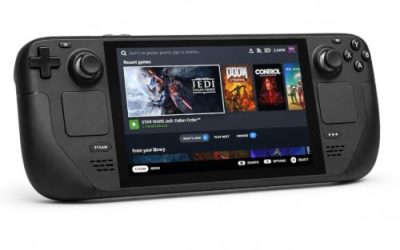
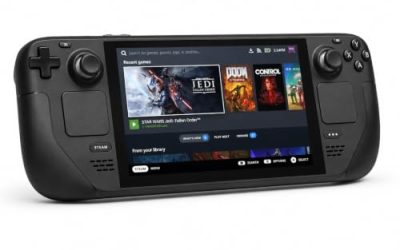
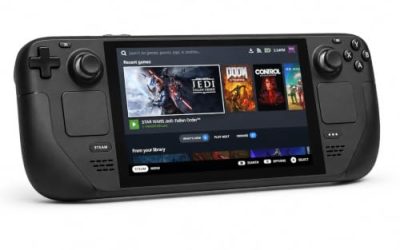
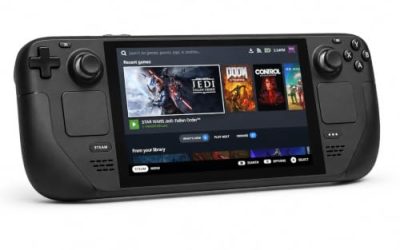
Valve Steam Deck OLED 512GB

The handheld the Verified badge was written for, tested on the same frozen build the store still ships. The published minimum specification sits far below the Deck’s APU.
Specs
- Display: 7.4-inch HDR OLED, 1280 by 800, up to 90 Hz
- Processor: AMD Zen 2 and RDNA 2 custom APU
- Memory: 16 GB LPDDR5
- Storage: 512 GB NVMe, plus a microSD slot
- Wireless: Wi-Fi 6E and Bluetooth
- Channel note: Valve sells the Deck mainly through its own store, so Amazon listings are third-party sellers
8BitDo Ultimate 2 Bluetooth Controller

The docked and desktop pad pick. Steam lists partial controller support for the trilogy, and this pad covers the couch case with modern sticks, triggers and back buttons.
Specs
- Connectivity: Bluetooth wireless and USB-C wired
- Joysticks: TMR electromagnetic, anti-drift design
- Triggers: Hall effect, with mode switching
- Extras: two remappable back buttons, motion control
- In the box: charging dock included
Xbox Wireless Controller, Carbon Black

The safest guest pad in PC gaming: Steam Input support is universal, the glyphs match what most games display, and it pairs over Bluetooth or its own wireless standard.
- Connectivity: Xbox Wireless and Bluetooth
- Port: USB-C for wired play
- Controls: hybrid D-pad, dedicated Share button
- Power: AA batteries or optional rechargeable pack
Logitech G502 HERO

Platforming belongs on a pad, but at a desk the trilogy’s menus, level select and file screens are mouse work, and eleven programmable buttons cover the repeated confirm and cancel inputs.
Specs
- HERO optical sensor, up to 25,600 DPI
- 11 programmable buttons
- Adjustable weight system
- Wired USB connection
- On-board memory profiles
Samsung T9 Portable SSD 2TB

The trilogy is a 29 GB install, and a library travels well on a fast USB-C drive: move it between a desktop and a laptop, or keep an offline backup of installers. The headline figure needs a Gen 2×2 host port; on a lesser port the drive runs at that ceiling.
Specs
- Capacity: 2 TB portable SSD
- Interface: USB 3.2 Gen 2×2, USB-C connector
- Maker-rated speeds: up to 2,000 MB per second read, 1,950 MB per second write
- Features: Dynamic Thermal Guard, maker-rated drop resistance
How to choose
Buy the Steam copy, because it is the only PC edition and the exact build both records describe. On a desktop or laptop, install it and leave the compatibility tool at its default first; the unanimous Platinum file says that is the expected route. If a default Proton build ever fails to boot the game on your setup, the report file’s own remedy is to select a specific or community Proton build for this title. On a Steam Deck, the Verified badge on the current branch build means install-and-launch is the whole procedure. Treat the game as pad-first on every machine.
Who should skip
Skip this collection if you buy only native Linux builds on principle: the record is Windows-only at every layer. Players who want to drive a platformer entirely from a keyboard should read the partial controller support line carefully first. And skip the Deck badge as a reason to buy if you need a native runtime: the Verified test names Proton, the only route this game has.
FAQ
Is Crash Bandicoot N. Sane Trilogy native on Linux?
No. Steam flags the game Windows true and Linux false, the Linux requirements field is an empty list, and the depot table holds no Linux depot in any branch. Linux play runs through Proton.
How well does it run under Proton?
ProtonDB’s summary record is unanimous: Platinum headline, best-reported and trending tiers across 223 reports, with strong confidence. A minority of filed reports describe picking a specific or community Proton build after a boot failure.
Is it Verified on Steam Deck?
Yes. Valve’s record, read through SteamDB’s republication after the endpoint returned an unusable response, rates it Verified with all four checks passing. The test dates to February 2022 on build 2964270, the build the branch still serves, with proton-stable as the recommended runtime.
Is there a GOG edition?
No. The title’s product address on GOG resolves to the store’s general catalogue and its embed search returns no product, so the Steam copy is the only PC edition. No soundtrack or DLC listing exists under the Steam app either.
Final verdict
Crash Bandicoot N. Sane Trilogy is not native on Linux, and its record is one of the cleanest Windows-only shapes in this series: a false flag, an empty-list field, two unsplit depots, a branch frozen since 2018 and no DLC array to complicate the count. What makes it an easy recommendation anyway is the pair of records behind the Windows build — a unanimous Platinum Proton file across 223 reports, and a Verified Deck badge whose test build is still the build the store delivers. Buy the Steam copy and play it through Proton.
Product and ASIN Reference
| Product | ASIN |
|---|---|
| Valve Steam Deck OLED 512GB | B0CQ3RWQQZ |
| 8BitDo Ultimate 2 Bluetooth Controller | B0F194QFT2 |
| Xbox Wireless Controller, Carbon Black | B08DF248LD |
| Logitech G502 HERO | B07GBZ4Q68 |
| Samsung T9 Portable SSD 2TB | B0CHFS9K14 |