Red Dead Redemption reached the PC in October 2024, fourteen years after its console debut, and Linux players had the usual question: is there a native build, or is this another Windows release carried by Proton? This audit reads the records directly — Steam’s listing, the whole app family, the ProtonDB summary figures, Valve’s Steam Deck test sheet, and GOG’s catalogue.
One distinction matters first. This article covers the 2024 port of the original Red Dead Redemption, Steam app 2668510, developed by Rockstar Games with Double Eleven. It is not Red Dead Redemption 2, a separate game with its own listing, ProtonDB file, and status article on this site. The two share a series name and a publisher; they share no record. Everything below belongs to the 2024 port alone.
As an Amazon Associate, we earn from qualifying purchases.
Quick answer
Red Dead Redemption’s 2024 PC port has no native Linux build: Steam flags Windows only. It runs through Proton with a unanimous Platinum record on ProtonDB across 147 reports, and Valve rates it Playable on Steam Deck, tested in November 2024 under proton-stable. The Steam copy is the only PC edition on sale; no GOG version exists.
What Steam’s own record says
Steam’s listing for app 2668510 flags exactly one platform: Windows. Mac is false, Linux is false, and the Linux requirements field is an empty shell — the Minimum and Recommended headings are present with empty lists under both, the store template’s placeholder shape rather than a real requirements tab. A native build would populate that field; this one never does. The port is a Windows release, and on Linux it runs through Proton.
The rest of the record is tidy. The category list reads single-player, Steam Achievements, full controller support, and HDR available. The store text confirms the package: the complete single-player experiences of Red Dead Redemption and its Undead Nightmare expansion, including Game of the Year Edition bonus content, in one app — and it states plainly that this product does not feature multiplayer content. Steam’s record names no anti-cheat, because there is no multiplayer for one to protect.
Two details deserve exact reporting. First, the listing carries no DRM notice, so this article names no DRM product. Second, the record does carry a third-party account notice, as Steam states it: a Rockstar Games account, with support for linking to a Steam account — the port’s one wrapper, sitting in the first-launch path of a single-player game. The published Windows minimum is modest: Windows 10 64-bit, a Core i5-4670 or FX-9590, 8 GB of memory, a GeForce GTX 960 or Radeon R7 360, DirectX 12, and 12 GB of storage.
The family sweep: one app, zero flags
Some games hide their only Linux flag in a soundtrack app, and a careless family scan can mistake that flag for the game’s own. This family offers no such trap, because there is barely a family at all. The game app’s record carries no DLC list — the field is absent, not empty — and a store search for a soundtrack app returns zero results. Undead Nightmare, separate downloadable content on console, ships inside the single base app here.
So the sweep takes one line: across the whole family — one app, the game itself — the Linux-flag count is exactly zero. Whatever Linux story this port has is written entirely by Proton and Valve’s test sheet.
The ProtonDB file: unanimous Platinum
ProtonDB’s summary record for app 2668510 is as clean as community files get. Headline tier Platinum, best-reported tier Platinum, trending tier Platinum — all three readings agree, across 147 reports, with confidence rated strong. There is no split to explain away.
A Platinum tier means reports describe a game that installs and runs through Proton without the workarounds that pull a title down to Gold. And 147 reports is a solid pool for a port of this age, deep enough that the strong confidence rating is earned. Combined with the record above, the Platinum file is exactly the shape you would predict.
The Steam Deck sheet: Playable, with launcher notes
Valve’s compatibility record for this app — read through SteamDB’s republication of Valve’s compatibility data, because Valve’s own endpoint returned no readable answer in this session — gives the game the Playable category, one step below Verified. The test paperwork is published on the record: tested on 6 November 2024, days after the PC launch, on build 16170925, with proton-stable as the recommended runtime. That date is claimed here as a record fact.
The sheet’s passes are the four that matter for play: all functionality is accessible with the default controller configuration, the game shows Steam Deck controller icons, in-game interface text is legible, and the default graphics configuration performs well. What keeps the badge at Playable is the launcher layer. The launcher or setup tool may require the touchscreen or virtual keyboard, or have difficult-to-read text. First-time setup requires an active internet connection — consistent with the Rockstar account step. And the game does not default to external Bluetooth or USB controllers on Deck, so a docked player may need to switch the active controller manually through the Quick Access Menu. SteamOS separately rates the game Compatible, with the same launcher notes.
None of those notes describes the game misbehaving once launched; they describe the wrapper around it — a Playable badge earned by the game, held back from the top category by its setup tool.
The GOG ruling: no edition exists
There is no GOG edition of this port. GOG’s catalogue search returns no purchasable product for the title, and the address a product page would occupy redirects to the general catalogue instead — the same two-part check this site applies to every title, because GOG’s search alone has missed games before. Here both halves agree: nothing is on sale.
The consequence is short. The Steam copy is the only PC edition, it is the build both compatibility records describe, and it is the copy a Linux player should buy. There is no DRM-free alternative to weigh.
Gear that fits the record
The gear below follows the record’s shape: the handheld Valve tested, two pads, a mouse for desktop sessions, and library storage.
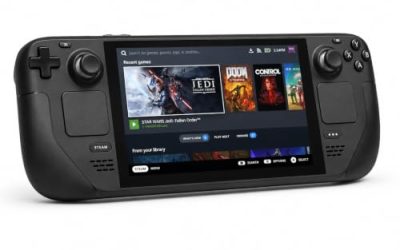
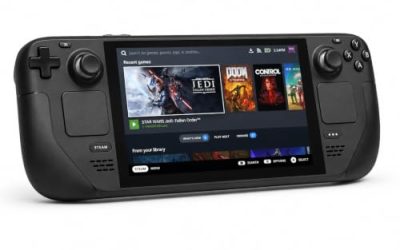
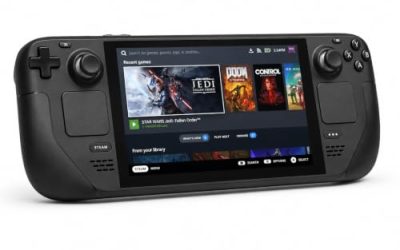
Valve Steam Deck OLED 512GB

The handheld this Playable badge was written for. Valve’s test sheet passes the game’s default graphics on the Deck’s APU under proton-stable, and the port’s published minimum is far below the hardware. Expect the launcher notes at setup rather than any problem with the game itself.
Specs
- Display: 7.4-inch HDR OLED, 1280 by 800, up to 90 Hz
- Processor: AMD Zen 2 and RDNA 2 custom APU
- Memory: 16 GB LPDDR5
- Storage: 512 GB NVMe, plus a microSD slot
- Wireless: Wi-Fi 6E and Bluetooth
- Channel note: Valve sells the Deck mainly through its own store, so Amazon listings are third-party sellers
8BitDo Ultimate 2 Bluetooth Controller

The docked and desktop pad pick. Steam lists full controller support, and this pad covers the couch case with modern sticks and triggers plus back buttons for weapon-wheel and menu inputs.
Specs
- Connectivity: Bluetooth wireless and USB-C wired
- Joysticks: TMR electromagnetic, anti-drift design
- Triggers: Hall effect, with mode switching
- Extras: two remappable back buttons, motion control
- In the box: charging dock included
Xbox Wireless Controller, Carbon Black

The safest guest pad: Steam Input support is universal, the glyphs match, and it pairs over Bluetooth or its own wireless standard. On the handheld, Valve’s note applies: this game does not default to an external pad, so it may need a manual Quick Access Menu switch first.
Specs
- Connectivity: Xbox Wireless and Bluetooth
- Port: USB-C for wired play
- Controls: hybrid D-pad, dedicated Share button
- Power: AA batteries or optional rechargeable pack
Logitech G502 HERO

At a desk, a precise wired mouse earns its place in the map, journal and shop menus, and for players who aim with a mouse in the shooting segments. Eleven programmable buttons cover the inputs a long session repeats.
Specs
- HERO optical sensor, up to 25,600 DPI
- 11 programmable buttons
- Adjustable weight system
- Wired USB connection
- On-board memory profiles
Samsung T9 Portable SSD 2TB

The port needs only 12 GB, so this pick is about the library around it: moving a game collection between machines, or keeping offline backups. The headline figure needs a Gen 2×2 host port; on a lesser port the drive runs at that ceiling instead.
Specs
- Capacity: 2 TB portable SSD
- Interface: USB 3.2 Gen 2×2, USB-C connector
- Maker-rated speeds: up to 2,000 MB per second read, 1,950 MB per second write
- Features: Dynamic Thermal Guard, maker-rated drop resistance
How to choose
Choose the Steam copy, because it is the only PC edition on sale and the exact build both records describe. On desktop or laptop, install under Proton and leave the compatibility tool at its default; a unanimous Platinum file across 147 reports says current builds run the game well. On a Steam Deck, expect a Playable experience rather than a Verified one: the game passes Valve’s checks, and the friction lives in first-time setup — have an internet connection ready for the Rockstar account step, and be ready to use the touchscreen or virtual keyboard in the launcher. A pad is the native shape of this game on every platform; a mouse earns its place only at a desk.
Who should skip
Skip it if you are shopping for a native Linux release: this port is not one, and no app in its family carries a Linux build. Skip it if you want a DRM-free offline installer, because no GOG edition exists to buy. Skip it if a mandatory third-party account for a single-player game is a hard line for you — the record states the Rockstar Games account requirement plainly, and first-time setup needs a connection. And skip it if you came looking for the sequel: this is the 2010 game and its Undead Nightmare expansion, not Red Dead Redemption 2.
FAQ
Is Red Dead Redemption native on Linux?
No. Steam’s record for app 2668510 flags Windows only, and the Linux requirements field is an empty shell of headings with no entries. The game runs on Linux through Proton, and no app in its family — the family is a single app — carries a Linux flag.
How well does the 2024 port run under Proton?
ProtonDB’s summary record reads Platinum on the headline, best-reported and trending tiers alike, across 147 reports with strong confidence — a fully converged file.
Is Red Dead Redemption Steam Deck Verified?
No — it is Playable, one category below Verified. Valve’s record, tested 6 November 2024 under proton-stable, passes the game on controls, icons, legible text and default-graphics performance; the badge stops at Playable because the launcher may need the touchscreen or virtual keyboard, first-time setup requires an internet connection, and external controllers do not take over by default.
Can I buy Red Dead Redemption on GOG instead?
No. GOG’s catalogue search returns no product for the title, and the address its product page would occupy redirects to the general catalogue. The Steam copy is the only PC edition on sale.
Final verdict
The 2024 port of Red Dead Redemption is a Windows-only release with an unusually simple paper trail: one app, no DLC list, no soundtrack flag to misread, no multiplayer and no anti-cheat named in the record. What it offers Linux players is a strong Proton route — a unanimous Platinum file across 147 reports, a Playable Deck badge whose only deductions are launcher notes, and full controller support in a 12 GB install. The one genuine friction is the Rockstar account in the first-launch path. Buy the Steam copy, play it under Proton, and keep it separate from the sequel: different game, different record, different article.
Product and ASIN Reference
| Product | ASIN |
|---|---|
| Valve Steam Deck OLED 512GB | B0CQ3RWQQZ |
| 8BitDo Ultimate 2 Bluetooth Controller | B0F194QFT2 |
| Xbox Wireless Controller, Carbon Black | B08DF248LD |
| Logitech G502 HERO | B07GBZ4Q68 |
| Samsung T9 Portable SSD 2TB | B0CHFS9K14 |