Slay the Princess — The Pristine Cut, Black Tabby Games’ hand-drawn horror visual novel about a voice ordering you to kill a princess in a cabin basement, is a rare simple case in this series. Steam flags it for Linux outright, the tab carries real entries, and the delivered files include the Linux engine binaries. Its branching story and narrated voices are presented here as gameplay, in neutral terms.
What still needs care is the paperwork. One SteamDB field points the other way, the add-ons carry Linux flags of their own, and Valve’s Deck test predates the current build. This piece reads each record separately: flags, tab, depots, family, Proton file, Deck sheet and second storefront.
As an Amazon Associate, we earn from qualifying purchases.
Quick answer
Slay the Princess is genuinely native on Linux. Steam flags Linux true with a populated minimum requirements tab, the shared Ren’Py depot ships Linux binaries, and Valve’s Deck sheet names a native recommended runtime with a Verified badge. ProtonDB reads Platinum across 53 reports. Buy the Steam copy, or the GOG edition, which also lists Linux.
The status at a glance
| Question | Answer from the record |
|---|---|
| Native Linux build | Yes — flag true, depot carries Linux binaries |
| Linux requirements tab | Populated at minimum; recommended tier empty |
| Add-on apps | Art book and Supporters Pack, both flag Linux |
| ProtonDB record | Platinum headline, Platinum best, 53 reports |
| Steam Deck verdict | Verified, tested March 2024, native runtime |
| GOG edition | Exists and lists Linux |
| Anti-cheat or launcher | None named on any record |
What Steam’s own record says
Steam’s appdetails record for Slay the Princess — The Pristine Cut (app 1989270, established from Steam’s own store search) names Black Tabby Games as developer, with Black Tabby Games and Serenity Forge as publishers, released 23 October 2023. The flags read Windows true, Mac true, Linux true: the store itself claims a Linux build.
The Linux requirements tab backs the flag at the minimum tier: an operating system entry reading “Anything recent”, a 2.6 GHz quad-core processor, 4 GB of RAM, integrated graphics and 13 GB of storage. The recommended tier is a heading over an empty list — populated where it matters, a stronger shape than the empty shells this series usually documents.
One field dissents, named here precisely: SteamDB’s extended operating-system string reads macos64 only. Against it stand the flag, the tab, the depot contents and Valve’s runtime line, and the ruling rests on those four. The record also lists single-player, full controller support, Steam Cloud, Family Sharing and a long accessibility set — adjustable text size, custom volume controls, keyboard-only and mouse-only options, narrated menus, save anytime — stated as capabilities only.
The depot check: Linux binaries in the delivered files
SteamDB’s depot table lists four depots. The main content depot (1989271) sits in the store packages, and its readable manifest is the tell: alongside Windows executables and macOS libraries it carries Linux shared libraries and a shell launcher script. That is the Ren’Py engine’s usual shape — one shared depot holding binaries for every platform it ships on — and SteamDB’s detected technologies are exactly Ren’Py and PyGame. A second large depot (1989272) appears in no known package, so it is not part of what a buyer downloads. A flag alone can be a leftover; here flag, tab and files agree, and the verdict is depot-backed.
The family sweep: every app flags Linux, the game leads
The DLC array holds exactly two apps, both read individually. The Art of Slay the Princess — Digital Art Book (3845330, type dlc) flags all three platforms, with a populated Linux field at both tiers — a single storage line of 700 MB. The Supporters Pack (2642210, type dlc) also flags all three, but its Linux field is an empty list: a flag with no tab behind it, the weaker form.
The count is therefore 3 of 3, and the soundtrack trap cannot form: the deciding flag sits on the game itself, backed by its own tab and binaries. The add-ons agree with the game rather than substituting for it; ignored entirely, the verdict stands.
DRM, accounts and anti-cheat: three silences
Steam’s record carries no third-party DRM notice and no external account notice; nothing is named in either direction, and both are stated here as gaps, not promises. No launcher or account requirement is listed.
Anti-cheat was checked in three places, kept separate. Steam names none — no category, no notice, no multiplayer categories at all. SteamDB’s detected technologies are the Ren’Py engine and PyGame, engine plumbing only. The Are We Anti-Cheat Yet dataset, all 1,167 games on its master branch, was searched by name and by app id 1989270 and carries no entry.
The Proton file
ProtonDB’s summary record for app 1989270, read directly this session, is unanimous: Platinum on the headline, best-reported and trending tiers, across 53 reports with strong confidence. For a native game that file prices the fallback route — the Windows build under Proton — not the default install.
One check could not be completed: the ProtonDB game page itself did not load this session, so no ruling is made about any classification header it may carry. The summary answered in full — tier, count and confidence are on record; only that page-level label goes unexamined, disclosed rather than guessed.
The Steam Deck sheet
Valve rates Slay the Princess Verified on Steam Deck, the top category, and SteamOS separately Compatible. The verdict was read from Valve’s own compatibility endpoint directly: all four Verified checks pass — the default controller configuration is fully functional, the game shows Steam Deck controller icons, in-game interface text is legible, and the default graphics configuration performs well. The configuration names gamepad input, no manual keyboard invoke, no launcher navigation and no internet required.
The dated paperwork comes from SteamDB’s republication of Valve’s compatibility data, the project’s fallback for test dates: tested 29 March 2024, on build 13861454, with the recommended runtime listed as native. That line is the point — the badge certifies the native build, not a Proton run. The branch has since moved to an October 2025 build, so the sheet is dated; the live endpoint still returns Verified.
The storefront ruling
A second native copy exists. GOG’s own search endpoints returned zero products for this title — the known blind spot in that storefront’s search — so the ruling rests on GOG’s live product page: it sells the game under its own name, and its system line reads Windows, Linux and Mac OS X. The GOG edition is a native Linux copy in a DRM-free wrapper, equal to Steam’s. One caution: a product identifier in the page’s menu styling belongs to an unrelated promoted title, so the ruling rests on the page’s identity and system line.
Either storefront buys the same native build: Steam adds Cloud saves and Trading Cards, GOG the offline installer.
Gear that fits the record
The gear below follows the record’s shape: the handheld with the native-runtime badge, two pads, a desktop mouse, and library storage.
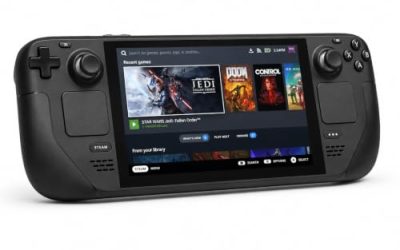
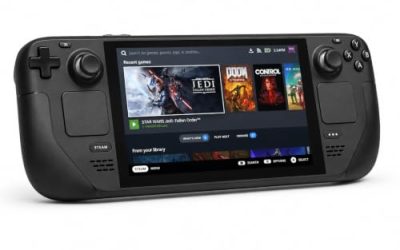
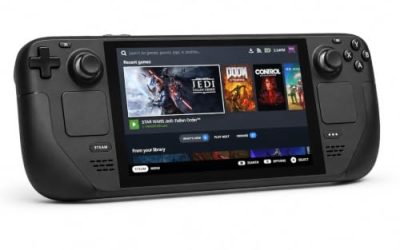
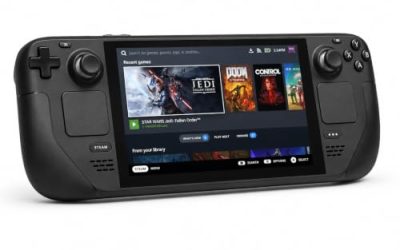
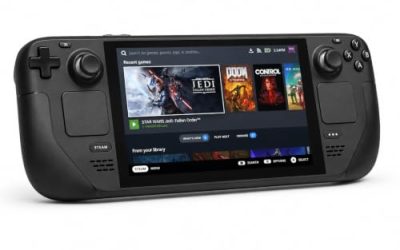
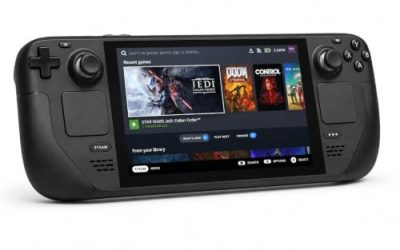
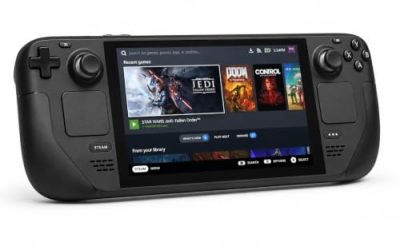
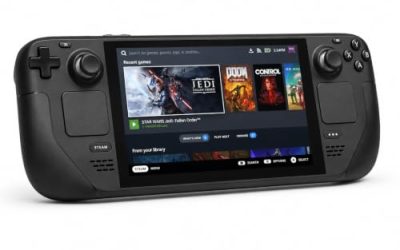
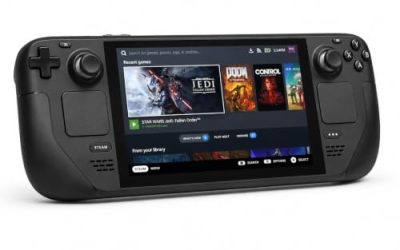
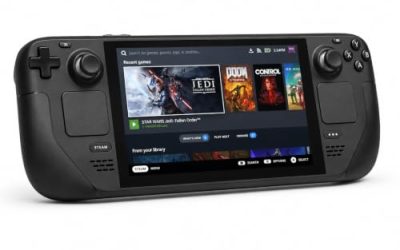
Valve Steam Deck OLED 512GB

The handheld the Verified badge was written for. Valve’s sheet names a native runtime here, and the published Linux minimum is a rounding error next to the Deck’s APU.
Specs
- Display: 7.4-inch HDR OLED, 1280 by 800, up to 90 Hz
- Processor: AMD Zen 2 and RDNA 2 custom APU
- Memory: 16 GB LPDDR5
- Storage: 512 GB NVMe, plus a microSD slot
- Wireless: Wi-Fi 6E and Bluetooth
- Channel note: Valve sells the Deck mainly through its own store, so Amazon listings are third-party sellers
8BitDo Ultimate 2 Bluetooth Controller

The docked and desktop pad pick. Steam lists full controller support, and this pad covers the couch case with modern sticks, triggers and back buttons.
Specs
- Connectivity: Bluetooth wireless and USB-C wired
- Joysticks: TMR electromagnetic, anti-drift design
- Triggers: Hall effect, with mode switching
- Extras: two remappable back buttons, motion control
- In the box: charging dock included
Xbox Wireless Controller, Carbon Black

The safest guest pad in PC gaming: Steam Input support is universal, the glyphs match what most games display, and it pairs over Bluetooth or its own wireless standard. Valve’s sheet passes this game’s controller checks with no deductions.
- Connectivity: Xbox Wireless and Bluetooth
- Port: USB-C for wired play
- Controls: hybrid D-pad, dedicated Share button
- Power: AA batteries or optional rechargeable pack
Logitech G502 HERO

A visual novel lives in menus and dialogue choices, and at a desk a precise wired mouse turns route maps and backlog trips into single clicks. Eleven programmable buttons cover confirm, cancel and skip.
Specs
- HERO optical sensor, up to 25,600 DPI
- 11 programmable buttons
- Adjustable weight system
- Wired USB connection
- On-board memory profiles
Samsung T9 Portable SSD 2TB

For moving a Linux game library between machines, or an offline backup of installers, a fast USB-C drive is the simple answer. The headline figure needs a Gen 2×2 host port; on a lesser port the drive runs at that ceiling.
Specs
- Capacity: 2 TB portable SSD
- Interface: USB 3.2 Gen 2×2, USB-C connector
- Maker-rated speeds: up to 2,000 MB per second read, 1,950 MB per second write
- Features: Dynamic Thermal Guard, maker-rated drop resistance
How to choose
Choose either storefront copy: both are the native build. On desktop or laptop, install and launch — no compatibility tool, no launch options; the minimum asks for integrated graphics and 4 GB of RAM, so almost any recent machine qualifies. On Deck, the Verified badge with a native runtime means the same, with the caveat that the test sheet dates from March 2024. Pick input by seating: pad on the couch, mouse at the desk. For an offline installer, take GOG; for cloud saves, Steam.
Who should skip
Skip this one if branching visual-novel horror is not your genre — the native build does not change what the game is. Skip it if you require a recommended-tier tab before trusting a native claim; this record publishes a minimum only, and the verdict rests on the flag, the depot and Valve’s runtime line. Skip the add-ons if you only want the game: their flags add nothing new. And skip it if you want multiplayer — this is single-player only.
FAQ
Is Slay the Princess native on Linux?
Yes. Steam flags Linux true for app 1989270, the minimum tab is populated, the Ren’Py depot carries Linux binaries, and Valve’s sheet names a native runtime. One SteamDB string, its extended OS field, reads Mac only; flag, tab, depot and runtime outweigh it.
How well does Slay the Princess run under Proton?
ProtonDB’s summary record reads Platinum on all three tiers, across 53 reports with strong confidence. That file prices the Windows build as a fallback; the default Linux install is native.
Is Slay the Princess Steam Deck Verified?
Yes. Valve’s endpoint returns Verified, all four checks passing, SteamOS separately Compatible. The paperwork, read through SteamDB’s republication, is from 29 March 2024 on a native runtime; the build has since moved, and the live endpoint still returns Verified.
Can I buy Slay the Princess on GOG instead?
Yes, and the GOG edition lists Linux on its own product page, alongside Windows and Mac OS X. GOG’s search returned no product, so the ruling rests on the live page. Steam adds cloud saves, GOG a DRM-free installer.
Final verdict
Slay the Princess is the clean case this series rarely gets: a native build claimed by the store flag, specified in a populated minimum tab, delivered as Linux binaries inside the Ren’Py depot, and certified by a Deck sheet whose runtime is native. The family agrees with the game instead of impersonating it, no anti-cheat or account system appears on any record, and a second storefront sells the same build. Buy either copy and play natively.
Product and ASIN Reference
| Product | ASIN |
|---|---|
| Valve Steam Deck OLED 512GB | B0CQ3RWQQZ |
| 8BitDo Ultimate 2 Bluetooth Controller | B0F194QFT2 |
| Xbox Wireless Controller, Carbon Black | B08DF248LD |
| Logitech G502 HERO | B07GBZ4Q68 |
| Samsung T9 Portable SSD 2TB | B0CHFS9K14 |