Fullbright’s 2013 exploration game taught a generation of players to read a story out of drawers, cassette tapes and notes. You play Kaitlin Greenbriar, home after a year abroad, walking an empty family house on a stormy night in 1995. For a game that helped define the walking simulator, the Linux question is basic: native build, or another Proton case?
The answer is the clean one. Steam’s record flags Gone Home for Linux outright, publishes a Linux requirements list, and delivers a dedicated Linux depot in the current public branch — no compatibility layer at all. One database field points the other way and is named below. Valve rates the game Verified on Steam Deck, and the second storefront that sells it lists Linux too.
As an Amazon Associate, we earn from qualifying purchases.
Quick answer
Gone Home is genuinely native on Linux. Steam flags the game for Windows, Mac and Linux, publishes a Linux minimum specification (Ubuntu 12.04 or SteamOS, a 1.80 GHz processor, 2 GB of memory, 2 GB of storage), and ships a live Linux depot. Valve rates it Verified on Steam Deck, GOG’s edition lists Linux too, and no Proton is needed.
The status at a glance
| Question | Answer from the record |
|---|---|
| Native Linux build | Yes — Steam flags Linux true |
| Linux requirements tab | Populated at the minimum tier only |
| Linux depot | Live — depot 232433, about 3.03 GiB |
| ProtonDB record | Not read this session — no tier claimed |
| Steam Deck verdict | Verified, tested May 2022 |
| GOG edition | Exists — and lists Linux |
| Anti-cheat or launcher | None named on any record checked |
What Steam’s own record says
Steam’s appdetails record for Gone Home (app 232430, identity confirmed from Steam’s own store search: developer Fullbright, publishers Fullbright and Serenity Forge, released 15 August 2013) lists the platforms as Windows true, Mac true, Linux true. The Linux requirements field is genuinely populated at the minimum tier: Ubuntu 12.04 or later, or SteamOS; a 1.80 GHz processor; 2 GB of memory; a DirectX 10 class card with 512 MB of video memory; 2 GB of storage. The record carries no recommended tier for any platform; the whole listing is a minimum-only specification from 2013, all a game of this size and pace ever needed.
The rest of the record is quiet where it matters: single-player, achievements, full controller support, trading cards, captions, Steam Cloud, a developer commentary mode and Family Sharing. No DRM notice and no external account notice appears; both are gaps in the record, not promises. The genres are Adventure and Indie; the game is a Unity title, which the anti-cheat check below picks up.
The depot check: the build is actually delivered
The depot table is the real check on a store flag. SteamDB’s depot list for app 232430 shows a Windows 64-bit depot (232431, about 3.00 GiB), a macOS depot (232432, about 3.01 GiB), a Linux depot (232433, named Gone Home Linux, about 3.03 GiB with a download size of about 1.50 GiB), a Windows 32-bit depot (232434) and a Windows Steam Deck depot marked Unused with no size recorded. The Linux depot is neither the Unused shape nor an empty shell: it carries a full content size inside the public branch, whose current build (4845033) dates to April 2020.
One field disagrees. SteamDB’s extended operating system string reads as a pair of macOS packaging values only, with no Linux entry. Against that Mac-packaging string stand three agreeing layers — true flag, populated requirements, live depot — and the ruling follows them: the string is the single dissenting field.
The family sweep: one soundtrack, no trap
The soundtrack trap is this series’ standing warning: a music app flags Linux, and a careless family scan credits that flag to the game. Gone Home’s add-on array lists exactly one app, the Gone Home Soundtrack (298720), read individually: a music product flagging Windows, Mac and Linux all true — but with an empty list for its own Linux requirements, a flag with no specification behind it.
The family count is 2 of 2, and the trap cannot form: the deciding evidence sits on the game itself, so the verdict stands even if the soundtrack is ignored. Its flag is weaker-form agreement: corroboration, not the source of the ruling.
DRM, accounts and anti-cheat
Three checks, kept separate. DRM: the record carries no DRM notice, so nothing is named; the absence is a gap, not a guarantee. Accounts: no external account notice, so no second launcher or sign-in is declared. Anti-cheat: Steam names none, fitting a single-player-only record; SteamDB’s detected technologies are the Unity Engine and the Mono SDK — engine plumbing, not an anti-cheat product; and the Are We Anti-Cheat Yet dataset — all 1,167 games, searched by name and by app number — carries no entry for this game. Three sources, three blanks.
The ProtonDB gap, stated plainly
ProtonDB is the one record this article could not read: its summary feed returned a page-not-found response and the game page did not load in time, so no tier, report count or confidence figure is claimed anywhere here, and the page’s classification header could not be checked either. The gap matters less than for a Windows-only game — ProtonDB prices the Windows build, and the native build makes Proton a fallback rather than the route — but no community number is put on that fallback, because the record that would supply it did not answer.
The Steam Deck sheet
Valve rates Gone Home Verified on Steam Deck, read here from Valve’s own compatibility endpoint directly. The passing items: the default controller configuration is fully functional, interface text is legible, and the default graphics configuration performs well. The configuration names gamepad input, no manual keyboard invocation, no launcher navigation, and no internet required for setup or single-player play. SteamOS separately rates it Compatible, its startup check passing.
The dated paperwork comes from SteamDB’s republication of Valve’s data, disclosed rather than hidden: tested 4 May 2022, on build 4845033 — the same build the public branch still carries, so the sheet describes the download a buyer gets now, not launch-window paperwork. One wrinkle, reproduced exactly as published: the sheet’s recommended runtime line names Valve’s stable Proton build, on a native game. That is the paperwork’s own wording; the native depot is what Steam delivers.
The storefront ruling
Two copies are on sale, and unusually both are native-capable. GOG’s own product record for Gone Home (product 1207665163, identity verified by title and catalogue address) lists compatibility as Windows true, Mac true and Linux true. One caution on the route: GOG’s search endpoints returned no result for the title — the blind spot this series has met before — so the ruling rests on the live product page and the product record. The GOG edition is the same game in a DRM-free wrapper, Linux build included. The Steam copy remains the default buy: it is the edition both compatibility records here describe, with the Steam Cloud saves and commentary mode the store record lists.
Gear that fits the record
The gear below follows the record: the badge’s handheld, two pads, a desk mouse, and library storage.
Valve Steam Deck OLED 512GB

The handheld the Verified badge was written for: the game’s published Linux minimum is a rounding error next to the Deck’s APU, and Valve’s test sheet — written against the build still served — passes it on every published item.
Specs
- Display: 7.4-inch HDR OLED, 1280 by 800, up to 90 Hz
- Processor: AMD Zen 2 and RDNA 2 custom APU
- Memory: 16 GB LPDDR5
- Storage: 512 GB NVMe, plus a microSD slot
- Wireless: Wi-Fi 6E and Bluetooth
- Channel note: Valve sells the Deck mainly through its own store, so Amazon listings are third-party sellers
8BitDo Ultimate 2 Bluetooth Controller

The docked and desktop pad pick: full controller support is on the record, and this pad covers the couch case.
Specs
- Connectivity: Bluetooth wireless and USB-C wired
- Joysticks: TMR electromagnetic, anti-drift design
- Triggers: Hall effect, with mode switching
- Extras: two remappable back buttons, motion control
- In the box: charging dock included
Xbox Wireless Controller, Carbon Black

The safest guest pad: Steam Input support is universal and the glyphs match what most games display. On the handheld, an external pad may need a manual Quick Access Menu switch before it takes over.
- Connectivity: Xbox Wireless and Bluetooth
- Port: USB-C for wired play
- Controls: hybrid D-pad, dedicated Share button
- Power: AA batteries or optional rechargeable pack
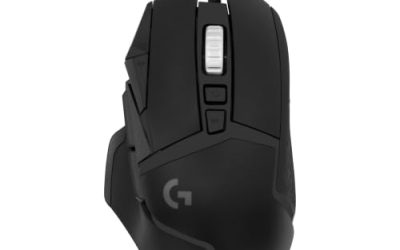
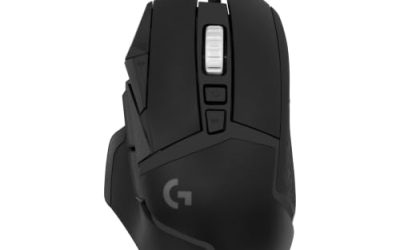
Logitech G502 HERO

On desktop the game is played at walking pace, mouse in hand — looking, reading, opening drawers — and a precise wired mouse suits those quiet sessions, with eleven programmable buttons for the repeated inputs.
Specs
- HERO optical sensor, up to 25,600 DPI
- 11 programmable buttons
- Adjustable weight system
- Wired USB connection
- On-board memory profiles
Samsung T9 Portable SSD 2TB

For moving a Linux game library between machines, a fast USB-C drive is the simple answer; the headline figure needs a Gen 2×2 host port.
Specs
- Capacity: 2 TB portable SSD
- Interface: USB 3.2 Gen 2×2, USB-C connector
- Maker-rated speeds: up to 2,000 MB per second read, 1,950 MB per second write
- Features: Dynamic Thermal Guard, maker-rated drop resistance
How to choose
Choose either storefront, because both list Linux: Steam for the copy the Deck sheet describes, with Cloud saves and the commentary mode, or GOG for the DRM-free installer. On desktop, install the native build as delivered; nothing needs configuring. On a Steam Deck, the Verified badge on the current build means install and launch; the one manual step is the controller switch if you pair an external pad. Pick input by seating: pad for the couch, mouse for the desk.
Who should skip
Skip the native-first framing if your system struggles with older Unity builds and you wanted a community Proton rating first: that record could not be read here, and no tier is claimed. Skip Gone Home itself if you want puzzles with locks, fail states or an inventory to manage — this is a story told through a house, at walking pace. And skip it if a short, single-evening game is not what you are shopping for; the whole house can be read in one sitting, which is the design, not a defect.
FAQ
Is Gone Home native on Linux?
Yes: Steam flags it for Linux, publishes a Linux minimum specification naming Ubuntu 12.04 or SteamOS, and serves a Linux depot of about 3.03 GiB in the current public branch.
Is Gone Home Steam Deck Verified?
Yes — Verified on Valve’s own record: fully functional default controller configuration, legible text, performant default configuration. The paperwork is dated 4 May 2022, against build 4845033, still the public build.
How well does Gone Home run under Proton?
It could not be read for this article: the summary feed returned a page-not-found response and the game page did not load, so no tier or count is claimed. It is a fallback question anyway — the native build is the route Steam delivers.
Can I buy Gone Home on GOG instead?
Yes, and the platform answer does not change: GOG’s record lists all three platforms, so its edition carries a Linux build in a DRM-free wrapper. The Steam copy is the one the Deck sheet describes, with Cloud saves.
Final verdict
Gone Home is a straightforward record: a true Linux flag, a populated requirements list and a live Linux depot agree; the one dissenting string is a macOS packaging note, and the soundtrack’s matching flag is corroboration, not the source of the claim. The Verified badge rests on paperwork written against the build still served, and the second storefront lists Linux too. Buy it on either, install the native build, and walk the house.
Product and ASIN Reference
| Product | ASIN |
|---|---|
| Valve Steam Deck OLED 512GB | B0CQ3RWQQZ |
| 8BitDo Ultimate 2 Bluetooth Controller | B0F194QFT2 |
| Xbox Wireless Controller, Carbon Black | B08DF248LD |
| Logitech G502 HERO | B07GBZ4Q68 |
| Samsung T9 Portable SSD 2TB | B0CHFS9K14 |