The First Tree is a short third-person exploration game from solo developer David Wehle, released in September 2017. It pairs two storylines: a fox crossing open country in search of her missing cubs, and a narrated account of a son working through his relationship with his estranged father. The exploration is unhurried and largely unguided, following light columns and scattered objects across open terrain while the narration unfolds, and the whole run is measured in a couple of hours.
For Linux players the interesting question is not length but paperwork. Small one-person releases from 2017 often carry a platform flag that nothing supports, so the flag alone settles nothing. This article reads the record layer by layer: the flags and requirements tab, the depot table, the family of related apps, the ProtonDB file, Valve’s Deck sheet and the second storefront’s listing.
As an Amazon Associate, we earn from qualifying purchases.
Quick answer
The First Tree is genuinely native on Linux. Steam flags all three platforms true, the Linux requirements tab is populated with named distributions and driver floors, and Steam delivers a dedicated Linux depot of about 2.29 GiB. The maker’s own tab still calls the build a beta, GOG’s edition lists Linux as well, and Valve rates the game Playable on Steam Deck.
What Steam’s own record says
Steam’s record for app 555150 reads windows, mac and linux all true, under developer and publisher David Wehle, released 14 September 2017. The categories are single-player, Steam Achievements, full controller support, Steam Trading Cards, Steam Cloud, commentary available, Remote Play on TV and Family Sharing.
The Linux requirements tab is populated at the minimum tier, and unusually specific for a game of this size. It asks for a 64-bit system and names the distributions the maker worked against: Arch Linux, Fedora, Ubuntu, Mint and openSUSE Tumbleweed. The hardware floor is a 2.4 GHz dual-core processor, 8 GB of memory and 4 GB of storage, with a dedicated graphics card carrying 1 GB of video memory recommended; the tab adds that the game may still run on an Intel HD 520, and names the Mesa and Nvidia driver generations of the time. There is no recommended tier — minimum only.
The same tab carries the article’s one honest wrinkle, in the maker’s own words: the additional notes describe the Linux build as a beta version, with MSAA disabled, most gamepads compatible apart from the wireless Xbox 360 controller, and a warning that some other minor bugs may be present. That wording has never been revised away. Two further fields are simply absent — no DRM notice and no third-party account notice — gaps in the paperwork, stated as gaps: an absent notice is not a promise about a future update.
The depot table: a Linux build with real size behind it
A flag and a tab can both be leftover paperwork, so the deciding layer is what Steam actually delivers. SteamDB’s depot table lists three content depots, one per platform: Windows at about 2.23 GiB on disk, macOS 64-bit at about 2.24 GiB, and Linux 64-bit at about 2.29 GiB, a combined total of about 6.76 GiB. The Linux depot is the largest of the three, and the public branch’s current build dates from February 2020 — the build on sale today is the build these depots describe.
One field points the other way: SteamDB’s extended-OS string lists a macOS value only. Against a true flag, a populated tab and a sized Linux depot in the live branch, that string reads as packaging metadata, not evidence about the build. SteamDB’s detected-technologies list is equally plain: Unity engine and Mono SDK, engine plumbing only.
The family sweep: there is no family to sweep
Some records hide their only Linux flag on a soundtrack or art book while the game itself points the other way. That trap cannot form here: there is nothing else in the family. The record carries no DLC array at all — no soundtrack, no art book, no demo, no expansion — and Steam’s store search for the name returns exactly one app, the game itself. The family Linux-flag count is one of one, and the single flag sits on the game, backed by the tab and the depot above.
Anti-cheat takes three sources, kept separate, and all three are negative: Steam’s record names none, SteamDB’s technology list holds no anti-cheat product, and Are We Anti-Cheat Yet carries no entry for this title under its name or app number.
The Proton file: a fallback route priced on five reports
Because the game is native, the ProtonDB record needs framing first: its tiers describe the Windows build running under Proton, which for a native title is the fallback route, not the main road. The summary record answers in full — headline tier Gold, best-reported tier Platinum, trending tier Gold, the whole file resting on five reports with confidence rated low. Claimed at exactly that size, it prices the Windows build as a workable detour on a very thin evidence base.
One check could not be completed: the ProtonDB game page returned only a site-update shell this session, so no classification header on that page could be read, and the article makes no claim about one.
The Steam Deck sheet: Playable, on the build still on sale
Valve’s own compatibility endpoint returned empty and garbled responses this session, so this record is read from SteamDB’s republication of Valve’s compatibility data, disclosed rather than hidden. The verdict is Playable, with SteamOS separately rated Compatible. The test paperwork is dated 6 December 2022 and names the same build the public branch still serves, so the sheet describes today’s download.
Two deductions keep the game out of the Verified tier: it sometimes shows mouse, keyboard or non-Steam-Deck controller icons, and some in-game text is small. Against those, all functionality is accessible on the default controller configuration and the default graphics configuration performs well. The sheet’s recommended runtime names a Proton 7.0 release, even though a native build exists — badge and build are separate facts, kept separate here. One further note deserves daylight, because the categories advertise Steam Cloud: the sheet states that saved games do not move across platforms.
The storefront ruling: GOG lists Linux too
GOG sells this game, and its edition lists Linux. The ruling rests on GOG’s own records rather than its search box: the live product page carries the game under its own title, with the same description and September 2017 release date, and its works-on line names Windows, Linux and Mac OS X. GOG’s product record agrees, reading all three platforms true. GOG’s own search returned nothing for the title — a known blind spot in its search, and exactly why the ruling is built on the page and record instead.
Gear that fits the record
The picks follow the record: a Playable Deck sheet, full controller support, and fast library storage.
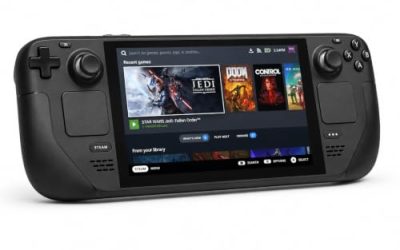
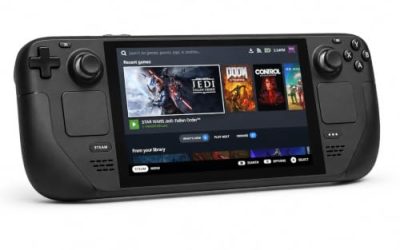
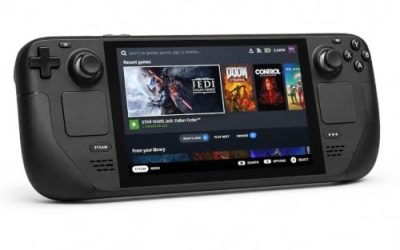
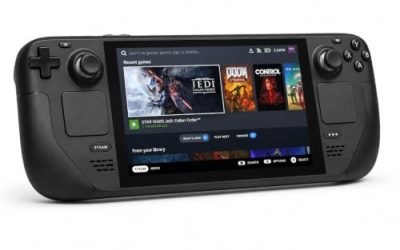
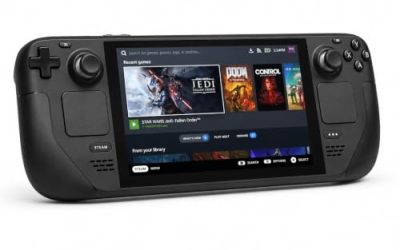
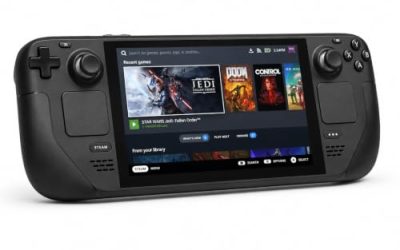
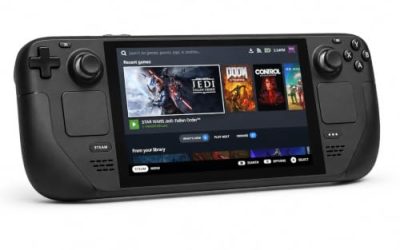
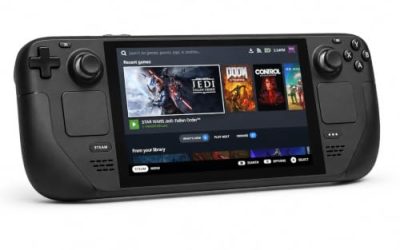
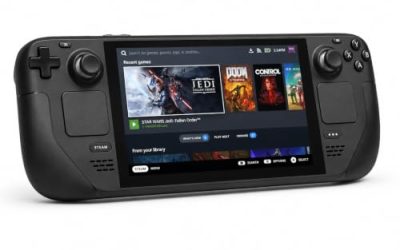
Valve Steam Deck OLED 512GB

The handheld on Valve’s test sheet: Playable rather than Verified, because of the icon and text-size notes above.
Specs
- Display: 7.4-inch HDR OLED, 1280 by 800, up to 90 Hz
- Processor: AMD Zen 2 and RDNA 2 custom APU
- Memory: 16 GB LPDDR5
- Storage: 512 GB NVMe, plus a microSD slot
- Wireless: Wi-Fi 6E and Bluetooth
- Channel note: Valve sells the Deck mainly through its own store, so Amazon listings are third-party sellers
8BitDo Ultimate 2 Bluetooth Controller

The docked and desktop pad pick: full controller support is on the record, and this pad covers the couch case with modern sticks, triggers and back buttons.
Specs
- Connectivity: Bluetooth wireless and USB-C wired
- Joysticks: TMR electromagnetic, anti-drift design
- Triggers: Hall effect, with mode switching
- Extras: two remappable back buttons, motion control
- In the box: charging dock included
Xbox Wireless Controller, Carbon Black

The safest guest pad in PC gaming: Steam Input support is universal, the glyphs match most game glyphs, and it pairs over Bluetooth or its own wireless standard.
- Connectivity: Xbox Wireless and Bluetooth
- Port: USB-C for wired play
- Controls: hybrid D-pad, dedicated Share button
- Power: AA batteries or optional rechargeable pack
Logitech G502 HERO

At a desk, a precise wired mouse turns the game’s menus and save slots into single clicks, and eleven programmable buttons cover the inputs a session repeats.
Specs
- HERO optical sensor, up to 25,600 DPI
- 11 programmable buttons
- Adjustable weight system
- Wired USB connection
- On-board memory profiles
Samsung T9 Portable SSD 2TB

For moving a Linux game library between desktop and laptop, a fast USB-C drive is the simple answer. The headline figure needs a Gen 2×2 host port; on a lesser port the drive runs at that ceiling.
Specs
- Capacity: 2 TB portable SSD
- Interface: USB 3.2 Gen 2×2, USB-C connector
- Maker-rated speeds: up to 2,000 MB per second read, 1,950 MB per second write
- Features: Dynamic Thermal Guard, maker-rated drop resistance
How to choose
Choose the native build first: it is the route the maker’s own tab describes, it needs no compatibility layer, and the depot behind it is the largest of the three. Choose the storefront by library rather than by build, since Steam and GOG list the same three platforms; the one functional difference the paperwork surfaces is Valve’s note that saved games do not move across platforms. Keep Proton in reserve: the five-report Gold file says the Windows build works under it, but on low confidence — a detour for native-copy bugs, not a default.
Who should skip
Skip this one if the beta wording in the Linux tab is a hard line: the maker still labels the build a beta, notes MSAA is disabled and warns that minor bugs may be present, and the branch has not been rebuilt since 2020, so that wording is the current position, not a launch-day leftover. Skip it if cross-platform saves are essential, because Valve’s sheet rules them out despite the Steam Cloud category. Skip it if a two-hour, narration-led exploration game with little challenge and no fail states is not the shape of game wanted.
FAQ
Is The First Tree native on Linux?
Yes. Steam flags Linux true, the requirements tab is populated with named distributions and driver floors, and SteamDB shows a dedicated Linux depot of about 2.29 GiB in the public branch. The one caveat is the maker’s own: the tab still calls the build a beta version.
Is The First Tree Steam Deck Verified?
No — it is rated Playable, a tier below Verified. Valve’s sheet, tested in December 2022 on the current build, deducts for occasional non-Deck controller icons and some small text, and passes the game on functionality and performance.
Does The First Tree work under Proton?
The ProtonDB summary rates the Windows build Gold overall and Platinum at best, on five reports with low confidence — the fallback route: workable on the evidence available, but thin, and unnecessary while the native build is the default download.
Can I buy The First Tree on GOG for Linux?
Yes. GOG’s product page lists Windows, Linux and Mac OS X on its works-on line, and its product record reads all three platforms true — a second native route alongside the Steam copy.
Final verdict
The First Tree is one of the clean cases: a genuinely native Linux build whose flag, requirements tab and delivery depot all agree, sold by two storefronts that both list Linux, with a Playable Deck sheet whose paperwork still matches the build on sale. The qualifications are real but small, and all on the record — a beta label the maker never removed, a minimum-only tab from the 2017 era, no cross-platform saves, and a thin Proton fallback file. Buy it on whichever storefront holds the library; on Linux, it simply runs.
Product and ASIN Reference
| Product | ASIN |
|---|---|
| Valve Steam Deck OLED 512GB | B0CQ3RWQQZ |
| 8BitDo Ultimate 2 Bluetooth Controller | B0F194QFT2 |
| Xbox Wireless Controller, Carbon Black | B08DF248LD |
| Logitech G502 HERO | B07GBZ4Q68 |
| Samsung T9 Portable SSD 2TB | B0CHFS9K14 |