The Legend of Heroes: Trails through Daybreak II arrived on PC on 14 February 2025, continuing Van Arkride’s story in the Calvard Republic a year after the first Daybreak game. Built by Nihon Falcom, ported by PH3 GmbH and published by NIS America, it is the second chapter of the Calvard arc. For Linux players the question is the same one that followed its predecessor: the game is a Windows title on Steam, so the whole Linux case rests on Proton.
This is a record-first status check: Steam’s platform flags, all ten add-ons in the family, ProtonDB’s published tier and report count, Valve’s Deck record, and GOG’s catalogue. Where a record is thin or silent, the article says so.
As an Amazon Associate, we earn from qualifying purchases.
Quick answer
Trails through Daybreak II is not native on Linux: Steam flags Windows only, with Mac and Linux both false and an empty Linux requirements tab. ProtonDB rates the Windows build Platinum on all three tiers across 14 reports at moderate confidence, Valve’s Deck record reads Playable with one legibility deduction, and GOG sells a Windows-only edition. Buy the Steam copy and play it under Proton.
The status at a glance
| Question | Answer |
|---|---|
| Native Linux build | No — Steam flags Windows only |
| Steam app | 2668430, released 14 February 2025 |
| ProtonDB tier | Platinum on all three tiers, 14 reports |
| Steam Deck | Playable, one legibility deduction |
| GOG edition | Exists, Windows only |
| DRM named by Steam | None — the record carries no DRM notice |
| Family Linux flags | Zero across 11 apps |
What Steam’s own record says
Steam’s record for app 2668430 is unambiguous: the platform flags read Windows true, Mac false and Linux false, and the Linux requirements block is an empty shell, with the Minimum and Recommended headings present and both lists empty. No native build is listed anywhere in the record.
The category record lists full controller support with DualShock and DualSense support, Steam Achievements, Trading Cards, Steam Cloud and Family Sharing, plus adjustable text size, custom volume controls and adjustable difficulty. The text size option matters later: Valve’s Deck test flags interface legibility.
The published Windows minimum is light: Windows 10 or 11, an AMD Ryzen 5 1600, 8 GB of RAM, a GeForce GTX 1050, DirectX 11 and 22 GB of storage, targeting 1080p at 30 frames per second. Under Proton the same build runs, and the bar stays low enough for the Deck’s APU.
Steam’s record carries no DRM notice, so this article names no DRM product — the same gap the Final Fantasy XVI and Final Fantasy VII Rebirth articles carried. No anti-cheat is named either, and no third-party launcher or account is listed.
The first game’s article made exactly one claim about this sequel: that Daybreak II also flags Windows only in Steam’s store search. That claim agrees with the record read here.
The family sweep: ten add-ons, zero Linux flags
The game app’s record carries ten DLC apps, each read individually. Every one is type “dlc” and every one flags Windows only: Shizuna’s attire pack (3449240), Agnès’ attire pack (3449250), Elaine’s and Renne’s attire pack (3449260), the Accessory Pack (3449270), the Holo Core Voice Pack (3449280), the Costume Pack (3449290), the BGM Pack (3449300), the Starter Pack (3449310), the Advanced Pack (3449320) and the Free Sample Pack (3449330).
Across all eleven apps the Linux-flag count is zero. The soundtrack trap cannot fire: there is no soundtrack app in the family, and the BGM Pack is ordinary DLC, not a type-music app, so its flags say nothing about platform support.
The Proton file: Platinum on a thin pool
ProtonDB’s summary feed reads Platinum on the headline, best-reported and trending tiers, across 14 reports at moderate confidence. That is a unanimous file, but it is a thin one: 14 reports is a small pool, and the article carries that thinness honestly rather than treating the tier as a census.
The most useful report comes from the Deck itself: a perfect experience on the handheld, with the reporter limiting the chip to 9 watts and 45 frames per second and enlarging the text through the in-game option, and praising the PH3 port work. That lines up with Valve’s own Deck sheet, which flags legibility and nothing else.
Desktop reports are mostly clean, with two recurring wrinkles. One Fedora reporter on GE-Proton10-3 hit audio crackling and fixed it with an audio-library override launch option plus a redistributed audio library file in the game folder, a fix first worked out for the previous game. Another reporter on Linux Mint with an Intel processor and an Nvidia card hit a slowdown where one processor core sat at full load, and pointed to the same community fix thread from the first game. A CachyOS reporter on GE-Proton9-25 hit audio popping after an hour and a half to two and a half hours of play, usually when the music track changed. None of these overturns the Platinum tier: the default Proton build is the starting point, and the community builds are the fallback if audio misbehaves.
ProtonDB’s own game page carries the recurring “Natively Supports” header that contradicts Steam’s flags. The article follows Steam: the flags say Windows only and the header is a stray tag.
The Steam Deck sheet: Playable, with one deduction
Valve’s Deck record reads Playable. The verdict comes from Valve’s compatibility record embedded in the game’s own store page, because Valve’s ajax endpoint returned only garbled data this session and the appdetails Deck filter returned an empty list. The article discloses the path.
Three checks pass: the default controller configuration is fully functional, the glyphs match the Deck device, and the default graphics configuration performs well. One check fails, and it is the only deduction: some interface text is not legible. That matches the Deck reporter’s note about enlarging the text in-game.
No test date is published on this record, and none is claimed: the test timestamp field is empty. SteamOS separately reads Playable, the Steam Machine row reads Verified, and the Frame row carries no verdict. ProtonDB’s game page independently shows the same Playable badge.
The storefront ruling: GOG sells it, Windows only
GOG sells an edition of this game, but it is not a native route. GOG’s embed search returns zero products — the search blind spot this series has hit repeatedly — while the catalogue search lists the base game as a standard edition with operating systems recorded as Windows only. The live product page’s details table reads “Works on: Windows”. The DRM-free copy is a legitimate buy, but it runs on Windows and needs the same Proton path under Linux. Buy the Steam copy if the Deck badge and ProtonDB file matter to you; buy the GOG copy if a DRM-free installer matters more.
Gear that fits the record
The gear below follows the record’s shape: the handheld the Playable badge was written for, two pads, a mouse for menu-heavy desktop sessions, and library storage.
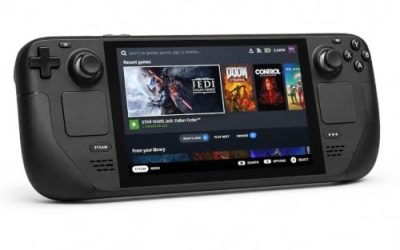
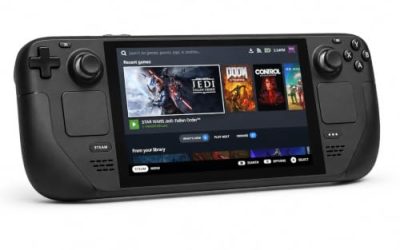
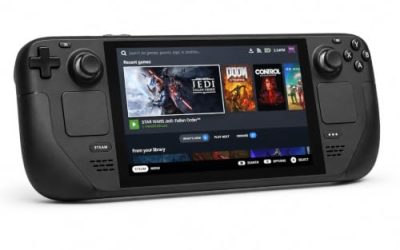
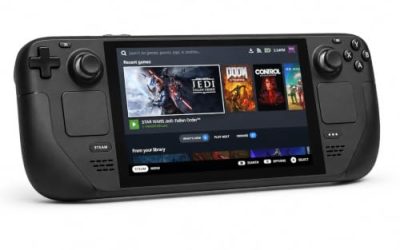
Valve Steam Deck OLED 512GB

The handheld the Playable badge was written for. The community’s Deck report describes a perfect experience with a modest power limit and larger text.
Specs
- Display: 7.4-inch HDR OLED, 1280 by 800, up to 90 Hz
- Processor: AMD Zen 2 and RDNA 2 custom APU
- Memory: 16 GB LPDDR5
- Storage: 512 GB NVMe, plus a microSD slot
- Channel note: Valve sells the Deck mainly through its own store, so Amazon listings are third-party sellers
8BitDo Ultimate 2 Bluetooth Controller

The docked and desktop pad pick.
Specs
- Connectivity: Bluetooth wireless and USB-C wired
- Joysticks: TMR electromagnetic, anti-drift design
- Triggers: Hall effect, with mode switching
- Extras: two remappable back buttons, motion control, charging dock included
Xbox Wireless Controller, Carbon Black

The safest guest pad in PC gaming, with universal Steam Input support and glyphs that match what most games display.
Specs
- Connectivity: Xbox Wireless and Bluetooth
- Controls: hybrid D-pad, dedicated Share button
- Power: AA batteries or optional rechargeable pack
Logitech G502 HERO

Daybreak II is a menu-driven RPG, and at a desk a precise wired mouse turns inventory and shop trips into single clicks.
Specs
- Sensor: HERO 25K optical, up to 25,600 DPI
- Buttons: 11 programmable, onboard memory profiles
- Weight: adjustable, 121 grams base
Samsung T9 Portable SSD 2TB

The storage pick for a growing library; the game itself needs only 22 GB.
Specs
- Capacity: 2 TB
- Interface: USB 3.2 Gen 2×2, up to 2,000 MB per second
- Host note: the headline maker figure assumes a USB 3.2 Gen 2×2 host; on a lesser port the drive runs at that lower ceiling
How to choose
Start from the record, not the badge alone. The game is Windows-only on Steam, so the choice is between the Steam build under Proton and the GOG build under Proton, and the Steam copy carries the stronger evidence: a unanimous Platinum file and a Deck sheet with a single legibility deduction. Buy the Steam copy unless a DRM-free installer is the deciding factor for you.
If you play on the Deck, buy the Steam copy, set the text size up through the in-game option before your first long session, and expect a clean run. If you play on a desktop, the published minimum is light, and the default Proton build is the starting point. Keep a community Proton build as a fallback: the audio crackling reports were fixed that way.
Who should skip
Skip the wait for a native build. Nothing in Steam’s record, GOG’s catalogue or the publisher’s listing points at one, and the Windows build already runs well under Proton with a unanimous Platinum file behind it.
Skip the GOG route if the Deck badge matters to you. The GOG edition is Windows-only, so it buys nothing on the Linux question, and the Steam copy is the one Valve tested.
Skip the Advanced Pack and the Starter Pack unless the bundled items matter to you. Both are ordinary DLC, and the base game is the complete story.
Frequently asked questions
Is Trails through Daybreak II native on Linux?
No. Steam’s record for app 2668430 flags Windows only, Mac false and Linux false, and the Linux requirements tab is an empty shell with no entries. The game runs under Proton instead.
How well does Trails through Daybreak II run under Proton?
ProtonDB rates it Platinum on all three tiers across 14 reports at moderate confidence. Reporters describe smooth play on desktop Linux and on the Deck, most of them on Proton 9.0-4 or 10.0-3. The file is thin, so the tier is unanimous rather than a census.
Is Trails through Daybreak II Steam Deck Playable?
Yes. Valve’s compatibility record embedded in the store page reads Playable, with three checks passing and one deduction: some interface text is not legible. The in-game text size option is the remedy.
Can I buy Trails through Daybreak II on GOG instead?
Yes, but it changes nothing on Linux. GOG sells a standard edition, and its catalogue record lists operating systems as Windows only. The DRM-free copy is a legitimate buy, but it needs the same Proton path as the Steam copy.
Final verdict
Trails through Daybreak II is a clean Windows-only case with a strong Proton record. Steam flags Windows only with an empty Linux tab, all ten add-ons flag Windows only with no soundtrack app to muddy the sweep, and no DRM is named anywhere in the record. ProtonDB’s file is thin at 14 reports but unanimous at Platinum, Valve’s Deck badge is Playable with a single legibility deduction the in-game text control answers, and the GOG edition exists but is Windows only. Buy the Steam copy, enlarge the text on the Deck, and play it under Proton.
Product and ASIN Reference
| Product | ASIN |
|---|---|
| Valve Steam Deck OLED 512GB | B0CQ3RWQQZ |
| 8BitDo Ultimate 2 Bluetooth Controller | B0F194QFT2 |
| Xbox Wireless Controller, Carbon Black | B08DF248LD |
| Logitech G502 HERO | B07GBZ4Q68 |
| Samsung T9 Portable SSD 2TB | B0CHFS9K14 |