The Beginner’s Guide, Everything Unlimited Ltd.’s 2015 narrated exploration piece, is built as a guided tour. The player walks through a sequence of small game spaces attributed to a developer named Coda, while a narrator talks over each one, explaining and sometimes arguing with what is on screen. It is a short, seated work whose Linux question is the one this series asks first: did a Linux build actually ship, or is the flag paperwork?
Here the record answers cleanly: Steam flags the game for Linux, publishes a requirements list and still serves a Linux depot in the current branch; ProtonDB’s community file is Platinum, and Valve has rated it on Steam Deck. This piece reads each layer separately: flags, depots, family, community file, Deck sheet and storefront ruling.
As an Amazon Associate, we earn from qualifying purchases.
Quick answer
The Beginner’s Guide is genuinely native on Linux. Steam flags it for Linux with a populated requirements list, and SteamDB shows a live Linux depot in the current branch. ProtonDB rates it Platinum across 22 reports, and Valve rates it Playable on Steam Deck. Buy the Steam copy: no GOG edition exists.
The status at a glance
| Question | Answer from the record |
|---|---|
| Native Linux build | Yes — flag, requirements tab and live depot agree |
| Linux requirements tab | Populated at minimum tier only |
| Linux depot | Depot 303213, carried in the current public branch |
| ProtonDB record | Platinum headline, 22 reports, good confidence |
| Steam Deck verdict | Playable, tested May 2023 |
What Steam’s own record says
Steam’s appdetails record for The Beginner’s Guide (app 303210, established from Steam’s own store search) names Everything Unlimited Ltd. as developer and publisher (Klei Publishing is also named as a publisher) and dates the release to 1 October 2015. The flags read Windows true, Mac true, Linux true, so the question is whether the Linux claim has anything behind it.
It does. The Linux requirements field is genuinely populated at the minimum tier: Ubuntu 12.04, a dual-core Intel or AMD processor at 2.8 GHz, 2 GB of RAM, a GeForce 8600 or 9600GT or Radeon HD2600 or 3600 class card with OpenGL 2.1, 4 GB of storage and an OpenAL-compatible sound card. Any current Linux machine clears those period specifications. One limit: no recommended tier is published for Linux, so the minimum list is the whole tab.
The categories are single-player, captions available, partial controller support, Remote Play on Tablet and Family Sharing. Two absences matter: no Steam Cloud category, so saves stay on the machine that made them, and partial controller support, the store-level version of the deduction on the Deck sheet below.
The depot table: a Linux build with a joke name
SteamDB’s depot table settles the question at the level of files. The public branch carries three content depots: the Windows content at 3.25 GiB, a macOS depot at 124.76 MiB, and depot 303213, labelled Linux and carrying the name The Beginner’s Guide Lemon Rooibos Edition at 73.07 MiB. A named Linux depot with real size in that branch is a delivered build, not a leftover. The branch is build 897906, dating to December 2015 and never superseded.
The configuration record agrees: alongside the Windows executable sits a Linux launch entry starting the game through a shell script. The ruling rests on four layers: a true flag, a populated tab, a live depot and a Linux launch configuration.
The family sweep: the soundtrack agrees, in the weaker form
The game’s record carries no DLC array, but one add-on hangs off it on the store: the Soundtrack (app 406460), read individually. It flags Windows, Mac and Linux all true, with an empty-list Linux requirements field, with its own small depot in the game’s depot table on SteamDB.
The family flag count is 2 of 2. The soundtrack trap, where a music app’s flag is a family’s only one and gets credited to a Windows-only game, cannot form here: the deciding flag sits on the game and is depot-backed. The soundtrack’s flag is agreement in the weaker form, a flag with no tab behind it.
DRM, accounts and anti-cheat: three silences
Steam’s record carries no third-party DRM notice and no external account notice; both are stated here as gaps in the record rather than promises.
Anti-cheat was checked on three sources, kept separate. Steam names none, on a single-player-only record. SteamDB’s detected technologies are the Source Engine, a CEF SDK and a Lua SDK, engine plumbing only. The Are We Anti-Cheat Yet dataset, all 1,167 games on its master branch, searched by name and by app id 303210, carries no entry.
The Proton file
ProtonDB’s summary record for app 303210 is unanimous: Platinum headline, Platinum best-reported and Platinum trending, across 22 reports with good confidence. The game page classifies the title as native, which agrees with Steam: the clean case, with no stray tag to name.
Because a native build exists, the 22 reports price two routes at once: native runs, and the Windows build forced through Proton. At report weight, a recurring strand describes the native build misbehaving on some systems, with late-game crashes, a mouse-look fault and timing-related crashes on many-core machines; those reporters generally finished through Proton, in some cases after restricting how many processor cores the game could see. A separate strand runs the native build cleanly, and one reporter notes the shipped SDL has no Wayland support, so the native build runs through the X compatibility layer on Wayland sessions. The native build remains the default route.
The Steam Deck sheet
Valve rates the game Playable on Steam Deck, the second category, and SteamOS separately Compatible. Valve’s own compatibility endpoint returned an empty result this session, so the verdict, items and paperwork come from SteamDB’s republication of Valve’s data, disclosed here.
The passing items are controller icons and default graphics performance. The deductions keeping it out of the top category: some functionality is not accessible with the default controller configuration, requiring the touchscreen, virtual keyboard or a community configuration, and some in-game text is small. A note adds that external controllers do not take over by default and may need a Quick Access Menu switch. The configuration names gamepad input, no manual keyboard invoke, no launcher navigation and no internet required for setup or single-player.
The paperwork dates the test to 6 May 2023, on build 897906, the build the branch still carries, so the sheet describes the current download. One line is reproduced exactly as published: the sheet names a Proton 8.0 series build as the recommended runtime, on a game whose native build is the default install.
The storefront ruling
The address a GOG product page would occupy resolves instead to GOG’s general games catalogue, that storefront’s behaviour for a title it does not sell, and the ruling rests on that behaviour, not on any search result. No GOG edition exists; the Steam copy is the only PC edition and the buy.
Gear that fits the record
The gear below follows the record: the handheld Valve rated Playable, two pads for the controller deductions, a mouse for the desktop default, and storage.
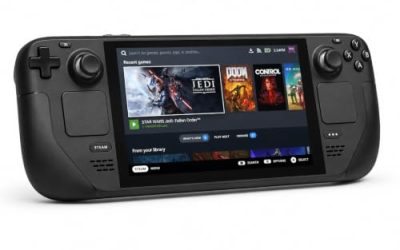
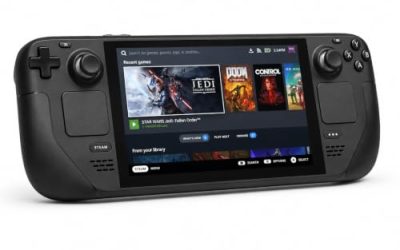
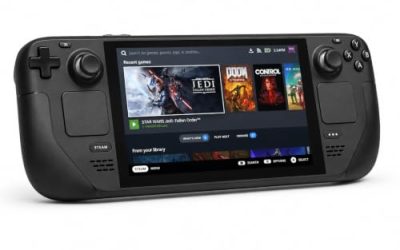
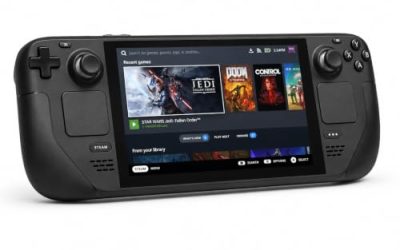
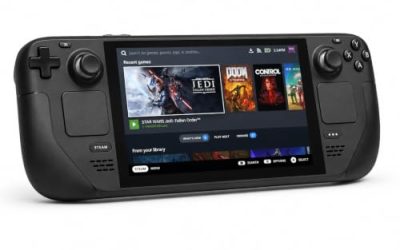
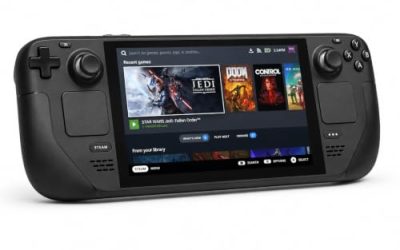
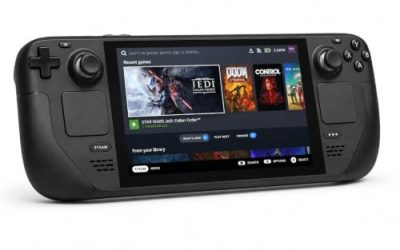
Valve Steam Deck OLED 512GB

The handheld on Valve’s test sheet: Playable there, its deductions in controller configuration and text size, not performance.
Specs
- Display: 7.4-inch HDR OLED, 1280 by 800, up to 90 Hz
- Processor: AMD Zen 2 and RDNA 2 custom APU
- Memory: 16 GB LPDDR5
- Storage: 512 GB NVMe, plus a microSD slot
- Wireless: Wi-Fi 6E and Bluetooth
- Channel note: Valve sells the Deck mainly through its own store, so Amazon listings are third-party sellers
8BitDo Ultimate 2 Bluetooth Controller

The docked and desktop pad pick: Steam lists only partial controller support, and the remappable back buttons help where a layout falls short.
Specs
- Connectivity: Bluetooth wireless and USB-C wired
- Joysticks: TMR electromagnetic, anti-drift design
- Triggers: Hall effect, with mode switching
- Extras: two remappable back buttons, motion control
- In the box: charging dock included
Xbox Wireless Controller, Carbon Black

The safest guest pad in PC gaming: Steam Input support is universal and the glyphs match most games. On the handheld, the sheet’s note applies: an external pad may need a Quick Access Menu switch first.
- Connectivity: Xbox Wireless and Bluetooth
- Port: USB-C for wired play
- Controls: hybrid D-pad, dedicated Share button
- Power: AA batteries or optional rechargeable pack
Logitech G502 HERO

On desktop this is a mouse-look first-person piece; a precise wired mouse is its natural input, with eleven programmable buttons for repeated inputs.
Specs
- HERO optical sensor, up to 25,600 DPI
- 11 programmable buttons
- Adjustable weight system
- Wired USB connection
- On-board memory profiles
Samsung T9 Portable SSD 2TB

The whole game is a few gigabytes; a fast USB-C drive earns its place moving a wider Linux library between machines. The headline figure needs a Gen 2×2 host port.
Specs
- Capacity: 2 TB portable SSD
- Interface: USB 3.2 Gen 2×2, USB-C connector
- Maker-rated speeds: up to 2,000 MB per second read, 1,950 MB per second write
- Features: Dynamic Thermal Guard, maker-rated drop resistance
How to choose
Choose the Steam copy: the only PC edition on sale, and the one carrying the native build. On desktop, play the native version first; flag, tab and depot all say it is real. If your system matches the ProtonDB strand where the native build crashes or loses mouse look, force the Windows build through Proton instead, the fallback the Platinum file also covers. On Deck, expect a Playable rather than frictionless experience: set a community layout or keep the touchscreen in reach.
Who should skip
Skip it if you need saves to follow you: no Steam Cloud is listed, so progress stays on one machine. Skip it if you want a top-category Deck badge and full controller support out of the box. Skip it for a DRM-free installer: no GOG edition exists. And skip it if you want a long, systems-driven game: this is a brief narrated tour, played for narration and structure, not for dozens of hours of mechanics.
FAQ
Is The Beginner’s Guide native on Linux?
Yes. Steam flags it for Linux with a populated requirements list, SteamDB shows a live Linux depot in the current branch, and the configuration record carries a Linux launch option. The verdict rests on the game app itself, not its soundtrack.
Why do some ProtonDB reports use Proton if a native build exists?
A strand of the file describes the native build misbehaving on particular systems, with crashes and input faults at report weight; those players finished through the Windows build under Proton. The summary is Platinum on all three tiers across both routes, with good confidence.
What does the Playable Steam Deck rating mean here?
Valve’s sheet, tested in May 2023 on the build still served, passes the game on controller icons and graphics performance, and deducts for a default configuration leaving some functionality to the touchscreen, virtual keyboard or a community layout, plus small text. SteamOS is separately Compatible.
Can I buy The Beginner’s Guide on GOG instead?
No. No GOG edition exists: the address its product page would occupy resolves to the general catalogue. The Steam copy is the only PC edition, and the one carrying the native build.
Final verdict
The Beginner’s Guide is the clean case this series rarely gets: a native Linux build real on every layer, from the store flag and tab down to a named Linux depot in the public branch. The caveats are smaller: a Playable rather than Verified Deck rating, no cloud saves, and a minority of reports finding the ageing native build unstable, with Proton as fallback. Buy the Steam copy and start native.
Product and ASIN Reference
| Product | ASIN |
|---|---|
| Valve Steam Deck OLED 512GB | B0CQ3RWQQZ |
| 8BitDo Ultimate 2 Bluetooth Controller | B0F194QFT2 |
| Xbox Wireless Controller, Carbon Black | B08DF248LD |
| Logitech G502 HERO | B07GBZ4Q68 |
| Samsung T9 Portable SSD 2TB | B0CHFS9K14 |