A Plague Tale: Innocence is where the series started: Asobo Studio’s 2019 stealth adventure, published by Focus Entertainment, following Amicia de Rune and her young brother Hugo through a plague-era France of Inquisition soldiers and rat swarms. It is the predecessor to Requiem, and Linux players arriving at it now usually ask the same two questions they asked about the sequel: is there a native Linux build, and what does the Steam Deck make of it.
The records answer cleanly, and the answer is a split one. There is no native build anywhere in this game’s Steam family, and no add-on smuggles one in. What the Windows build has instead is one of the strongest community files in this corner of the catalogue: a unanimous Platinum record on ProtonDB, and a Playable badge from Valve’s own Deck testing with a single deduction about graphics settings.
As an Amazon Associate, we earn from qualifying purchases.
Quick answer
A Plague Tale: Innocence has no native Linux build: Steam flags the game Windows-only and its Linux requirements tab is an empty shell. The Windows build carries a unanimous Platinum file on ProtonDB across 272 reports, and Valve rates the Steam Deck Playable, with one note: the default graphics configuration needs manual adjustment to perform well.
What Steam’s own record says
Steam’s store search identifies the game app directly: A Plague Tale: Innocence, app 752590, released 14 May 2019. Its platform flags are unambiguous. Windows reads true, Mac reads false and Linux reads false. The Linux requirements field exists on the record but is an empty shell: a Minimum heading and a Recommended heading with no entries beneath either, and the Mac field reads the same way. The only build on sale here is the Windows build.
The category list describes a firmly single-player game: single-player, Steam Achievements, full controller support, DualShock and DualSense controller support, Steam Cloud and Family Sharing. No multiplayer, co-op or online category appears anywhere on it, which shapes the anti-cheat picture further down.
The published Windows minimum is modest, as expected for a 2019 title: Windows 7, 8 or 10 in 64-bit, an Intel Core i3-2120 at 3.3 GHz or an AMD FX-4100 X4 at 3.6 GHz, 8 GB of RAM, a 2 GB GeForce GTX 660 or Radeon HD 7870, and 50 GB of storage.
The family sweep: a DLC, a demo, and no soundtrack to hide behind
A native build can sometimes hide in a game’s add-on family, most often behind a soundtrack app whose flags cover all three systems while the game itself stays Windows-only. That trap cannot fire here: the family is small, and every member was read individually.
The record lists exactly one downloadable content app: the Coats of Arms DLC, app 967380, a cosmetic pack of crests for Amicia’s outfit. Its own record flags Windows true, Mac false and Linux false, with the same empty-shell Linux field as the parent game. The record also lists one demo, app 1096660, reading identically: Windows only, empty shell. A store search for a soundtrack release under this game’s name returns no app at all, so no music-type release exists whose flags could be misread.
The count is therefore simple: across the game and its two relatives, the number of apps carrying a Linux flag is zero of three.
DRM and anti-cheat: two absences, stated plainly
Steam’s record for this game carries no DRM notice at all, and no external account notice either. No DRM product is named on the listing, and no second launcher or account sign-in is required by the record. That is the whole of the evidence, so this article names no DRM product in either direction.
Anti-cheat is reported source by source, because the sources are separate records. Steam’s own record names no anti-cheat system: no notice, no category, nothing in the requirements text. SteamDB’s detected technologies are the Zouna Engine, the AMD GPU Services SDK, Bink Video, and the NVIDIA Ansel and Nsight Aftermath SDKs — engine and media components, with no anti-cheat among them. Are We Anti-Cheat Yet, whose database was read directly for this article, carries no entry for this title at all. On the Deck side, kept separate, Valve’s sheet records no anti-cheat deduction either. Desktop and Deck agree: no record names an anti-cheat gate for this game.
ProtonDB: Platinum at every level
ProtonDB’s summary feed for app 752590 answered in full, and the file is as tidy as they come. The headline tier is Platinum, the best-reported tier is Platinum, and the trending tier is Platinum, across 272 reports, with confidence marked strong — the community’s way of saying the Windows build, run through Proton, is a solved problem on desktop hardware.
One label on ProtonDB’s game page needs naming rather than repeating. The page header carries a “Natively Supports” tag, which reads like a native Linux classification. Steam’s own record contradicts it directly: the Linux flag is false and the requirements tab is an empty shell. Where the two disagree, this article follows Steam, the publisher’s own listing.
Steam Deck: Playable, with one graphics-settings note
Valve’s own compatibility endpoint answered directly for this app, so the verdict here rests on Valve’s record itself. The Steam Deck category is Playable, category 2. Three of the four published test items are passes: all functionality is accessible with the default controller configuration, the game shows Steam Deck controller icons, and in-game interface text is legible. The single deduction is that the default graphics configuration is not performant — SteamDB’s republication of the same record words it as the game requiring manual configuration of graphics settings to perform well on Steam Deck. That is a settings task, not a compatibility block: no launcher navigation, no manual keyboard invocation and no small text are flagged, and no internet is required for setup or single-player play.
The test behind the badge is dated. SteamDB’s republication of Valve’s compatibility data records the test on 7 October 2026, against build 4336652, with proton-stable as the recommended runtime. SteamOS, rated separately from the handheld, reads Compatible.
The GOG edition changes nothing
There is a second PC edition, and it documents no Linux route either. GOG sells A Plague Tale: Innocence, and because GOG’s search surfaces are known to miss listings, this ruling rests on GOG’s product API record rather than on search results. That record, product 1901367087, lists system compatibility as Windows true, Mac false and Linux false. The GOG copy is the same Windows build in a second wrapper, so buy the Steam copy: it is the edition ProtonDB’s file describes and the edition Valve’s Deck sheet was written against.
Gear that fits the record
The gear below follows the record’s shape: the handheld the badge was written for, two pads, a mouse for desktop menu work, and library storage.
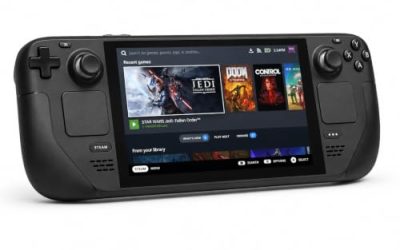
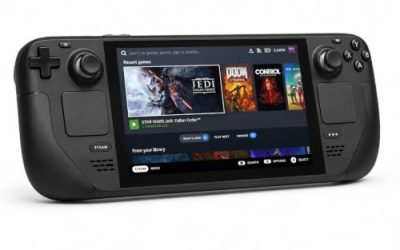
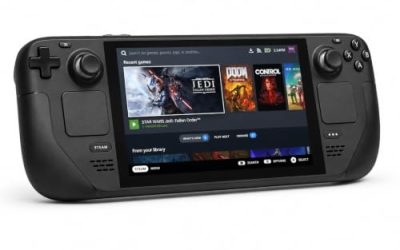
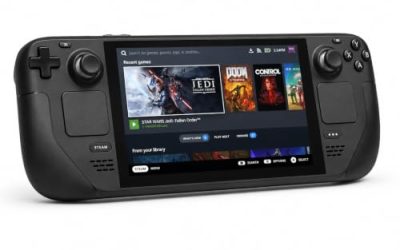
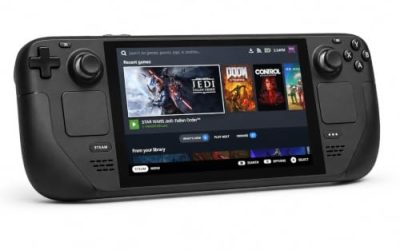
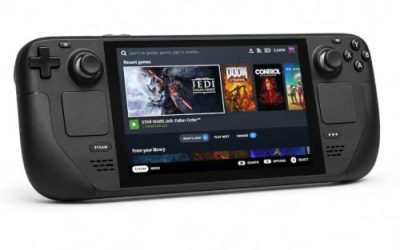
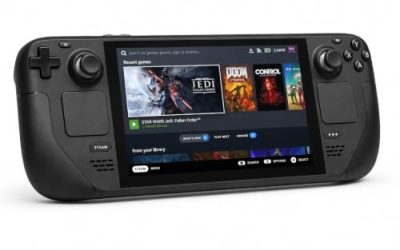
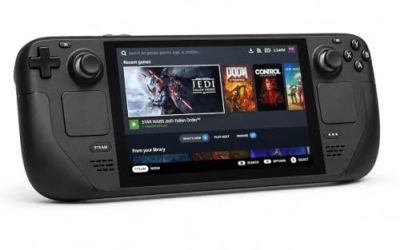
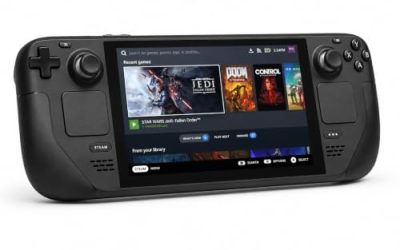
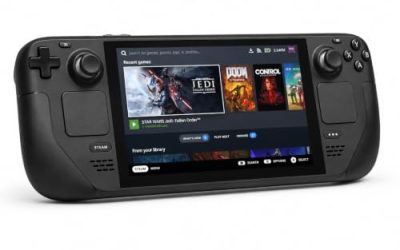
Valve Steam Deck OLED 512GB

The handheld the Playable badge was written for. Valve’s sheet asks for one manual graphics adjustment and passes everything else.
Specs
- Display: 7.4-inch HDR OLED, 1280 by 800, up to 90 Hz
- Processor: AMD Zen 2 and RDNA 2 custom APU
- Memory: 16 GB LPDDR5
- Storage: 512 GB NVMe, plus a microSD slot
- Wireless: Wi-Fi 6E and Bluetooth
- Channel note: Valve sells the Deck mainly through its own store, so Amazon listings are third-party sellers
8BitDo Ultimate 2 Bluetooth Controller

The docked and desktop pad pick. Steam lists full controller support for the game, and this pad covers the couch case with modern sticks and triggers plus back buttons for menu shortcuts.
Specs
- Connectivity: Bluetooth wireless and USB-C wired
- Joysticks: TMR electromagnetic, anti-drift design
- Triggers: Hall effect, with mode switching
- Extras: two remappable back buttons, motion control
- In the box: charging dock included
Xbox Wireless Controller, Carbon Black

The safest guest pad in PC gaming: Steam Input support is universal, the glyphs match what most games display, and it pairs over Bluetooth or its own wireless standard.
- Connectivity: Xbox Wireless and Bluetooth
- Port: USB-C for wired play
- Controls: hybrid D-pad, dedicated Share button
- Power: AA batteries or optional rechargeable pack
Logitech G502 HERO

Innocence’s menus, codex pages and inventory screens are frequent stops, and at a desk a precise wired mouse turns those trips into single clicks.
Specs
- HERO optical sensor, up to 25,600 DPI
- 11 programmable buttons
- Adjustable weight system
- Wired USB connection
- On-board memory profiles
Samsung T9 Portable SSD 2TB

For moving a Linux game library between machines, or keeping an offline backup of installers, a fast USB-C drive is the simple answer. The headline figure needs a Gen 2×2 host port; on a lesser port the drive runs at that ceiling.
Specs
- Capacity: 2 TB portable SSD
- Interface: USB 3.2 Gen 2×2, USB-C connector
- Maker-rated speeds: up to 2,000 MB per second read, 1,950 MB per second write
- Features: Dynamic Thermal Guard, maker-rated drop resistance
How to choose
Choose the Steam copy, because it is the build both compatibility records describe: ProtonDB’s file is built from reports on that edition, and Valve’s Deck sheet was tested against it. On a desktop or laptop, install under Proton and start from the default compatibility tool; a unanimous Platinum file across 272 reports says the current build needs no heroics. On a Steam Deck, expect the Playable badge’s one homework item: open the graphics settings once and adjust them, because Valve’s sheet marks the default configuration as not performant on the handheld. For input, a pad is the game’s native shape on every platform, while a mouse earns its place for desktop menu and codex work.
Who should skip
Skip it if you are holding out for a native Linux release: the flag count across the whole Steam family is zero, and no record suggests one is coming. Skip the Deck as your only machine if you refuse all settings work, since the Playable badge carries that graphics-configuration condition. Skip the GOG copy if you hoped a second storefront hid a native build; its product record lists Windows only. And if you have already played Requiem, understand that this is the earlier, smaller entry — the first chapter of the story, not a replacement for the second.
FAQ
Is A Plague Tale: Innocence native on Linux?
No. Steam’s record for app 752590 flags Windows only, the Linux requirements tab is an empty shell, and neither the Coats of Arms DLC nor the demo carries a Linux flag. The ProtonDB page’s “Natively Supports” header contradicts that record, and this article follows Steam.
How well does it run through Proton?
ProtonDB’s summary feed rates it Platinum at every level — headline, best-reported and trending — across 272 reports at strong confidence. That describes the Windows build running through Proton on desktop hardware.
Is it Steam Deck Verified?
No: it is rated Playable. Valve’s sheet passes controller functionality, controller icons and legible text, and deducts on one item — the default graphics configuration is not performant, so graphics settings need manual configuration on the handheld. The test is dated 7 October 2026.
Does the GOG version work better on Linux?
No record says so. GOG’s own product API record for its edition lists Windows only, so it is the same Windows build. The Steam copy is the one the ProtonDB file and the Deck sheet describe.
Final verdict
A Plague Tale: Innocence is a desktop Linux game with an unusually clean file. Steam offers no native build and no member of its small family smuggles one in, yet the Proton route is documented about as well as it can be: Platinum on ProtonDB at every level, no anti-cheat named by any source, no DRM notice on the listing, and a Playable Deck badge whose only condition is a one-time graphics-settings adjustment.
Product and ASIN Reference
| Product | ASIN |
|---|---|
| Valve Steam Deck OLED 512GB | B0CQ3RWQQZ |
| 8BitDo Ultimate 2 Bluetooth Controller | B0F194QFT2 |
| Xbox Wireless Controller, Carbon Black | B08DF248LD |
| Logitech G502 HERO | B07GBZ4Q68 |
| Samsung T9 Portable SSD 2TB | B0CHFS9K14 |