Trine 2: Complete Story is Frozenbyte’s fairy-tale puzzle platformer, released 6 June 2013 on the record Steam sells today. A wizard, a knight and a thief share a body-switching adventure built around physics puzzles, playable alone or in co-op with up to three heroes on screen. For Linux players the interesting question is not whether a port exists — it is why the maker’s own paperwork points part of the audience away from it.
That twist shapes everything below. The build is delivered in the store package and sits on a public branch rebuilt in December 2025 — yet the Linux tab calls it a legacy build, and a note in the same tab suggests the Windows version through Proton may give better results on SteamOS and Steam Deck.
As an Amazon Associate, we earn from qualifying purchases.
Quick answer
Yes — Trine 2: Complete Story is genuinely native on Linux. Steam flags all three platforms, the Linux requirements tab is filled in, and a dedicated Linux depot sits inside the store package. The twist is Frozenbyte’s own note: on SteamOS and Steam Deck it suggests the Windows build through Proton may give better results than the legacy native build.
The native build, layer by layer
Start with the flags. Steam’s record marks Windows, Mac and Linux all true, and SteamDB’s table repeats the same three-system list. A flag alone proves little, so the requirements fields matter next — and the Linux field is a genuinely populated minimum tab, not an empty shell or an empty list: a 2.2 GHz dual-core processor, 1 GB of memory, a Radeon HD 2400 or GeForce 7600 class card with OpenGL 2.1 support, and 4.0 GB of storage.
The depot table closes the case. Beside the Windows main depot at 4.50 GiB and the macOS main at 3.69 GiB sits a dedicated Linux depot at 3.85 GiB on disk. Its own depot page shows it inside the store packages buyers receive, including the Complete Story package itself — delivered, not merely documented.
The caveat Frozenbyte prints itself
The same Linux tab that proves the port also dates it. Its operating-system line reads that the game was built and tested against Ubuntu 12.04 LTS, that this is a legacy native build, and that it is not actively tested against current distributions. A further note says it runs best with proprietary graphics drivers and may misbehave with open source drivers. The native route is a preserved artifact, then, rather than a maintained one.
Then comes the twist. At the end of the Linux tab, Frozenbyte writes that on SteamOS and Steam Deck, running the Windows version through Proton may give better results than the native Linux build. A developer steering handheld players toward the compatibility layer, in the same field that documents its own port, is a rare piece of paperwork.
What the Deck sheet actually certifies
Valve’s own compatibility record, read directly for this article, rates the game Playable on Steam Deck and Compatible on SteamOS. Three checks carry notes: the launcher or setup tool may need the touchscreen or virtual keyboard, the game sometimes shows non-Deck controller icons, and text entry requires manually invoking the on-screen keyboard. Three pass cleanly: the default controller configuration is fully functional, interface text is legible, and the default graphics configuration performs well.
The dated paperwork comes from SteamDB’s republication of Valve’s compatibility data: tested on 8 September 2022, on a 2015-era build, with proton-stable as the recommended runtime. So the badge as tested certifies the Windows build under Proton — not the native Linux build in the depot table. It also predates the current branch build, which now stands on a December 2025 build.
Co-op, accounts and anti-cheat
Steam’s category list is worth stating exactly as listed: Single-player, Multi-player, Co-op, Online Co-op, Shared/Split Screen Co-op, Shared/Split Screen, Cross-Platform Multiplayer, full controller support, Steam Cloud, a level editor and Remote Play Together. Those are the store’s own labels; no claim is made about server health or matchmaking populations either way.
Two fields are simply absent: no DRM notice and no third-party account notice, recorded as gaps rather than filled in from the publisher’s reputation. On anti-cheat, three sources agree by silence: Steam names none; SteamDB’s detected technologies are Bink Video, Epic Online Services, NVIDIA CUDA, NVIDIA PhysX and SDL — video, online-services plumbing, physics and platform libraries, no anti-cheat among them; and the Are We Anti-Cheat Yet dataset, read in full, carries no entry for this game.
The family around the game
The full add-on array holds exactly one app: the Trine 2 Soundtrack, a music product released in February 2020. It flags all three platforms true while its own Linux requirements field is an empty list outright — a bare flag on an audio listing, the familiar soundtrack trap. Two of two readable records carry a Linux flag, but the game’s native case never rests on the soundtrack.
The free Trine 2 Demo sits outside that array, and its record tells the opposite story: Windows and Mac flagged true, Linux false, with an empty-list Linux field. Anyone hoping to preview the native build through the demo cannot — the demo was never given the port. The other Trine games — the first game’s Enchanted Edition, Trine 3, Trine 4 and Trine 5 — are separate records, and nothing from them is borrowed here.
The ProtonDB gap
One record could not be read for this article, and the gap is disclosed rather than papered over. The ProtonDB summary feed returned a page-not-found response, and the report page could not be loaded in readable form, so no headline tier, best-reported tier, trending tier or report count is claimed anywhere here — and the page’s classification header could not be checked either. The native ruling rests on Steam’s own flags, tab and depots, so the verdict stands without it.
The GOG edition
A GOG edition of Trine 2: Complete Story exists, and it lists Linux. Ruled from GOG’s own live product page — identity confirmed by the Frozenbyte credit and the 6 June 2013 release line matching Steam’s store date — the works-on line reads Windows and Linux, and its questions section states the game is officially supported on both. GOG sells its edition as a DRM-free offline installer, so that route does not cost the native build. One difference: where Steam flags a Mac version too, GOG’s line names only the two systems above.
Gear for the journey
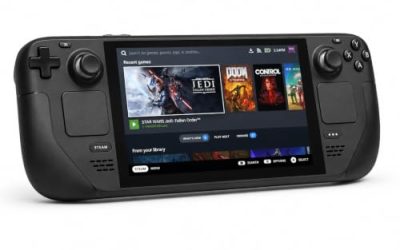
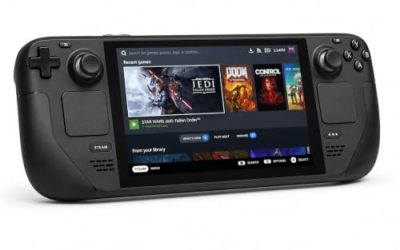
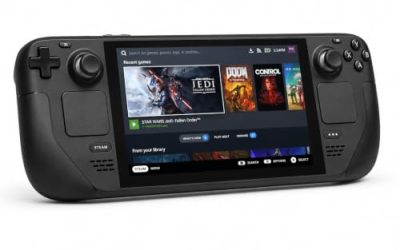
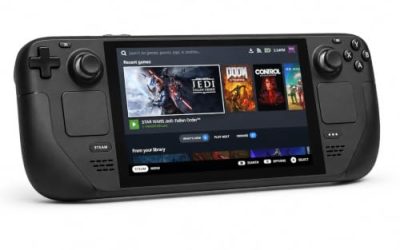
Valve Steam Deck OLED 512GB

The handheld whose test sheet this article just read: Playable rather than Verified, its paperwork written around the Proton route — a sound way in, notes kept in mind.
Specs
- Display: 7.4-inch HDR OLED, 1280 by 800, up to 90 Hz
- Processor: AMD Zen 2 and RDNA 2 custom APU
- Memory: 16 GB LPDDR5
- Storage: 512 GB NVMe, plus a microSD slot
- Wireless: Wi-Fi 6E and Bluetooth
- Channel note: Valve sells the Deck mainly through its own store, so Amazon listings are third-party sellers
8BitDo Ultimate 2 Bluetooth Controller

Built for up to three heroes at once, Trine 2 makes a second pad the most useful accessory here. Steam lists full controller support; this one covers couch co-op duty.
Specs
- Connectivity: Bluetooth wireless and USB-C wired
- Joysticks: TMR electromagnetic, anti-drift design
- Triggers: Hall effect, with mode switching
- Extras: two remappable back buttons, motion control
- In the box: charging dock included
Xbox Wireless Controller, Carbon Black

The guest pad for the third hero’s chair: it pairs with a Linux desktop over Bluetooth or wired, in the layout most players already know.
- Connectivity: Xbox Wireless and Bluetooth
- Port: USB-C for wired play
- Controls: hybrid D-pad, dedicated Share button
- Power: AA batteries or optional rechargeable pack
Logitech G502 HERO

At a desk, the wizard’s conjuring is a pointing exercise — drag a box into place, angle a plank, hold it steady. A precise wired mouse suits those gestures, and eleven programmable buttons cover the hero-switch keys.
Specs
- HERO optical sensor, up to 25,600 DPI
- 11 programmable buttons
- Adjustable weight system
- Wired USB connection
- On-board memory profiles
Samsung T9 Portable SSD 2TB

The game asks for 4.0 GB of storage, so this drive is about the library: moving a Linux collection between machines, or keeping offline installers backed up. Its headline figure needs a Gen 2×2 host port.
Specs
- Capacity: 2 TB portable SSD
- Interface: USB 3.2 Gen 2×2, USB-C connector
- Maker-rated speeds: up to 2,000 MB per second read, 1,950 MB per second write
- Features: Dynamic Thermal Guard, maker-rated drop resistance
How to choose
On a Linux desktop, start with the native build: flagged, documented and delivered in the store package, with requirements almost any surviving hardware clears. Treat the maker’s caveats as the decision rule — if the legacy build misbehaves on a modern system, the Proton route is not a workaround but the fallback Frozenbyte itself suggests. On Steam Deck, follow the badge’s paperwork and play through Proton, expecting the launcher and keyboard notes rather than a Verified clean pass. A mid-range setup gains most from one extra pad, unlocking the co-op the game was designed around; the premium route is the Deck plus a dock-side pad. Budget players lose nothing: keyboard and mouse are a listed way to play, and the GOG edition offers the same build as an offline installer.
Who should skip
Skip the native route — not the game — if you need a port actively maintained against current distributions; the requirements tab says plainly that this one is not. Skip it if you wanted the demo to test the port first, because the demo flags Linux false. Skip the Deck plan if only a Verified badge will do: this one is Playable, with launcher and manual-keyboard notes attached. And skip it entirely if you were shopping for another Trine game.
FAQ
Is Trine 2: Complete Story native on Linux?
Yes. Steam flags Linux true, the Linux requirements field is a populated minimum tab rather than an empty shell, and SteamDB’s depot table holds a dedicated Linux depot of 3.85 GiB inside the store package. Flag, paperwork and delivery all agree.
Why does the store page suggest Proton on Steam Deck?
Because Frozenbyte says so in its own requirements tab: after calling the port a legacy build not actively tested against current distributions, the note adds that on SteamOS and Steam Deck the Windows version through Proton may give better results. Valve’s Deck paperwork follows that steer — its recommended runtime is a Proton build.
Is Trine 2 Verified on Steam Deck?
No — it is rated Playable, one tier down. The passes: the default controller configuration is fully functional, text is legible and the default graphics setup performs well. The notes are a launcher that may need the touchscreen or virtual keyboard, glyphs that sometimes do not match the Deck, and manual on-screen keyboard use for text entry.
Does the soundtrack’s Linux flag mean the game is native?
No, and the game does not need it to. The soundtrack is a separate music listing whose Linux flag sits over an empty requirements field — a bare flag on an audio product. The game’s native case rests on its own flag, tab and packaged depot.
Final verdict
Trine 2: Complete Story is genuinely native on Linux, and unusually, every layer of the record says so at once: the flag, the filled-in requirements tab, the sized Linux depot inside the store package, and a second storefront edition listing Linux too. The honest complication is age. The maker labels its own port a legacy build, warns it is not actively tested on current distributions, and points SteamOS and Deck players toward Proton — the route Valve’s Playable paperwork certifies. Native, delivered and documented, then, with the Proton fallback recommended by the developer itself.
Product and ASIN Reference
| Product | ASIN |
|---|---|
| Valve Steam Deck OLED 512GB | B0CQ3RWQQZ |
| 8BitDo Ultimate 2 Bluetooth Controller | B0F194QFT2 |
| Xbox Wireless Controller, Carbon Black | B08DF248LD |
| Logitech G502 HERO | B07GBZ4Q68 |
| Samsung T9 Portable SSD 2TB | B0CHFS9K14 |