KUNAI looks like a Linux game that lost its badge. TurtleBlaze’s metroidvania about a sentient tablet ninja has a filled-in Linux requirements tab and a depot named for Linux outright. Yet Steam’s flags read Windows only, and the second look matters: the Linux depot holds zero bytes, and total size on disk is the Windows depot alone.
As sold today, KUNAI is a Windows game with Linux paperwork: the tab describes a port the store does not ship, the depot is an empty shell, and the family’s only real Linux flag sits on the soundtrack. The route is Proton — a small, favourable file and a Deck Verified badge, both earned by the Windows build.
As an Amazon Associate, we earn from qualifying purchases.
Quick answer
KUNAI is not native on Linux as Steam sells it. The flag reads Windows only, the one sized depot is the Windows build, and the depot named for Linux holds zero bytes; the populated requirements tab is paperwork without a build. The route is Proton: a Gold headline, a thin file, and a Deck Verified badge earned under Proton.
What Steam’s own record says
The record for app 1001800, KUNAI, developed by TurtleBlaze and released on 6 February 2020, flags Windows true and both Mac and Linux false. Publishers named on the record: The Arcade Crew, Gamirror Games and Dotemu. The categories, exactly as listed: Single-player, Steam Achievements, Full controller support, Steam Cloud and Family Sharing — no multiplayer category of any kind.
The requirements fields are where the record argues with itself. The Windows tab is genuinely populated at the minimum tier: Windows 7 or later, an Intel i5 class processor, 2 GB of memory, a GeForce 450 GTS or Radeon HD 5750 class card, 1 GB of storage. The Linux field is not the empty list or empty shell this series usually finds under a false flag; it is populated at the minimum tier too — 2 GB of memory, the same graphics class, 500 MB of storage — though it names no operating system or processor line, where the Windows tab names both. The Mac field mirrors it under its own false flag. Two absences belong in the record as gaps: no third-party DRM notice and no external account notice — no launcher, no account layer. The extended OS and OS architecture strings are both published empty, so no values are claimed from them.
The depot table settles it
Requirements tabs are descriptions; depots are deliveries. SteamDB’s depot table holds three depots: the Windows depot, 1001801, at 794.36 MiB on disk (download 502.75 MiB); the macOS depot, 1001802, at zero bytes; and the Linux depot, 1001803, likewise zero bytes. The app’s total size on disk is given as 794.36 MiB — the Windows depot alone, exactly.
The Linux depot is not hidden, either: its own page shows it referenced by two packages, a general CD key package and a beta testing package, with a last known manifest from May 2019, before release. None of that changes the arithmetic — a depot whose manifest holds nothing delivers nothing, whichever package names it. The public branch stands on build 4855528 (April 2020), with no Linux content to download. A populated tab under a false flag, over an empty named depot, is paperwork for a port that never shipped in this listing, or was withdrawn before it held a build: a historical artefact, not a compatibility promise. The verdict follows the delivery record: not native.
The family sweep: the flag sits on the soundtrack
The game’s DLC array holds exactly one app: KUNAI – OST, app 1243000, a music product released on 12 February 2020. The soundtrack flags all three platforms true, while its own Linux requirements field is an empty list outright — the soundtrack trap in standard form, a bare flag on an audio product that a careless family scan credits to the game. The family count is one of two, and the game’s verdict rests entirely on its own record. Separation note: store search also surfaces Project Kunai and Kunai Strike, different games by different hands; nothing here comes from their records.
Anti-cheat: three sources, all quiet
The check was run from three sources kept separate. Steam’s record names no anti-cheat, and carries no DRM or account notice at all. SteamDB’s detected technologies are the Unity Engine and the Mono SDK — engine plumbing only. The Are We Anti-Cheat Yet dataset, read in full at 1,167 entries, carries no entry for this game by name or app id. Three negatives: no anti-cheat layer stands in the Proton route’s way.
The Proton file: favourable, and thin
ProtonDB’s summary record answered in full: a Gold headline tier, a Platinum best-reported tier and a Gold trending tier, across just 7 reports, with confidence rated low at 0.44. Those figures are claimed at exactly that size — the direction is favourable, but seven reports is a thin file, the low confidence is part of the record, and a reader on different hardware is extrapolating.
One check could not be completed this session: the ProtonDB game page, where the classification header sits, could not be loaded, so no header is claimed either way. The summary figures grade the Windows build under Proton, the only build there is.
The Steam Deck sheet
Valve rates KUNAI Verified on Steam Deck, the top category, and SteamOS separately Compatible. The verdict and its items were read from Valve’s own compatibility endpoint directly this session: all four Verified checks pass — default controller configuration fully functional, Deck controller icons shown, interface text legible, default graphics performing well. One note item: the game does not default to external controllers on Deck, and may require a manual Quick Access Menu switch.
The dated paperwork comes from SteamDB’s republication of Valve’s data, disclosed as the route used: tested 2 March 2022, on build 4855528, runtime proton-7.0-1. Build 4855528 is the very build the public branch still serves, so unusually the paperwork does not predate the current branch build — and since the runtime is a Proton line, the badge certifies the Windows build under Proton, not a native build, matching the depot table exactly.
The GOG copy
A second storefront copy exists, and it does not change the ruling. GOG’s product record for KUNAI, read directly from the store’s own product data, lists Windows only in its system compatibility, with a release date matching Steam’s — a Linux buyer gets a Windows build from GOG just as from Steam. (GOG’s embedded catalogue search returned nothing for this title even though the store sells it; this ruling rests on the product record, never on search.)
Gear that fits the record
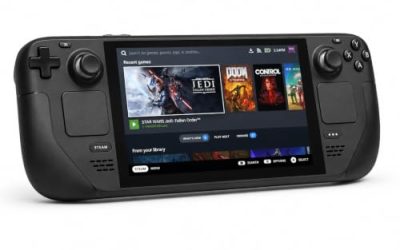
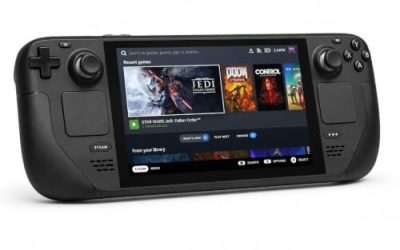
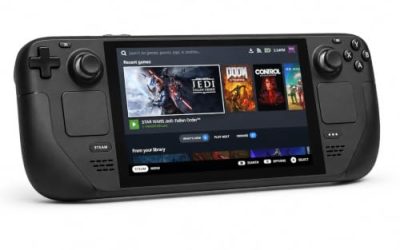
Valve Steam Deck OLED 512GB

The device the Verified badge was written for: a clean pass under proton-7.0-1 on the current branch build, against requirements far below this APU. The premium route, with paperwork behind it.
Specs
- Display: 7.4-inch HDR OLED, 1280 by 800, up to 90 Hz
- Processor: AMD Zen 2 and RDNA 2 custom APU
- Memory: 16 GB LPDDR5
- Storage: 512 GB NVMe, plus a microSD slot
- Wireless: Wi-Fi 6E and Bluetooth
- Channel note: Valve sells the Deck mainly through its own store, so Amazon listings are third-party sellers
8BitDo Ultimate 2 Bluetooth Controller

The docked and desktop pad pick. Movement here is twin-stick aiming and grappling; this pad adds anti-drift sticks, hall effect triggers and back buttons, and its dock keeps it charged between runs.
Specs
- Connectivity: Bluetooth wireless and USB-C wired
- Joysticks: TMR electromagnetic, anti-drift design
- Triggers: Hall effect, with mode switching
- Extras: two remappable back buttons, motion control
- In the box: charging dock included
Xbox Wireless Controller, Carbon Black

The safe second pad: universal Steam Input support, matching glyphs. One record detail applies — Valve’s sheet notes the game does not default to external controllers on Deck, so expect a Quick Access Menu switch first.
- Connectivity: Xbox Wireless and Bluetooth
- Port: USB-C for wired play
- Controls: hybrid D-pad, dedicated Share button
- Power: AA batteries or optional rechargeable pack
Logitech G502 HERO

For desktop players handling menus and settings between sessions, a precise wired mouse is the practical pick, its on-board profiles surviving a move between Linux and dual-boot Windows installs. The mid-range desk option here.
Specs
- HERO optical sensor, up to 25,600 DPI
- 11 programmable buttons
- Adjustable weight system
- Wired USB connection
- On-board memory profiles
Samsung T9 Portable SSD 2TB

Library storage for the Proton route: a fast USB-C drive keeps a growing compatibility-layer library portable between desktop, laptop and docked handheld. The maker’s headline speeds need a Gen 2×2 host port; on a lesser port the drive runs at that ceiling.
Specs
- Capacity: 2 TB portable SSD
- Interface: USB 3.2 Gen 2×2, USB-C connector
- Maker-rated speeds: up to 2,000 MB per second read, 1,950 MB per second write
- Features: Dynamic Thermal Guard, maker-rated drop resistance
How to choose
Choose by the route, not by the tab. If the populated Linux requirements tab brought you here, set it aside: the delivery record — flag, depots, total size — says Windows three times. Buy the game as a Proton title, because that is what it is. On a Steam Deck no choosing is needed; the Verified badge covers the current build. On desktop or laptop, install through Steam with Proton enabled and expect the Gold-tier experience described, thin file and all.
For gear, the handheld is the premium route with paperwork behind it. A pad you already own covers docked and desktop play — controller support is full, the game single-player — so the pads above suit buyers replacing worn hardware. Storage is a library question; this title needs almost none of it.
Who should skip
Skip if you buy only native Linux builds: the tab may look like a port, but nothing native is delivered. Skip it, too, if a seven-report ProtonDB file is too thin a basis for your main machine and you do not own a Deck — the tested route is the handheld, desktop reports few. Players who dislike punishing, repeat-attempt platforming should also pass: a precision metroidvania of chained grapples and boss retries.
FAQ
Is KUNAI native on Linux?
No. The flag reads Windows only, total size on disk equals the Windows depot alone, and the depot named for Linux holds zero bytes. The populated tab is paperwork without a build, so the game runs on Linux through Proton.
Why does the store page list Linux system requirements?
The record alone cannot say. The tab is populated at the minimum tier, minus the operating system and processor lines, beside a Linux depot whose manifest holds no content — the remains, most likely, of a planned or withdrawn port, not a current offer.
How well does KUNAI run under Proton?
ProtonDB’s summary gives Gold headline, Platinum best-reported and Gold trending tiers, on a thin file of 7 reports with low confidence. The Deck sheet is stronger evidence: Valve tested the current build under Proton and rated it Verified, all four checks passing.
Does the soundtrack’s Linux flag mean the game supports Linux?
No. The soundtrack is a separate music product flagging all three platforms while its own Linux requirements field is an empty list. A flag on an audio product is not a build of the game; the game’s own record decides its status.
Final verdict
KUNAI is a Windows game wearing Linux paperwork: flags Windows only, one sized depot, an empty Linux shell from before release, the family’s only Linux flag on the soundtrack. The Proton story is genuinely good — a favourable if thin file, and a Verified badge tested on the build the store still serves. Buy it as a Proton title, ideally for the handheld; buy it expecting a native port, and the empty depot is what you get.
Product and ASIN Reference
| Product | ASIN |
|---|---|
| Valve Steam Deck OLED 512GB | B0CQ3RWQQZ |
| 8BitDo Ultimate 2 Bluetooth Controller | B0F194QFT2 |
| Xbox Wireless Controller, Carbon Black | B08DF248LD |
| Logitech G502 HERO | B07GBZ4Q68 |
| Samsung T9 Portable SSD 2TB | B0CHFS9K14 |