Some Linux ports hide in the paperwork: a flag, a half-filled tab, and nothing in the download itself. Cyber Shadow is the opposite case. Steam’s record for the game, app 861250 from solo developer Aarne “MekaSkull” Hunziker and publisher Yacht Club Games, released 26 January 2021, flags all three desktop platforms as supported, and the depot table underneath backs the flags with delivered files. The Linux depot is no token entry: at 244.65 MiB on disk it is the largest of the three platform depots, ahead of macOS at 188.58 MiB and Windows at 167.95 MiB.
That makes this check a verification exercise rather than a detective story: does the Linux depot reach buyers, does the requirements tab say anything real, and does Valve’s Deck sheet certify the native build or a Proton run? Each layer below is answered from the record itself, including its two thin spots: a four-report ProtonDB file, and a Deck sheet read through a republication after Valve’s endpoint returned nothing usable.
As an Amazon Associate, we earn from qualifying purchases.
Quick answer
Yes. Cyber Shadow is genuinely native on Linux. Steam flags Windows, Mac and Linux all true, the Linux tab carries a real Ubuntu specification, and SteamDB lists a dedicated Linux depot inside the store package. Valve rates it Steam Deck Verified with the native runtime named on the test sheet, and GOG sells an edition listing Linux too.
The depot table settles it
Steam’s record marks windows, mac and linux all true for app 861250, and here the flags are the honest layer. The Linux requirements field is genuinely populated at the minimum tier: Ubuntu 16.04, a 2.0 GHz or faster processor in 32-bit or 64-bit form, 1 GB of memory, graphics in the ATI Radeon X1300, Nvidia GeForce 6600 GT or Intel HD 3000 class, and 1 GB of storage. The Windows and Mac tabs sit at the same single tier, so the Linux tab is no leftover shell. One clerical wrinkle: the Linux tab asks for 1 GB of storage where the other tabs ask for 250 MB; the depot sizes suggest the Linux figure is the more honest of the two.
The delivery layer confirms the flags. SteamDB’s depot table lists three content depots, one per platform: 861253 for Windows, 861254 for macOS and 861255 for Linux. The Linux depot’s own page shows it belongs to the store package sold as Cyber Shadow, so a Linux buyer receives it through the normal purchase, not a beta branch or key-only package. Its manifest shows the anatomy of a native build: shared library files and a shell script among the data files. The public branch stands on build 6367363, the build still served today.
Two metadata fields complete the picture: osarch is an empty string, so no architecture value is claimed from it, and osextended reads macos64, Mac packaging metadata that stands as one dissenting string against the flag, tab and depot evidence.
A family of one
The game’s Steam record carries no DLC array at all: no soundtrack, no art book, no expansion, nothing. The family Linux-flag count is therefore one of one, the game itself, and the familiar soundtrack trap, where a music listing flags Linux and gets misread as support for the game, cannot form here because there is no relative to hold the stray flag. The record lists the product’s shape plainly: single-player only, Steam Achievements, full controller support including DualShock and DualSense pads, Steam Cloud and Family Sharing. It is a retro-styled action platformer about a ninja crossing a ruined world of machines, described here in gameplay terms only.
Anti-cheat and the account layer
No anti-cheat layer stands between a Linux player and this game, on three separate checks. Steam’s own record names no anti-cheat. SteamDB’s record for the app surfaces no anti-cheat technology among its detected technologies. The Are We Anti-Cheat Yet dataset, all 1,167 games searched by name and app number, carries no entry for Cyber Shadow. Two account-layer absences deserve the same plain statement: the record carries no DRM notice and no external account notice. Both are recorded as gaps in the paperwork, with nothing filled in from the publisher’s reputation.
The Proton file
ProtonDB’s summary feed answered in full. The headline tier is Platinum, the best-reported tier is Platinum and the trending tier is Platinum, across just four reports, with the confidence score in the low band: a unanimous but very thin file, claimed here at exactly that size. The framing matters more than the tiers. ProtonDB grades the Windows build under Proton, which for a game with a real native build is the fallback route, not the route a Linux buyer is meant to take; treat the Platinum line as a verdict on the spare path, not the main one. One check could not be completed: the ProtonDB game page did not load in readable form this session, so no classification heading from it is claimed either way.
The Steam Deck sheet
Valve’s own compatibility endpoint returned empty and unusable responses this session, so the Deck record below comes from SteamDB’s republication of Valve’s compatibility data. The verdict is Verified, with all four checks passing: full functionality on the default controller configuration, Deck controller icons shown, legible interface text, and a default graphics configuration that performs well. SteamOS carries its own separate Compatible rating on the same sheet.
The dated paperwork is unusually reassuring for a game of this age. Valve’s test ran on 31 March 2022 against build 6367363, the same build the public branch still serves, so the paperwork is current. Better still, the sheet’s recommended runtime reads native. Unlike most badges in this series, which certify a Windows build under Proton, this one certifies the Linux build itself.
The storefront ruling
GOG sells Cyber Shadow as well, and its edition lists Linux. The ruling rests on GOG’s own product record for the game, which shows all three systems, Windows, Mac and Linux, as supported. One blind spot fired on the way: GOG’s embed catalogue search returned no products for the title at all, even though the game sits in its catalogue. The product record, read directly, settles the question in Linux’s favour.
Gear that fits the record
The gear below follows the record’s shape: the handheld whose test sheet names the native runtime, two pads for docked and desktop play, a mouse for desktop sessions, and library storage.
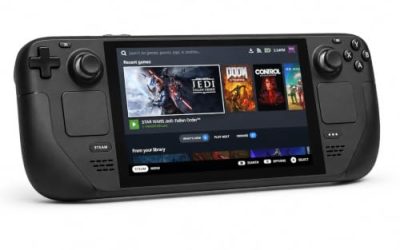
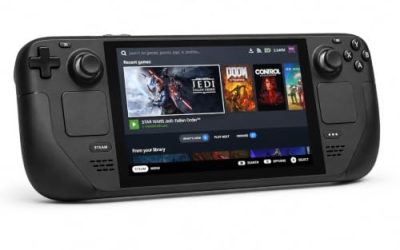
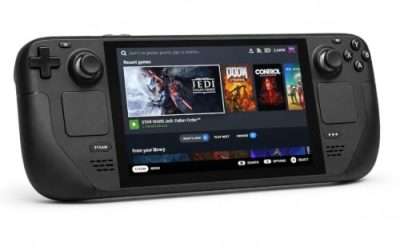
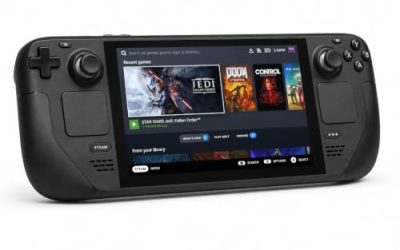
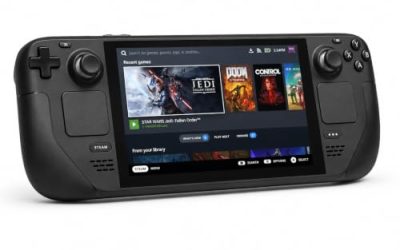
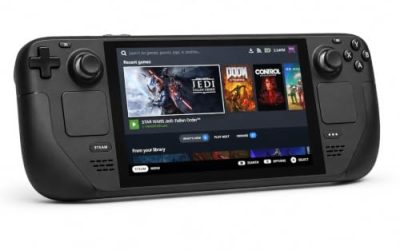
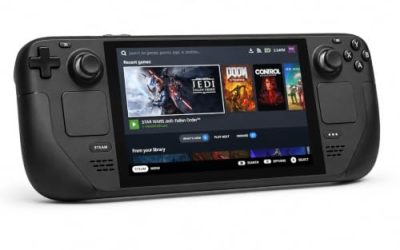
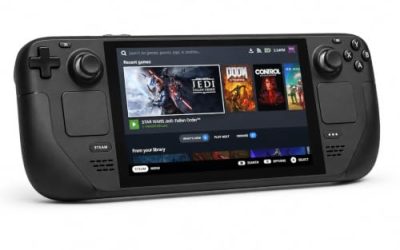
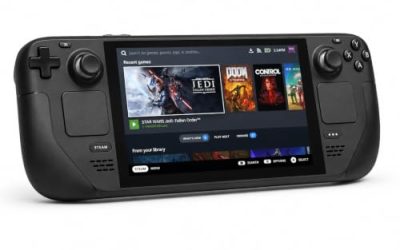
Valve Steam Deck OLED 512GB

The handheld the Verified badge was written for, and here the badge certifies the same native build a desktop player installs. The game’s requirements are a rounding error next to the Deck’s APU.
Specs
- Display: 7.4-inch HDR OLED, 1280 by 800, up to 90 Hz
- Processor: AMD Zen 2 and RDNA 2 custom APU
- Memory: 16 GB LPDDR5
- Storage: 512 GB NVMe, plus a microSD slot
- Wireless: Wi-Fi 6E and Bluetooth
- Channel note: Valve sells the Deck mainly through its own store, so Amazon listings are third-party sellers
8BitDo Ultimate 2 Bluetooth Controller

The docked and desktop pad pick, covering the couch case with modern sticks and triggers plus back buttons for shortcuts.
Specs
- Connectivity: Bluetooth wireless and USB-C wired
- Joysticks: TMR electromagnetic, anti-drift design
- Triggers: Hall effect, with mode switching
- Extras: two remappable back buttons, motion control
- In the box: charging dock included
Xbox Wireless Controller, Carbon Black

The safest guest pad in PC gaming: Steam Input support is universal, the glyphs match what most games display, and it pairs over Bluetooth or its own wireless standard. Its hybrid D-pad suits a precision platformer’s dash and wall-jump inputs.
- Connectivity: Xbox Wireless and Bluetooth
- Port: USB-C for wired play
- Controls: hybrid D-pad, dedicated Share button
- Power: AA batteries or optional rechargeable pack
Logitech G502 HERO

A controller game, but at a desk a precise wired mouse still turns library management and settings menus into single clicks.
Specs
- HERO optical sensor, up to 25,600 DPI
- 11 programmable buttons
- Adjustable weight system
- Wired USB connection
- On-board memory profiles
Samsung T9 Portable SSD 2TB

For moving a Linux game library between machines, or keeping an offline backup of installers, a fast USB-C drive is the simple answer. The headline figure needs a Gen 2×2 host port; on a lesser port the drive runs at that ceiling.
Specs
- Capacity: 2 TB portable SSD
- Interface: USB 3.2 Gen 2×2, USB-C connector
- Maker-rated speeds: up to 2,000 MB per second read, 1,950 MB per second write
- Features: Dynamic Thermal Guard, maker-rated drop resistance
How to choose
Choose the native build first: it is the default. A standard Steam install on Linux pulls the Linux depot automatically, and the Deck sheet’s native runtime line confirms that is the build Valve tested. Choose Proton only as an experiment, or as a fallback if the native build misbehaves on your distribution; the Platinum file, thin as it is, says the fallback is sound. Choose your storefront on preference rather than platform anxiety: Steam and GOG both list Linux here, so the DRM-free question stands on its own merits. Choose a pad on D-pad quality above all: the game asks for precise directional inputs far more than anything a mouse offers.
Who should skip
Skip this one if you want multiplayer or co-op, because the record is single-player only and no family relative changes that. Skip it if your buying rule requires a deep ProtonDB file; the native build makes that file nearly irrelevant here, but four reports will not satisfy a reader who treats volume as the quality signal. Skip it if you need a recommended requirements tier; the tab publishes a minimum tier only. And skip the question entirely if retro-styled precision platforming is not your genre; the record is exemplary, but it cannot change what kind of game this is.
FAQ
Is Cyber Shadow native on Linux?
Yes. Steam flags Linux true, the Linux tab is populated with an Ubuntu specification, and SteamDB’s depot table holds a dedicated Linux depot, the largest of the three platform depots, inside the store package buyers receive. Its manifest shows native shared libraries and a shell script.
Is Cyber Shadow Steam Deck Verified?
Yes. Valve’s sheet, read through SteamDB’s republication after Valve’s endpoint returned nothing usable, rates it Verified with all four checks passing. The test ran in March 2022 on the build the public branch still serves, and the sheet names the native runtime, so the badge certifies the Linux build itself.
Does Cyber Shadow need Proton or anti-cheat workarounds on Linux?
Neither. The native build is the default install, so Proton is only a fallback; ProtonDB’s small file rates that fallback Platinum across four reports. No anti-cheat appears on Steam’s record, in SteamDB’s record, or in the Are We Anti-Cheat Yet dataset.
Can I buy Cyber Shadow on GOG for Linux?
Yes. GOG’s own product record lists Windows, Mac and Linux as supported systems, so the DRM-free edition keeps the native build. GOG’s embed search returned nothing for the title this session, a known blind spot of that search; the product record itself is clear.
Final verdict
Cyber Shadow is one of the cleanest native records in this series: all three store flags true, a populated Linux tab, a dedicated Linux depot larger than the Windows one and delivered inside the store package, no family members to muddy the flag count, and a Deck Verified sheet naming the native runtime that still matches the current build. The caveats concern thin paperwork, not the port: a four-report ProtonDB file grading a route most players will never need, and a Deck sheet read through a republication. Buy it on Steam or GOG, install it, and play the native build.
Product and ASIN Reference
| Product | ASIN |
|---|---|
| Valve Steam Deck OLED 512GB | B0CQ3RWQQZ |
| 8BitDo Ultimate 2 Bluetooth Controller | B0F194QFT2 |
| Xbox Wireless Controller, Carbon Black | B08DF248LD |
| Logitech G502 HERO | B07GBZ4Q68 |
| Samsung T9 Portable SSD 2TB | B0CHFS9K14 |