Momodora: Moonlit Farewell is the closing chapter of Bombservice’s long-running action series, released through PLAYISM on 11 January 2024. It is a side-scrolling action adventure in the series’ hand-drawn style, and because an earlier series game, Reverie Under the Moonlight, ships a genuine native Linux build, this finale is one Linux players check twice before assuming anything.
The record settles the question quickly, and not in the direction the family history suggests. Steam’s own data describes a Windows-only game, the one relative in its download family that does carry a Linux flag turns out to be the soundtrack, and the working route on Linux is Proton.
As an Amazon Associate, we earn from qualifying purchases.
Quick answer
No. Momodora: Moonlit Farewell ships no native Linux build: Steam flags Windows only, the Linux requirements field is an empty list, and the single content depot carries no Linux build. The route is Proton, where the summary record reads Platinum across 17 reports, and Valve rates the game Playable on Steam Deck with one controller-glyph note.
The flag, the field and the depot all say the same thing
Start with the platform flags. Steam lists Windows as true, Mac as false and Linux as false. Flags alone have misled before in this series, so the two layers underneath matter. The Linux requirements field is an empty list outright: not a populated tab, not even the headings-over-empty-lists shell some records carry, just nothing. The Mac field is the same empty list. Against that, the Windows tab is genuinely populated at the minimum tier: Windows 7, an Intel Core i5 processor, 4 GB of RAM, a GeForce GTX 750 Ti class graphics card, DirectX version 10 and 1.5 GB of storage.
The depot table closes the case. The game ships exactly one content depot, numbered 1747761, holding 1.20 GiB, and its configuration line names no operating system at all. There is no Linux depot, no macOS depot and no split of the download by platform: the single package is the Windows build. SteamDB publishes the osextended field as an empty string, so no extended-OS metadata argues otherwise. Flag, field and depot agree.
Two absences are worth stating as gaps rather than promises: the record carries no DRM notice and no external-account notice, so the store page names no third-party DRM and no linked account requirement. That describes what the record shows, not what a future update could add.
The family sweep: the soundtrack wears the flag
The game’s own record lists exactly one app in its add-on array, and it is the trap this series keeps meeting. App 2731990 is the Official Soundtrack, a music product released a day before the game. On its own record, the soundtrack flags all three platforms true: Windows, Mac and Linux. Its Linux requirements field is an empty list outright, the same nothing the game shows, but the flag itself is set.
So the family count is two readable records, and the only Linux flag in the family sits on the audio files. A soundtrack cannot be played as a game, its flag describes nothing about a build, and the game’s own three layers settle the question independently. The flag belongs to the music; the game is Windows-only.
Anti-cheat: three sources, three blanks
The game is listed as single-player only, with Steam Achievements, full controller support, Steam Trading Cards, Steam Cloud and Family Sharing. On anti-cheat, the three sources this article always keeps separate agree by saying nothing. Steam’s record names no anti-cheat product. SteamDB’s detected-technologies list contains three entries, the Unity engine, the Mono SDK and the SteamworksNET SDK: engine and plumbing components, not enforcement software. The Are We Anti-Cheat Yet dataset, read in full, carries no entry for this game under its name or app number. No anti-cheat layer stands in the Proton route’s way, because there is no anti-cheat layer at all.
The same record lists accessibility categories as store-listed capabilities: camera comfort, custom volume controls, adjustable difficulty, a keyboard-only option, playable without timed input and stereo sound, reported exactly as listed, with nothing further claimed.
The Proton file: Platinum, on a small pool
Since the Windows build is the only build, Proton is the whole story on Linux, and its summary record is as strong as the tier system gets. The community summary file reads Platinum for the headline tier, Platinum for the best-reported tier and Platinum for the trending tier, across 17 reports, with confidence rated good. Seventeen reports is a modest pool, and the figures are claimed at exactly that size: unanimous Platinum, on a small file.
One check could not be completed. The summary figures come from the data feed, which answered in full; the separate game-page classification header would not load during this session, so no header is claimed either way. Nothing here rests on it.
The Steam Deck sheet: Playable, one glyph note
Valve’s own compatibility endpoint, read directly, resolves this app to the Playable category, and SteamOS separately rates it Compatible. The sheet’s items show three passes and one note. The passes: all functionality is accessible with the default controller configuration, in-game interface text is legible, and the default graphics configuration performs well. The note: the game sometimes shows mouse, keyboard or non-Steam-Deck controller icons. There is no launcher, small-text or performance item.
The dated paperwork behind the badge was read from SteamDB’s republication of Valve’s compatibility data, and two details deserve plain statement. The test is dated 20 January 2024, on build 13185441, and the public branch has since moved to a newer build dated February 2025, so the paperwork predates the build the store serves today while the Playable category still stands. And the test’s recommended runtime is named as a Proton release candidate from the 8.0 series, confirming the badge grades the Windows build under Proton.
The second storefront: no GOG edition
The DRM-free ruling is short. The natural product address for this title on GOG resolves to the store’s general games catalogue, how that storefront answers for a title it does not sell, and both of its catalogue search routes return no product for the name. Ruled from the storefront’s own behaviour rather than from search alone, there is no GOG edition. Steam is the only PC edition of the two checked.
Gear that fits the record
The record points at a specific setup: the Playable-rated handheld, pads for the docked and desktop cases, a mouse for the keyboard-only route the listing itself names, and fast storage for a travelling library.
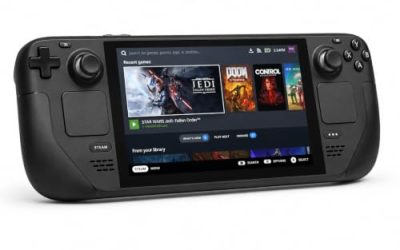
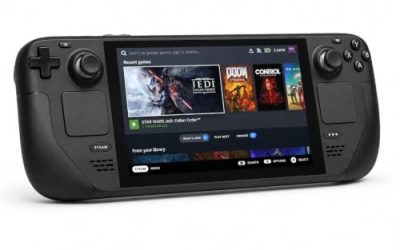
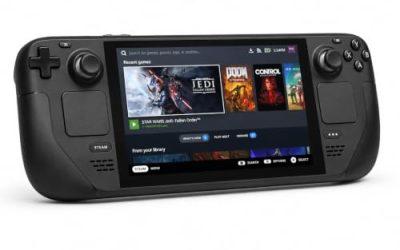
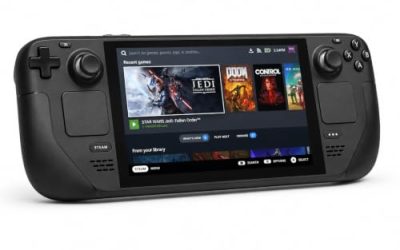
Valve Steam Deck OLED 512GB

The device the Playable sheet was written on. The game’s minimums sit far below this APU’s ceiling, and the only deduction on the sheet is an icon note, so the handheld case needs no workarounds.
Specs
- Display: 7.4-inch HDR OLED, 1280 by 800, up to 90 Hz
- Processor: AMD Zen 2 and RDNA 2 custom APU
- Memory: 16 GB LPDDR5
- Storage: 512 GB NVMe, plus a microSD slot
- Wireless: Wi-Fi 6E and Bluetooth
- Channel note: Valve sells the Deck mainly through its own store, so Amazon listings are third-party sellers
8BitDo Ultimate 2 Bluetooth Controller

The docked pad pick. The store lists full controller support plus DualShock and DualSense support, and this pad covers the couch case with modern sticks and triggers, back buttons, and a dock that keeps it charged.
Specs
- Connectivity: Bluetooth wireless and USB-C wired
- Joysticks: TMR electromagnetic, anti-drift design
- Triggers: Hall effect, with mode switching
- Extras: two remappable back buttons, motion control
- In the box: charging dock included
Xbox Wireless Controller, Carbon Black

The guest-pad standard: Steam Input support is universal, and its glyphs are the ones most games draw for controller prompts. That matters here, because the one note on this game’s Deck sheet is about which icons appear.
- Connectivity: Xbox Wireless and Bluetooth
- Port: USB-C for wired play
- Controls: hybrid D-pad, dedicated Share button
- Power: AA batteries or optional rechargeable pack
Logitech G502 HERO

The store lists a keyboard-only option, so the desktop route is a real one. A precise wired mouse with eleven programmable buttons covers the confirm, cancel and menu inputs that route leans on.
Specs
- HERO optical sensor, up to 25,600 DPI
- 11 programmable buttons
- Adjustable weight system
- Wired USB connection
- On-board memory profiles
Samsung T9 Portable SSD 2TB

The game itself asks for 1.5 GB, so this is library gear rather than game gear: a fast USB-C drive for carrying a Linux game library between machines. The headline figure needs a Gen 2×2 host port; on a lesser port the drive runs at that ceiling.
Specs
- Capacity: 2 TB portable SSD
- Interface: USB 3.2 Gen 2×2, USB-C connector
- Maker-rated speeds: up to 2,000 MB per second read, 1,950 MB per second write
- Features: Dynamic Thermal Guard, maker-rated drop resistance
How to choose
Choose by where you will actually play. On a Steam Deck, nothing needs choosing: the Playable sheet is already written and the game runs through Proton by default. On a Linux desktop, the choice is which Proton version to run, and the summary file’s unanimous Platinum across 17 reports says the default is a sound starting point. For controls, the full controller support listing and its DualShock and DualSense entries mean most pads on hand will serve; the Xbox pad earns its place if glyph matching matters to you, and the keyboard-only listing makes the mouse route legitimate. Storage is a non-issue at 1.5 GB, so buy capacity for the library, not this title.
Who should skip
Skip this one if you buy only native Linux builds on principle: there is none here, and the soundtrack’s flag is the only Linux mark in the family. Skip it if you expected the series pattern to hold, because the earlier Reverie Under the Moonlight genuinely is native and this finale breaks the run. And if a 17-report Proton file feels too thin to trust, the honest reading is to wait for a deeper file rather than treat the Platinum headline as settled proof.
FAQ
Is Momodora: Moonlit Farewell native on Linux?
No. Steam flags the game Windows-only, its Linux requirements field is an empty list, and its single content depot carries no operating-system split and no Linux build. The only Linux flag in the family belongs to the official soundtrack, a music app.
How well does it run under Proton?
The community summary record reads Platinum on its headline, best-reported and trending tiers, across 17 reports, with confidence rated good: a unanimous verdict on a modest pool, claimed at exactly that size.
What does the Steam Deck Playable rating rest on?
Valve’s sheet passes the default controller configuration, interface legibility and default performance, with a single note that the game sometimes shows mouse, keyboard or other non-Deck controller icons. The test behind it dates from January 2024 and names a Proton release candidate as its runtime, so the badge grades the Windows build under Proton.
Is there a GOG version?
No. The title’s natural address on that storefront resolves to its general catalogue and its search routes return no product, so Steam is the only PC edition of the storefronts checked.
Final verdict
Momodora: Moonlit Farewell is a Windows-only release whose Linux story is written entirely by Proton, and that story is a good one: a unanimous Platinum summary on a small pool, a Playable Deck sheet whose only deduction is an icon note, no anti-cheat in the file, and no DRM or account notice on the record. The traps are presentational rather than technical: a soundtrack carrying the family’s only Linux flag, and a series history that invites an unsupported assumption. Read the game on its own record and it is a clean Proton title.
Product and ASIN Reference
| Product | ASIN |
|---|---|
| Valve Steam Deck OLED 512GB | B0CQ3RWQQZ |
| 8BitDo Ultimate 2 Bluetooth Controller | B0F194QFT2 |
| Xbox Wireless Controller, Carbon Black | B08DF248LD |
| Logitech G502 HERO | B07GBZ4Q68 |
| Samsung T9 Portable SSD 2TB | B0CHFS9K14 |