The Messenger, Sabotage’s 2018 action platformer published by Devolver Digital, built its reputation on a trick: an 8-bit ninja adventure that opens halfway through into a 16-bit metroidvania. On Linux it plays a different, accidental trick. One of its soundtrack albums carries a Linux flag, and that line of paperwork is easy to misread as the game supporting the platform. It does not.
Steam’s own record is consistent at every layer that delivers software: the store flags the game for Windows alone, the Linux requirements field is an empty list, and the only content depot is the Windows build. What Linux players actually have is a Proton file in excellent shape and a Steam Deck badge at Valve’s highest grade.
As an Amazon Associate, we earn from qualifying purchases.
Quick answer
The Messenger is not native on Linux. Steam flags Sabotage’s 2018 action platformer for Windows alone, its Linux requirements field is an empty list, and its single content depot is the Windows build. The working route is Proton: ProtonDB rates it Platinum across 71 reports, and Valve rates it Verified on Steam Deck.
The record in one pass
| Question | Answer from the record |
|---|---|
| Native Linux build | No — Steam flags read Windows only |
| Linux requirements tab | Absent — the field is an empty list |
| ProtonDB record | Platinum across 71 reports |
| Steam Deck | Verified, tested February 2022 |
| GOG edition | Exists, Windows only |
Reading the Steam page closely
Start with the platform flags. The record flags Windows true and both Mac and Linux false. The requirements area underneath agrees in the emptiest way available: the Linux requirements field is an empty list outright, with no headings and no text, and the Mac field is the same empty list. There is no leftover tab here, no populated minimum tier under a false flag. The descriptive layer simply never mentions Linux at all.
The delivery layer matches. The depot table holds exactly one content depot, named as the Windows content, at 1.58 GiB, and that figure is also the game’s total size on disk. No Linux depot and no macOS depot appear in any branch. The public branch stands on a build set in October 2025, so the record is current, not an abandoned snapshot. Two further absences are worth stating as gaps rather than promises: the record carries no DRM notice and no external account notice. SteamDB publishes no extended OS value for the app, so none is claimed.
What the record does list is a single-player game with full controller support, Steam Achievements, Trading Cards, Cloud saves, Remote Play on TV and Family Sharing, in ten languages.
Five add-on apps, one stray flag
The game’s add-on family holds five apps, each read individually. Four agree with the game completely: the Picnic Panic expansion, the first soundtrack disc, the third soundtrack disc and the Keiji Yamagishi EP all flag Windows only, each with an empty Linux field.
The exception is the second soundtrack disc, the 16-bit half of the score. That music app flags all three platforms true — Windows, Mac and Linux — while its own Linux requirements field is an empty list outright. So the family’s Linux-flag count is one of five, and the one flag sits on an album. An audio product’s platform flags describe how its files are delivered, not what operating systems the game runs on; a soundtrack cannot ship a port. Anyone scanning the family at headline level could carry that flag into a buying decision. The game’s own record says the opposite three times.
ProtonDB: a Platinum file and a header that overreaches
The community record is the strongest part of this game’s Linux story. ProtonDB’s summary grades the Windows build Platinum on its headline tier, Platinum on its best-reported tier and Platinum on its trending tier, across 71 reports, at strong confidence — a unanimous top grade on a deep pool, claimed here at exactly that size.
Report texture, kept at report weight: most reports describe clean out-of-the-box runs on current Proton builds, including full playthroughs on Steam Deck, and one reporter sums the experience up as working like a native game. A minority note occasional screen tearing. The tinkering notes cluster in the oldest reports from the Proton 5 era, where some players described needing a Wine D3D launch flag to get the graphics initialised; the current file does not depend on them.
One caution belongs in this section. ProtonDB’s game page carries a classification header presenting the game as natively supported. Steam’s record contradicts that header on the flag, on the requirements field and on the depot table, so this article follows Steam and names the contradiction: the header is wrong for this app, and the Platinum grade underneath it describes the Windows build running through Proton — a different and genuinely good result.
Anti-cheat: three empty chairs
Three sources were checked separately, and all three come back negative. Steam’s record names no anti-cheat, which fits a category list that is single-player only. SteamDB’s detected technologies are the Unity engine, a Discord SDK, a game development kit SDK and the Mono SDK — engine, chat and runtime plumbing, nothing in the anti-cheat class. The Are We Anti-Cheat Yet dataset, all 1,167 tracked games searched by name and by app number, carries no entry for this title at all. There is no multiplayer mode for a cheat layer to guard.
The Deck badge and its 2022 paperwork
Valve’s compatibility record, read through SteamDB’s republication of Valve’s own data, rates The Messenger Verified on Steam Deck, with SteamOS separately rated Compatible. All four Verified items pass: every function is accessible with the default controller configuration, the game shows Steam Deck controller icons, interface text is legible, and the default graphics configuration performs well. The test configuration names the stable Proton runtime as the recommended one — the honest footnote to the badge: Verified here certifies the Windows build under Proton, not a native port.
The dated paperwork needs one plain statement. The test sheet is dated 16 February 2022 and was run against the build current then. The public branch has since moved to a build set in October 2025, so the paperwork predates the current branch build while the live category still reads Verified. The ProtonDB file above is the fresher evidence for the current build.
The other storefront
GOG sells The Messenger, and its own product record settles what that edition is: the compatibility entry reads Windows true, Mac false, Linux false, on a release date matching the Steam launch. So a GOG edition exists, but it is the same Windows build with the same platform limits. Neither storefront sells a Linux copy, because none exists.
Gear that fits the record
The gear below follows the record’s shape: the handheld the Verified badge was written for, two pads for docked and desktop play, a mouse for menu-heavy desktop sessions, and library storage.
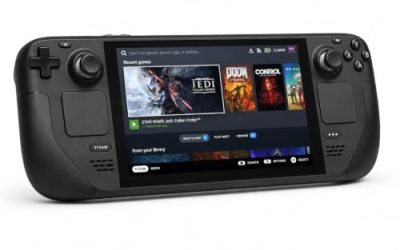
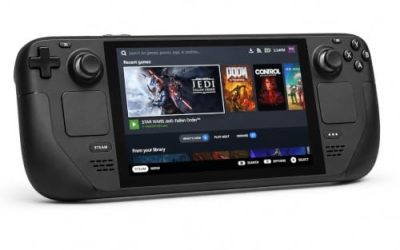
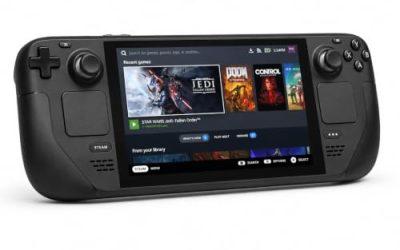
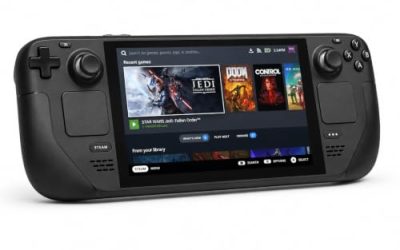
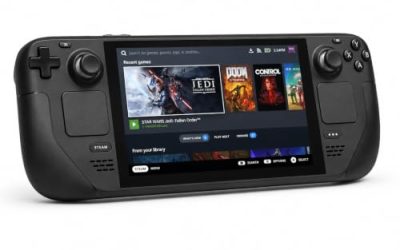
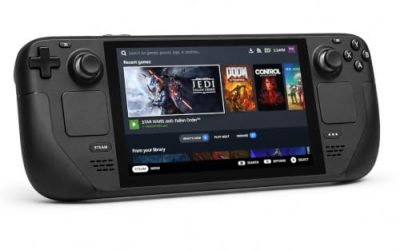
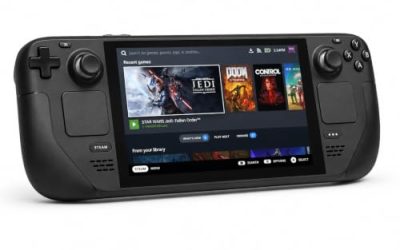
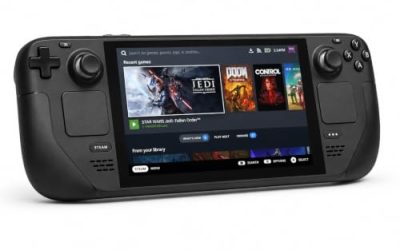
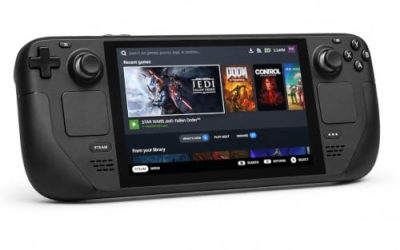
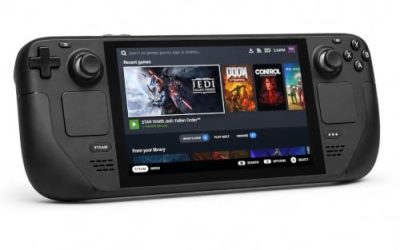
Valve Steam Deck OLED 512GB

The handheld the Verified badge was written for. Valve’s test sheet gives the Windows build a clean pass under the stable Proton runtime, and ProtonDB’s Deck reports describe full playthroughs.
Specs
- Display: 7.4-inch HDR OLED, 1280 by 800, up to 90 Hz
- Processor: AMD Zen 2 and RDNA 2 custom APU
- Memory: 16 GB LPDDR5
- Storage: 512 GB NVMe, plus a microSD slot
- Wireless: Wi-Fi 6E and Bluetooth
- Channel note: Valve sells the Deck mainly through its own store, so Amazon listings are third-party sellers
8BitDo Ultimate 2 Bluetooth Controller

The docked and desktop pad pick. Steam lists full controller support, and a precision platformer lives or dies on its D-pad and jump timing; this pad covers the couch case.
Specs
- Connectivity: Bluetooth wireless and USB-C wired
- Joysticks: TMR electromagnetic, anti-drift design
- Triggers: Hall effect, with mode switching
- Extras: two remappable back buttons, motion control
- In the box: charging dock included
Xbox Wireless Controller, Carbon Black

The safest guest pad in PC gaming: Steam Input support is universal, the glyphs match what most games display, and it pairs over Bluetooth or its own wireless standard. On the handheld, an external pad may need a manual Quick Access Menu switch before it takes over.
- Connectivity: Xbox Wireless and Bluetooth
- Port: USB-C for wired play
- Controls: hybrid D-pad, dedicated Share button
- Power: AA batteries or optional rechargeable pack
Logitech G502 HERO

At a desk, the platforming belongs to a pad, but the desktop around it — library management, shop screens, the metroidvania half’s map — is mouse work. Eleven programmable buttons cover the confirm, cancel and map inputs a long session repeats.
Specs
- HERO optical sensor, up to 25,600 DPI
- 11 programmable buttons
- Adjustable weight system
- Wired USB connection
- On-board memory profiles
Samsung T9 Portable SSD 2TB

For moving a Linux game library between a desktop and a laptop, or keeping an offline backup of installers, a fast USB-C drive is the simple answer. The headline figure needs a Gen 2×2 host port; on a lesser port the drive runs at that ceiling.
Specs
- Capacity: 2 TB portable SSD
- Interface: USB 3.2 Gen 2×2, USB-C connector
- Maker-rated speeds: up to 2,000 MB per second read, 1,950 MB per second write
- Features: Dynamic Thermal Guard, maker-rated drop resistance
How to choose
Choose the Steam copy and the default Proton path for the least-effort route: the summary file is unanimously Platinum, and most reporters changed nothing at all. Choose the Deck if you want the tested configuration, accepting that the badge’s paperwork is from 2022 and the fresher evidence sits in the Proton reports. If a soundtrack listing anywhere shows a Linux flag, read it as a property of the album’s file delivery and check the game’s own depot table before believing a port exists.
Who should skip
Skip this entirely if you buy only native Linux builds on principle: there is no native build here, and the one Linux flag in the family belongs to a music app. Skip the GOG copy if you were hoping a second storefront changes the platform answer; it does not. And skip the tinkering advice from Proton 5 era reports — those launch flags solve problems the current builds no longer present.
FAQ
Is The Messenger native on Linux?
No. Steam flags the game for Windows alone, its Linux requirements field is an empty list, and its only content depot is the Windows build. The one Linux flag in the family belongs to the second soundtrack disc, a music app, and a soundtrack flag is not a port.
How well does The Messenger run under Proton?
ProtonDB’s summary record is Platinum on its headline, best-reported and trending tiers across 71 reports, at strong confidence. Most reports describe out-of-the-box runs, including full Steam Deck playthroughs, with occasional screen tearing noted by a minority.
Is The Messenger Steam Deck Verified?
Yes. Valve’s record rates it Verified, with all four checks passing and SteamOS separately Compatible, read through SteamDB’s republication of Valve’s data. The test sheet is dated February 2022 and predates the current branch build; the recommended runtime on that sheet is the stable Proton build, so the badge certifies the Windows version.
Does the GOG version run on Linux?
No. GOG’s own product record lists Windows as its only compatible system; the edition is the same Windows build Steam sells.
Final verdict
The Messenger on Linux is a paperwork trap wrapped around an easy recommendation. The trap: a soundtrack album’s Linux flag and a community page header both gesture at native support that the game’s own record denies at the flag, field and depot layers. The recommendation: ignore both gestures, buy the Steam copy, and run the Windows build through Proton, where 71 reports grade it Platinum and Valve’s own sheet calls it Verified.
Product and ASIN Reference
| Product | ASIN |
|---|---|
| Valve Steam Deck OLED 512GB | B0CQ3RWQQZ |
| 8BitDo Ultimate 2 Bluetooth Controller | B0F194QFT2 |
| Xbox Wireless Controller, Carbon Black | B08DF248LD |
| Logitech G502 HERO | B07GBZ4Q68 |
| Samsung T9 Portable SSD 2TB | B0CHFS9K14 |