Yooka-Laylee is Playtonic Games’ 2017 open-world platformer, built around the buddy duo of Yooka the chameleon and Laylee the bat and a vault-load of collectibles. It shipped with a Linux build at launch, and Steam’s record still says so plainly: the store flags the game for Windows, Mac and Linux alike, and the Linux requirements tab names Ubuntu and SteamOS.
The oddity sits one shelf over. The game’s whole family flags Linux too — the soundtrack and the digital artbook carry the same three-platform flags as the game itself. In this series that pattern usually marks a trap: a stray flag on an audio product making a Windows-only game look supported. Here the trap has nothing to catch, because the game’s own record is complete at every layer.
As an Amazon Associate, we earn from qualifying purchases.
Quick answer
Yes. Yooka-Laylee is genuinely native on Linux. Steam flags the game for Windows, Mac and Linux, the Linux requirements tab names Ubuntu 14.04 or SteamOS with launch-era hardware, and a dedicated Linux depot of about seven and a half GiB sits inside the store package buyers receive. Proton is only the fallback route, and the game is Verified on Steam Deck.
The status at a glance
| Question | Answer from the record |
|---|---|
| Native Linux build | Yes — all three platform flags read true |
| Linux requirements tab | Populated at the minimum tier; recommended tier empty |
| Linux depot | Yes — a dedicated Universal depot, inside the store package |
| Add-on apps | Soundtrack and artbook, both flagging Linux as well |
| ProtonDB record | Platinum headline, Platinum best, 19 reports |
| Steam Deck verdict | Verified, tested February 2022 on the build still served |
| GOG edition | None — the address resolves to the general catalogue |
| Anti-cheat or launcher | None named on any of the three records checked |
What Steam’s own record says
Steam’s record for Yooka-Laylee (app 360830) lists the developer as Playtonic Games and the publisher as Playtonic Friends, released 11 April 2017. The platform flags read Windows true, Mac true, Linux true.
The Linux requirements field is genuinely populated at the minimum tier: Ubuntu 14.04 or later, or SteamOS, an Intel i5-2500, 8 GB of memory, an NVidia GTS450 or AMD Radeon 6850HD graphics card, 9 GB of storage, and the note the other tabs carry, that a controller is strongly recommended. The recommended tier is an empty heading — the same on the Windows and Mac tabs, so that bareness is a quirk of the whole listing.
The osarch value reads 64. The osextended value reads macos64, a Mac packaging string; against a true flag, a populated tab and a delivered depot, it is the single dissenting field. Two absences stand as gaps: no DRM notice and no external account notice, so no launcher or account requirement is claimed either way.
The depot layer: the build is in the package buyers get
A flag and a tab can both be paperwork; the delivery layer is where a native claim has to survive, and this one does. SteamDB’s depot table lists a small common depot, a Windows 64-bit depot at 7.43 GiB, a macOS Universal depot at 7.57 GiB, and a dedicated Linux Universal depot at 7.47 GiB, all still served by the public branch’s May 2020 build.
The package check closes the loop: the Linux depot is a member of the store package named for the game itself, and of the Digital Deluxe package beside it. This is not the unpackaged shape, where a depot sits in no package and reaches nobody — the native build is what a Linux buyer downloads. A Linux client icon sits in the asset list too.
The family sweep: three flags out of three, and none of them load-bearing
The game’s record carries a DLC array of exactly two apps, both read individually. The Soundtrack (app 564250, a music product) flags all three platforms true, while its own Linux requirements field is an empty list outright — a bare flag on an audio product. The Digital Artbook (app 564251) also flags all three true, and its Linux minimum field carries the game’s own requirements text copied across — the copied-text variant of the same quirk.
So the family count is three Linux flags out of three readable records, the mirror image of the usual finding. Here those flags are noise around a signal: the game’s case rests on its own flag, tab and depot. Yooka-Laylee and the Impossible Lair, kept separate by name, is a different game; nothing here is drawn from it.
Anti-cheat, from three separate records
The multiplayer on this record is local in shape: multi-player, player-versus-player and co-op in shared and split-screen forms, plus Remote Play Together, with full controller support and Steam Cloud. No online server play is described. Steam’s own record names no anti-cheat. SteamDB’s detected technologies are Unity Engine, the Mono SDK and the Wwise SDK — engine, scripting and audio plumbing. The Are We Anti-Cheat Yet dataset, searched by name and by app number, carries no entry for it at all. Three sources, kept separate, all negative.
The Proton file, and what it is actually grading
ProtonDB’s summary record reads Platinum on the headline tier, Platinum on the best-reported tier and Platinum on the trending tier, across 19 reports, with confidence rated good. One framing sentence matters: for a game with a native Linux build, a ProtonDB tier grades the Windows build running under Proton — the fallback route, not the build Steam delivers to a Linux machine by default. The file is still useful as insurance.
One check could not be completed: the ProtonDB game page returned no readable content this session, so no classification heading from that page is claimed either way.
Steam Deck: Verified, with a Proton runtime on the sheet
Valve’s own compatibility endpoint returned an empty result set this session, so the Deck record here is read from SteamDB’s republication of Valve’s compatibility data, disclosed rather than hidden. The verdict is Verified, and SteamOS is separately rated Compatible.
The dated paperwork is current on one axis and quietly revealing on another. The test sheet is dated 16 February 2022 and names the build it tested — the same build the public branch still carries today, so the paperwork matches the branch build rather than predating it. All four Verified items pass, with one note: the game does not default to external controllers on Deck, and a paired pad may need a manual switch through the Quick Access Menu.
The revealing part is the runtime line: the sheet names proton-7.0-1, so the Verified test, as recorded, ran the Windows build under Proton — for a game whose native build sits in the same depot table. The badge is genuine; it simply never graded the native build.
The second storefront: no GOG edition
GOG’s behaviour settles this one. The natural product address for the game resolves to GOG’s general games catalogue, and GOG’s embed catalogue search returns no product for the name. No product record could be read because none appears to exist. The Steam copy is the only PC edition, and it is the buy.
Gear that fits the record
The record is pad-first — the store page itself strongly recommends a controller — so the gear follows that shape.
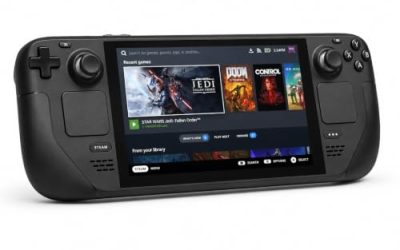
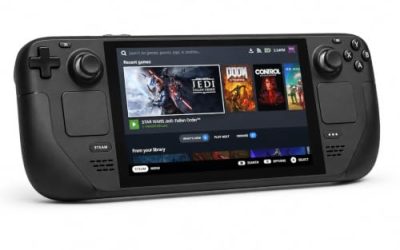
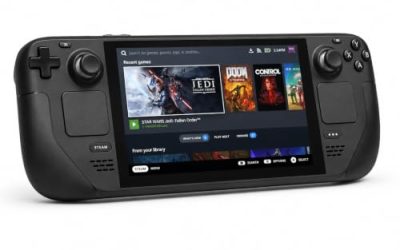
Valve Steam Deck OLED 512GB

The handheld the Verified badge was written for, and its dated test sheet was written against the very build the store still serves.
Specs
- Display: 7.4-inch HDR OLED, 1280 by 800, up to 90 Hz
- Processor: AMD Zen 2 and RDNA 2 custom APU
- Memory: 16 GB LPDDR5
- Storage: 512 GB NVMe, plus a microSD slot
- Wireless: Wi-Fi 6E and Bluetooth
- Channel note: Valve sells the Deck mainly through its own store, so Amazon listings are third-party sellers
8BitDo Ultimate 2 Bluetooth Controller

The docked and desktop pad pick, with back buttons for the moves a collectathon repeats.
Specs
- Connectivity: Bluetooth wireless and USB-C wired
- Joysticks: TMR electromagnetic, anti-drift design
- Triggers: Hall effect, with mode switching
- Extras: two remappable back buttons, motion control
- In the box: charging dock included
Xbox Wireless Controller, Carbon Black

The safest guest pad in PC gaming: Steam Input support is universal and the glyphs match. On the handheld, this game’s test sheet note applies: an external pad may need a manual Quick Access Menu switch first.
- Connectivity: Xbox Wireless and Bluetooth
- Port: USB-C for wired play
- Controls: hybrid D-pad, dedicated Share button
- Power: AA batteries or optional rechargeable pack
Logitech G502 HERO

A platformer is pad-first; this mouse earns its desk place for the screens around the platforming — world maps, collectible trackers and the library itself.
Specs
- HERO optical sensor, up to 25,600 DPI
- 11 programmable buttons
- Adjustable weight system
- Wired USB connection
- On-board memory profiles
Samsung T9 Portable SSD 2TB

For moving a Linux game library between machines, a fast USB-C drive is the simple answer. The headline figure needs a Gen 2×2 host port; on a lesser port the drive runs at that ceiling.
Specs
- Capacity: 2 TB portable SSD
- Interface: USB 3.2 Gen 2×2, USB-C connector
- Maker-rated speeds: up to 2,000 MB per second read, 1,950 MB per second write
- Features: Dynamic Thermal Guard, maker-rated drop resistance
How to choose
Choose the Steam copy, because it is the only PC edition on sale. On a Linux desktop or laptop, install and launch: Steam delivers the native build by default. Keep Proton in reserve — the Platinum file across 19 reports says the fallback route is sound. On Steam Deck, the Verified badge means install-and-play, with one manual step if you pair an external controller. Treat a pad as the primary input.
Who should skip
Skip this one if you are shopping for a DRM-free offline installer: no GOG edition exists. Skip it if the game you actually want is the side-scrolling sequel: Yooka-Laylee and the Impossible Lair is a separate game. Skip it if you only buy on a deep modern Proton file — the community file here is 19 reports grading the fallback route. And skip the external-pad plan on Deck if you will not make the one manual controller switch the notes describe.
FAQ
Is Yooka-Laylee native on Linux?
Yes. Steam flags the game for Linux alongside Windows and Mac, the Linux requirements tab is populated at the minimum tier, and a dedicated Linux depot sits inside the store package buyers receive.
The soundtrack and artbook flag Linux too. Does that mean anything?
No. Both are add-on products, not playable builds: the soundtrack’s Linux requirements field is an empty list outright, and the artbook’s Linux field copies the game’s own requirements text. Their flags describe nothing installable.
What does the Verified badge on Steam Deck actually certify here?
The test sheet (16 February 2022) was written against the same build the public branch still serves, so the paperwork is current. But the sheet names a Proton runtime, proton-7.0-1, so the test as recorded graded the Windows build under Proton — not the native build in the depot table.
Is there a GOG edition of Yooka-Laylee?
No edition could be found: the product address resolves to the general games catalogue and the embed catalogue search returns nothing. The Steam copy is the only PC edition.
Final verdict
Yooka-Laylee is one of the clean native records in this series: a true Linux flag backed by a populated requirements tab and a dedicated Linux depot sitting inside the store package, so the build is delivered rather than merely documented. The quirks are harmless — a family where even the soundtrack flags Linux, and a Verified Deck sheet that graded the Proton fallback instead of the native build. Buy the Steam copy and play the build Playtonic shipped.
Product and ASIN Reference
| Product | ASIN |
|---|---|
| Valve Steam Deck OLED 512GB | B0CQ3RWQQZ |
| 8BitDo Ultimate 2 Bluetooth Controller | B0F194QFT2 |
| Xbox Wireless Controller, Carbon Black | B08DF248LD |
| Logitech G502 HERO | B07GBZ4Q68 |
| Samsung T9 Portable SSD 2TB | B0CHFS9K14 |