Psychonauts is Double Fine Productions’ action platformer about Raz, a cadet at a psychic summer camp who projects himself into other characters’ minds, each mind playing as a self-contained level built from that character’s obsessions and fears. Those mental worlds are described here in gameplay terms only: levels, with platforming, collectibles and boss encounters. Steam lists it as single-player, with partial controller support, achievements, trading cards, Steam Cloud and Family Sharing. The record names Double Fine Productions as developer and publisher, and dates the Steam release to 11 October 2006; the game first shipped on 19 April 2005.
Most games from 2005 reach Linux, if at all, through a compatibility layer. This one carries a real native port, and Valve re-reviewed it on Steam Deck in August 2025, on the build the public branch still serves, with the native runtime recommended.
As an Amazon Associate, we earn from qualifying purchases.
Quick answer
Yes — the original Psychonauts is genuinely native on Linux. Steam flags all three platforms true, the Linux requirements tab is filled in at both tiers, and a dedicated Linux depot of just over five gigabytes stands on the current branch. Valve rates it Playable on Steam Deck, tested in August 2025, native runtime.
A Deck test sheet newer than most modern games get
Valve’s compatibility sheet, written on 23 August 2025, grades the native build: the sheet’s recommended runtime is native, so the badge certifies the Linux port itself, not a Windows build under Proton. The tested build is the same build the public branch still serves, and the paperwork is current on the build axis — a rarity for a record this old.
Playable rather than Verified, on input and presentation notes, not performance: interface text is legible and the default graphics configuration performs well. Against that sit the notes: the default controller configuration leaves some functionality inaccessible, requiring the touchscreen, virtual keyboard or a community configuration; the game sometimes shows mouse, keyboard or non-Deck controller icons; some text entry requires manually invoking the on-screen keyboard; the game supports the Deck’s native display resolution but does not set it by default; and cross-platform saved games are not supported. SteamOS separately rates the game Compatible, with the same notes attached. Evidence note: Valve’s own endpoint returned no usable answer this session, so the verdict, items and test date come from SteamDB’s republication of Valve’s data, disclosed rather than smoothed over.
What Steam’s own record says
Steam’s record for Psychonauts (app 3830) flags all three platforms true: Windows, Mac and Linux. The Linux requirements field is genuinely populated at both tiers, and the two tiers are identical: a 2.0 GHz processor, 2 GB of memory, 128 MB graphics with OpenGL 2.1 and compressed texture support, glibc 2.7 or newer. A closing note states the port’s shape: 32-bit native binaries only.
Two quirks sit inside that good news. The Linux tab never names an operating system — no OS line, only processor, memory, graphics and libraries. And the Windows tab beside it is museum paperwork: Windows 98 SE, 2000 and XP, a Pentium III floor, a 64 MB graphics card. Neither touches the ruling. One metadata string dissents: the extended OS field reads as Mac packaging metadata, the same string its sequel carries — against a true flag, a filled tab and a sized depot, a clerical leftover, not evidence about Linux. The architecture field is an empty string, so no value is claimed from it.
The depot table settles it
SteamDB’s depot table holds a dedicated Linux depot, named for the platform, at 5.11 GiB, beside the Windows content depot at 5.13 GiB, Mac depots in 32-bit and 64-bit forms, and two token-size French and German language depots. The record’s OS list names macOS, Windows and Linux together. The public branch stands on a build from late 2020 — the same build Valve’s testers used in 2025 — so depot table and Deck sheet describe the same software: the current public download, not a leftover.
The family: two soundtracks, two bare flags
The add-on array holds two apps, both music: the Psychonauts Original Soundtrack and the Psychonauts Original Score, both from May 2012. Each flags all three platforms true — and each carries an empty list where its Linux requirements field should be. The family thus flags Linux on three of three readable records, but only one flag describes a game. The soundtrack flags are bare flags on audio products, the trap in its standard form — harmless here, because the game’s own flag is backed by its tab and depot.
ProtonDB: a Gold file for a native game
ProtonDB’s summary record reads Gold on its headline tier, Platinum on its best-reported tier and Gold trending, across 89 reports, at strong confidence. For a native title, that file mostly grades the fallback route — the Windows build under Proton — rather than the port itself, and it is claimed here at exactly that size and in that framing.
The game page’s report text describes the native build directly: reports discuss the port’s performance and its configuration files, and a recurring theme is that the Linux build is played with keyboard and mouse. Report texture at report weight, beside the store record’s partial controller support listing, not replacing it. One gap disclosed plainly: the page’s classification header was not visible in the readable text returned this session, so no header is claimed either way.
Anti-cheat and the account layer: three silences
Three sources, checked separately, are all silent. Steam’s record names no anti-cheat, which fits a single-player-only listing. SteamDB’s detected technologies are Bink Video, Ogg, OpenAL and Vorbis — film and audio plumbing, nothing that inspects the player. The Are We Anti-Cheat Yet dataset, read in full, carries no entry under the game’s name or app number. The account layer holds two gaps: no DRM notice field and no external account notice field at all. Nothing is filled in from the publisher’s reputation either way — as the record stands, no DRM is named and no third-party account is required.
The GOG edition also lists Linux
A GOG edition exists: its live product page lists the game as working on Windows, Linux and Mac OS X — the native build is not a Steam exclusive. Both of GOG’s own search routes returned nothing for this title this session — the known blind spot in full — so the ruling rests on the live product page itself, its identity confirmed by its description, release date and Double Fine Productions credit. No wishlist entry is involved.
Gear that fits the record
The gear below follows the record: the handheld Valve re-tested in 2025, pads for the docked and Proton routes, a mouse for the native build’s reported input style, and library storage.
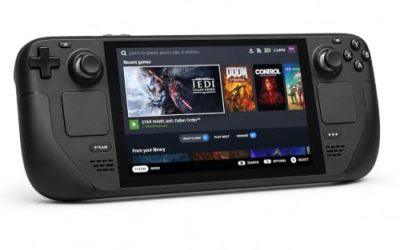
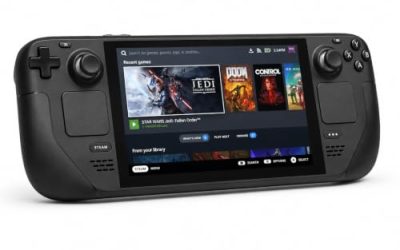
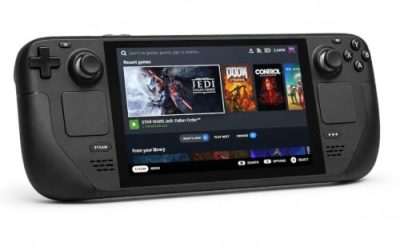
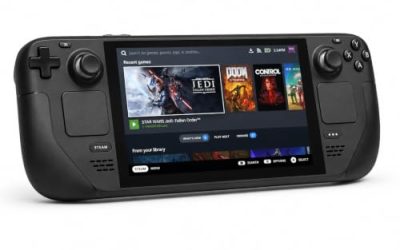
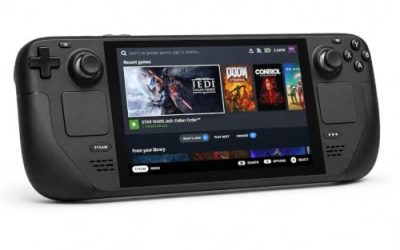
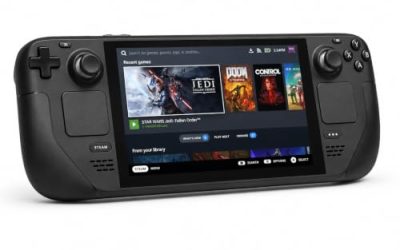
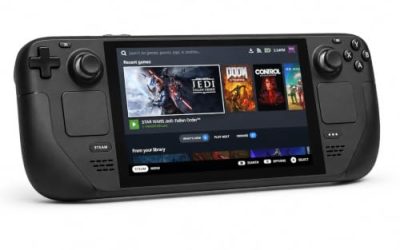
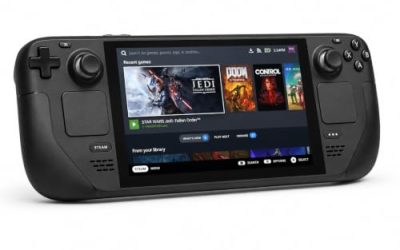
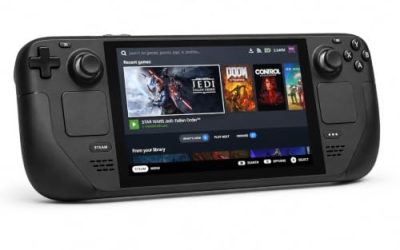
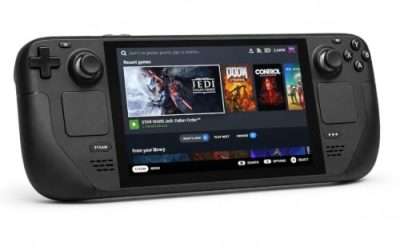
Valve Steam Deck OLED 512GB

The handheld from Valve’s 2025 test sheet: the badge names the native runtime, so this is the machine the port itself was graded on.
Specs
- Display: 7.4-inch HDR OLED, 1280 by 800, up to 90 Hz
- Processor: AMD Zen 2 and RDNA 2 custom APU
- Memory: 16 GB LPDDR5
- Storage: 512 GB NVMe, plus a microSD slot
- Wireless: Wi-Fi 6E and Bluetooth
- Channel note: Valve sells the Deck mainly through its own store, so Amazon listings are third-party sellers
8BitDo Ultimate 2 Bluetooth Controller

The pad pick where a pad applies: the Windows build under Proton, or docked play with a community configuration answering the test sheet’s controller note.
Specs
- Connectivity: Bluetooth wireless and USB-C wired
- Joysticks: TMR electromagnetic, anti-drift design
- Triggers: Hall effect, with mode switching
- Extras: two remappable back buttons, motion control
- In the box: charging dock included
Xbox Wireless Controller, Carbon Black

The glyph-matching pad for Steam Input sessions. On the handheld, an external pad may need the manual Quick Access Menu switch the test sheet notes.
- Connectivity: Xbox Wireless and Bluetooth
- Port: USB-C for wired play
- Controls: hybrid D-pad, dedicated Share button
- Power: AA batteries or optional rechargeable pack
Logitech G502 HERO

ProtonDB’s reports describe the native build as a keyboard-and-mouse game; a precise wired mouse is the input this port expects at a desk, and eleven programmable buttons cover the inputs a long session repeats.
Specs
- HERO optical sensor, up to 25,600 DPI
- 11 programmable buttons
- Adjustable weight system
- Wired USB connection
- On-board memory profiles
Samsung T9 Portable SSD 2TB

The game is a five-gigabyte install, but a Linux library outgrows it quickly; a fast USB-C drive moves that library between machines or holds offline installer backups.
Specs
- Capacity: 2 TB portable SSD
- Interface: USB 3.2 Gen 2×2, USB-C connector
- Maker-rated speeds: up to 2,000 MB per second read, 1,950 MB per second write
- Features: Dynamic Thermal Guard, maker-rated drop resistance
How to choose
Choose the Steam copy for the exact build both compatibility records describe, with Steam Cloud attached. Choose the GOG edition if you prefer its offline installer model; its page lists the same three platforms. On desktop or laptop, install the native build first — it is the current public download — and keep Proton in reserve as the fallback the Gold file describes. On Steam Deck, expect the Playable notes rather than a frictionless Verified pass: budget a community controller configuration and the manual on-screen keyboard. For input on the native build, plan on keyboard and mouse at a desk, per the report file; a pad is for the Proton route or docked play.
Who should skip
Skip the pad-first plan for the native build alone: the report file describes keyboard-and-mouse play, and the store listing promises only partial controller support. Skip it if your setup cannot run 32-bit binaries: the tab’s note limits the port to that shape, and no 64-bit Linux build exists. Skip it if you need saves to travel between platforms, since Valve’s sheet states cross-platform saved games are not supported. And skip the sequel’s records when researching this game: Psychonauts 2 is a separate app with its own article, and nothing in its record describes this one.
FAQ
Is the original Psychonauts native on Linux?
Yes. Steam flags Linux true, the requirements tab is filled in at both tiers for 32-bit native binaries, and a Linux depot of 5.11 GiB stands on the current branch. The GOG edition lists Linux as well.
Is Psychonauts Steam Deck Verified?
No — the verdict is Playable, tested on 23 August 2025 against the build the public branch still serves, with the native runtime named. The deductions are input and presentation notes: controller configuration gaps, occasional non-Deck icons, manual keyboard invocation for text entry and a display resolution the game does not set by default. Performance and legibility pass.
Do the soundtrack listings prove Linux support?
No. Both soundtrack apps flag all three platforms while carrying an empty list for a Linux requirements field — bare flags on audio products that prove nothing either way. The game’s own flag, tab and depot carry the native case.
Does Psychonauts need Proton on Linux?
No. The native build is the default download and the build Valve’s Deck sheet graded. Proton remains a fallback: ProtonDB’s Gold file across 89 reports grades that Windows-build route, there if a system disagrees with the 32-bit port.
Final verdict
Psychonauts is the cleanest kind of old record: a genuine native port, documented at every checkable layer, and re-certified by Valve in 2025 on the build still being served. Its quirks — a Linux tab with no OS line, a museum Windows tab, a Mac metadata string, two soundtrack flags — sit at the edges. The centre holds: flag, tab, depot and a second storefront all agree. Buy it where you prefer, play the native build, and keep the Gold Proton file as insurance.
Product and ASIN Reference
| Product | ASIN |
|---|---|
| Valve Steam Deck OLED 512GB | B0CQ3RWQQZ |
| 8BitDo Ultimate 2 Bluetooth Controller | B0F194QFT2 |
| Xbox Wireless Controller, Carbon Black | B08DF248LD |
| Logitech G502 HERO | B07GBZ4Q68 |
| Samsung T9 Portable SSD 2TB | B0CHFS9K14 |