Indivisible, the hand-drawn action RPG from Lab Zero Games, published by 505 Games as Steam’s record states it today, launched on 8 October 2019 — and unusually for a 2019 release, its Linux story is not a Proton story at all. Steam flags all three platforms, the Linux requirements tab is filled in, and a dedicated Linux depot sits in the depot table.
The stranger detail is the paperwork. The game’s public branch has not moved since August 2020, yet Valve retested the game for Steam Deck in December 2025, on the very build that branch still serves, and the test sheet names the native runtime.
As an Amazon Associate, we earn from qualifying purchases.
Quick answer
Yes — Indivisible is genuinely native on Linux. Steam flags Windows, Mac and Linux, the Linux tab names Ubuntu 18.04 with modest hardware, and a Linux depot ships beside a shared content depot. Valve rates it Verified on Steam Deck with the native runtime named, tested in December 2025 on the current build, and GOG sells a Linux edition too.
A fresh badge on a frozen branch
The public branch stands on build 5205809, built in June 2020 and untouched since that August. Valve’s compatibility sheet, read at Valve’s own endpoint this session, returns the top category, Verified, with all four checks passing: the default controller configuration is fully functional, Deck controller icons are shown, interface text is legible, and the default graphics configuration performs well. Two notes ride along rather than counting as deductions: the game does not default to external controllers, which may need a manual Quick Access Menu switch, and external pads are not supported for local multiplayer. SteamOS separately rates the game Compatible.
The dated paperwork, read through SteamDB’s republication of Valve’s compatibility data and disclosed as such, dates the test to 12 December 2025, on build 5205809 — the build the public branch still serves, so the paperwork is current. The recommended runtime line reads native: the badge certifies the Linux build itself.
The platform record, layer by layer
Steam’s flags read Windows, Mac and Linux all true. The Linux requirements field is populated at the minimum tier: Ubuntu 18.04, an Intel Core i3-2100, 8 GB of memory, a GeForce GTX 560 with OpenGL 3.3 Core, and 6 GB of storage. Its additional notes carry a photosensitivity warning and a maker note that 8 GB of swap is required alongside 8 GB of RAM; there is no recommended tier on the Linux side, where the Windows tab carries both. The record also lists accessibility categories — camera comfort, adjustable difficulty, a keyboard-only option, subtitle options among them — reported here as store-listed capabilities only.
The depot table backs the flag with delivered files. A dedicated Linux 64-bit depot (421173) holds the platform layer, a shared content depot (421174, at 3.24 GiB) holds the bulk of the game, and the video content ships in a Mac-and-Linux AV depot (421176) encoded as VP9, separate from the Windows AV depot. Total size on disk reads 7.12 GiB. One metadata string dissents: osextended reads macos64, Mac packaging metadata, ruled against flag, tab and depots; osarch is an empty string. Two fields are simply absent: the record carries no DRM notice and no account notice — both recorded here as gaps rather than filled in from the publisher’s reputation.
The family around the game
The store record’s DLC array holds two apps, each read individually. The Soundtrack (1172420, a music app) flags all three platforms, and its Linux field holds a single graphics line about OpenGL 3.3 Core support — the familiar soundtrack-flag shape, harmless here because the game’s own case never rests on it. Razmi’s Challenges (1233840), the one content expansion, also flags all three platforms, its Linux field carrying the game’s own populated minimum text. Counting the game itself, all three readable records in the family flag Linux.
Two further relatives surface only in the depot table: a Roti Never Waits depot (1092310) and a Super Special Backer Thank You depot (1155020), both marked unused, whose store records return no data — named here so the sweep stays auditable, no flag claimed for either. The free Prototype Demo (421830) sits outside the array and flags Windows only; it is a 2015 prototype, kept separate from the released game throughout.
What players report
ProtonDB classifies the game Native under its Natively Supports heading, and Steam agrees — the clean-agreement case, not the stray-tag pattern. One evidence gap, stated plainly: ProtonDB’s summary feed could not be read this session — its summary address returned page-not-found through every route tried — so no tier split or confidence figure is claimed. What follows is the game page’s own file of 14 reports.
That file mixes native and Proton runs. Its newest report describes a completed full playthrough on the native build, the controller working, no crashes, with long loading pauses between larger maps. Several Deck reports instead run the Windows build under Proton and rate it highly. Older reports split: some found the native build choppy on their hardware, and the Proton route has its own quirk, with cutscene video described as garbled or pink under some configurations. The native build is the intended route; the Proton fallback exists for anyone whose machine disagrees.
Anti-cheat and the account layer
Three sources, kept separate, all negative. Steam’s record names no anti-cheat and carries no account notice and no DRM notice. SteamDB’s detected technologies are the Discord SDK, Ogg, SDL and Vorbis — community, audio and platform plumbing, not an anti-cheat. The Are We Anti-Cheat Yet dataset — all 1,167 games, searched by name and app number — carries no entry. The record’s multiplayer categories are local ones — multi-player, co-op, shared/split screen co-op — stated exactly as listed, with no server claims made.
The storefront ruling
A second edition exists, and it lists Linux. GOG’s live product page for Indivisible states that the game works on Windows, Linux and Mac OS X, and its own FAQ answers that the game is officially supported on all three systems. GOG’s search endpoints returned nothing usable this session — embed empty, catalogue surfacing unrelated games — so the ruling rests on the product page itself, never on search. Either copy is the native build; the choice is installer preference, not compatibility.
Gear that fits the record
The gear below follows the record’s shape: the handheld whose badge names the native build, two pads, a mouse for menu-heavy sessions, and room for the library.
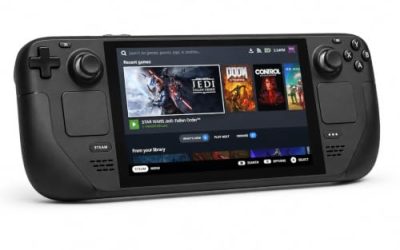
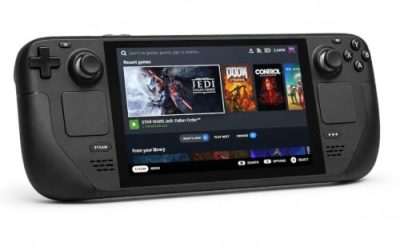
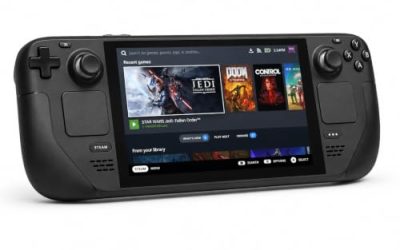
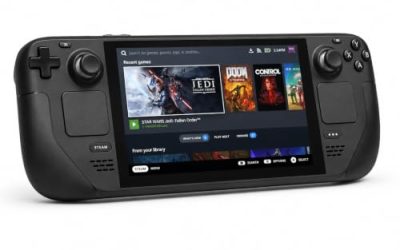
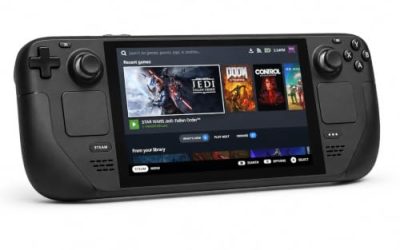
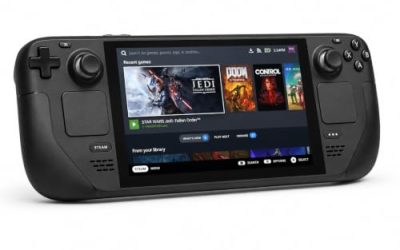
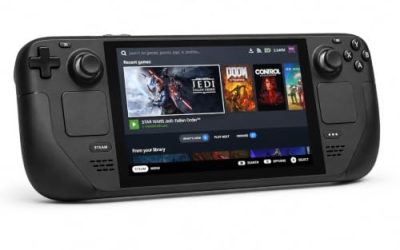
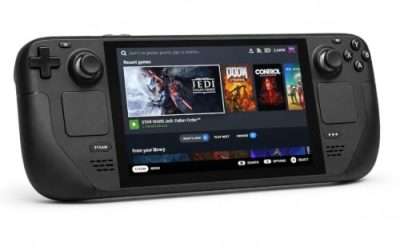
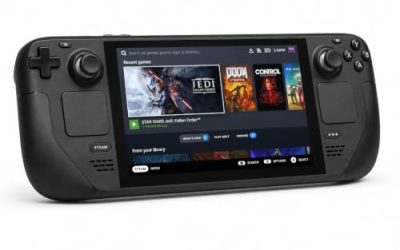
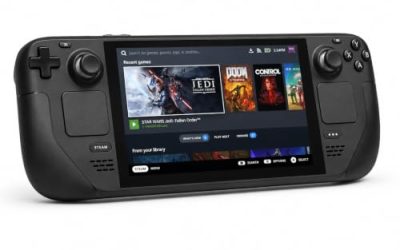
Valve Steam Deck OLED 512GB

The handheld Valve retested in December 2025 — and because the sheet names the native runtime, the Deck runs the same Linux build a desktop install gets, all four Verified checks passing.
Specs
- Display: 7.4-inch HDR OLED, 1280 by 800, up to 90 Hz
- Processor: AMD Zen 2 and RDNA 2 custom APU
- Memory: 16 GB LPDDR5
- Storage: 512 GB NVMe, plus a microSD slot
- Wireless: Wi-Fi 6E and Bluetooth
- Channel note: Valve sells the Deck mainly through its own store, so Amazon listings are third-party sellers
8BitDo Ultimate 2 Bluetooth Controller

The docked pad pick. Steam lists full controller support, and this pad covers the couch case with modern sticks and triggers plus back buttons.
Specs
- Connectivity: Bluetooth wireless and USB-C wired
- Joysticks: TMR electromagnetic, anti-drift design
- Triggers: Hall effect, with mode switching
- Extras: two remappable back buttons, motion control
- In the box: charging dock included
Xbox Wireless Controller, Carbon Black

The safest guest pad: Steam Input support is universal, the glyphs match what most games display, and it pairs over Bluetooth or its own wireless standard. The record’s local co-op categories make a second pad a real use case here.
- Connectivity: Xbox Wireless and Bluetooth
- Port: USB-C for wired play
- Controls: hybrid D-pad, dedicated Share button
- Power: AA batteries or optional rechargeable pack
Logitech G502 HERO

Indivisible’s battles are menu-driven party combat, and at a desk a precise wired mouse speeds up inventory and shop screens. Eleven programmable buttons cover the inputs a long session repeats.
Specs
- HERO optical sensor, up to 25,600 DPI
- 11 programmable buttons
- Adjustable weight system
- Wired USB connection
- On-board memory profiles
Samsung T9 Portable SSD 2TB

The whole game is a 7.12 GiB install; a fast USB-C drive moves a Linux library between machines, or keeps an offline backup of the GOG installer. The headline figure needs a Gen 2×2 host port; lesser ports run at their own ceiling.
Specs
- Capacity: 2 TB portable SSD
- Interface: USB 3.2 Gen 2×2, USB-C connector
- Maker-rated speeds: up to 2,000 MB per second read, 1,950 MB per second write
- Features: Dynamic Thermal Guard, maker-rated drop resistance
How to choose
Choose either storefront: Steam and GOG both sell the native Linux build, so decide on installer and library preference. On a desktop or laptop, install and launch — no compatibility tool is part of the route, and the published minimum (Ubuntu 18.04, a GTX 560-class card, 8 GB of memory plus the maker’s swap note) is modest by any modern standard. On Steam Deck, the Verified badge on the current build means the default configuration is the tested one; only reach for settings if you pair an external pad, which will not take over by default. A pad is the game’s native shape; a mouse earns its place only for long menu sessions.
Who should skip
Skip the assumption, not the game: anyone who files Indivisible under Proton-only 2019 releases is working from an outdated picture. Skip it if you require a recommended-tier Linux specification before buying, because the record publishes a minimum only. Skip it if your buying rule needs a ProtonDB tier split, because that feed could not be read this session and this article will not invent one. And if older reports of a choppy native build worry you, the fallback is documented honestly in the same file: the Windows build under Proton, cutscene quirks included.
FAQ
Is Indivisible native on Linux?
Yes. Steam flags all three platforms, the Linux requirements field gives an Ubuntu 18.04 minimum, and the depot table holds a dedicated Linux depot plus a shared content depot. ProtonDB classifies the game Native as well, so the two records agree.
Is Indivisible Steam Deck Verified?
Yes. Valve’s record gives the top category, Verified, with all four checks passing, and the dated test paperwork — read through SteamDB’s republication of Valve’s data — is dated 12 December 2025 on build 5205809, the build the public branch still serves. The sheet names the native runtime, so the badge certifies the Linux build.
Does the soundtrack’s Linux flag prove anything?
On its own, no — soundtrack listings across Steam routinely carry platform flags their audio files do not need, and this one is no exception. It proves nothing and needs to: the game’s own flag is backed by its requirements tab and its depots, and the Razmi’s Challenges expansion flags Linux with the game’s full minimum text.
Can I buy Indivisible on GOG for Linux?
Yes. GOG’s product page lists the game as working on Windows, Linux and Mac OS X, and its FAQ states official support for all three. GOG’s own search did not surface the page this session — a known blind spot in that search; the product page itself is the evidence.
Final verdict
Indivisible is one of the straightforward records in this series: a true Linux flag backed by a populated requirements tab, a dedicated Linux depot, a family that repeats the flag honestly, a ProtonDB Native classification that agrees, a GOG edition that lists Linux, and a Deck Verified badge retested in December 2025 on the build still in use, naming the native runtime. Buy it on either storefront and play the native build; keep Proton in mind only as the documented fallback.
Product and ASIN Reference
| Product | ASIN |
|---|---|
| Valve Steam Deck OLED 512GB | B0CQ3RWQQZ |
| 8BitDo Ultimate 2 Bluetooth Controller | B0F194QFT2 |
| Xbox Wireless Controller, Carbon Black | B08DF248LD |
| Logitech G502 HERO | B07GBZ4Q68 |
| Samsung T9 Portable SSD 2TB | B0CHFS9K14 |